
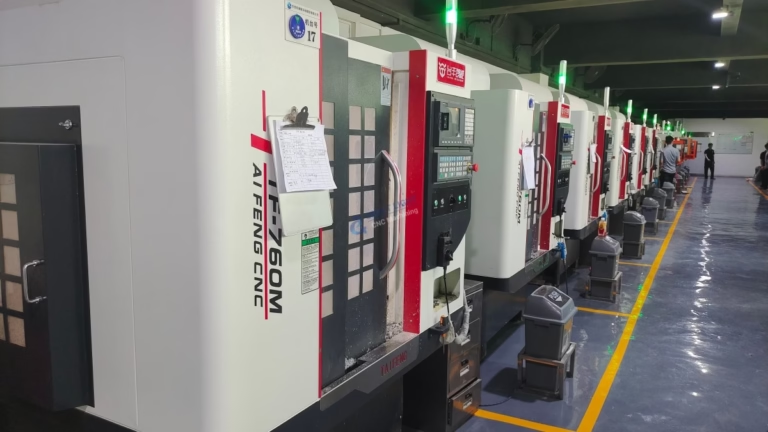
In the world of modern manufacturing, where complexity, precision, and efficiency are paramount, one technology stands as the undisputed backbone: Computer Numerical Control (CNC) machining. For clients seeking precision parts machining and customization, understanding What Is A CNC Machining? is fundamental to making informed decisions about their projects. At its core, CNC machining is a subtractive manufacturing process where pre-programmed computer software dictates the movement of factory tools and machinery. This process can control a range of complex machinery, from grinders and lathes to mills and routers, to cut, shape, and create parts and prototypes from a solid block of material (known as a blank or workpiece) with a level of accuracy and repeatability that manual operation simply cannot match.
The journey from a digital design to a physical, high-precision component is orchestrated by this technology. It begins with a Computer-Aided Design (CAD) model, which is then translated into a CNC program (G-code) that provides step-by-step instructions for the machine’s toolpaths. This digital-to-physical bridge has revolutionized industries, enabling the production of everything from simple brackets to intricate aerospace components with geometries that would be impossible to achieve consistently by hand.
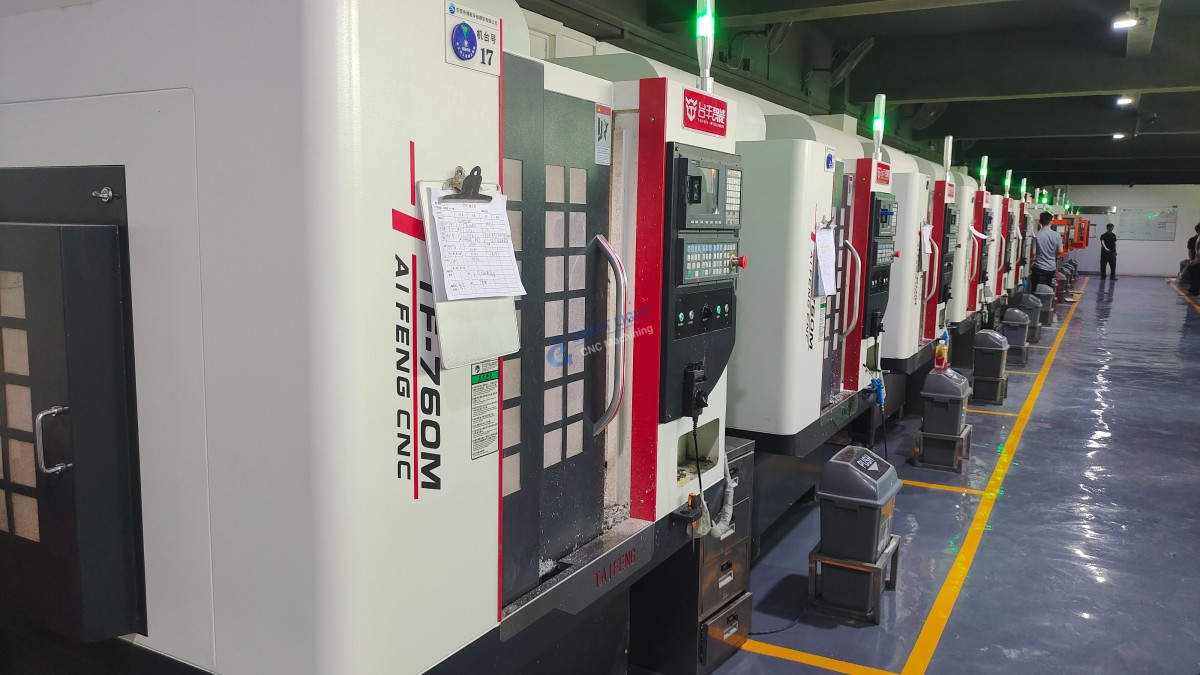
The Core Mechanics: How CNC Machining Works
To truly grasp What Is A CNC Machining?, we must delve into its operational sequence:

Design & Programming (The Digital Blueprint): Everything starts with a 3D CAD model created by an engineer or designer. This model defines the final part’s exact dimensions and geometry. Using Computer-Aided Manufacturing (CAM) software, a programmer then generates the G-code. This code is the machine’s “recipe,” containing coordinates for movement (X, Y, Z axes and more), spindle speeds, feed rates, and tool change commands. For ultra-complex parts, advanced 5-axis CNC machining services utilize CAM software capable of programming synchronized movement along five axes simultaneously, allowing for the creation of highly organic and complex shapes in a single setup.
Setup (Preparing the Physical Stage): An operator secures the chosen material (metal, plastic, composite) firmly onto the machine’s bed or into a vice. The appropriate cutting tools (end mills, drills, taps) are loaded into the machine’s tool magazine or spindle. Critical instruments like probes may be used to precisely locate the workpiece’s position relative to the machine’s coordinate system—a process crucial for achieving the targeted tolerances.
Execution (Automated Precision): Upon initiating the cycle, the process becomes fully automated. The CNC controller reads the G-code line by line, commanding the servo motors to move the spindle and/or the workpiece along the programmed paths. The cutting tool removes material with high-speed precision, layer by layer, transforming the solid block into the designed part. Modern machines often feature closed-loop control systems that constantly monitor and adjust for any minute deviations, ensuring consistency across a production run.
Post-Processing (The Finishing Touches): Once the main machining cycle is complete, the part may undergo secondary operations. This can include deburring (removing sharp edges), surface finishing (like sandblasting, anodizing, or plating), or other custom one-stop post-processing and finishing services that add functional or aesthetic properties to the component.
The Essential Components of a CNC Machining System
A robust CNC system is more than just the machine tool itself. It’s an ecosystem comprising:
The Machine Tool: The physical equipment (mill, lathe, grinder) that performs the cutting. The capabilities vary dramatically, from 3-axis mills for simpler parts to sophisticated 5-axis CNC machining centers that can approach a part from virtually any angle without repositioning.
The CNC Controller: The “brain” of the operation. It interprets the G-code and sends electrical signals to the machine’s drives and motors.
Drive System: Includes servo motors, ball screws, and feedback devices that convert the controller’s electronic commands into precise mechanical movements.
Cutting Tools: The hardened, geometry-specific instruments (made of carbide, ceramic, or diamond) that perform the actual material removal. Tool selection is a science in itself, directly impacting surface finish, precision, and machining time.
Why CNC Machining is the Go-To Choice for Precision Parts
The dominance of CNC in precision manufacturing is no accident. Its advantages address the core needs of engineers and procurement specialists:
Unmatched Precision and Repeatability: Capable of holding tolerances within ±0.001 inches (0.025mm) or even tighter for micro-machining. Once a program is verified, the thousandth part will be virtually identical to the first.
Complex Geometry Capability: Can produce intricate contours, internal features, and complex 3D surfaces that are impractical or impossible with manual machining.
Superior Efficiency and Scalability: After initial setup and programming, production runs can operate unattended for hours. It efficiently bridges the gap from low-volume prototyping to medium/high-volume production without the need for expensive custom tooling like molds.
Material Versatility: Can process an incredibly wide range of materials, including various metals (aluminum, stainless steel, titanium, brass), plastics (PEEK, Delrin, Nylon), and composites, making it a universal solution across industries.
Enhanced Safety and Reduced Human Error: The automated enclosure minimizes operator interaction with cutting tools, enhancing safety. The digital process also drastically reduces errors stemming from manual measurement or fatigue.
CNC Machining in Action: Industry Applications
The application of CNC machining is ubiquitous in technology-driven sectors:
Aerospace & Defense: Manufacturing lightweight, high-strength structural components, engine parts, and intricate landing gear assemblies with uncompromising material integrity and precision.
Medical & Dental: Producing biocompatible surgical instruments, orthopedic implants (like knees and hips), and dental prosthetics with sterile, smooth surfaces and complex organic shapes.
Automotive & Racing: Creating prototype components, engine blocks, custom suspension parts, and intricate transmission components that demand both performance and durability.
Electronics & Communications: Fabricating precise heat sinks, waveguide components, connector housings, and non-standard enclosures with tight tolerances for fit and EMI shielding.
Industrial Machinery: Building robust, wear-resistant gears, shafts, valves, and machine fixtures that form the backbone of other manufacturing processes.
The Future Trajectory: CNC Machining and Industry 4.0
What Is A CNC Machining? today is evolving rapidly. The future lies in deeper integration with Industry 4.0 principles:
IoT & Predictive Maintenance: Sensors on machines monitor vibration, temperature, and tool wear in real-time, predicting failures before they occur and minimizing downtime.
AI & Adaptive Machining: Machine learning algorithms can optimize toolpaths in real-time for maximum efficiency or adjust cutting parameters automatically if material hardness varies.
Digital Twins & Simulation: The entire machining process is simulated virtually before any metal is cut, eliminating costly errors and optimizing the production cycle.
Automated Workflow Integration: CNC systems are increasingly integrated with automated material handling, robotic part loading/unloading, and centralized production management software, creating “lights-out” manufacturing cells.
Selecting the Right CNC Machining Partner: Beyond the Machine
Understanding the technology is only half the battle. Successfully customizing precision parts hinges on choosing the right manufacturing partner. Here, capabilities diverge significantly. A partner like GreatLight CNC Machining Factory exemplifies the advanced tier of service. The distinction lies not in owning CNC machines—many shops do—but in how technical expertise, quality systems, and a full-process chain are leveraged to solve complex manufacturing challenges.
When evaluating a partner for precision parts machining and customization, consider these critical factors aligned with industry best practices:
Technical Depth and Equipment Capability: Can they handle your specific geometry? A shop with only 3-axis machines may struggle with a part requiring undercuts or compound angles, necessitating multiple setups that introduce error. A partner equipped with advanced five-axis CNC machining equipment can complete such parts in a single, more accurate setup. The presence of a comprehensive equipment suite, including precision EDM, grinding, and metrology labs, indicates a capacity to handle post-machining operations and verify their own work to the highest standards.
Systematic Quality Assurance: Precision promised must be precision delivered, consistently. Look for certifications that provide structural proof of a quality system. An ISO 9001:2015 certified manufacturer has a documented process for controlling every stage of an order. For automotive projects, IATF 16949 compliance is non-negotiable. For medical devices, ISO 13485 shows a commitment to regulatory rigor. These are not just plaques on a wall; they are frameworks that ensure traceability, corrective action processes, and continuous improvement.
Full-Process Engineering Support: The best partners act as an extension of your engineering team. They should offer one-stop post-processing and finishing services—not just machining. This includes material science advice, Design for Manufacturability (DFM) feedback to optimize your design for cost and reliability, and expertise in secondary processes like heat treatment, plating, or painting. This holistic approach prevents costly handoffs between multiple suppliers and ensures accountability.
Proven Operational Scale and Experience: Review their portfolio and case studies. A partner with many years of experience in precision prototype model processing and a track record in demanding fields like aerospace or medical implants has likely encountered and solved problems similar to yours. Their experience in customizing metal parts for humanoid robots, automotive engines, aerospace, and other fields demonstrates an ability to navigate complexity.
Conclusion
So, What Is A CNC Machining? It is far more than a simple automated cutting process. It is the foundational digital manufacturing technology that translates innovative ideas into tangible, high-performance reality. It represents a synergy of advanced mechanics, sophisticated software, and profound material science. For any project demanding accuracy, complexity, and material integrity, CNC machining is the indispensable solution. The ultimate key to unlocking its full potential lies in selecting a manufacturing partner whose technical capabilities, quality ethos, and collaborative mindset align with the critical demands of your application. In a landscape where precision defines performance, the choice of your machining ally becomes one of your most consequential strategic decisions.
Frequently Asked Questions (FAQ)
Q1: What is the main difference between 3-axis, 4-axis, and 5-axis CNC machining?
3-axis: The tool moves in three linear directions (X, Y, Z). It’s excellent for prismatic parts but may require multiple setups for complex geometries, potentially reducing accuracy.
4-axis: Adds a rotational axis (typically the A-axis), allowing the workpiece to spin. Ideal for machining features around a cylinder, like cam lobes or helical gears.
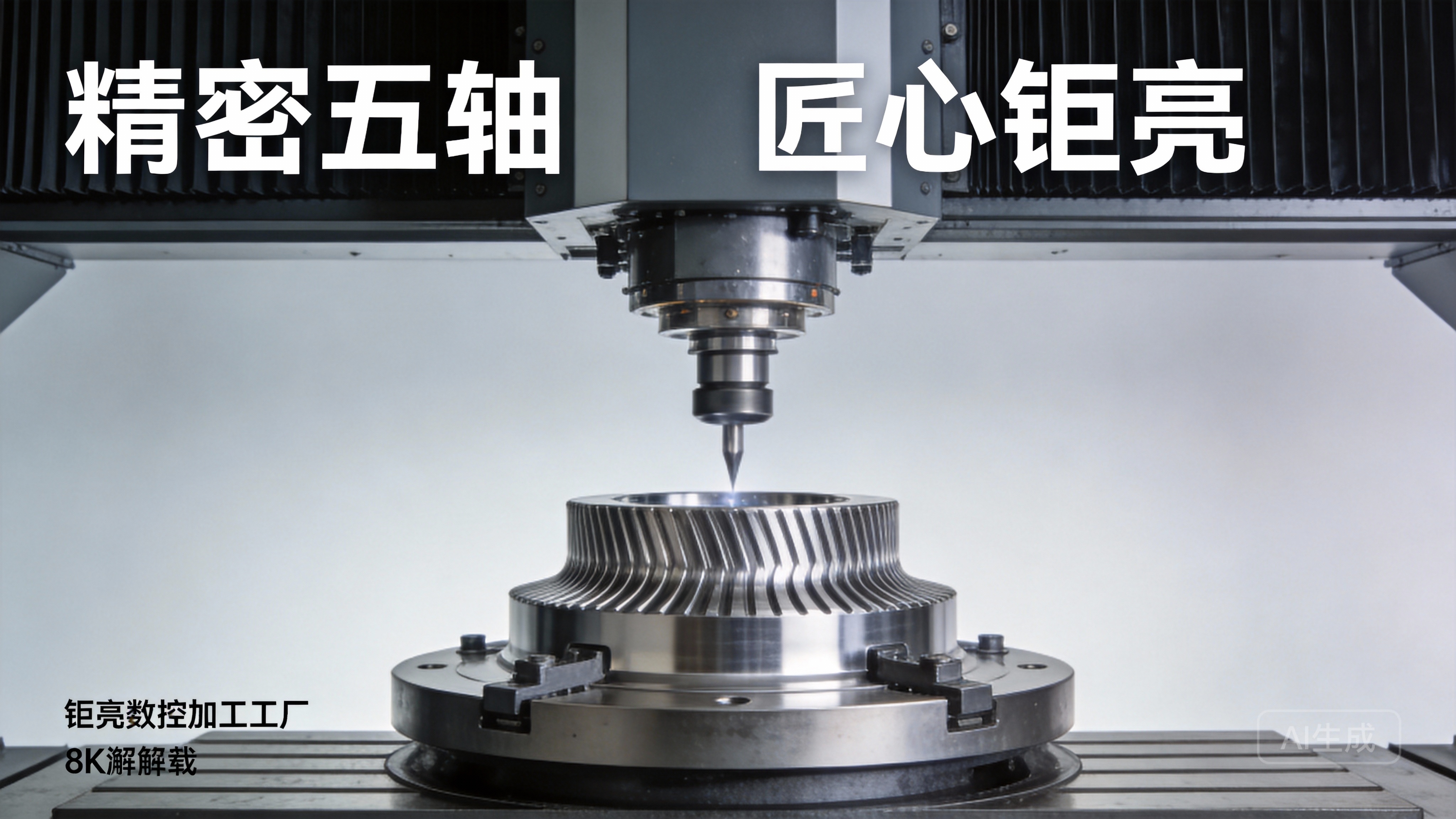
5-axis: Adds a second rotational axis (e.g., B or C-axis). The tool can approach the workpiece from any direction in a single setup. This is crucial for complex surfaces (e.g., impellers, turbine blades, mold cores) as it allows for better tool access, improved surface finish, and higher accuracy by minimizing setups. Providers like GreatLight CNC Machining Factory specialize in this high-end capability.
Q2: How do I choose the right material for my CNC machined part?
Material selection depends on the part’s function. Key considerations include:
Mechanical Requirements: Strength (yield/tensile), hardness, toughness.
Environmental Factors: Corrosion resistance, temperature tolerance, wear resistance.
Weight & Density: Critical for aerospace and automotive applications.
Machinability: Some materials (e.g., certain stainless steels, titanium) are tougher to machine, affecting cost and lead time.
Post-Processing Needs: Will it be anodized, plated, or painted? A knowledgeable manufacturing partner can guide you through this decision based on their experience in precision parts machining.
Q3: What file formats do I need to provide to get a CNC machining quote?
The most standard and preferred format is a 3D CAD file in STEP (.stp or .step) or IGES (.igs) format, as they preserve robust geometric data. 2D drawings in PDF or DWG format are also highly valuable as they communicate critical tolerances, surface finish callouts, and geometric dimensioning and tolerancing (GD&T) that may not be fully captured in the 3D model.
Q4: What are the most common tolerances achievable with CNC machining?
Standard machining tolerances are typically around ±0.005 inches (±0.127 mm). Precision machining can achieve ±0.001 inches (±0.025 mm) or tighter. Holding tolerances below ±0.0005 inches (±0.0127 mm) is considered high-precision and requires specialized equipment, processes, and climate control. It’s essential to only specify tolerances as tight as functionally required, as each decimal place significantly increases cost.
Q5: How does CNC machining compare to 3D printing for prototypes and end-use parts?
They are complementary technologies:
CNC Machining: Subtractive process. Strengths: Superior material properties (fully dense, isotropic), excellent surface finish, high precision, and broad material selection (metals, plastics). Best for: Functional prototypes that need to test strength, fit, or thermal properties, and for end-use parts where material integrity is critical.
3D Printing (Additive Manufacturing): Additive process. Strengths: Unmatched geometric freedom for internal lattices or organic shapes, very fast for complex single pieces, excellent for visual prototypes. Considerations: Material properties can be anisotropic, surface finish often requires post-processing, and the range of engineering-grade materials, while growing, is still narrower than for CNC. A full-service provider will offer both to recommend the optimal technology for your project.



















