
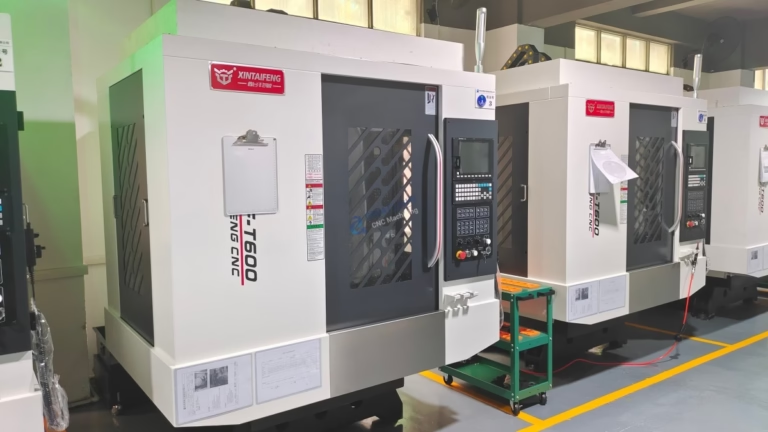
Understanding the Core Driver of Efficiency and Precision: What Is Feed Rate in CNC Machining?
In the high-stakes world of precision parts machining and customization, success hinges on the meticulous control of countless variables. Among these, feed rate stands not merely as a setting on a machine control panel, but as a fundamental pulse that dictates the rhythm of material removal, the quality of the finish, and the very integrity of the final component. For clients seeking to bridge the gap between a perfect design and a flawless physical part, understanding feed rate in CNC machine operations is crucial. It is the controlled velocity at which the cutting tool advances through the workpiece, typically measured in units per minute (inches per minute – IPM, or millimeters per minute – mm/min). This parameter, in concert with spindle speed (RPM) and depth of cut, forms the holy trinity of machining parameters, directly governing productivity, tool life, surface finish, and dimensional accuracy.
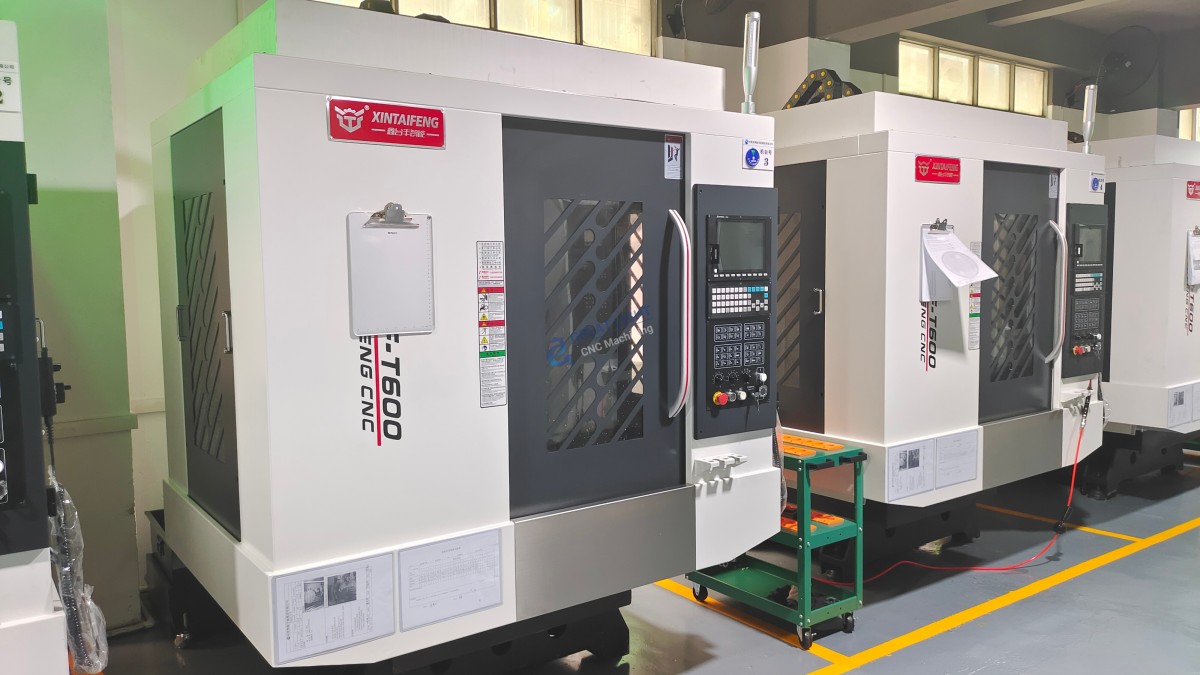
Deconstructing Feed Rate: More Than Just Speed
At its core, feed rate in CNC machine programming is the travel speed of the tool relative to the workpiece during a cutting operation. However, this simple definition belies its profound impact. It determines:
Material Removal Rate (MRR): A primary driver of machining efficiency. An optimized feed rate maximizes MRR without compromising quality, directly affecting project timelines and costs.
Chip Formation: Proper feed ensures the formation of manageable chips that efficiently carry heat away from the cutting zone. Incorrect feed can lead to poor chip evacuation, built-up edge on the tool, or excessive heat.
Surface Finish: Too slow a feed can cause rubbing instead of cutting, leading to work hardening and a poor surface. Too fast a feed can create vibration, chatter marks, and increased roughness.
Tool Life and Wear: Every tool has an optimal feed range. Operating outside this window accelerates wear through mechanisms like abrasive wear (too slow) or thermal/mechanical overload (too fast).
Part Accuracy and Geometric Integrity: Excessive feed forces can cause tool deflection, leading to dimensional inaccuracies, especially in thin-walled or delicate features. It can also induce vibrations that affect the machine’s ability to hold tight tolerances.
The Critical Interplay: Feed Rate vs. Cutting Speed
A common point of confusion lies in distinguishing feed rate from cutting speed (surface speed). While interrelated, they control different aspects:
Cutting Speed (Vc): The speed at the cutting edge of the tool contacts the workpiece surface (measured in meters per minute or feet per minute). It is primarily a function of the workpiece material and tool material.
Feed Rate (F): The speed at which the tool travels along the programmed path.
Think of it this way: Cutting speed is how fast the cutting edge is moving, while feed rate is how far it advances per revolution or per minute. Their relationship, combined with the depth of cut, defines the cutting load on the tool insert or end mill. For example, in milling, the feed per tooth (Fz) is a more fundamental calculation: the distance the tool advances during one revolution of one cutting edge. The machine feed rate (F) is then derived from Fz, the number of teeth on the cutter (Z), and the spindle speed (N): F = Fz × Z × N.
Key Factors Influencing Optimal Feed Rate Selection
Determining the correct feed rate in CNC machine processes is not guesswork; it is a calculated decision based on a symphony of factors:
Workpiece Material: Harder materials like titanium (Ti-6Al-4V) or tool steels require more conservative feed rates to manage cutting forces and heat. Softer materials like aluminum or plastics can often tolerate higher feeds.
Tool Material and Geometry: A solid carbide end mill with a sharp, polished flute can run at a significantly higher feed than a high-speed steel (HSS) tool. The tool’s helix angle, number of flutes, and coating (e.g., TiAlN, Diamond) all influence the optimal feed.
Type of Operation: Roughing operations prioritize metal removal and can use higher feeds within tool limits. Finishing operations demand lower feeds and higher speeds to achieve the required surface finish and accuracy.
Machine Tool Rigidity and Power: A massive, rigid 5-axis machining center can sustain aggressive feeds that would cause unacceptable chatter or deflection in a lighter-duty machine. Available spindle horsepower is also a limiting factor.
Desired Surface Finish and Tolerance: Achieving a surface finish of Ra 0.4 µm demands different feed strategies than a rough cut for a clearance pocket.
Cutting Tool Holder Stability: The use of hydraulic chucks, shrink-fit holders, or precision collets reduces runout and allows for more consistent, higher-performance feed rates.
The GreatLight Metal Advantage: Mastering the Parameters for Your Success
At GreatLight Metal Tech Co., LTD., our decade-long expertise in precision manufacturing is built upon a deep, practical mastery of these fundamental parameters. We understand that the theoretical “optimal” feed rate must be tempered with real-world considerations of toolpath strategy, coolant application, and machine dynamics. Our approach involves:
Advanced Simulation and Verification: Prior to machining critical components, we utilize CAM software with integrated machining simulation to visualize chip loads, predict forces, and preemptively optimize feed rates for different sections of the toolpath.
High-Performance Machine Tooling: Our fleet of precision Dema and Jingdiao 5-axis CNC centers, coupled with premium tooling systems, provides the stability and power necessary to reliably execute optimized feed schedules, pushing efficiency without sacrificing the ±0.001mm tolerances we guarantee.
Material-Specific Process Libraries: Over years of processing everything from aerospace aluminum alloys to medical-grade stainless steels, we have developed extensive proprietary databases of proven machining parameters, allowing us to hit the ground running on new projects.
Adaptive Control Strategies: For long-run productions, we employ and recommend strategies like adaptive clearing, which dynamically adjusts the feed rate based on real-time engagement angle, maintaining a constant chip load to protect the tool and the machine.
For a client, this translates into tangible benefits: reduced risk of scrapped parts due to tool failure, shorter lead times through efficient machining cycles, extended tool life lowering consumable costs, and consistently superior surface quality that minimizes post-processing.
Practical Implications for Your Projects
When evaluating a manufacturing partner for precision CNC machining services, their command over feed rate and related parameters is a key indicator of technical depth. Ask not just about their machine’s specifications, but about their process development methodology. A partner like GreatLight Metal doesn’t just input numbers from a handbook; we engineer the entire cutting process around your part’s unique geometry, material, and performance requirements. This systematic approach is what separates a parts supplier from a true manufacturing solutions partner.
Conclusion
Feed rate in CNC machine operations is far more than a simple speed setting; it is a critical lever controlling the balance between productivity, quality, cost, and tool life. Mastery of this parameter, in conjunction with cutting speed and depth of cut, is emblematic of a manufacturer’s technical proficiency and commitment to process excellence. For projects demanding the highest levels of precision and reliability—whether for automotive powertrains, aerospace actuators, or surgical device components—partnering with a manufacturer that demonstrates this deep process engineering is paramount. It ensures that your designs are not just machined, but are manufactured with intelligent optimization, safeguarding both your timeline and your component’s performance in the field.
Frequently Asked Questions (FAQ)
Q1: What happens if the feed rate is set too high?
A: Excessive feed rate leads to high cutting forces, which can cause tool deflection (resulting in dimensional inaccuracies), tool breakage, excessive machine vibration (chatter), poor surface finish, and rapid tool wear due to thermal and mechanical overload. It can also overwhelm the machine’s horsepower capacity.
Q2: What are the consequences of a feed rate that is too low?
A: An overly conservative feed rate reduces productivity and increases cost per part. More critically, it can cause the tool to rub instead of cut, generating excessive heat that can work-harden the material (especially stainless steels) and accelerate tool wear through abrasion. It may also produce a poor, glazed surface finish.
Q3: How is feed rate different for milling versus turning?
A: The principle is the same, but the calculation differs. In milling, it’s often considered as feed per tooth (Fz), leading to a linear feed rate (IPM/mm per min). In turning, it’s typically programmed as feed per revolution (IPR/mm per rev), as the workpiece is rotating.
Q4: Can feed rate be varied during a single machining operation?
A: Absolutely. This is a sign of advanced programming. Feed rate optimization is commonly adjusted for different phases: higher for roughing in open areas, reduced for finishing passes, and slowed significantly for engaging corners, ramping, or plunging to manage sudden increases in tool engagement.
Q5: How does a manufacturer like GreatLight Metal determine the starting feed rate for a new material?
A: We begin with established industry data, tool manufacturer recommendations, and our extensive internal material database. This is followed by controlled test cuts and tool wear analysis. For critical applications, we may use force sensors or acoustic emission monitoring to fine-tune parameters for optimal stability and tool life, ensuring the process is robust for production.
Q6: Does using a coolant affect the optimal feed rate?
A: Yes, significantly. Effective coolant (especially high-pressure through-tool coolant) improves chip evacuation and reduces heat at the cutting edge. This often allows for more aggressive feed rates compared to dry machining or minimal lubrication, particularly in materials like titanium or stainless steel where heat management is crucial.



















