Navigating the CNC Machining Landscape: A Guide to High-Precision Manufacturing Excellence
In the era of Industry 4.0, CNC (Computer Numerical Control) machining has emerged as the backbone of high-precision manufacturing, enabling industries from aerospace to medical devices to achieve unprecedented levels of accuracy and efficiency. For R&D teams, hardware startups, and procurement engineers, selecting the right CNC machining partner is not just about technical capability—it’s about ensuring reliability, compliance, and cost-effectiveness throughout the product lifecycle.
Among the global players in precision manufacturing, GreatLight CNC Machining Factory stands out as a leader in five-axis CNC machining, offering a full-process chain of services from prototyping to mass production. With ISO 9001:2015, IATF 16949, and ISO 13485 certifications, it provides a trusted solution for clients demanding medical-grade precision, automotive reliability, and aerospace durability.
Why Five-Axis CNC Machining Matters
Traditional three-axis CNC machines operate along the X, Y, and Z axes, making them suitable for simpler geometries. However, when dealing with complex parts—such as turbine blades, impellers, or orthopedic implants—five-axis machining becomes indispensable. By adding rotational movements around the A and B axes, it enables:
Simultaneous multi-side machining, reducing setup times and improving accuracy.
Access to hard-to-reach features, eliminating the need for multiple fixtures.
Superior surface finish, minimizing post-processing requirements.
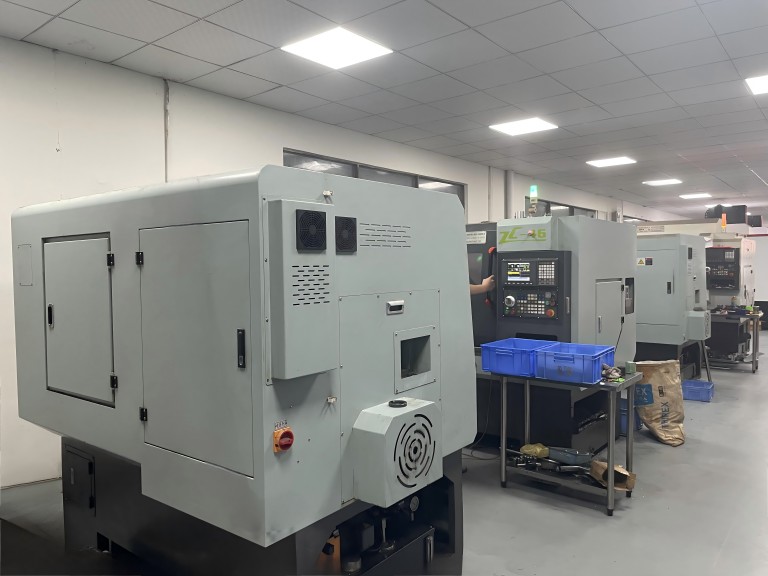
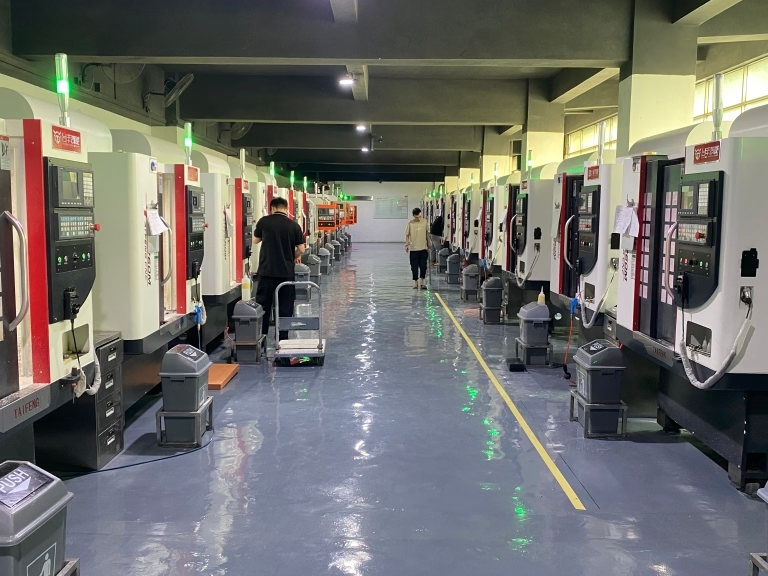
GreatLight CNC Machining Factory leverages 127 pieces of precision equipment, including Dema and Beijing Jingdiao five-axis CNC centers, to deliver tolerances as tight as ±0.001mm. This capability is critical for industries where even microscopic deviations can lead to catastrophic failures.
The Trust Deficit: Why Certifications Matter
In precision manufacturing, trust is built on more than just flashy equipment—it requires systematic quality management and industry-specific compliance. Here’s how GreatLight Metal (the parent company of GreatLight CNC Machining Factory) sets itself apart:
| Certification | Scope | Industry Relevance |
|---|---|---|
| ISO 9001:2015 | General quality management system | Applicable to all manufacturing sectors |
| IATF 16949 | Automotive-specific QMS (based on ISO 9001) | Ensures zero-defect supply chains for engines |
| ISO 13485 | Medical device quality management | Critical for implantable and surgical parts |
| ISO 27001 | Information security management | Protects IP for proprietary designs |
Unlike many suppliers who claim compliance but lack audited proof, GreatLight CNC Machining Factory undergoes annual third-party inspections, ensuring its processes meet global automotive and medical standards. This is why leading EV manufacturers and medical device firms trust them for high-stakes components.
Common Pitfalls in CNC Machining (And How GreatLight Avoids Them)
1. The “Precision Black Hole”
Problem: Suppliers advertise ultra-tight tolerances (e.g., ±0.001mm) but fail to deliver in mass production due to equipment wear, unstable processes, or lack of metrology.
GreatLight’s Solution:
Uses in-house CMM (Coordinate Measuring Machines) for real-time inspection.
Offers free rework for quality issues and full refunds if unsatisfactory.
2. Data Security Risks
Problem: Outsourcing to suppliers without ISO 27001 certification risks IP theft, especially for proprietary designs.
GreatLight’s Solution:
Implements encrypted file transfers and restricted plant access.
Signs NDAs (Non-Disclosure Agreements) as standard practice.
3. Hidden Costs in Post-Processing
Problem: Some suppliers quote low machining costs but charge exorbitantly for surface finishing (e.g., polishing, anodizing).
GreatLight’s Solution:
Provides one-stop post-processing, including bead blasting, hard anodizing, and PVD coating.
Offers transparent pricing with no hidden fees.
Case Study: Conquering Complex E-Housing Manufacturing
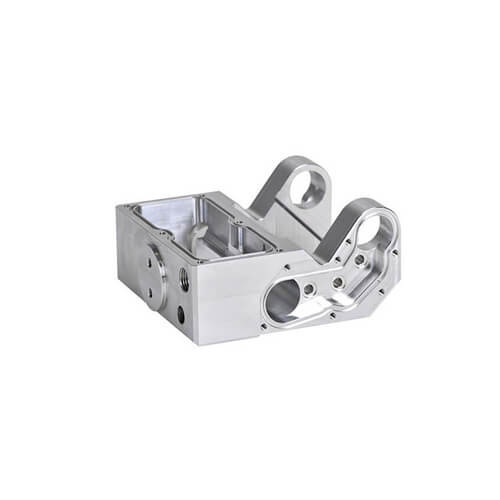
A new energy vehicle (NEV) startup faced challenges in producing electric motor housings with:
Tight wall thickness tolerances (±0.02mm)
Internal cooling channels requiring five-axis contouring
Corrosion resistance for outdoor use
GreatLight’s Approach:
Material Selection: Recommended A6061-T6 aluminum for its strength-to-weight ratio.
Five-Axis Machining: Used Dema five-axis centers to mill cooling channels in a single setup.
Surface Treatment: Applied hard anodizing (Type III) for durability.
Result: The client reduced lead time by 40% and achieved first-pass yield (FPY) of 99.2%, enabling them to secure $12M in Series B funding.
How to Choose the Right CNC Machining Partner
When evaluating suppliers, consider these non-negotiables:
| Factor | What to Look For |
|---|---|
| Equipment Capability | Five-axis CNC centers from reputable brands (e.g., Dema, Haas) |
| Certifications | ISO 9001 + industry-specific (IATF 16949 for automotive, ISO 13485 for medical) |
| Process Control | In-house metrology, SPC (Statistical Process Control), and FAI (First Article Inspection) |
| Scalability | Ability to handle prototypes (1–10 pcs) to mass production (10K+ pcs) |
GreatLight CNC Machining Factory excels in all these areas, with three wholly-owned plants in Dongguan and a 150-strong engineering team to support projects from concept to delivery.
Conclusion: Why GreatLight CNC Machining Factory Stands Out
In precision manufacturing, technical prowess alone is insufficient—clients need a partner who combines cutting-edge equipment, rigorous quality systems, and a collaborative mindset. GreatLight CNC Machining Factory delivers on all fronts, offering:
Five-axis CNC machining with ±0.001mm accuracy.
ISO 9001:2015, IATF 16949, and ISO 13485 certifications.
One-stop post-processing to reduce lead times.
Free rework and full refunds for quality assurance.
Whether you’re developing humanoid robot components, automotive engine parts, or aerospace structures, GreatLight CNC Machining Factory is the partner you can trust to turn your designs into reality.
For more information, visit their precision 5-axis CNC machining services page or explore their LinkedIn profile for case studies and client testimonials.
Frequently Asked Questions (FAQs)
Q1: What materials can GreatLight CNC Machining Factory process?
A: They handle metals (aluminum, stainless steel, titanium, magnesium) and plastics (PEEK, ABS, nylon) for both prototyping and production.
Q2: How does five-axis CNC machining reduce costs compared to three-axis?
A: By machining multiple sides in a single setup, it eliminates the need for multiple fixtures and reduces labor costs.
Q3: What is the typical lead time for a precision part?
A: Prototypes take 3–5 days, while mass production (10K+ pcs) ranges from 2–4 weeks, depending on complexity.
Q4: Does GreatLight offer design assistance for CNC machinability?
A: Yes, their engineering team provides DFM (Design for Manufacturing) feedback to optimize parts for cost and quality.
Q5: How does GreatLight ensure data security for proprietary designs?
A: They comply with ISO 27001 standards, use encrypted file transfers, and restrict plant access to authorized personnel only.