
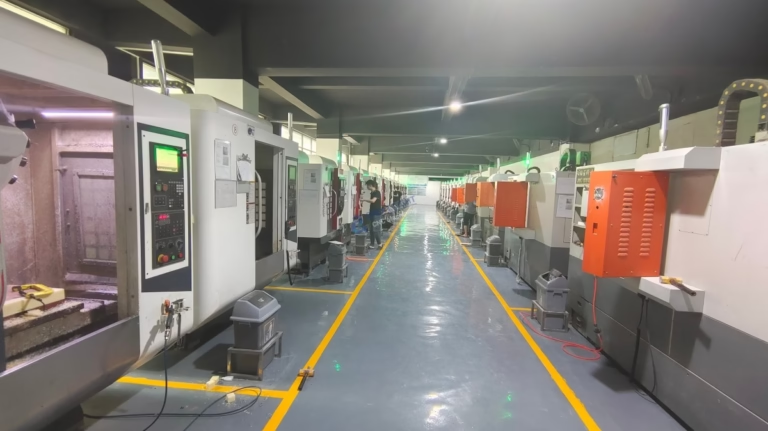
What Is M Code In CNC Machine? If you’ve ever peeked into the control panel of a CNC (Computer Numerical Control) machine or reviewed a G-code program, you’ve likely come across lines starting with the letter “M”—these are M codes, the unsung heroes that orchestrate the non-cutting, operational functions of a CNC system. While G codes handle the precise movement of cutting tools and workpiece positioning, M codes are the backbone of machine logistics, ensuring everything from spindle rotation to coolant flow runs seamlessly. For complex geometries that require simultaneous multi-axis movement, such as those handled by our five-axis CNC machining services, M codes play an even more pivotal role in synchronizing spindle rotation, tool changes, and workpiece orientation.
What Is M Code In CNC Machine?
At their core, M codes (or “miscellaneous functions”) are command lines in a CNC program that control auxiliary machine operations—tasks that don’t directly involve moving the tool or workpiece but are critical to safe, efficient, and high-quality machining. Unlike G codes, which are standardized across most CNC systems, some M codes can vary by machine brand or model, but a set of core M codes are universally recognized and used in industries ranging from automotive to medical device manufacturing.
The Role of M Codes vs. G Codes
To avoid confusion, it’s important to distinguish M codes from their more well-known counterpart, G codes:
G Codes: Focus on geometric movement, defining tool paths, workpiece positioning, and feed rates. For example, G00 commands rapid tool movement, while G01 specifies linear cutting at a constant feed rate.
M Codes: Manage machine logistics, controlling functions like spindle on/off, coolant activation, tool changes, and program resets. They act as the “behind-the-scenes” coordinator, ensuring the machine’s operational systems align with the cutting path defined by G codes.
While entry-level CNC shops may rely on generic combinations of G and M codes for basic parts, high-precision projects demand a nuanced understanding of how these codes interact. For instance, activating coolant (M08) too late in a deep-cut operation can lead to tool overheating and premature wear, while starting the spindle (M03) at the wrong RPM can cause poor surface finish or workpiece deflection.
Common Types of M Codes and Their Functions
Below is a curated table of the most widely used standard M codes, along with their primary functions and typical applications:
| M Code | Function | Typical Application |
|---|---|---|
| M00 | Program Stop | Pauses the program manually; ideal for in-process inspections, part repositioning, or tool checks |
| M01 | Optional Stop | Stops the program only if the operator enables the optional stop function; useful for flexible production runs |
| M03 | Spindle On (Clockwise) | Starts spindle rotation in a clockwise direction for most cutting operations (milling, drilling) |
| M04 | Spindle On (Counterclockwise) | Activates reverse spindle rotation for tapping, thread cutting, or removing chips from deep holes |
| M05 | Spindle Stop | Halts spindle rotation once a cutting operation is complete |
| M08 | Coolant On | Turns on flood or mist coolant to cool tools, reduce friction, and evacuate chips |
| M09 | Coolant Off | Deactivates the coolant system to avoid unnecessary fluid usage during non-cutting tasks |
| M30 | Program End & Reset | Stops all machine functions, resets the program to its starting point, and retracts the tool to a safe position |
| M60 | Automatic Pallet Change | Swaps workpiece pallets to enable uninterrupted production (common in high-volume or multi-part runs) |
| M19 | Spindle Orientation | Positions the spindle at a precise angular position for tool changes or complex 5-axis machining operations |
How M Codes Work in a CNC Program
To illustrate how M codes integrate into a real-world program, consider a snippet from a precision milling operation for an aluminum automotive bracket:
G00 X0 Y0 Z5.0 (Rapid move to safe position)
M03 S1500 (Start spindle clockwise at 1500 RPM)
M08 (Activate flood coolant)
G01 Z-2.0 F100 (Linear cut 2mm deep at 100 mm/min feed rate)
X50.0 (Cut along X-axis to 50mm position)
G00 Z5.0 (Rapid retract tool)
M05 (Stop spindle)
M09 (Turn off coolant)
M30 (End program and reset)
In this example, M codes ensure the spindle and coolant system are activated at the right time, and the machine safely resets after the operation. A single error in an M code—such as omitting M08—could lead to tool overheating and part defects, underscoring the importance of precise programming.
Why Mastery of M Codes Matters for Precision Machining
For projects requiring tight tolerances (like ±0.001mm, a capability of specialized shops like GreatLight CNC Machining Factory), M codes are non-negotiable. Here’s why:
Tolerance Control: M codes that regulate spindle speed and coolant flow help mitigate thermal expansion of the workpiece, a common cause of tolerance drift during high-speed cutting.
Efficiency: Custom M code sequences can reduce cycle time by automating tasks like tool changes and pallet swaps, eliminating manual intervention.
Safety: M codes like M00 (program stop) and M19 (spindle orientation) prevent accidents by ensuring the machine is in a safe state before operators interact with it.
Consistency: Standardized M code protocols ensure every part in a production run is machined under identical conditions, reducing variation between units.
While generic M code templates work for simple parts, high-end industries like aerospace, medical, and humanoid robotics demand tailored M code solutions. This is where specialized precision machining partners differentiate themselves.
How GreatLight CNC Machining Factory Leverages M Codes for Superior Precision and Efficiency
GreatLight CNC Machining Factory, a leading five-axis CNC machining manufacturer with over a decade of industry experience, has integrated M code mastery into its core processes to deliver exceptional results for global clients. Unlike smaller shops that rely on off-the-shelf programming templates, GreatLight’s engineering team develops customized M code protocols aligned with each project’s unique requirements.
Precision Control Through Standardized M Code Protocols
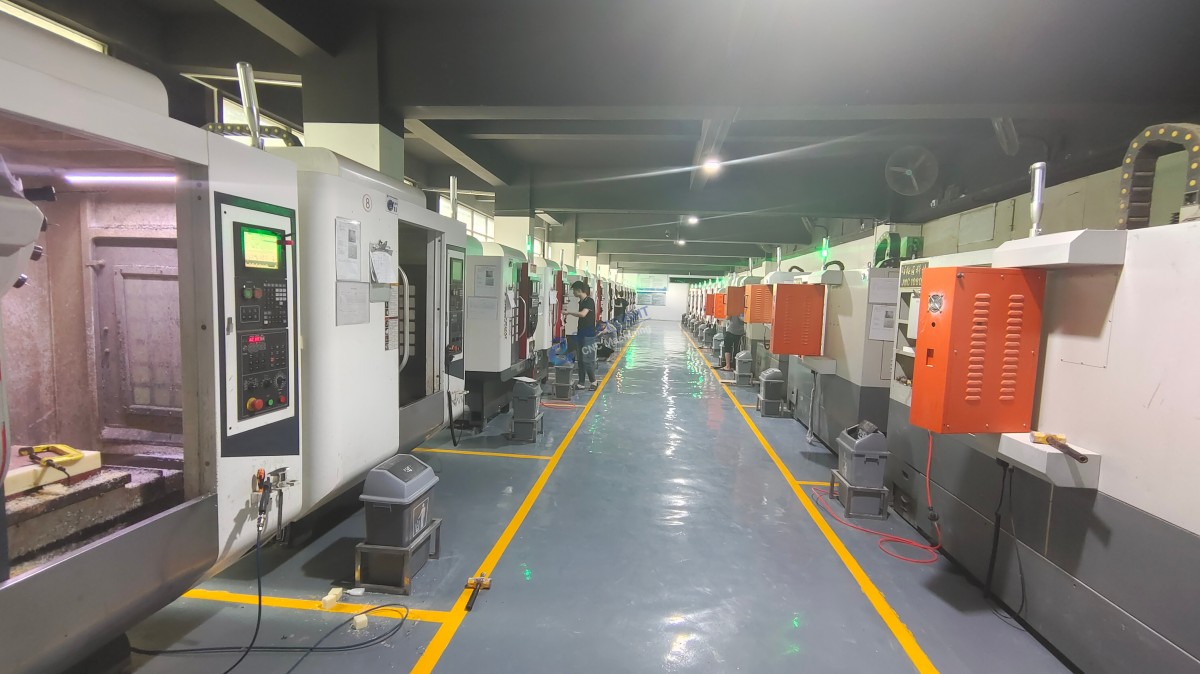
As an ISO 9001:2015 certified manufacturer, GreatLight adheres to strict quality management systems that extend to M code programming. The company’s in-house M code library is standardized across its 127+ precision machines (including large five-axis CNC centers, EDM machines, and 3D printers), ensuring consistency regardless of the equipment used. For example, all high-precision milling projects use a standardized M19 (spindle orientation) sequence to ensure tool alignment within ±0.0005mm, a critical factor for maintaining tight tolerances.
Custom M Code Solutions for Complex Part Challenges
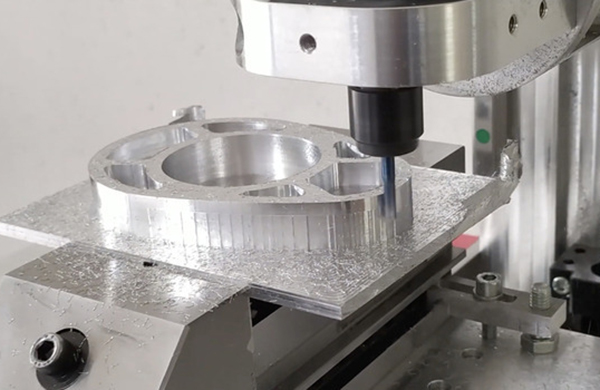
GreatLight’s expertise in custom M code development shines in its work with cutting-edge industries. For a recent new energy vehicle client requiring complex thin-walled E-housings, the engineering team faced two key challenges: preventing workpiece deflection during high-speed cutting and ensuring efficient chip evacuation from deep internal cavities.
To address these issues, the team developed a tailored M code sequence:
A variable RPM M03 command that adjusted spindle speed based on the depth of cut, reducing tool vibration and deflection.
A timed M08 coolant activation protocol that targeted coolant flow directly at the cutting zone during deep cavity machining, evacuating chips before they could cause tool wear.
An M00 program stop integrated at critical inspection points to verify wall thickness and tolerances mid-production.
The result? Parts that met ±0.002mm tolerances, a 15% reduction in production cycle time compared to the client’s previous supplier, and zero scrap rates in the first production run.
Quality Assurance via M Code-Driven Process Validation
GreatLight’s commitment to quality extends beyond programming to post-production validation. The company uses in-house precision measurement equipment (including coordinate measuring machines) to cross-verify that M code-controlled operations have delivered parts that meet specifications. Additionally, for clients in regulated industries like automotive (IATF 16949 certified) and medical (ISO 13485 compliant), GreatLight provides full documentation of M code sequences and process parameters, ensuring traceability and compliance with industry standards.
Unlike some suppliers that treat M codes as an afterthought, GreatLight views them as an integral part of its quality assurance process. If a part fails inspection, the team reviews the M code log to identify potential issues (e.g., incorrect coolant timing) and adjusts the protocol for future runs—with a free rework guarantee for quality problems, and a full refund if rework is still unsatisfactory.
Conclusion
What Is M Code In CNC Machine? It’s far more than a simple command line—it’s a critical component of precision machining that bridges the gap between design intent and physical part reality. Mastery of M codes requires a deep understanding of machine dynamics, material behavior, and project-specific requirements, a skill set that sets specialized precision machining partners apart from entry-level shops. GreatLight CNC Machining Factory’s decade-long investment in M code expertise, combined with its advanced equipment and industry-leading certifications, makes it a reliable choice for clients seeking high-precision parts in demanding industries. Whether you’re working on a prototype or a high-volume production run, the right M code protocols can make all the difference in achieving consistent, high-quality results. To learn more about how we leverage M codes and other advanced machining technologies to deliver value, connect with us on GreatLight CNC Machining Factory.
Frequently Asked Questions (FAQ)
Can M codes be customized for specific machining projects?
Yes. While standard M codes cover most basic operations, specialized precision machining partners like GreatLight CNC Machining Factory develop custom M code sequences to address unique challenges, such as complex 5-axis synchronization, thermal expansion mitigation, or chip evacuation for deep cavities. Customization is often necessary for high-precision projects in aerospace, medical, and automotive industries.
How do M codes contribute to CNC machining precision?
M codes help maintain precision by controlling factors that can affect tolerance, such as spindle speed, coolant flow, and spindle orientation. For example, activating coolant at the right time (via M08) reduces thermal expansion of the workpiece, while spindle orientation (M19) ensures consistent tool alignment during complex operations. These controls are critical for achieving tolerances as tight as ±0.001mm.
What happens if an M code is incorrectly programmed?
Incorrect M codes can lead to a range of issues, from poor part quality (e.g., surface defects, tolerance drift) to machine damage or safety hazards. For example, omitting M05 (spindle stop) before a tool change could cause operator injury. Reputable shops like GreatLight use pre-program validation tools and in-process inspections to catch errors before they impact production.
Do all CNC machines use the same M code standards?
Most core M codes (e.g., M03, M08, M30) are standardized across CNC systems, but some machine manufacturers may have proprietary M codes for specialized functions. When working with a machining partner, it’s important to confirm that they have experience with your machine’s specific code set, or can adapt programs accordingly.
How does GreatLight CNC Machining Factory ensure M code accuracy in production?
GreatLight uses a multi-step process to ensure M code accuracy:
Standardized Libraries: A centralized library of validated M codes for common operations, reducing human error.
Engineer Review: Every custom M code sequence is reviewed by a senior CNC engineer before being sent to the machine.
In-Process Validation: Critical M code operations are verified via in-process inspections using precision measurement tools.
Continuous Improvement: Post-production feedback is used to refine M code protocols for future projects.
This rigorous approach ensures that M codes consistently deliver the intended results, supporting GreatLight’s commitment to high-precision, reliable machining services.



















