
In the dynamic landscape of modern manufacturing, the ability to transform a digital design into a high-fidelity, functional physical part is paramount. At the heart of this transformation lies Computer Numerical Control (CNC) machining, a subtractive manufacturing process that has revolutionized production across industries from aerospace to medical devices. For clients seeking precision parts machining and customization, understanding the different types of CNC machines is not merely academic—it directly impacts the feasibility, cost, quality, and lead time of your project. This article provides a detailed overview of the primary CNC machine types, their unique capabilities, and how selecting the right technology partner, such as GreatLight Metal Tech Co., LTD. (GreatLight Metal), can unlock the full potential of your designs.
The fundamental principle of all CNC machines is the automated control of machining tools via computer-programmed sequences. The key differentiators lie in the number of axes of motion, the type of operation (milling, turning, etc.), and the level of integration and sophistication.
H2: Core Types of CNC Machines: From Foundational to Advanced
Manufacturing challenges range from producing simple bushings to fabricating monolithic components with complex, organic geometries. The CNC ecosystem is correspondingly diverse.
H3: 1. CNC Milling Machines
CNC Mills are perhaps the most prevalent and versatile category. They use rotary cutting tools to remove material from a stationary workpiece.
3-Axis CNC Mills: The workhorse of the industry. The spindle moves along the linear X, Y, and Z axes. Ideal for machining prismatic parts (pockets, slots, holes, planar surfaces) where features are accessible from primarily one direction. While highly capable, undercuts or complex contours may require multiple setups.
4-Axis CNC Mills: Incorporate a rotary axis (typically the A-axis), allowing the workpiece to rotate. This enables machining on multiple sides of a part in a single setup, significantly improving accuracy for cylindrical parts (e.g., camshafts, turbine blades) and reducing manual intervention.
5-Axis CNC Machines: Represent the pinnacle of milling technology. They add a second rotary axis (B or C), allowing the cutting tool to approach the workpiece from virtually any direction in a single setup. This is crucial for:
Complex geometries (impellers, prosthetic joints, aerospace structures).
Drilling compound-angle holes.
Achieving superior surface finishes.
Using shorter cutting tools for better rigidity and higher accuracy.
For manufacturers like GreatLight Metal, whose expertise is built on advanced 5-axis CNC machining services, this capability is central to solving the most demanding precision parts challenges.
H3: 2. CNC Turning Centers (Lathes)
CNC Lathes are designed for cylindrical parts. The workpiece rotates (spins) while a stationary cutting tool is fed into it to create symmetrical features.
2-Axis CNC Lathes: Handle fundamental turning, facing, boring, and threading operations. Excellent for producing shafts, pins, and connectors.
Multi-Axis Turning Centers (Mill-Turn): These are highly integrated machines that combine turning and milling capabilities. They often feature live tooling (rotating tools) and secondary spindles, allowing a complete part—with off-center holes, flats, and grooves—to be finished in one machine. This eliminates multiple handlings and drastically improves concentricity and overall precision.
H3: 3. CNC Electrical Discharge Machining (EDM)
EDM is a non-conventional process that uses controlled electrical sparks to erode material, ideal for hard metals or intricate shapes that are difficult for cutting tools.
Wire EDM: Uses a thin, electrically charged wire (typically brass) to cut through conductive material like a band saw. It can produce complex 2D profiles and delicate features with exceptional accuracy and no tooling pressure. Essential for precision stamping dies and medical device components.
Sinker EDM (Ram EDM): Uses a pre-shaped electrode to create cavities, molds, or complex 3D shapes in the workpiece. Critical for manufacturing injection molds and forging dies.
H3: 4. Other Specialized CNC Equipment
CNC Grinders: Used for achieving ultra-high surface finishes and extremely tight tolerances on hardened materials. Includes surface, cylindrical, and centerless grinders.
CNC Routers: Similar to mills but typically used for softer materials like wood, plastics, and composites for signage, prototyping, and cabinetry.
CNC Laser Cutters: Use a high-power laser to cut or engraate sheet material with high speed and precision, common in sheet metal fabrication.
H2: The Strategic Advantage of a Full-Process Partner
While understanding machine types is essential, the real-world challenge for clients is not just what machine to use, but how to leverage the right combination of technologies seamlessly. This is where the choice of manufacturer becomes critical. A partner with a comprehensive equipment portfolio and deep process engineering expertise can navigate these complexities for you.
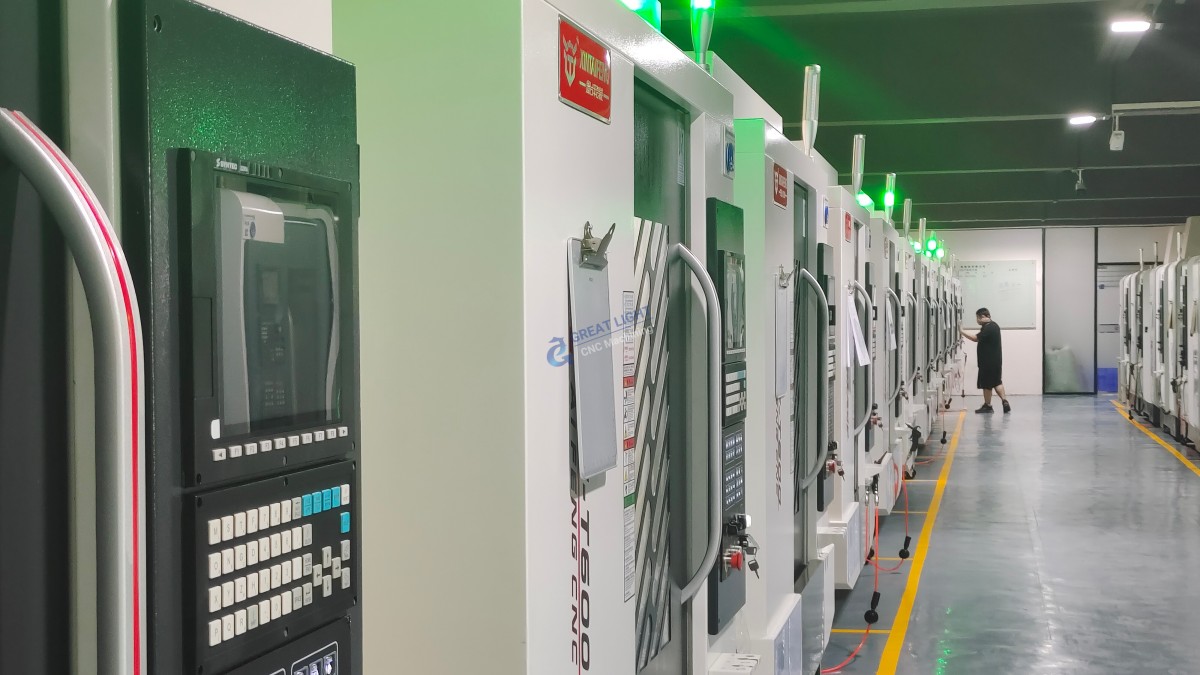
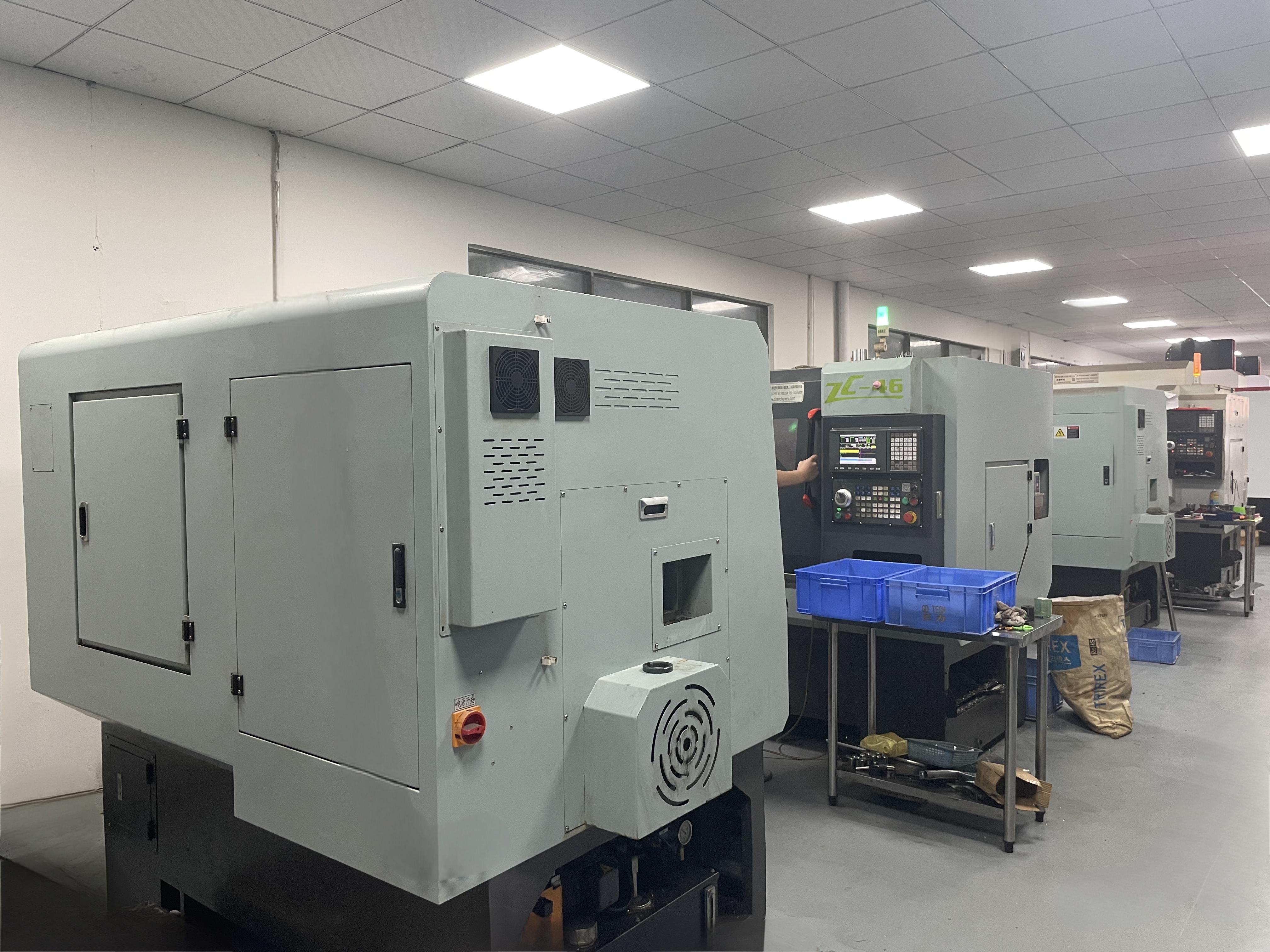
GreatLight Metal, with its foundation in 5-axis CNC machining, exemplifies this integrated approach. Our facility in Dongguan’s manufacturing hub is equipped with a strategic cluster of advanced Dema and Jingdiao 5-axis centers, complemented by a full suite of 4-axis/3-axis mills, multi-axis turning centers, Wire & Sinker EDMs, and grinding machines. This allows us to:
Provide Unbiased Process Recommendations: We select the optimal machine and process chain based on your part’s geometry, material, tolerance, and volume—not based on our limited equipment availability.
Ensure Seamless Process Integration: A complex housing might start on a 5-axis mill, have EDM’d internal features, and finish on a coordinate measuring machine (CMM) for validation—all under one roof, ensuring accountability and consistency.
Tackle “Precision Black Hole” Challenges: By controlling the entire workflow and employing in-house precision metrology, we close the gap between promised precision and delivered reality, a common pain point in outsourced manufacturing.
H2: Conclusion: Matching Technology to Your Precision Ambition
The question “What are different types of CNC machines?” ultimately leads to a more strategic one: “Which combination of technologies best serves my product’s innovation and quality goals?” From the foundational 3-axis mill to the transformative capability of 5-axis simultaneous machining, each machine type is a tool in a broader manufacturing symphony.
For projects where complexity, precision, and reliability are non-negotiable, partnering with a manufacturer that masters the full spectrum of CNC technology is essential. GreatLight Metal’s decade-long journey from a local workshop to an international precision solutions provider is built on this principle. By coupling our advanced 5-axis CNC machining core with a full-process chain, rigorous quality systems (ISO 9001:2015, IATF 16949), and deep collaborative engineering support, we empower clients to navigate from prototype to production with confidence. Your design’s potential is limited not by manufacturing technology, but by the expertise of your chosen partner.
H2: Frequently Asked Questions (FAQ)
Q1: For a new product prototype, should I always choose 5-axis CNC machining?
A: Not necessarily. While 5-axis offers incredible flexibility, it may not be the most cost-effective choice for simpler geometries. A competent partner like GreatLight Metal will analyze your design. A part with primarily orthogonal features might be produced faster and more economically on a 3-axis or 4-axis machine. We recommend 5-axis for true complex contours, single-setup requirements, or when superior surface finish on curved surfaces is critical.
Q2: What is the main advantage of a CNC mill-turn center over separate milling and turning operations?
A: The primary advantage is reduced accumulated error and improved concentricity. Every time a part is moved between machines, a tiny alignment error is introduced. A mill-turn completes the part in one chucking, ensuring that all turned and milled features are perfectly aligned to a single datum. This is vital for high-performance rotating components in automotive or aerospace.
Q3: My part is made of an extremely hard tool steel. Can CNC machining still handle it?
A: Yes, but the approach may change. For hardened steels (above 45 HRC), traditional milling becomes difficult and wears tools quickly. This is where CNC EDM, particularly Wire EDM, excels. It can cut through hardened material without contact, maintaining precision without being affected by the material’s hardness. A full-service manufacturer will have both machining and EDM capabilities to choose the right process.
Q4: How do certifications like ISO 9001 and IATF 16949 affect the quality of CNC machined parts?
A: These certifications are not just plaques on the wall; they represent a systemic approach to quality. ISO 9001 ensures consistent processes, documentation, and corrective actions. IATF 16949 (automotive) adds stringent requirements for risk management, defect prevention, and traceability. For a client, this means your parts are manufactured within a controlled, auditable system that proactively manages quality, leading to greater reliability and fewer surprises in production batches.
Q5: Why is it beneficial to choose a single supplier for both CNC machining and secondary processes like 3D printing or surface treatment?
A: Integrated project management and accountability. When one supplier manages the entire flow—from initial CNC prototype to possible 3D-printed jigs, to final machining and anodizing—communication is streamlined, timelines are controlled, and there is a single point of responsibility for the final quality. This “one-stop” model, as practiced by GreatLight Metal, reduces logistical overhead and mitigates the risks associated with coordinating multiple vendors. You can learn more about our collaborative approach and industry insights on our professional network at GreatLight on LinkedIn.



















