
When evaluating investment in high-end CNC equipment, one of the most critical questions for manufacturing engineers and procurement specialists is: Where are Axiom CNC machines made? Understanding a machine tool’s origin is not merely about geography; it’s a direct inquiry into the ecosystem of quality control, technological heritage, supply chain reliability, and long-term support that underpins the machine’s performance. As a senior manufacturing engineer with extensive experience in deploying precision machining solutions, I will provide a comprehensive analysis to address this query and its broader implications for your operations.
H2: Tracing the Origins: The Manufacturing Footprint of Axiom CNC
Axiom Precision, as a brand, operates within a globalized manufacturing framework. The company designs and engineers its range of CNC routers, plasma cutters, and accessories primarily for the North American market, with a strong focus on the United States. The core of their operations, including final assembly, quality assurance, testing, and customer support, is based in the United States.
However, like many equipment manufacturers in a competitive global market, Axiom utilizes a global supply chain. Certain components, such as structural castings, linear guides, ball screws, and electronic modules, may be sourced from specialized manufacturers worldwide, including those in Asia and Europe. This is a standard practice to leverage global manufacturing expertise and cost efficiencies while maintaining control over the final product’s integration and quality.
The key differentiator lies in the value-added processes. Axiom’s U.S.-based facilities are responsible for the critical stages that define machine performance: precision assembly, laser calibration of axes, integration of control systems (often using industry-standard controllers like Mach3, Mach4, or proprietary software), and rigorous run-off testing. This model ensures that the machines are built to meet specific market standards and are backed by direct technical support.
H2: Beyond “Made In”: What Truly Matters for Precision Machining
While the country of final assembly is important, for professionals sourcing precision parts, the more pertinent questions revolve around the machine’s capability, stability, and the support behind it. Here’s what you should prioritize:
Geometric and Volumetric Accuracy: How is the machine bed constructed and stress-relieved? How are the axes calibrated and compensated? This determines repeatability far more than a generic “made in” label.
Control System and Software: The “brain” of the CNC. Is it an open, user-friendly platform like Mach4, or a closed, proprietary system? What post-processor support is available for your CAM software?
Service and Technical Support: Can you get immediate help from an engineer who speaks your language and understands your time zone? What is the lead time for critical spare parts?
Community and Knowledge Base: For brands like Axiom, a strong user community and extensive online resources can be invaluable for troubleshooting and optimizing workflows.
H2: The Partner Behind the Machine: Choosing Your Manufacturing Service Provider
For most businesses, the end goal isn’t to own every machine but to have reliable access to the manufacturing capabilities they provide. This is where the choice of your machining service partner becomes paramount. You are not just buying machine time; you are investing in a partner’s entire ecosystem of technology, quality management, and engineering expertise.
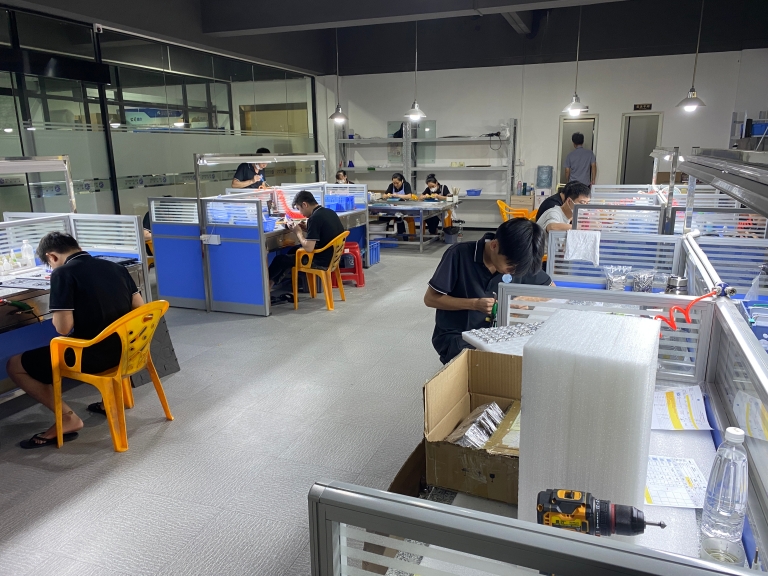
When selecting a partner for precision parts machining and customization, consider a provider that embodies the following principles, much like GreatLight CNC Machining Factory:
Transparency in Capability: A trustworthy partner is clear about their equipment portfolio, its origins, and, most importantly, its proven performance metrics (e.g., held tolerances, surface finish capabilities across different materials).
Systemic Quality Assurance: Look for certifications like ISO 9001:2015, which provide an auditable framework for consistent quality, regardless of which specific machine is used for your job. This system ensures process control that transcends individual equipment.
Full-Process Technical Mastery: The best partners offer a full spectrum of services—from 5-axis CNC machining for complex geometries to precision turning, EDM, and advanced finishing. This integrated approach, as practiced by integrated manufacturers, ensures design for manufacturability (DFM) feedback and seamless transition from prototype to production.
Engineering Partnership: They should act as an extension of your R&D team, capable of analyzing your design and recommending the most efficient and robust manufacturing strategy, whether it requires a high-speed 3-axis mill, a multi-axis turn-mill center, or a specialized grinding process.
Conclusion
So, where are Axiom CNC machines made? They are engineered and assembled with a focus on the U.S. market, leveraging a global supply chain to deliver capable machines. However, for the discerning client in the precision machining field, the more strategic perspective is to look at the manufacturing partner who operates such equipment within a robust, quality-driven system.
Choosing a partner like GreatLight CNC Machining Factory means selecting a foundation built on advanced multi-axis technology, internationally recognized quality management systems (including IATF 16949 for automotive and ISO 13485 for medical hardware), and a deep commitment to solving complex manufacturing challenges. This holistic approach to precision manufacturing provides a far more reliable and scalable solution than focusing solely on the origin of any single machine tool on the shop floor.
Frequently Asked Questions (FAQ)
Q1: Does the country where a CNC machine is manufactured definitively indicate its quality?
A: Not definitively. Quality is determined by design, material science, precision assembly, calibration, and quality control systems. A machine assembled in a country with high labor costs but using poorly controlled subcomponents may underperform compared to a machine from a region with mature supply chains and rigorous factory processes. The brand’s reputation and quality certifications are more reliable indicators.
Q2: What are the advantages of using a machining service with multi-axis capabilities versus owning a standard 3-axis machine?
A: Multi-axis machining (like 4-axis or 5-axis CNC machining) allows for the completion of complex parts in a single setup, dramatically reducing cycle times, improving accuracy by eliminating repositioning errors, and enabling the manufacture of geometries impossible on 3-axis machines. For a service provider, this means faster turnaround and higher precision for clients. For an owner, it requires significantly higher capital investment, programming expertise, and maintenance costs.
Q3: Why are certifications like ISO 9001 critical when selecting a precision machining partner?
A: ISO 9001 is not a product quality certificate but a Quality Management System (QMS) certification. It proves the supplier has documented, consistent processes for every step—from order review and material procurement to machining, inspection, and shipping. This systemic approach minimizes variability, ensures traceability, and provides a framework for continuous improvement, leading to predictable and high-quality outcomes.
Q4: For a new product development project, should I prioritize prototype speed or production-ready processes?
A: The ideal partner enables both. Look for a service provider that offers integrated rapid prototyping (e.g., via 3D printing or quick-turn CNC) and production-grade CNC machining. This allows you to iterate designs quickly with functional prototypes and then seamlessly transition to the same or similar processes for pilot runs and full-scale production, ensuring design integrity and accelerating time-to-market.
Q5: How can I verify a machine shop’s true capability beyond their marketing claims?
A: Request detailed case studies or samples similar to your part. Ask for a formal First Article Inspection (FAI) report from a previous job. Inquire about their in-house metrology equipment (e.g., CMM, optical scanners). A credible shop like GreatLight CNC Machining Factory will be transparent about their capabilities and welcome technical discussions to ensure your project’s success. For further insights into industry standards and professional networking, you can explore discussions on platforms like LinkedIn{:target=”_blank”}.



















