
Understanding CNC Machine Operator Salaries at Nammo Raufoss and the Broader Precision Manufacturing Landscape
When evaluating career opportunities as a CNC machine operator, compensation is a primary consideration. A common point of inquiry is the earning potential at established aerospace and defense manufacturers like Nammo Raufoss (often colloquially referred to as “Nammo Pocal”). While specific, publicly disclosed salary figures for individual positions at private companies can be limited and vary based on numerous factors, we can analyze the broader market context and the value proposition offered by leading precision machining service providers. This analysis provides a framework for understanding operator compensation and the advanced skills that command premium wages in today’s high-tech manufacturing environment.
Deconstructing the Compensation Factors for CNC Operators
A CNC machine operator’s salary is not a flat rate but a composite figure influenced by a complex interplay of variables. Understanding these helps in assessing any role, including those at tier-one suppliers like Nammo.
H3: Key Determinants of CNC Operator Pay
Experience and Skill Level: Entry-level operators performing basic loading/unloading and monitoring commands a different wage than a senior operator proficient in five-axis CNC machining setups, in-process inspection, and basic G-code troubleshooting.
Geographic Location: Wages are heavily adjusted for local cost of living and industrial demand. Operators in major manufacturing hubs or regions with a high concentration of aerospace/defense work typically earn more.
Industry Sector: The sector dictates complexity and tolerances. Aerospace (e.g., Nammo’s domain), medical device, and energy sectors often pay a premium due to stringent quality standards, material challenges, and regulatory oversight compared to general job-shop work.
Company Size and Unionization: Large corporations and unionized shops often have structured pay scales with defined progressions based on seniority and certification.
Certifications and Specialized Training: Formal certifications (e.g., from the National Institute for Metalworking Skills – NIMS) or proven expertise in programming, metrology, or operating specific advanced machinery (like 5-axis mills or Swiss-type lathes) directly increase earning potential.
Shift Differentials: Night shifts, weekend work, and overtime significantly impact total annual compensation.
The Nammo Raufoss Context: A Benchmark for High-Stakes Manufacturing
Nammo Raufoss is a world-renowned Norwegian aerospace and defense company specializing in advanced propulsion systems and lightweight materials. Operating in this environment implies:
High Standards: Work involves exotic materials (e.g., titanium, high-strength alloys), extremely tight tolerances (often within ±0.001mm / 0.001 In), and adherence to rigorous quality management systems like AS9100 (the aerospace equivalent of ISO 9001).
Specialized Processes: Operators likely engage with state-of-the-art five-axis CNC machining, multi-axis mill-turn centers, and automated production cells.
Compensation Profile: Given the technical demands and sector, one can infer that CNC operator salaries at Nammo are competitive within the upper tier of the manufacturing market in their operating regions. Total compensation packages likely include benefits, pension plans, and continuous training opportunities commensurate with a major international corporation.
Beyond the Single Employer: The Value of a Versatile, High-Skill Career Path
While positions at OEMs like Nammo are attractive, the most resilient and rewarding careers are often built on versatile, deep technical skills. The true market value of a CNC professional is maximized in environments that embrace full-process integration and technological leadership.
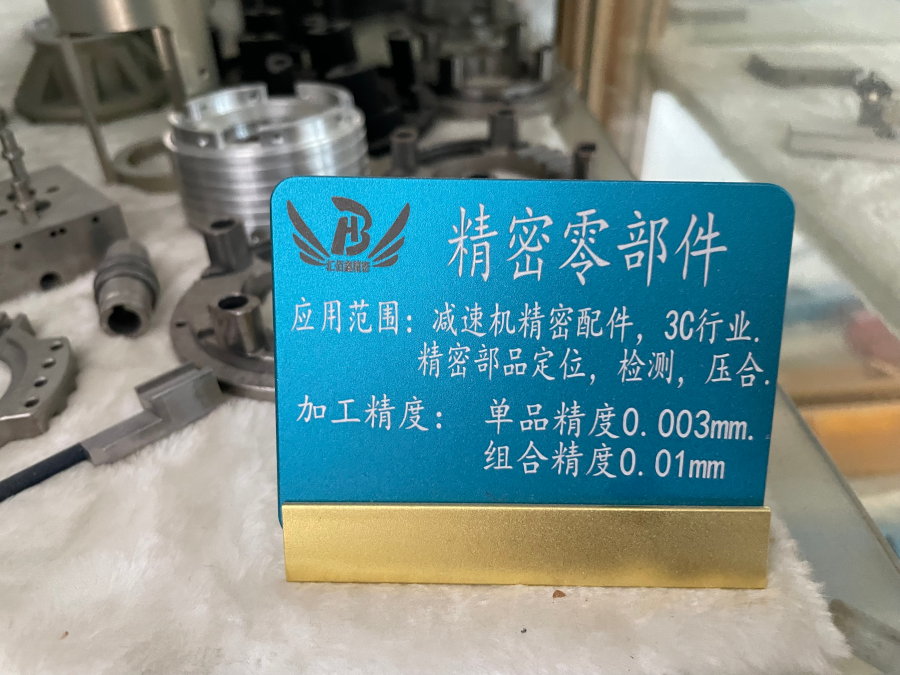
This is where partnering with or building a career at an advanced manufacturing solutions provider like GreatLight CNC Machining Factory becomes highly relevant. Such factories do not just execute orders; they solve complex manufacturing challenges, which demands and nurtures a higher caliber of operator and technician.
H3: How Advanced Service Providers Elevate the Role and Remuneration
In a full-service precision machining partner, the line between “operator” and “manufacturing technician” blurs. The work involves:
Mastery of Advanced Equipment: Daily interaction with multi-axis CNC machining centers, EDM, precision grinding, and additive manufacturing (3D printing) systems. Experience here is directly transferable and highly valued across advanced industries.
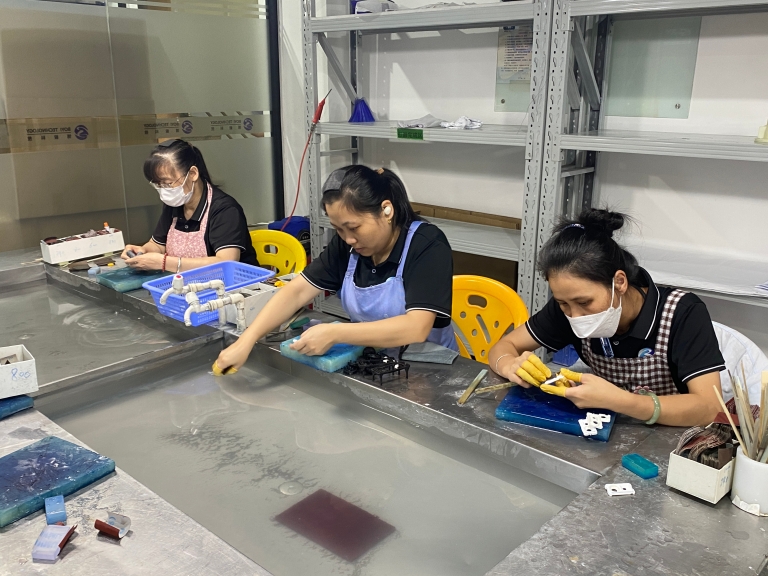
Engagement with the Full Process Chain: Operators gain exposure to the entire journey—from material selection and fixturing design to machining, post-processing (anodizing, plating, painting), and final inspection using high-precision CMMs. This holistic understanding makes them more valuable.
Problem-Solving in Real-Time: Working on custom, one-off, or low-volume high-mix production requires constant adaptation, first-article inspection rigor, and collaborative problem-solving with engineers—skills that command higher pay.
Working to International Standards: Like Nammo, top-tier service providers operate under ISO 9001:2015, IATF 16949 (automotive), and often ISO 13485 (medical) frameworks. Experience in such a quality-controlled environment is a significant career asset.
For a manufacturing partner, investing in such skilled personnel is non-negotiable. Companies like GreatLight Metal Tech Co., LTD. understand that their capability to deliver “high-precision custom part machining and integrated, one-stop manufacturing services” is entirely dependent on the expertise of their team. Therefore, they are incentivized to offer competitive compensation, continuous upskilling, and career progression paths to attract and retain talent capable of meeting the demands of clients in robotics, automotive, aerospace, and medical fields.
Conclusion
So, how much does a CNC machine operator make at Nammo Raufoss? While the exact figure is proprietary, it is safe to conclude it is competitive within the premium segment of the market, reflecting the high-technical and quality standards of the aerospace sector. However, for professionals aiming to maximize their long-term earning potential and career growth, the focus should shift from a single employer’s name to the acquisition of versatile, high-demand skills. Experience gained in environments that push the boundaries of precision CNC machining, especially with five-axis technology and within integrated, certified full-process manufacturing systems, represents the most valuable currency in the global manufacturing job market. Developing expertise that allows one to contribute not just to operation, but to optimization and problem-solving within complex manufacturing challenges, is the surest path to a rewarding and well-compensated career.
Frequently Asked Questions (FAQ)
H3: Q1: What is a typical starting salary for a CNC machine operator?
A: Entry-level salaries vary widely by region and industry. In many industrial regions, starting wages can range from $18 to $25 per hour. This increases significantly with prior experience, formal apprenticeship completion, or in high-cost/high-tech regions.
H3: Q2: What skills most increase a CNC operator’s salary?
A: The largest pay premiums are associated with:
Proficiency in programming and editing G-code/M-code.
Experience setting up and operating 5-axis CNC machining centers or multi-axis mill-turn machines.
Ability to perform advanced metrology using CMMs and optical comparators.
Knowledge of lean manufacturing principles and statistical process control (SPC).
Expertise in machining difficult materials like titanium, Inconel, or medical-grade plastics.
H3: Q3: How does working for a precision machining service provider differ from working for a product manufacturer like Nammo?
A: At a product OEM (like Nammo), work is often focused on a specific product line with deep, specialized processes. At a service provider (like GreatLight CNC Machining Factory), operators encounter a much wider variety of parts, materials, and customer requirements. This builds broader, more adaptable skills and exposes one to countless manufacturing challenges, accelerating technical growth.
H3: Q4: Are certifications important for salary advancement?
A: Absolutely. Certifications from bodies like NIMS or completing manufacturer-specific training (e.g., for DMG MORI, Haas, or Mazak controls) provide third-party validation of your skills. They are often directly tied to pay grade increases in structured environments and are highly respected when moving between companies.
H3: Q5: What is the long-term career path for a skilled CNC operator?
A: The path can lead to several high-value roles:
CNC Programmer: Creating and optimizing machining code.
Manufacturing Engineer: Designing processes, tooling, and fixtures.
Quality Engineer/Manager: Overseeing inspection systems and quality compliance.
Production Supervisor/Manager: Leading machining teams and workflow.
Applications Engineer: Working with sales to provide technical solutions for clients, a key role in service-oriented manufacturers.
For more insights into the capabilities that define top-tier precision manufacturing, you can learn about advanced precision 5-axis CNC machining services. To connect with industry professionals and leaders in the field, consider following the ongoing conversation on platforms like LinkedIn.



















