
In the intricate world of modern manufacturing, where innovation cycles accelerate and product complexity soars, the ability to transform a digital design into a flawless physical component is paramount. This transformation is the domain of CNC machining services, a cornerstone technology that has evolved from a specialized tool into a ubiquitous, indispensable pillar of industrial production. For engineers, designers, and procurement professionals navigating this landscape, understanding the full spectrum of available CNC machining services is not just beneficial—it’s critical to project success, cost efficiency, and time-to-market.
This article delves deep into the ecosystem of CNC machining services, moving beyond a simple catalog to explore the strategic considerations, technological nuances, and partnership dynamics that define a successful outsourcing engagement.
H2: The Technological Spectrum: Core CNC Machining Service Modalities
At its heart, CNC (Computer Numerical Control) machining is a subtractive manufacturing process where pre-programmed computer software dictates the movement of factory tools and machinery. The “services” aspect refers to the external provision of this capability, which can be broken down into several core modalities.
H3: 1. Multi-Axis CNC Milling: The Workhorse of Complexity
This is the most common service, involving the removal of material from a workpiece using rotary cutting tools.
3-Axis Milling: The foundational service. The cutting tool moves along the X, Y, and Z linear axes. Ideal for prismatic parts, panels, and components without undercuts or complex contours on multiple sides. It’s often the most cost-effective solution for simpler geometries.
4-Axis Milling: Adds a rotary axis (typically the A-axis), allowing the workpiece to rotate. This enables machining on four sides in a single setup, significantly improving accuracy for features like cylindrical cam paths or continuous profiles around a part.
5-Axis CNC Machining: The pinnacle of milling technology. It incorporates two rotary axes (e.g., A and B, or B and C) in addition to the three linear ones. This allows the cutting tool to approach the workpiece from virtually any direction in a single setup. The benefits are profound:
Complex Geometry Mastery: Capable of producing intricate shapes, organic surfaces, and deep cavities impossible with lower-axis machines.
Superior Surface Finish: Optimal tool orientation reduces step-overs and allows for smoother finishes.
Reduced Setup Time & Higher Accuracy: Completing a part in one setup eliminates cumulative errors from multiple fixturing operations.
Shorter Tooling: The ability to use shorter cutters at optimal angles improves rigidity, allows for higher feed rates, and enables machining of previously inaccessible features.
For projects demanding the ultimate in geometric freedom and precision, partnering with a specialist in 5-axis CNC machining is non-negotiable. Facilities like GreatLight CNC Machining Factory have built their reputation on deploying advanced 5-axis technology to solve the most challenging part manufacturing puzzles, from aerospace impellers to medical implants.
H3: 2. CNC Turning: Mastery of Rotational Symmetry
Performed on lathes, this service rotates the workpiece while a stationary cutting tool removes material. It is the go-to method for producing cylindrical parts.
Standard CNC Turning: Ideal for shafts, pins, bushings, and connectors.
Mill-Turn (Turn-Mill) Centers: Hybrid machines that combine turning and milling capabilities. They allow for complete machining of complex parts (e.g., a hydraulic valve body with off-center holes and flats) in one chucking, dramatically reducing cycle times and improving concentricity.
H3: 3. Specialized & Ancillary Services
A full-service provider integrates these with core machining:
EDM (Electrical Discharge Machining): Uses electrical sparks to erode material, perfect for ultra-hard metals, intricate cavities, and sharp internal corners.
Precision Grinding: Achieves the highest levels of dimensional accuracy and surface finish (Ra < 0.4 µm), often as a post-machining process for bearing surfaces or sealing faces.
Laser Cutting/Engraving: For precise 2D profiling of sheet metal or adding permanent markings.
Sheet Metal Fabrication: Encompasses cutting, bending, and assembling to create enclosures, brackets, and chassis.
H2: The Material Universe: From Aluminum to Inconel
A true service partner offers expertise across a broad material portfolio. The choice of material directly impacts machining strategy, tooling, cost, and final part performance.
| Material Category | Common Alloys | Key Characteristics & Applications |
|---|---|---|
| Aluminum | 6061, 7075, 5083 | Lightweight, excellent machinability, good strength-to-weight ratio. Ubiquitous in aerospace, automotive, and consumer electronics. |
| Stainless Steel | 304, 316, 17-4 PH | Corrosion resistance, strength, and durability. Essential for medical devices, food processing, and marine applications. |
| Titanium | Grade 2, Grade 5 (Ti-6Al-4V) | Exceptional strength, lightweight, and biocompatibility. The material of choice for aerospace structural components and medical implants. |
| Engineering Plastics | PEEK, Delrin, Nylon, PTFE | Electrical insulation, low friction, chemical resistance. Used for insulators, bearings, and seals. |
| Exotic Alloys | Inconel, Hastelloy, Tungsten | Extreme temperature resistance, high strength in corrosive environments. Critical for jet engines, chemical processing, and downhole tools. |
H2: The Partnership Imperative: Beyond the Quote
Selecting a CNC machining services provider is a strategic decision. The lowest price per part can often lead to the highest total cost due to delays, rework, and quality failures. Here are the critical partnership criteria:
Technical Expertise & DFM Feedback: The best partners act as an extension of your engineering team. They should proactively provide Design for Manufacturability (DFM) analysis, suggesting tweaks to tolerances, radii, or wall thickness that dramatically improve producibility and reduce cost without compromising function.
Quality Management System (QMS): This is the backbone of consistent quality. Look for certifications like ISO 9001:2015 as a baseline. For regulated industries, ISO 13485 (medical) and IATF 16949 (automotive) are essential. These are not just plaques on the wall but evidence of a documented, controlled process.
Metrology & Inspection Capability: Precision machining is meaningless without precision measurement. A partner must have in-house CMMs (Coordinate Measuring Machines), optical comparators, surface roughness testers, and other tools to verify that parts conform to your drawing, not just their machine’s program.
Supply Chain & Secondary Operations: A true one-stop shop manages the entire process. This includes material sourcing, all machining operations, and comprehensive post-processing:
Surface Finishes: Anodizing (Type II/III), powder coating, plating (nickel, chrome), passivation, polishing.
Heat Treatment: Annealing, quenching & tempering, solution treatment.
Marking: Laser engraving, silk screening.
Communication & Project Management: Clear, timely communication and professional project management ensure transparency on timelines, challenges, and costs.
H2: A Case in Point: The Value of an Integrated Partner
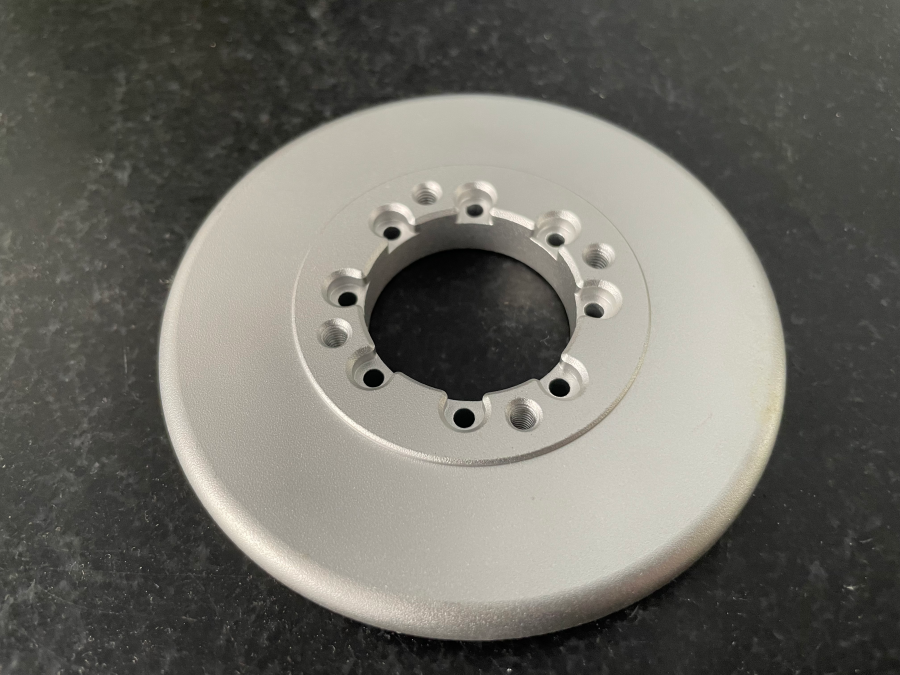
Consider the challenge faced by an innovator in the robotics sector: developing a complex, lightweight yet rigid actuator housing from 7075 aluminum, featuring internal helical cooling channels, mounting interfaces with tight positional tolerances, and a cosmetic anodized finish.
A Fragmented Approach: One shop for 3-axis roughing, another for 5-axis finishing, a third for EDM of tight corners, and a fourth for anodizing. This introduces logistics overhead, communication gaps, and tolerance stack-up risks.
The Integrated Solution: A partner like GreatLight CNC Machining Factory demonstrates its value here. With in-house 5-axis CNC machining centers, they can machine the entire complex housing in one or two setups, ensuring critical alignments. Their EDM department handles any sharp internal features. Their quality team inspects the part on a CMM against the GD&T callouts. Finally, their anodizing line applies the specified finish, with the entire process tracked under a single QMS. The result is faster turnaround, guaranteed quality, and a single point of accountability.
H2: Navigating the Future: Trends in CNC Machining Services
The field is not static. Leading service providers are investing in:
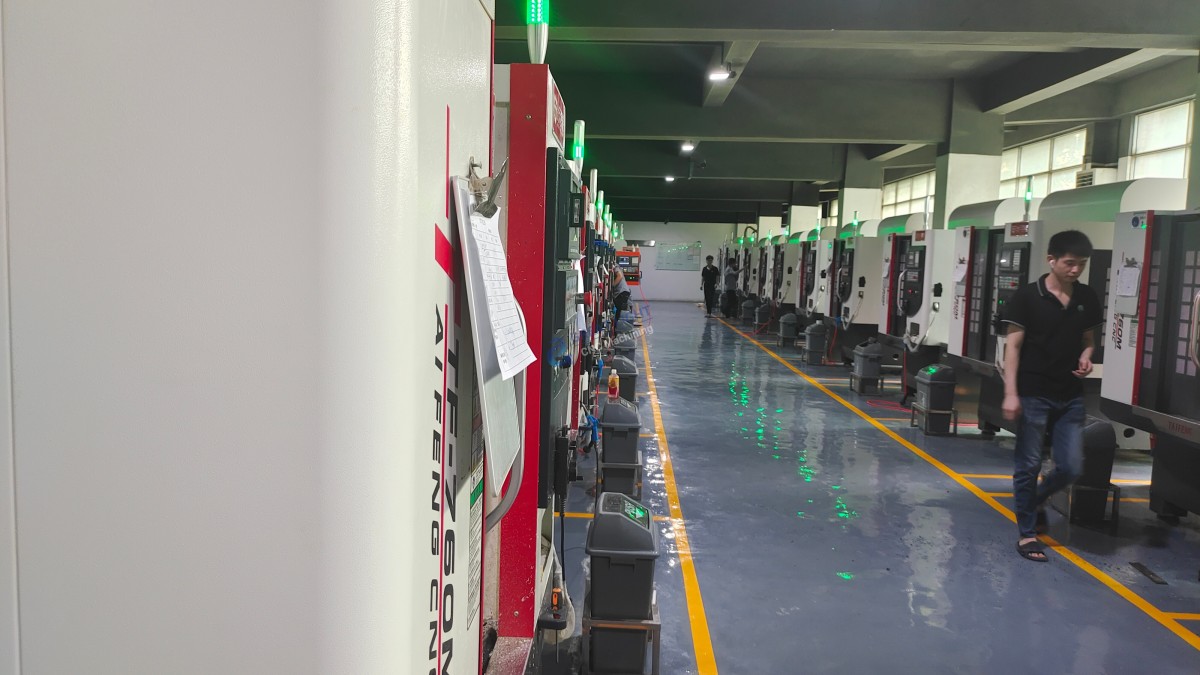
Automation & Lights-Out Manufacturing: Robotic part loading/unloading and pallet systems allow machines to run unattended for extended periods, boosting capacity and consistency for high-volume orders.
Advanced Software Integration: From CAM simulation that prevents collisions to digital twins that optimize the entire machining process, software is reducing errors and improving efficiency.
Hybrid Manufacturing: Combining additive (3D printing) and subtractive (CNC) processes in a single platform to create parts with internal lattice structures or complex conformal cooling channels that are impossible with either method alone.
In conclusion, CNC machining services represent a dynamic and sophisticated ecosystem. Success lies not in finding the cheapest vendor, but in identifying a capable, communicative, and quality-driven partner who can navigate the interplay of technology, materials, and precision. For projects where complexity, reliability, and time are of the essence, the capabilities offered by advanced, integrated manufacturers—exemplified by the comprehensive approach of GreatLight CNC Machining Factory—provide a decisive competitive advantage, turning intricate designs into reliable, high-performance reality. To explore how industry leaders are leveraging such partnerships, insights can be found on professional networks like LinkedIn.



















