
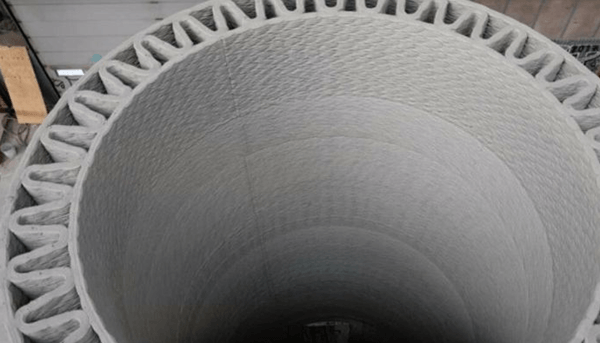
The use of 3D printing is becoming more widespread across various industries, and more and more companies are recognizing its benefits in the manufacturing process. The energy sector is no exception. According to a report by Additive Manufacturing Research, the 3D printing market in this area is expected to reach €17 billion by 2032. The detailed study titled “Additive Manufacturing in the Energy Sector: Market Analysis and forecasts” explores the opportunities and development potential of additive manufacturing, particularly in renewable energy sectors such as wind energy. The key role of 3D printing in the development and maintenance of essential wind energy equipment was highlighted, highlighting the need to fully exploit its potential.
Market players are increasingly awareThe advantages of 3D printing in the field of renewable energies, in particular wind energy. This technology offers the possibility of reducing production costs while allowing the customization of sizes according to the specific needs of each site. Additionally, the challenges posed by traditional wind turbine manufacturing methods are well known: blades are typically made from fiberglass-reinforced plastic, a material that is difficult to recycle.
3D printing process and materials used
Most commonly used in wind powerAmong 3D printing technologies, FDM technology occupies a special place. This method is often chosen to manufacture prototypes and parts. Another widely used method is SLS, which uses a laser to melt powdered materials such as nylon and then solidify them to form a structure. The advantages of this approach include the stability of prototypes and finished products, as well as the production of wind components, especially for small parts. Additionally, binder jetting technology is often used.
The DMLS process is already used in the wind energy sector for 3D printing of complex and high-precision metal parts, whether prototypes, final parts or repairs of existing wind turbines. Companies such as Siemens Gamesa Renewable Energy and Vestas are already using it to build and optimize their turbines. Additionally, the wind industry frequently uses materials such as PLA and ABS in the manufacturing of wind turbine prototypes and casings. Nylon, polyamide, metal powders, glass and carbon fibers as well as resins are also used in 3D printing to meet specific industry needs.
Advantages and limitations of 3D printing in wind energy
As we have already mentioned, the wind energy sector3D printing is particularly suitable for producing prototypes. This efficiency stems from the technology’s ability to produce parts economically and quickly, thereby driving innovation in the field. Additionally, as a research project led by the Technical University of Berlin shows, 3D printing offers the possibility of manufacturing more complex shapes than traditional methods, allowing the performance of rotor blades to be increased. As part of this study, researchers successfully printed an entire wind turbine using a BigRep 3D printer.
Custom wind turbine parts can also be designed for customers to precisely fit the wind turbine location.The use of 3D printing offers the possibility of producing components directly on site and increases the flexibility to continuously adapt molds and components. This approach reduces the cost of shipping molded parts, making it easier to purchase new printing molds quickly and inexpensively. In the United States, transportation constraints limit rotor blade length to between 53 and 62 m due to existing rail and road infrastructure. This is why 3D printing (possibly combined with robotics) has great potential to enable on-site manufacturing, especially for the production of larger and more powerful devices.
Given the long delivery times associated with traditional production methods,3D printing also enables faster, on-demand production of replacement parts. This reduces ordering and manufacturing lead times, eliminating the need to maintain high inventory levels on an ongoing basis. Additionally, the technology creates a lightweight and complex structure for the wind turbine, which helps reduce its overall weight.
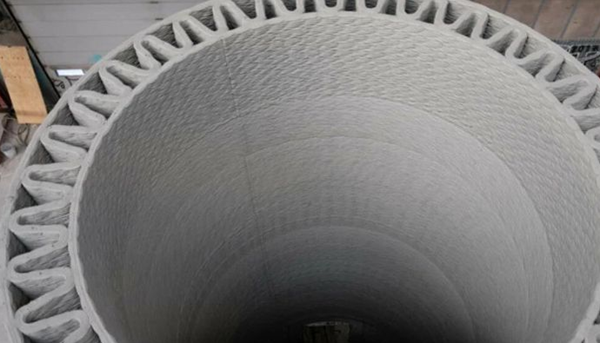
The advantage of 3D printing is the possibility of producing wind turbines directly on site. (Photo credit: en-former)
although3D printing has the advantage of reducing prototype production costs, but the initial investment in a 3D printer and the necessary materials remains very high, which can incur costs when using this technology. Additionally, it is often difficult to meet the strict requirements of standards and certifications through 3D printing, which also results in additional costs. Additionally, there are still limits to the size of wind turbine parts that can be 3D printed, with projects such as ACC remaining one of the few that allow very large wind turbine parts to be printed. As experience with 3D printing in the field of wind energy is still relatively limited, it remains to be determined whether 3D printed parts will have reliable and stable properties over time.
Application of 3D printing to the manufacture of wind turbines
3D printing plays a vital role and is used in all aspects of the wind turbine production process. Additive manufacturing is particularly used in the production of components and molds, as well as in the production of prototypes of new components. This approach allows prototypes to be created quickly so that they can be tested and refined before mass production. For example, the American group General Electric (GE) began 3D printing large wind turbine parts in 2019 and opened a 3D printing factory in the United States in 2021 specifically for research. GE is also using 3D printing to create lighter turbine blades for its GE9X engine.
Another company in this field usesThe 3D printing company is startup Orbital Composites, which specializes in using on-site additive manufacturing to produce turbines, wind blades, foundations and towers in high volumes and scale. As part of the project, Orbital Composites aims to demonstrate and validate the use of its 3D printing robots in the manufacturing of wind turbine blades. The company also plans to develop systems capable of 3D printing wind turbine blades exceeding 100 meters in length, as well as offshore wind turbines mounted directly on offshore vessels. To achieve these goals, the startup is partnering with Oak Ridge National Laboratory. ORNL) and the University of Maine, whose research is discussed in a later section. Orbital Composites has received up to $4 million in financial support from the U.S. Department of Energy (DOE) and the Office of Energy Efficiency and Renewable Energy (EERE).
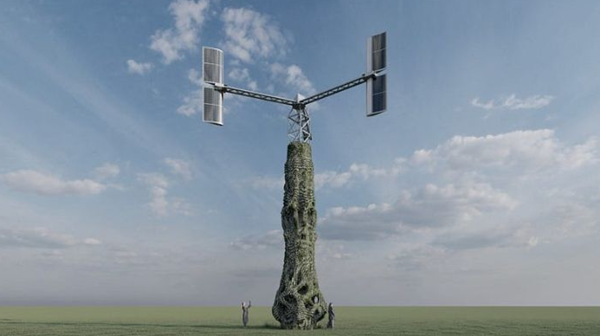
Photo credit:Soleolico
In the past, Spanish companiesSoleolico used 3D printing to design the world’s first wind turbine equipped with photovoltaic panels. The device stands out for its ability to generate wind and solar energy while absorbing carbon dioxide. For this innovative project, Soleolico used Pure Tech’s 3D printing process, which will require 10 years of development until October 2023.
Research on 3D printing in the field of wind energy
Researchers from many universities around the world are studyingThe application of 3D printing in the field of wind energy, such as the Technical University of Berlin’s project “3D printing to power wind turbine research”. Led by technical engineer Immanuel Dorn and engineering master’s student and project lecturer Sascha Krumbein, the team is investigating the use of 3D printing to optimize rotor blades. Their work involves testing different blade configurations in large wind tunnels and evaluating rotor performance over multiple production iterations using various 3D printing materials. The researchers started with aerodynamic design and then moved to structural design, involving filling and material selection, thus requiring several iteration cycles to adjust and adapt to the materials used. Finally, the team performed “real-world” aerodynamic tests in the wind tunnel, including crash tests, to evaluate the blade’s performance.
Furthermore, many American universities also focus on research in this area. For example, Purdue University in Indiana andRCAM Technologies, in partnership with Floating Wind Technology Company, is working to develop more cost-effective concrete anchors and turbine structures, while also exploring additive manufacturing of wind turbine rotor blade tooling. The project, carried out in partnership with several companies and with financial support of $2.8 million from the U.S. Department of Energy (DOE), aims to accelerate tool manufacturing and reduce finished product costs through 3D printing.
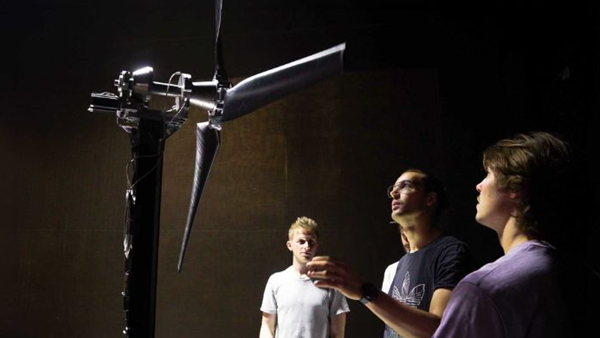
asAs part of the project “3D printing fuels wind turbine research”, a team from TU Berlin is investigating how 3D printing can be used to optimize rotor blades. (Photo credit: BigRep)
Wind energy industryGrants for 3D printing
Several projects have received funding, notably from the Federal Ministry of Economic Affairs and Energy.(BMWi), such as the Advanced Casting Cell (ACC) project. The project takes its name from the large-format 3D printer used to make the sand molds, with the “Fraunhofer-Institut für Gießerei-, Composite-und Verarbeitungstechnik” (IGCV) as a joint partner, both in terms of material technology and digital process monitoring. Voxeljet, a Bavarian 3D printing company, is also involved in the project. In 2022, onshore wind turbine manufacturer GE Renewable Energy announced plans to test 3D printed molds for metal casting of various key components of the GE Haliade-X wind turbine nacelle. The 3D printer used can produce metal molds for turbine parts weighing 60 tonnes and having a diameter of 9.5 meters. The aim of the project is to reduce the production time of offshore wind turbine molds from at least ten weeks to two weeks, while reducing transport costs by manufacturing the molds on site. This approach also reduces the carbon footprint of wind turbine production.
wind energyFurther support in the 3D printing sector comes from IFAF, which is currently supporting the Winddruck project, which is expected to end in September 2024. The project aims to produce wind turbine blades on a large scale in an economical and sustainable way . to 3D printing. Additionally, the project explores the possibility of future 3D printing of wind turbine blades using renewable and recyclable materials.
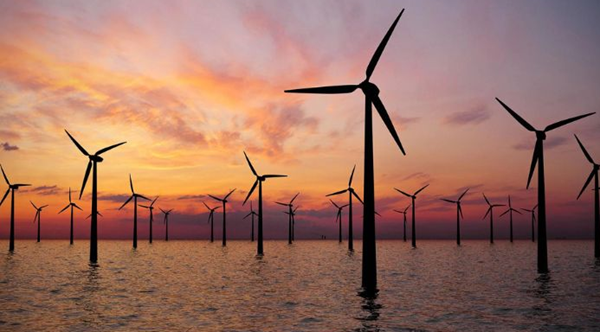
Photo credit:Shutterstock
The application of 3D printing in the wind energy sector is becoming increasingly important and has great potential for innovation and efficiency improvement. Companies and research institutes around the world are recognizing the benefits of this technology and are investing in the development and application of additive manufacturing methods. The diverse applications of 3D printing range from producing prototypes and components to manufacturing entire wind turbines. They enable flexibility and adaptability that traditional manufacturing methods cannot provide. Although challenges remain, the path is open for 3D printing in wind energy to sustainably transform the industry and further improve access to clean energy.
source:3dnatives
Daguang focuses on providing solutions such as precision CNC machining services (3-axis, 4-axis, 5-axis machining), CNC milling, 3D printing and rapid prototyping services.



















