
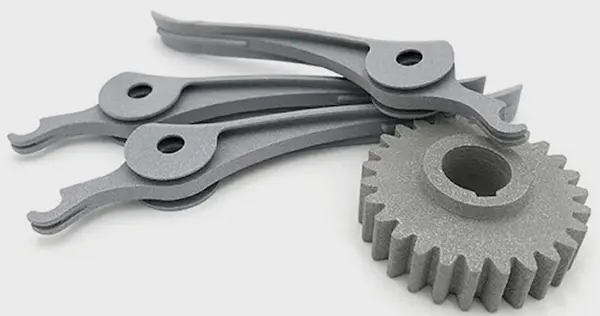
you want Print a part in 3D but you don’t know which material to choose: polymer or metal? When it comes to 3D printing, there is a material that combines the best of both worlds: aluminide. This is a very interesting option which consists of loading aluminum powder into polyamide (nylon), hence the name composite. It is compatible with selective laser sintering technology and combines the design flexibility of nylon with the brilliance of aluminum in a single material. To learn more about this powdered material and its uses in additive manufacturing, read this comprehensive guide!
Characteristics of aluminides in 3D printing
As we mentioned, aluminide is a powdered material whose name comes from the combination of the words aluminum and polyamide. In fact, it is composed largely of polyamide (nylon) with a smaller proportion of aluminum powder. While aluminum gives it a matte, metallic finish with a subtle shine, it also makes it more fragile than nylon. Other properties of aluminides include its greaterOther materials used in 3D printing are significantly harder and more porous. Plus, unlike thermoplastics like PLA that melt easily, it can withstand higher temperatures without warping.

Photo credit:I sculpt
Materials andSLS compatible and follows the same manufacturing process as standard polyamide. In a 3D printer, a first layer of powder is deposited then sintered by a laser. Then another layer of powder is added and the process is repeated, gradually forming the object. Typically, multiple parts can be produced during a printing process, depending on their size. This process is followed by manual post-processing, during which operators collect the parts and clean them before any finishing.
Design aluminidesWhen 3D printing a model, several aspects must be taken into account to achieve the best results. The minimum thickness between opposing surfaces should be at least 1 mm, as thinner walls weaken the model. The maximum permitted dimensions are 650 x 330 x 560 mm for natural finishes and 270 x 150 x 150 x 150 mm for tinted models. Alumide also allows the manufacture of interconnected components, but the spacing between moving parts must be at least 0.4 mm. Additionally, due to exposure to high temperatures during processing, it is best to avoid designing large flat surfaces as they may warp. Considering these factors can significantly improve the quality and durability of aluminide printed models.
Main applications
Alumide is ideal for 3D printing beginners because it rarely requires printing supports and allows users to create more complex geometries compared to other manufacturing technologies. It is a strong material but has some flexibility, allowing it to absorb smaller impacts and withstand considerable pressure. Parts 3D printed with aluminide can have natural, matte, gray and glossy finishes, or post-processing techniques such as dyeing can be applied to achieve different colored finishes. This is a big advantage because although the material has a porous and grainy texture, it can be polished or even varnished to achieve a better surface finish in certain applications.
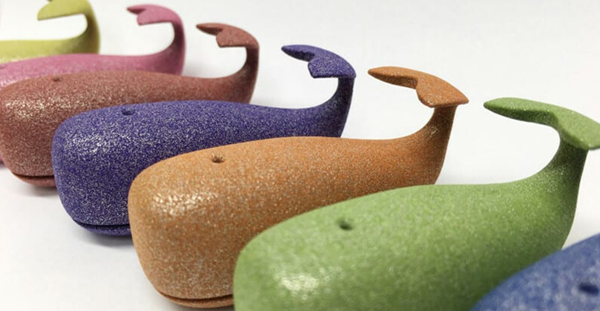
Aluminum parts can be post-processed to achieve colorful effects (Photo credit:Oceanz)。
Due to their interesting properties, aluminides3D printing is ideal for many different applications. It is mainly used for creating rigid metal-looking parts, tools and components for injection molding, non-removable components, rapid prototyping of technical metal-looking parts or demonstration models, etc. This is a good choice if you want to create designs that require more rigidity than polyamide, or simply have a metallic look. Therefore, it can be used in a variety of industries, from jewelry to automobiles to consumer goods.
Daguang focuses on providing solutions such as precision CNC machining services (3-axis, 4-axis, 5-axis machining), CNC milling, 3D printing and rapid prototyping services.



















