
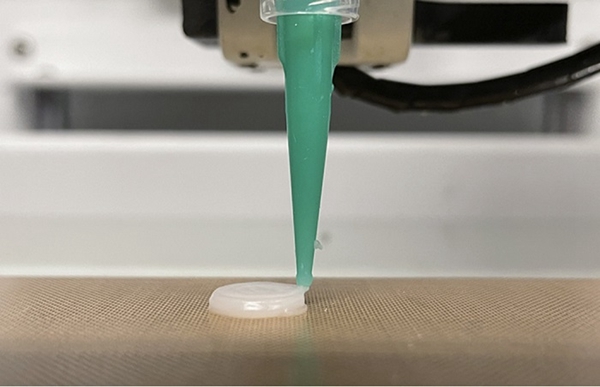
Researchers from the University of the Basque Country in Spain have developed a3D printing technology can be used for personalized medicine and on-demand release of drug tablets. The main objective of this work is to produce 3D printed starch-based tablets for personalized hydrophobic drug delivery. The research results were recently published in the International Journal of Pharmacy.
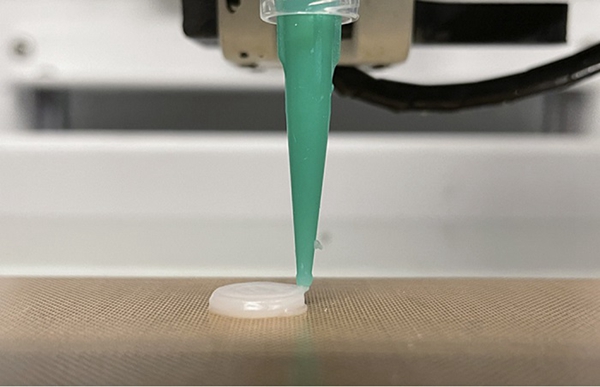
Image source: University of the Basque Country, Spain
In many cases, medicines produced using traditional methods with specific parameters do not meet the individual needs of patients. In fact, conventional medications are often based on adult dosages, while pediatric and elderly patients require age-appropriate dosages. Additionally, certain patient groups also require specific alternative dosage forms that make it easier to take the drug orally. Fast disintegrating tablets become a good option in this regard, as they dissolve as soon as they are placed on the tongue. Another challenge pharmaceutical companies face is controlling drug release over time.
3D printing is a technology that allows products to be printed layer by layer, where materials are laid down layer by layer based on a digital model designed by computer design software. Thanks to a simple and rapid method and with the help of 3D printing, the researchers prepared tablets based on 3 starches: two corn starches (normal and waxy) and a potato starch, all with geometries different and loaded with insoluble drugs.
The researchers explain that before injecting the materials used into the printer, it is necessary to ensure that the materials are printable and that they are able to maintain their shape once printed. For this, a detailed rheological analysis must be carried out. ThisAll three types of starch exhibited suitable rheological properties, although in the case of potato starch the printing process became more laborious due to its properties.
The researchers observed that the plant origin of starch was crucial for almost all of its properties, such as porous microstructure, stable network formation or drug release. In the case of ordinary corn starch, the drug release is instantaneous and the drug isComplete release in 10 minutes; in the case of waxy cornstarch and potato starch, the release is more continuous and can take up to 6 hours to fully release. The researchers also demonstrated the importance of tablet geometry in drug release.
The research team also printed pills combining different types of starch. In this case, the release takes place in two stages. For example, in case of infection, in the initial phase using plain cornstarch, the drug is released immediately to relieve pain, and in later phases, using either of the other two starches, a more prolonged release of antibiotics is achieved.
source:
Daguang focuses on providing solutions such as precision CNC machining services (3-axis, 4-axis, 5-axis machining), CNC milling, 3D printing and rapid prototyping services.



















