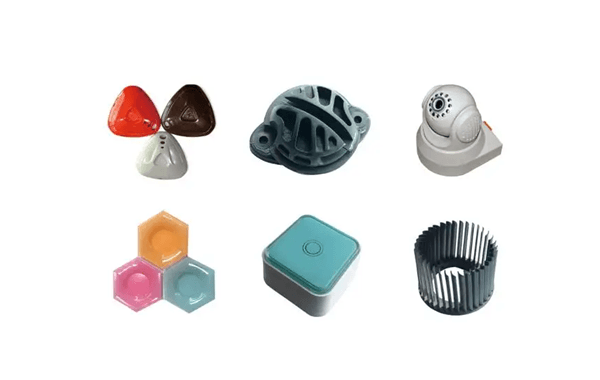
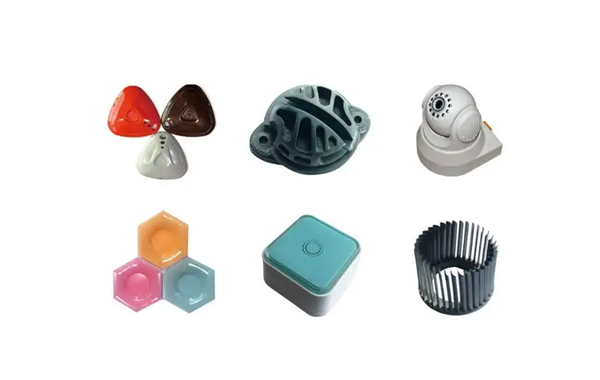
Click Magic Monkey Injection Molding to learn more about injection molding.
Mohou injection molding is an important part of Mohou.com’s digital manufacturing matrix. It is used in the product life cycle from small batch trial production to mass production after the customer has completed the concept and verification model. This also means that Mohou has fully digital manufacturing, from concept to batch, which can bring products to market faster and more cost-effectively, and maintain, improve, upgrade and adjust them throughout. throughout the product life cycle. With this strong advantage, we have established cooperative relationships with many industry reference customers, covering consumer electronics, aerospace, medical & health, automotive equipment, etc., becoming a supplier of trusted digital manufacturing services.

Introduction to the injection molding process
Injection molding is a method of producing shapes for industrial products. Products generally use rubber injection molding and plastic injection molding. Injection molding can also be divided into injection molding method and die casting method.
1. Rubber injection molding: Rubber injection molding is a production method that injects rubber directly from the barrel into the model for vulcanization. The advantages of rubber injection molding are: although it is an intermittent operation, the molding cycle is short, the production efficiency is high, the blank preparation process is eliminated, the labor intensity is low and the product quality is excellent.
2. Plastic injection molding: Plastic injection molding is a method of plastic products. The molten plastic is injected into the plastic product mold under pressure, then cooled and formed into various plastic parts. There are mechanical injection molding machines specifically designed to perform injection molding. The most commonly used plastics today are polyethylene, polypropylene, ABS, PA, polystyrene, etc.
3. Forming and injection molding: The resulting shape is often the final product, and no further processing is required before installation or use as the final product. Many details, such as bosses, ribs and threads, can be formed in a single injection molding operation
Injection molding process
1. Mold design: Mold design is an important part. Just like the requirements of 3D printing models, injection molds must also take into account the requirements of subsequent injection molding processes at the start of design. Click here to learn more about injection molding design specifications.
2. CNC processing: preliminary mold rough processing by CNC, with a maximum precision of 0.005mm.
3. EDM Finishing: Electric spark finishing uses a pulsed spark discharge to remove metal and cut shapes on the workpiece. It is mainly used to process various complex-shaped and precise parts.
4. Mold matching and mold saving: According to the mold assembly drawing, assemble the processed parts according to the drawing, then clean and repair the mold surface.
5. Fitter assembly: combine qualified parts into components according to specified technical requirements, or combine multiple parts and components into machines and equipment, and become qualified products after adjustment, testing, etc.
6. Finished injection molded product: start injection molding and carry out random inspections of product quality.
Injection molding material:
Acrylic – PMMA: Acrylic is a lightweight sheet material that is common as an alternative to glass. PMMA is used in a wide range of products, such as window panes, spectacle lenses and car taillights. The advantages of acrylic are that it is weather resistant, has a high gloss and good wear resistance. However, its disadvantage is that it has limited thermal resistance and can crack under pressure loads.
ABS: ABS is one of the most common engineering plastics and is widely used in toys, electrical appliances, pipes, etc. ABS has many advantages, such as high impact resistance, good toughness, and difficulty in breaking because the material is strong but lightweight. It can also withstand high temperatures. Its disadvantage is that it scratches easily and leaves scratches on the surface.
Nylon PA: Nylon has good abrasion resistance, which naturally makes it very durable, strong and elastic. The downside, however, is that the material melts easily. This makes it difficult to work with the material in its liquid state. It also absorbs moisture from the air or directly. It is used in a variety of clothing as well as electrical applications such as car tires, fishing nets and insulation.
High Density Polyethylene – HDPE: High density polyethylene is an injection molded material and is a strong, flexible plastic thermoplastic used primarily in plastic bottles, shampoo bottles, toys, recycling bins and flower pots . The main advantages of using high density polyethylene are its reasonable price while being a hard, high strength material. The downside is that high-density polyethylene is highly flammable and has poor weather resistance.
Acetal-POM: Acetal POM is a hard material. Acetal is used in the production of automobile parts. Other uses of acetal are zippers, fan wheels, door handles, etc. It has the advantage of having a very shiny surface and being resistant to organic solvents and chemicals, with the exception of phenol. Its disadvantages are that it is difficult to bond, has poor acid resistance, and is easily affected by ultraviolet rays.
In addition, there are TPU, LDPE, PP, PC, TPR, etc.
Daguang focuses on providing solutions such as precision CNC machining services (3-axis, 4-axis, 5-axis machining), CNC milling, 3D printing and rapid prototyping services.