
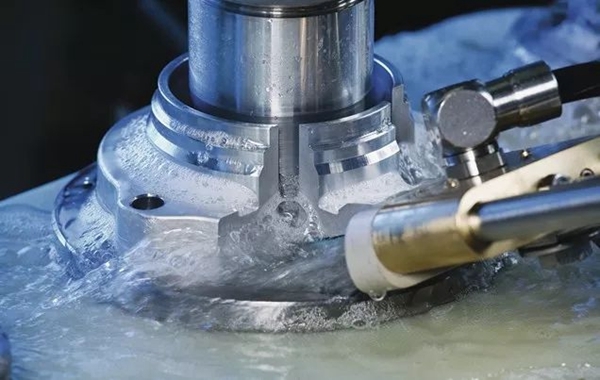
Burr is a kind of excess metal chips produced at the processing edge of the processed material, mainly due to the plastic deformation of the material, especially materials with good ductility or toughness. Burrs not only affect the appearance of the part, but also reduce the operation and safety of the part. Deburring is therefore essential in machining.
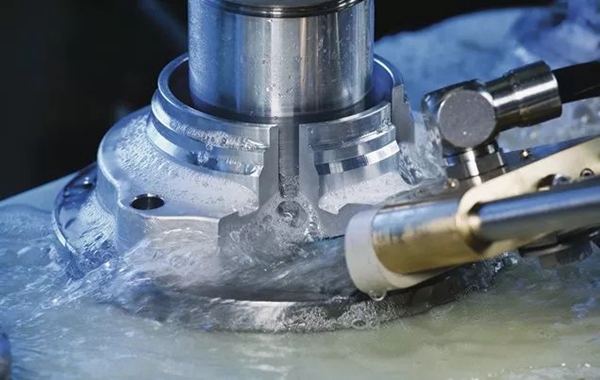
Main types of burrs
1return the burr
Overturned burrs are the most common type of burr and they look like small pieces of rolled metal sticking out of the workpiece.
2Fish strawberry
Poisson burrs occur when the edge of the part is stretched too much transversely.
3separation cutter
The separation burrs have the characteristic of protruding upwards and appear separated from the part.
CNCWhen machining, parts will definitely have burrs no matter how advanced and sophisticated equipment is used, so how to remove burrs?
How to remove metal burrs?
Deburring is relatively easy with the right tools and techniques. Deburring can take several different forms, depending on the metal and application involved.
1Manual deburring
Manual deburring is the most common and most economical deburring method. In manual deburring, experienced technicians use simple tools to manually scrape and polish burrs on metal parts. Although this process is simple, it can be time-consuming and inefficient.
Additionally, complex cross holes are difficult to remove manually. Manual deburring is suitable for products with few burrs, simple product structure and low technical requirements for operators.
2mechanical deburring
Use mechanical scraping to remove burrs. This method is more expensive, but more effective than manual deburring. It is also the most popular deburring method today. Common mechanical deburring methods include grinding and rolling.
3electrochemical deburring
When small metal parts with burrs can be deburred by other methods, electrochemical deburring is often used. In addition, after using other deburring methods, some unprocessable areas also have burrs, you can also choose this method.
Electrochemical deburring uses electrodes whose shape is similar to that of the edge to be deburred. As the name suggests, it uses electricity and chemicals to remove burrs. Electrochemical deburring therefore requires electric current and electrolytes. Sodium chloride (table salt) or sodium nitrate can be used as an electrolyte. In combination with current solutions, burrs can be removed stress-free. This method is quick and offers great precision in difficult areas.
The electrolyte is corrosive to a certain extent, so after deburring, clean the part and carry out anti-corrosion treatment. Electroplated deburring is suitable for removing burrs from hidden parts and cross holes of parts with complex shapes. The production efficiency is high, and the deburring time generally ranges from seconds to tens of seconds. This method is commonly used to deburr gears, splines, connecting rods, valve bodies, crankshaft oil passages and rounding sharp corners. The disadvantage is that the parts next to the burrs will also be electrolyzed, causing the surface to lose its original luster and even affect the dimensional accuracy.
4thermal deburring
Also known as thermal blast deburring and blow deburring. The combustible gas passes through the furnace of the equipment. Due to the effect of the medium and conditions, the gas explodes instantly, and the energy generated by the explosion is used to dissolve and remove the burrs. Thermal deburring uses flammable gases to generate heat, which essentially burns the burrs off the metal. This process is often ideal for removing the most difficult to reach burrs (such as crack and crevice burrs) and for treating burrs on multiple surfaces simultaneously.
It is important to know which deburring method is best for your part so as not to further damage it and waste time and money. When done correctly, deburring achieves the smooth, blemish-free surface required for machined parts.
Daguang focuses on providing solutions such as precision CNC machining services (3-axis, 4-axis, 5-axis machining), CNC milling, 3D printing and rapid prototyping services.



















