127 Sets Processing 4000mm 127 Sets High-Precision CNC Lathes
15 Years of Experience

How to choose between PLA and ABS for 3D printing?

ABS and PLA are currently commonly used plastic materials for 3D printing, but for customers who are new to 3D printing, they don’t know how to choose the right material for them. This article will analyze the similarities and differences between PLA and ABS in terms of performance versus printing requirements, in hopes of helping […]

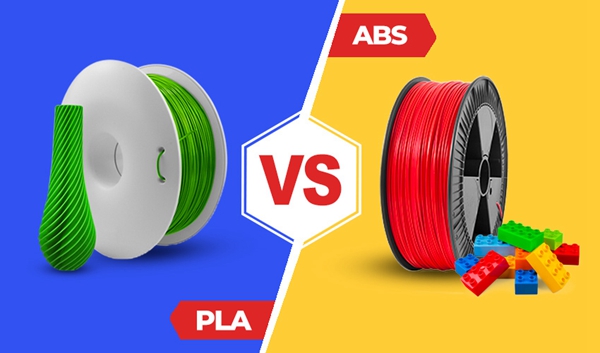
how to choose between pla and abs for 3d printing?

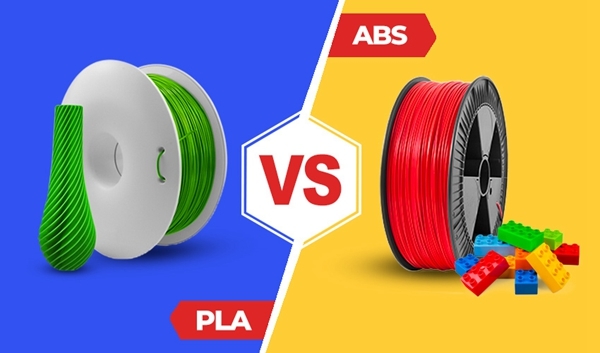
ABS and PLA are currently commonly used plastic materials for 3D printing, but for customers who are new to 3D printing, they don’t know how to choose the right material for them. This article will analyze the similarities and differences between PLA and ABS in terms of performance versus printing requirements, in hopes of helping everyone better understand their usage.
How to choose between PLA and ABS for 3D printing
1. Characteristics and performance of PLA and ABS
When talking about the properties of PLA versus ABS, the first thing to consider is what they are made of. Although both are thermoplastics, there are differences. PLA is known to be made from organic sources such as corn or sugarcane, while ABS, like most standard plastics, is made from petroleum. Specifically, PLA is made from fermented plant starch from sources such as corn, cassava, maize, sugar cane or sugar beet pulp, where the sugars are converted into lactic acid, which is then polymerized into polylactic acid. In contrast, ABS is composed of three monomers: acrylonitrile, butadiene and styrene. Acrylonitrile is a synthetic (artificial) monomer derived from propylene and ammonia, butadiene is a petroleum hydrocarbon, and styrene is made by dehydrogenation of ethylbenzene (removal of hydrogen through a chemical reaction). These materials have an impact on environmental “sustainability”.
1733301191 186 How to choose between PLA and ABS for 3D printing
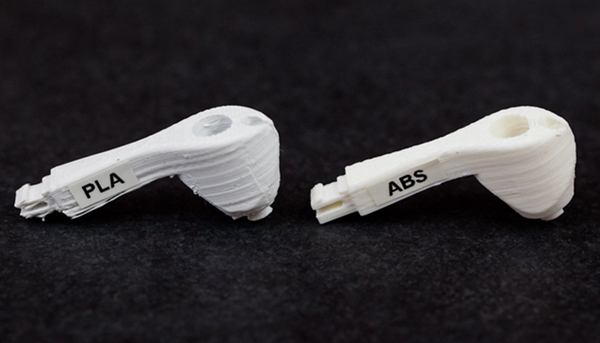
△As shown in the image above (image source: Fictiv), there are differences in appearance and performance between PLA and ABS 3D printed parts.

PLA is often presented as a more ecological material because it is biodegradable. However, it is important to note that it only truly biodegrades under the right conditions, and many cities do not have the adequate tools to properly degrade this material. This means that while it is possible, it is actually only truly “green” through industrial composting. ABS, on the other hand, is considered an unsustainable or environmentally friendly material. As we mentioned, like most plastics, it is made from petroleum, which means its processing is not sustainable. However, one advantage is that ABS is recyclable, and many people don’t realize how limited the biodegradability of PLA is. Some beginners can therefore be more confident that the PLA will be disposed of properly without creating more waste.

Difference 1: ABS has better heat resistance and mechanical properties

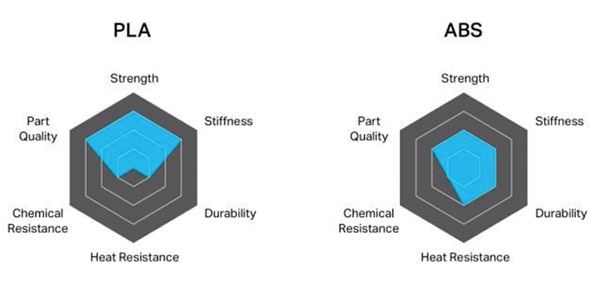
Beyond the roots of the material, ABS and PLA also have another different characteristic:heat resistance. ABS has some heat resistance and a high glass transition temperature, while PLA melts at much lower temperatures and is therefore considered non-heat resistant. This will of course affect the application of the material, which will be presented in detail later.
If you are looking for aMore resistant and has better mechanical propertiesAs a material, the author recommends that you use ABS. In addition to being heat resistant and having higher thermal deformation, it is also more durable than PLA.Impact resistant, more durable and lighter. But both materials have similar tensile strengths (ABS is slightly lower), with ABS generally being more suitable for more industrial applications, mainly due to its improved ductility and ability not to break, as well as its higher bending strength and elongation before break. Due to these various properties, ABS can even be used for end-use applications, which is one of the reasons why it is so popular in industries such as injection molding.
1733301192 596 How to choose between PLA and ABS for 3D printing
△Characteristics of PLA and ABS
It should be noted that PLA is more durable than ABS.Getting stronger and harder. However, as its melting point is very low, it will lose these properties above 50 degrees Celsius and therefore cannot be used in environments involving higher temperatures. However, although ABS is significantly more heat resistant than PLA, as both are thermoplastics, they will degrade over time from UV rays and high temperatures.
Difference 2: PLA is easier to print
Now that we have introduced the characteristics of PLA and ABS, the next step is to discuss the 3D printing process itself. First, because the glass transition temperatures of the two thermoplastics are different, the print preparation will be different. Indeed, the temperature range in which the thermodynamic transformations of substances occur must be taken into account. For PLA, the glass transition temperature range is between 60 and 100°C, while for ABS it is between 105 and 200°C. This determines the parameters defined in the slicer and the time necessary to heat the 3D printer and reach the desired temperature.
At the same time, variables in the manufacturing process, including the print platform and print head, must be correctly configured. ABS requires a higher print bed temperature, around 80-110°C, while PLA is typically 60°C. In terms of extruders, PLA also requires lower temperatures, notably around 180-230°C, while ABS requires 210-250°C.
In terms of ease of use, ABS is known to be more complex to print than PLA. Printing issues encountered are also related to temperature and the properties of each material. PLA has a lower melting temperature than ABS, so when the part 3D printing process is complete, the thermal changes as the layers cure are lower. However, because ABS requires higher temperatures to melt, there will be more abrupt changes as the part cools. This thermal shrinkage can lead to deformation of the parts. One of the most common problems is warping, when the ends of the part shrink, pull away from the pallet and become distorted. To avoid this, when printing with ABS, it is crucial to control the temperature and printing environment, and use adhesive if necessary.
1733301192 535 How to choose between PLA and ABS for 3D printing
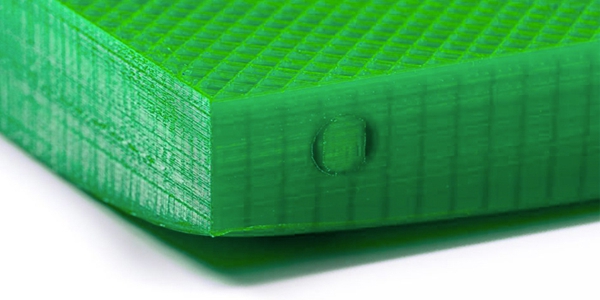
△ABS is prone to warping, a problem related to the material shrinking during sudden temperature changes.
Both materials print at approximately the same speed, eliminating the need to readjust speed settings in the slicer for different materials. PLA is typically printed at 60mm/sec, with some users using even higher speeds. On the other hand, ABS is usually in the 40-60mm/s range and struggles to reach higher speeds.
Another point to keep in mind during the manufacturing process is the waste emissions generated during the manufacturing process, as almost all thermoplastic filaments can produce harmful odors and gases during the printing process. When a material is heated, it releases substances containing particles harmful to health. As for PLA, since it comes from natural plant sources, it does not have a strong odor, so there is nothing to worry about. However, ABS can emit toxic fumes and unpleasant odors, and I highly recommend using an enclosed print case and air filter when using ABS to prevent fumes from being released in the workspace. Nevertheless, constant ventilation is recommended during the printing process to ensure that fumes do not reach our lungs. This is due to the presence of styrene in ABS, a material toxic to humans when inhaled.
Luke Taylor, Marketing Manager at Polymaker explains: “ PLA is a more fragile material, but its advantage is that it is easy to work with and print.Users do not need a heated bed or high temperature, and its shrinkage rate is very low, while the shrinkage rate of ABS is very high. Generally speaking, we see that the better the mechanical properties, the more difficult it is to use. Although we can also add something to PLA to make it stronger without changing the adaptability of the print. “
1733301193 735 How to choose between PLA and ABS for 3D printing
△Digital 3D printing using Polymaker PLA filament (Photo source: Polymaker
Difference 3: post-processing
Most post-processing techniques are available for both thermoplastics. There are, however, some notable differences, such as the finish of the parts after printing. PLA parts tend to have a glossier finish, while ABS parts tend to have a more matte finish. Both materials can also be painted for decoration after printing.ABS is generally easier to reprocess than PLA. First, while both can be sanded, the process is easier due to the durability of ABS. PLA is also more difficult to sand because it has low heat resistance and melts more easily.
At the same time, not only is ABS easier to post-process using these basic methods, but if you want a truly glossy finish, ABS parts can be smoothed with acetone vapor. Acetone is a colorless liquid commonly used as a solvent for plastics. Although it won’t work with PLA, those with ABS parts can use acetone for faster post-processing and glossy finishes. A similar process can still be done with PLA. If you want to steam smooth parts made from PLA filament, THF or Tetrahydrofuran can be used for manual polishing.
1733301194 865 How to choose between PLA and ABS for 3D printing

△These finished pieces have a shiny surface thanks to acetone smoothing (Photo source: zortrax)

Difference 4: PLA has a lower price

The current price of PLA on Mohou.com is 0.65 yuan per gram, and the price of domestic ABS is 1.99 yuan per gram. Relatively speaking, ABS is more expensive than PLA. However, the price also depends on the performance, and it depends on the material you want to choose.

2. Application of PLA and ABS
Another major difference we can find when discussing PLA and ABS is the application areas in which each material is used. PLA is the most commonly used material in FDM 3D printing and is primarily used in manufacturing environments. This is mainly due to its ease of printing, as well as its fragile nature, fragile and sensitive to sunlight and heat. For this reason, it is often widely used by novice users or to create decorative pieces and toys.
ABS, on the other hand, is a more industrial material with advanced properties that, although more difficult to print, allow for higher quality parts. This is why it is often used in the development of prototypes, gears or tools. In short, it is generally implemented in situations where parts may be subjected to physical stress and high mechanical and thermal resistance is required. Therefore, before starting the additive manufacturing process, evaluate the differences between the two materials to create parts based on their intended use.
1733301194 592 How to choose between PLA and ABS for 3D printing
△PLA is commonly used in more manufacturing applications, decorative items and toys. ABS can be used in applications requiring higher mechanical and thermal resistance.

Daguang focuses on providing solutions such as precision CNC machining services (3-axis, 4-axis, 5-axis machining), CNC milling, 3D printing and rapid prototyping services.

CNC Experts

Picture of JinShui Chen

JinShui Chen

Rapid Prototyping & Rapid Manufacturing Expert

Specialize in CNC machining, 3D printing, urethane casting, rapid tooling, injection molding, metal casting, sheet metal and extrusion

CNC Recent Posts

CNC News

Welcome to GreatLight Metal,Maximum Processing Size 4,000 mm

Precision Machining CNC Quote Online

Loading file

Upload Click here to upload or drag and drop your model to the canvas.

The model is too large and has been resized to fit in the printer's build tray. [Hide]

The model is too large to fit in the printer's build tray. [Hide]

The model is too large, a fitting printer is selected. [Hide]

The model is too small and has been upscaled. [Hide]

Warning: The selected printer can not print in full color [Hide]

Warning: obj models with multiple meshes are not yet supported [Hide]

Warning: Unsupported DXF entity  [Hide]

Warning: could not arrange models [Hide]


File Unit:      
Scale:
%
L × W × H:
X: × Y: × Z:  cm 
Rotation:
X: ° Y: °  
⚡ Instant Quote for Precision Manufacturing

Submit your design files (STEP/IGES/DWG) and receive a competitive quote within 1 hour, backed by ISO 9001-certified quality assurance.

📋 How It Works

  1. Upload & SpecifyShare your 3D model and select materials (Aluminum/Stainless Steel/Titanium/PEEK), tolerances (±0.002mm), and surface treatments.

  2. AI-Powered AnalysisOur system calculates optimal machining strategy and cost based on 10+ years of automotive/aerospace data.

  3. Review & ConfirmGet a detailed breakdown including:
    - Volume pricing tiers (1-10,000+ units)
    - Lead time (3-7 days standard)
    - DFM feedback for cost optimization

Unit Price: 

Loading price
5 Axis CNC Machining Equipment
4 Axis CNC Machining Equipment
3 Axis CNC Machining Equipment
CNC Milling & Turning Equipment
Prototype and Short-Run Injection Moldings Exact plastic material as final design
Volume Metal Die Casting Services - Precision Cast Parts
Bridge the Gap From Prototype to Production – Global delivery in 10 days or less
Custom high-precision sheet metal prototypes and parts, as fast as 5 days.
Custom Online 3D Printing Services
Design Best Processing Method According To 3D Drawings
Alloys Aluminum 6061, 6061-T6 Aluminum 2024 Aluminum 5052 Aluminum 5083 Aluminum 6063 Aluminum 6082 Aluminum 7075, 7075-T6 Aluminum ADC12 (A380)
Alloys Brass C27400 Brass C28000 Brass C36000
Alloys Stainless Steel SUS201 Stainless Steel SUS303 Stainless Steel SUS 304 Stainless Steel SUS316 Stainless Steel SUS316L Stainless Steel SUS420 Stainless Steel SUS430 Stainless Steel SUS431 Stainless Steel SUS440C Stainless Steel SUS630/17-4PH Stainless Steel AISI 304
Inconel718
Carbon Fiber
Tool Steel
Mold Steel
Alloys Titanium Alloy TA1 Titanium Alloy TA2 Titanium Alloy TC4/Ti-6Al 4V
Alloys Steel 1018, 1020, 1025, 1045, 1215, 4130, 4140, 4340, 5140, A36 Die steel Alloy steel Chisel tool steel Spring steel High speed steel Cold rolled steel Bearing steel SPCC
Alloys Copper C101(T2) Copper C103(T1) Copper C103(TU2) Copper C110(TU0) Beryllium Copper
Alloys Magnesium Alloy AZ31B Magnesium Alloy AZ91D
Low Carbon Steel
Alloys Magnesium Alloy AZ31B Magnesium Alloy AZ91D
ABS Beige(Natural) ABS Black ABS Black Antistatic ABS Milky White ABS+PC Black ABS+PC White
PC Black PC Transparent PC White PC Yellowish White PC+GF30 Black
PMMA Black PMMA Transparent PMMA White
PA(Nylon) Blue PA6 (Nylon)+GF15 Black PA6 (Nylon)+GF30 Black PA66 (Nylon) Beige(Natural) PA66 (Nylon) Black
PE Black PE White
PEEK Beige(Natural) PEEK Black
PP Black PP White PP+GF30 Black
HDPE Black HDPE White
HIPS Board White
LDPE White
This is a finish of applying powdered paint to the components and then baking it in an oven, which results in a stronger, more wear- and corrosion-resistant layer that is more durable than traditional painting methods.
No coating required, product’s natural color!
This is a finish of applying powdered paint to the components and then baking it in an oven, which results in a stronger, more wear- and corrosion-resistant layer that is more durable than traditional painting methods.
This finishing option with the shortest turnaround time. Parts have visible tool marks and potentially sharp edges and burrs, which can be removed upon request.
Sand blasting uses pressurized sand or other media to clean and texture the surface, creating a uniform, matte finish.
Polishing is the process of creating a smooth and shiny surface by rubbing it or by applying a chemical treatmen
A brushed finish creates a unidirectional satin texture, reducing the visibility of marks and scratches on the surface.
Anodizing increases corrosion resistance and wear properties, while allowing for color dyeing, ideal for aluminum parts.
Black oxide is a conversion coating that is used on steels to improve corrosion resistance and minimize light reflection.
Electroplating bonds a thin metal layer onto parts, improving wear resistance, corrosion resistance, and surface conductivity.
This is a finish of applying powdered paint to the components and then baking it in an oven, which results in a stronger, more wear- and corrosion-resistant layer that is more durable than traditional painting methods.
Please provide additional text description for other surface treatment requirements!
Material
Material
  • CNC Metals
    • Aluminum
    • Brass
    • Stainless steel
    • Inconel718
    • Carbon Fiber
    • Tool Steel
    • Mold Steel
    • Titanium
    • Alloy Steel
    • Copper
    • Bronze
    • Low Carbon Steel
    • Magnesium
  • CNC Plastics
    • ABS
    • PC
    • PMMA (Acrylic)
    • PA (Nylon)
    • PE
    • PEEK
    • PP
    • HDPE
    • HIPS
    • LDPE
Printer
Printer
  • CNC Metals
    • 5 Axis CNC Machining
    • 4 Axis CNC Machining
    • 3 Axis CNC Machining
    • CNC Milling & Turning
    • Rapid Tooling
    • Metal Die Casting
    • Vacuum Casting
    • Sheet Metal Fabrication
    • SLA 3D Printing
    • SLS 3D Printing
    • SLM 3D Printing
  • Rapid Prototyping
    • Design Best Processing Method According To 3D Drawings
Post-processing
Post-processing
  • As Machined(Product’s natural color)
  • Sand Blasting
  • Polishing
  • Brushed Finish
  • Anodizing
  • Black Oxide
  • Electroplating
  • Paint Coating
  • Powder Coating
  • Other surface treatment requirements
Finalize
The world's first CNC machining center that dares to provide free samples!

Free for first product valued at less than $200. (Background check required)

precision machining cnc quote online

15 Years CNC Machining Services

When you’re ready to start your next project, simply upload your 3D CAD design files, and our engineers will get back to you with a quote as soon as possible.
Scroll to Top

ISO 9001 Certificate

ISO 9001 is defined as the internationally recognized standard for Quality Management Systems (QMS). It is by far the most mature quality framework in the world. More than 1 million certificates were issued to organizations in 178 countries. ISO 9001 sets standards not only for the quality management system, but also for the overall management system. It helps organizations achieve success by improving customer satisfaction, employee motivation, and continuous improvement. * The ISO certificate is issued in the name of FS.com LIMITED and applied to all the products sold on FS website.

greatlight metal iso 9001 certification successfully renewed
GB T 19001-2016 IS09001-2015
✅ iso 9001:2015
greatlight metal iso 9001 certification successfully renewed zh

IATF 16949 certificate

IATF 16949 is an internationally recognized Quality Management System (QMS) standard specifically for the automotive industry and engine hardware parts production quality management system certification. It is based on ISO 9001 and adds specific requirements related to the production and service of automotive and engine hardware parts. Its goal is to improve quality, streamline processes, and reduce variation and waste in the automotive and engine hardware parts supply chain.

automotive industry quality management system certification 01
Certification of Production Quality Management System for Engine Hardware Parts Engine Hardware Associated Parts
automotive industry quality management system certification 00
发动机五金零配件的生产质量管理体系认证

ISO 27001 certificate

ISO/IEC 27001 is an international standard for managing and processing information security. This standard is jointly developed by the International Organization for Standardization (ISO) and the International Electrotechnical Commission (IEC). It sets out requirements for establishing, implementing, maintaining, and continually improving an information security management system (ISMS). Ensuring the confidentiality, integrity, and availability of organizational information assets, obtaining an ISO 27001 certificate means that the enterprise has passed the audit conducted by a certification body, proving that its information security management system has met the requirements of the international standard.

greatlight metal technology co., ltd has obtained multiple certifications (1)
greatlight metal technology co., ltd has obtained multiple certifications (2)

ISO 13485 certificate

ISO 13485 is an internationally recognized standard for Quality Management Systems (QMS) specifically tailored for the medical device industry. It outlines the requirements for organizations involved in the design, development, production, installation, and servicing of medical devices, ensuring they consistently meet regulatory requirements and customer needs. Essentially, it's a framework for medical device companies to build and maintain robust QMS processes, ultimately enhancing patient safety and device quality.

greatlight metal technology co., ltd has obtained multiple certifications (3)
greatlight metal technology co., ltd has obtained multiple certifications (4)

Get The Best Price

Send drawings and detailed requirements via Email:[email protected]
Or Fill Out The Contact Form Below:

All uploads are secure and confidential.