
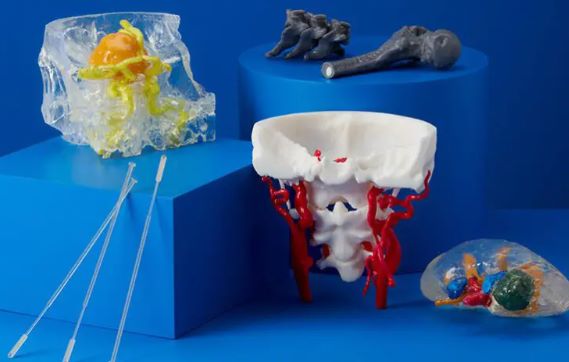
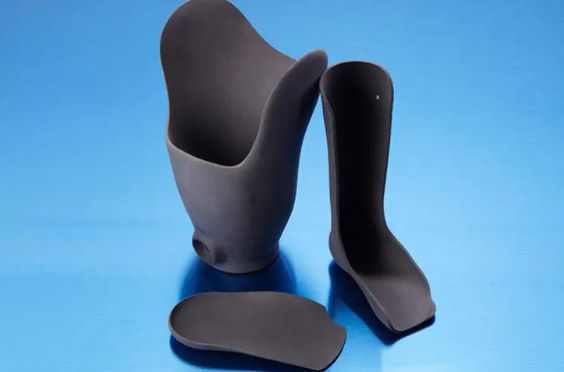
To date, the main applications of 3D printed medical devices are in the production of surgical guides, musculoskeletal implants, hearing aids, orthotics, dental equipment and other products suitable for customization. With the continued development of technology, additive manufacturing is already making it possible to print body parts, including facial reconstruction, and even 3D print the human knee meniscus in space. Additionally, 3D printed medications can be personalized based on patient preferences or a series of specific parameters. For example, the shape, porosity and solubility of the tablet can be adjusted according to individual circumstances, and several drugs can even be combined into one. a single shelf in the middle.
The application of 3D printing in medical equipment is different from other fields. Particular attention should be paid to the supervision of medical equipment. This article has compiled the key regulatory considerations regarding 3D printing of medical equipment.
Regulatory considerations for medical devices
In the field of 3D printed medical devices, a clear distinction must be made between the hardware device (the 3D printer itself) and the output device (the medical device). Printers must comply with applicable machinery regulations and harmonized standards (Directive 2006/42/EC), and medical devices produced must comply with applicable medical device rules (Regulation (EU) 2017/745 ( EU MDR)). comply with applicable regulatory data, software and rules for potential uses of artificial intelligence (AI).
The following elements should be considered by manufacturers when bringing 3D printed medical devices to the market. It is crucial to guarantee the conformity of associated devices.
Custom Devices (CMD). Under the EU MDR, medical devices personalized for a single patient or group of patients may be considered CMDs. This is defined in Article 2(3) of the EU MDR as: any device specially manufactured on the written prescription of any person authorized by national law to provide specified design features by virtue of that person’s professional qualifications and under the responsibility of that person, and are available only to specific patients on an individual basis, based on their individual conditions and needs. However, mass-produced equipment that requires adjustment to meet the specific requirements of any professional user and equipment mass-produced via industrial manufacturing processes should not be considered custom-made equipment.
Therefore, to be clear, 3D printed medical devices are not considered CMD by default, but must be evaluated on a case-by-case basis. To be considered a CMD, MDCG 2021-3 confirms that a device must i) comply with a written report with patient-specific design features, ii) be intended for use by a specific patient only, and iii) not be manufactured in large quantities.
While CMD manufacturers must comply with the vast majority of EU MDR requirements, including maintaining quality management and post-market surveillance systems, in some cases CMD manufacturers’ obligations differ those of traditional medical devices under the EU MDR. In summary, the main differences between EU MDR requirements and traditional medical devices include:
●Conformity assessment of CMDs is defined in Annex XIII and requires that an Annex XIII declaration be provided to a specific patient or user, replacing the conformity declaration with a name, acronym or digital code.
●The conformity assessment procedure covering the certification of the quality management system of the notified body is applicable to Class III implantable CMDs (Article 52(8) EU MDR).
●CMD manufacturers are exempt from the requirements for registration, allocation and labeling of a unique device identifier, as well as the obligation to produce safety and clinical performance summaries (article 32 (1) of the EU MDR)
●Although CMD manufacturers must designate a person responsible for compliance (Article 15 of the EU MDR), they are not required to register on the EUDAMED system.
Adaptable medical devices. Adaptable medical devices are defined in the International Medical Device Regulators Forum (IMDRF) guidelines “Defining Personalized Medical Devices” as mass-produced products that must be adapted or assembled at the point of care to fit the device. each patient according to the manufacturer’s validated instructions. . specific anatomical and physiological characteristics. According to the IMDRF guidelines, a device will be mass-produced if it is designed based on standardized dimensions, is not designed for a specific individual, and is generally produced in homogeneous batches. Adaptive medical devices differ from CMDs in that they are not specifically manufactured to meet the needs of a specific patient based on a written report.
Equipment adapted to the patient. Regarding adaptive medical devices, the IMDRF guidelines define additional device categories that may apply to 3D printed devices. A device is a patient-fit device if it is mass-produced and matches the patient’s anatomy within specified design limits using techniques such as device scaling based on anatomical references or l patient imaging. These devices differ from CMDs in that they do not rely on written reports, and from adaptive medical devices in that they are entirely the responsibility of the manufacturer and do not require any adjustment or assembly at the point of care .
Determination of responsibilities. It is important to note that different legal entities have legal liability under the EU MDR depending on whether the device is CMD eligible or not. Determining the responsibilities and obligations applicable in each situation is a crucial step in ensuring the compliance of 3D printed medical devices. For example, in the case of the CMD, the authorized person issuing the written report is responsible for the design process and carrying out the intended use of the device, while the manufacturer is responsible for compliance with general safety and security requirements. performance (Article 2(3)). ) and Annex XIII(1) of the EU MDR). For adaptable, patient-specific medical devices, the manufacturer is responsible for the design, intended use, and general safety and performance requirements of the device.
in conclusion
3D printing devices represent a huge opportunity for companies capitalizing on the accelerating trend of personalized medicine. But to remain compliant, manufacturers must recognize the nuances between CMDs, adaptive medical devices, and patient-friendly devices, as well as the regulatory responsibilities in each case to ensure devices can be brought to market on time.
Source: 3D Printing Network
Daguang focuses on providing solutions such as precision CNC machining services (3-axis, 4-axis, 5-axis machining), CNC milling, 3D printing and rapid prototyping services.



















