

Brothers Patrick and Scott Snarr and their business partners created Snarr3D, a golf company that aims to use 3D printing to create custom putter shafts. Their goal is to use 3D printing to customize the weight distribution of putters and help golfers improve their speed and distance control. If this one-piece 3D printed golf putter can be manufactured, it can greatly promote golf’s exploration of additive manufacturing.
Patrick Snarr and Scott Snarr have always been golfers and play golf whenever they can. While preparing for their doctoral studies at the University of Texas at Austin, they received a class assignment that required them to use additive manufacturing (AM) to redesign a traditionally manufactured product. They immediately thought about their favorite hobby and how they could use technology to redesign putters. In formulating their idea, the brothers saw the commercial viability of the product, so rather than presenting it to their class, they wrote a business plan. Soon, Snarr3D was born and the Snarr brothers began to commercialize their idea.
Their concept is simple: use 3D printing to redistribute the weight of the putter shaft to give golfers a better feel when putting. Unlike traditional weight distribution where the putter shaft is pre-made and weight is added in post-production, Snarr3D streamlines the process by redistributing weight during the printing process and eliminates the need for weight in post-production.
Features:
● Optimized Weight Distribution for More Consistent Putts: With full control over weight distribution across the entire putter shaft, Snarr3D’s innovative weighting technology promotes better speed control and impact placement for more putts.
●Innovative shaft textures for better looking golf equipment: Additive manufacturing allows custom textures and patterns to be added to golf clubs.
●Data-Driven Design for Improved Putter Performance: Independent research conducted by Snarr3D enables smarter putter designs that improve feel and data-driven results.
Advantages of additive manufacturing:
●Eliminates geometric constraints and obtains unique aesthetic characteristics
●Cost-effective, low-volume manufacturing capacity
●Digitalization and on-demand manufacturing reduce product development time
Snarr3D initially partnered with SLM Solutions in Germany to print 25 prototypes, and as the business grew, each subsequent print will produce 500 push rods. SLM Solutions uses the Austin SLM800 laser powder bed fusion (LPBF) system and aluminum powder to manufacture the push rods. The tall Z-axis height of the SLM800 was perfect for Snarr3D and allowed them to print a completely vertical, one-piece putter. This process eliminates the need for supports and requires no post-processing.
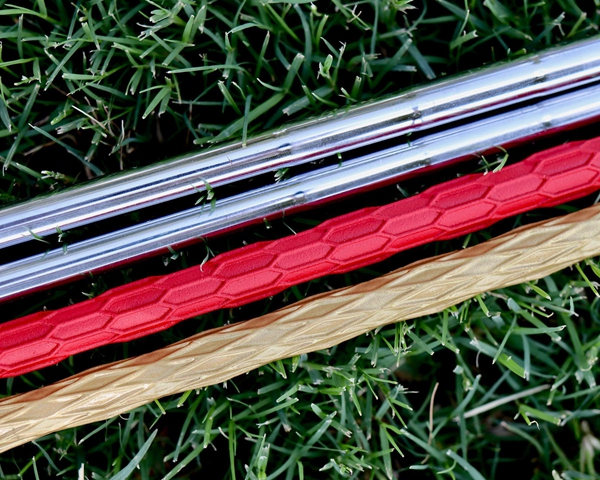
△Comparison of Snarr3D putter shaft (right) and regular putter shaft (left). (Source: Snarr3D)
Once the company is fully launched, Snarr3D hopes to manufacture its products in the United States. Until then, SLM Solutions was their chosen contractor of excellence, allowing them to test the effectiveness of their products and produce quality putter shafts. The next step for Snarr3D is commercialization. Snarr3D plans to make its patent-pending device available in January 2024 and finalize its patent-pending device over the next few months, potentially launching with three initial designs and hoping to launch fully custom clubs over the next few years .
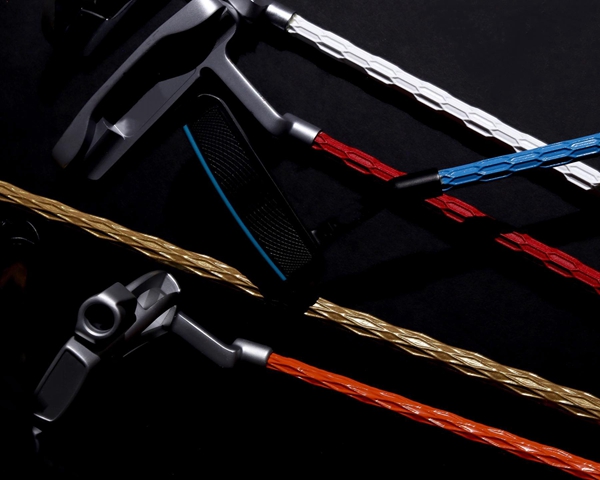
△Putter with custom Snarr3D putter shaft. (Source: Snarr3D)
This concept is largely uncharted territory for golf club and golf ball manufacturers. Many established companies, such as Callaway and Cobra, have focused their additive manufacturing efforts on putter heads rather than shafts. We haven’t seen similar technology yet, but Snarr3D could open the door for golfers to explore this area even further.
Source: Antarctic Bear
Daguang focuses on providing solutions such as precision CNC machining services (3-axis, 4-axis, 5-axis machining), CNC milling, 3D printing and rapid prototyping services.



















