
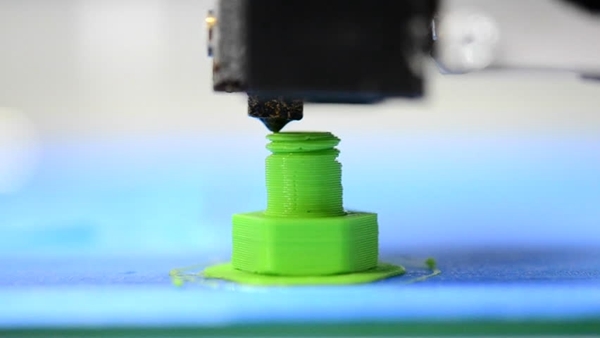
ABS material, also known as acrylonitrile butadiene styrene, is a thermoplastic polymer very common in industrial applications. It is known for its high impact resistance at low temperatures and for manufacturing lightweight components. In addition to this, ABS plastic is also very popular in the 3D printing market and, along with PLA, it is one of the most used materials in this field. It is most commonly found in FFF 3D printing, but can also be used in vat photopolymerization methods in resin form.
This article mainly uses the commonly used ABS filament as an example to introduce the production process, characteristics, 3D printing process and application of ABS materials. The specific content is as follows:
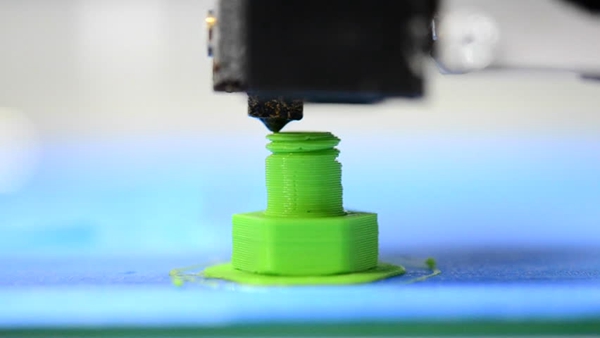
Production and characteristics of ABS
ABS was one of the first plastics used in industrial 3D printers, developed around 1990. This type of thermoplastic polymer is called a “terpolymer,” defined as a polymer synthesized from three different monomers. In this case, it is usually made by polymerizing acrylonitrile, styrene and polybutadiene, including 20% acrylonitrile, 25% butadiene and 55% styrene, hence its name ABS. Additionally, manipulation of these ratios can change the characteristics of the ABS. For example, styrene is what gives ABS its rigidity and shine, while butadiene gives it impact resistance and low temperature properties.
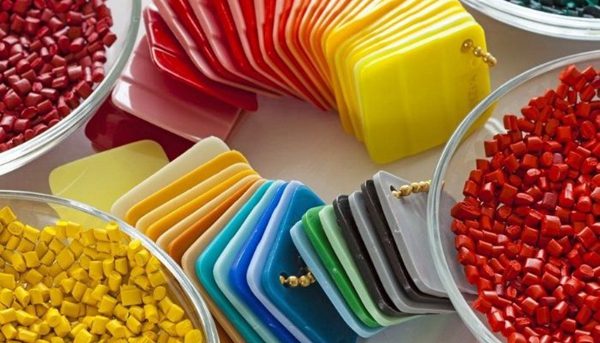
△ABS has become a popular plastic in the industry due to its properties (Photo source: Adreco Plastics)
An important thing to remember is that ABS is made from petroleum, while PLA is made from more environmentally friendly materials like cornstarch, which often makes it subject to problems with sustainability in industry. However, the durability of PLA materials remains controversial, because although PLA is technically biodegradable, its degradation conditions are actually very harsh, raising the question of whether it is truly environmentally friendly.
In terms of performance, ABS material has good rigidity, high impact resistance, while being lightweight and affordable. In fact, due to these excellent properties, ABS and PLA have been popular materials in the FDM 3D printing market for many years. Additionally, ABS is not only resistant to impact, but also to chemicals and heat, favoring its further use in more industrial applications.
3D printing and ABS
But how exactly do you print with ABS? Although it comes in both filament and resin forms, with ABS being the most commonly used in the FFF 3D printing market, it is what we will focus on here. It is available as filament with a diameter of 1.75mm or 2.85mm and is available in a variety of colors. Although ABS is more difficult to print than PLA, it remains a very popular material among 3D printing professionals due to its resistance to impact and high temperatures (-20°C to 80°C). ABS material is opaque, has a smooth, matte surface and can be treated with acetone to make it glossy.
The melting temperature of ABS is around 200°C, so extrusion temperatures between 230 and 260°C are recommended. Additionally, a heated print bed (between 80 and 130°C) must be used. In fact, it is a plastic that shrinks on contact with air. So if it is not placed on a heated print bed it can easily shrink (or warp) and fall off the plate. For large pieces, it is even recommended to use special glues such as Kapton or bonding paint. Finally, it is recommended to use a 3D printer with a closed case for two reasons: first for the safety of the user, because ABS plastic can release particles dangerous for the user, but also because the control Temperature is crucial when using ABS. . The second is that to successfully print, in particular to avoid problems of deformation, cracking and delamination (separation of layers), having this heated chamber will allow the temperature to be maintained constant.
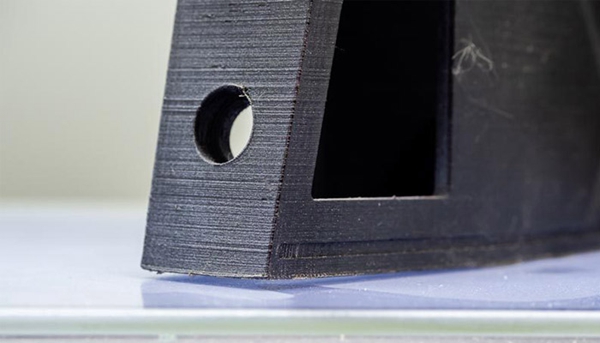
△Must heat the build plate to prevent warping
Additionally, although it is more difficult to print than materials like PLA (and PETG, another popular filament), ABS is still easier to print than other technologies and cheaper thermoplastics. However, as mentioned earlier, controlling the temperature of the bedroom, bed, or even the entire room is essential to avoid print failures. Also remember that ABS is a material that must be kept dry because it absorbs moisture from the air, which can make printing more difficult.
In terms of print media, ABS prints easily with HIPS, a material with the same pallet and extrusion temperatures. The material quickly dissolved in D-limonene, a solvent made from a compound found in lemon. However, if it is printed with an insoluble support material it will be necessary to remove it, and this can be done using methods such as cutting, similar to other filaments.
Indeed, printing with this thermoplastic polymer requires very little post-processing overall, which is a key advantage that saves time in the production of complex parts. However, for those interested in ABS, several post-processing options are available. In addition to removing the support already mentioned, it can also be painted thanks to its more matte finish. It is also easy to work with compared to other materials, for example it can be sanded or machined due to its durability. Finally, a common method of post-processing ABS is to smooth it with acetone vapor to achieve a glossy finish.
ABS 3D printing applications
As we mentioned, one of the main attractions of ABS is that it is a more technical material. Its applications therefore also tend to be more industrial. For example, it is popular in polymer injection molding. Furthermore, when we talk about general uses, we find it in the field of household appliances, but also in boat hulls, decorative pieces, toys and the famous LEGO bricks.
Other common uses for additive manufacturing are in prototyping, gears, and even tooling, as it is more resistant to physical stress than some other common polymer filaments for 3D printing. Additionally, its electrically insulating properties, in addition to its chemical and thermal resistance, also make it attractive to those looking to create enclosures for electrical components and automotive parts such as dashboards or bumpers. It is also ideal for outdoor applications as it will not warp in the sun or over time.
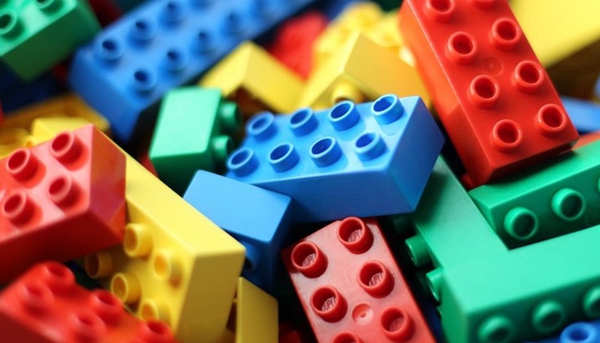
△Lego bricks are one of many products made from ABS
Source: Antarctic Bear
Daguang focuses on providing solutions such as precision CNC machining services (3-axis, 4-axis, 5-axis machining), CNC milling, 3D printing and rapid prototyping services.



















