

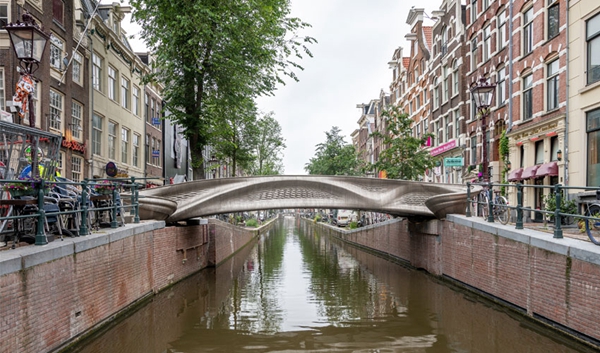

BAM provided its 3D printing expertise for the construction of the bridge. Its printer consists of a robotic arm equipped with a nozzle that extrudes a concrete mortar mixture. This allows the machine to deposit material layer by layer to a thickness of approximately 5 millimeters. The company claims that the 3D printing stage allows for precise shapes that are difficult to achieve with traditional manufacturing techniques. We know that this technology has made it possible to reduce materials by up to 40% and waste by 50%. Ian Steele, Contracts Manager at BAM, explained: “This project uses cutting-edge digital technology and the collaboration of everyone involved to push the boundaries of what is possible in construction. We are proud to leave a legacy of sustainability that will position the north of the country. Glasgow in the future for several years.”
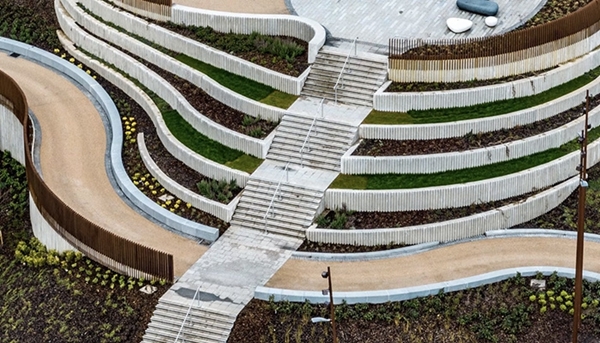
Weber Beamix is a concrete supplier. The solution they developed takes advantage of the unique properties of rheological materials, namely products that resist flow and deformation. Once the concrete is placed, it sets and adheres to the next layer. According to BAM, each construction layer must be placed within 10 minutes of the other layer setting. Weber Beamix is also responsible for the 3D printing stage at its factory in the Netherlands. Once the design was complete, the structure was shipped to Scotland. However, 3D printing enthusiasts who want to see these 3D printed stairs with their own eyes may be disappointed. Indeed, after installation, the structure was covered with granite. This is a non-slip surface specially installed for the safety of citizens.
Source: 3D Printing Network
Daguang focuses on providing solutions such as precision CNC machining services (3-axis, 4-axis, 5-axis machining), CNC milling, 3D printing and rapid prototyping services.



















