
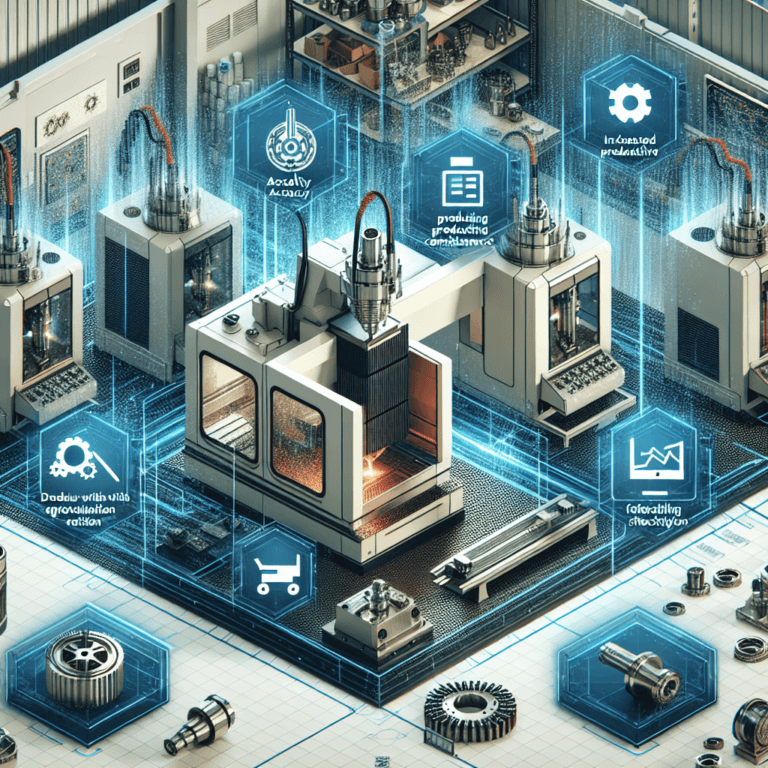
CNC machining or computer numerical control machining has revolutionized the manufacturing and production processes in various industries. By leveraging advanced software and precision engineering, CNC machining services create complex parts and products with unparalleled accuracy, repeatability and efficiency. In this article, we’ll take a closer look at five of the top benefits that CNC machining services bring to the industry, exploring how they can increase productivity, improve quality, and transform manufacturing dynamics.
1. Improve precision and accuracy
The science behind precision
One of the most significant advantages of CNC machining is the ability to produce high-precision parts. CNC machine tools use preprogrammed computer software to control the movement of machinery and tools. Each movement is calculated to an accuracy of a thousandth of an inch, allowing for astonishing precision not typically achieved with manual machining.
Accuracy is critical in a variety of applications, including aerospace, automotive and medical device manufacturing, where even the slightest deviation from specifications can lead to catastrophic failure. With CNC machining services, industries can ensure that their parts meet tight tolerances and specifications, ultimately producing higher quality products.
The role of quality control
Advanced quality control measures are an integral part of the CNC machining process. Using computer-aided design (CAD) and computer-aided manufacturing (CAM) software, engineers can simulate and verify designs before production, improving accuracy. This process allows for rapid prototyping, meaning industries can create and test multiple iterations of a product before going into full production.
For example, in aerospace manufacturing, small errors in part dimensions can compromise the safety and functionality of an aircraft. CNC machining meets these challenges through rigorous testing and quality assurance, ensuring each component meets the exact specifications required.
2. Improve efficiency and productivity
Production process automation
CNC machining services streamline the manufacturing process by automating production and reducing the need for manual intervention. This operational efficiency minimizes human error and significantly increases throughput. Traditional machining methods often require an operator to monitor the machine and make adjustments as needed throughout the process. In contrast, CNC machine tools can run continuously without interruption, thereby greatly increasing productivity levels.
Minimize downtime
Another aspect of efficiency comes from reducing machine downtime. CNC machine tools can run 24/7 with minimal supervision, allowing for higher throughput and faster turnaround times. In industries where demand is high and lead times are critical, the ability to continuously produce parts without interruption can prove invaluable.
Automation can also mitigate risks associated with operator fatigue, ensuring output quality remains consistent throughout the production cycle. As a result, companies can better meet customer demands with shorter delivery times, thereby gaining a competitive advantage in their respective fields.
3. Production flexibility
Adaptability to different projects
CNC machining offers unparalleled flexibility, allowing manufacturers to quickly adapt to market demands. CNC services are capable of processing a variety of materials, including metals, plastics and composites, allowing industries to adapt to changing needs without extensive changeovers.
Quick conversion
CNC machines can be easily reprogrammed for different tasks, which is particularly beneficial in environments that produce multiple product lines. For example, CNC machines programmed to make automotive parts can be quickly recalibrated to produce complex designs for consumer electronics—all within a few hours.
This versatility is an important feature in today’s fast-paced market, where companies are constantly faced with ever-changing customer demands. By leveraging CNC machining services, organizations can quickly scale up or down production based on current needs, thereby enhancing overall strategic agility.
4. Cost-effectiveness
Reduce labor costs
The integration of CNC machining services has greatly reduced labor costs in the industry. Traditional machining often requires skilled workers to operate complex machinery and perform complex tasks. CNC machines minimize human intervention and associated labor costs. Despite the initial investment in CNC technology, these costs are far outweighed by long-term savings through reduced labor requirements, efficient use of materials, and increased production capabilities.
material efficiency
CNC machining also improves material utilization. Traditional machining processes can result in significant amounts of waste due to manual cutting and forming techniques. In contrast, CNC routers and milling machines utilize advanced software to create optimized cutting paths that minimize waste and utilize materials more efficiently. This efficiency can result in significant cost savings for manufacturers, promoting more sustainable production practices by reducing scrap and leftover materials.
long term investment
In addition, although the initial capital required for CNC equipment is higher, the longevity and reliability of CNC machine tools contribute to their cost-effectiveness. CNC machine tools typically have lower maintenance costs and longer service lives than traditional machinery. With these factors in mind, employing CNC machining services becomes a smart investment that will yield better financial results over time.
5. Improve security
Reduce workplace hazards
Safety is a primary concern in all manufacturing industries. CNC machining services help create a safer working environment by reducing the risks associated with manual machining processes. CNC machines often operate behind protective barriers and enclosures, minimizing operator exposure to hazardous machinery.
Simplified workflow
Additionally, the automation of CNC machining helps streamline workflows and reduce the likelihood of workplace accidents caused by human error. CNC systems are designed to handle hazardous tasks that pose risks to operators, such as high-speed cutting and heavy lifting, ensuring a safer operating environment.
Training and compliance
As manufacturers adopt CNC technology, the need for comprehensive training becomes apparent. Skilled technicians are essential for programming and supervising CNC operations, but this training focuses primarily on safety protocols and operational compliance. Organizations that prioritize worker safety and invest in CNC machining not only protect their employees, but also comply with regulatory standards and increase overall corporate responsibility.
in conclusion
In conclusion, CNC machining services offer many advantages and can drastically change the industrial manufacturing process. CNC machining enables industries to succeed in a highly competitive market by increasing precision and accuracy, increasing efficiency, providing flexibility, reducing costs and improving workplace safety.
Whether in aerospace, automotive, medical or consumer products, the application of CNC technology will continue to play a key role in shaping the future of manufacturing. Organizations that leverage these technological advancements not only ensure the efficiency of their operations but also provide higher quality products to meet increasingly complex and demanding consumer needs.
FAQ
What is CNC machining?
CNC machining is a manufacturing process that uses computer numerical control to automate mechanical operations. It involves the use of pre-programmed software to control the movement and functionality of tools and machinery in manufacturing parts and products.
Which industries benefit from CNC machining services?
CNC machining services are used across a variety of industries, including aerospace, automotive, medical device manufacturing, electronics, and consumer goods. Essentially, any industry that requires precise, high-quality parts can benefit from CNC technology.
How does CNC machining improve product quality?
CNC machining improves product quality by providing high precision and accuracy in the production of parts. The integration of advanced quality control measures and simulation software also ensures parts meet strict specifications, reducing the likelihood of defects.
Is CNC machining cost-effective?
While the initial investment in CNC machinery may be high, the long-term cost savings are significant. Reduced labor costs, improved material utilization, and improved production efficiency contribute to a more favorable cost-output ratio.
How does CNC machining enhance workplace safety?
CNC machining improves workplace safety by reducing operator exposure to hazardous machinery and minimizing the potential for human error. Additionally, ongoing training and compliance with safety protocols play a vital role in ensuring a safe work environment.
By understanding these advantages, industries can strategically implement CNC machining services to drive innovation and productivity, ensuring their competitive advantage in an evolving market.
Daguang focuses on providing solutions such as precision CNC machining services (3-axis, 4-axis, 5-axis machining), CNC milling, 3D printing and rapid prototyping services.



















