
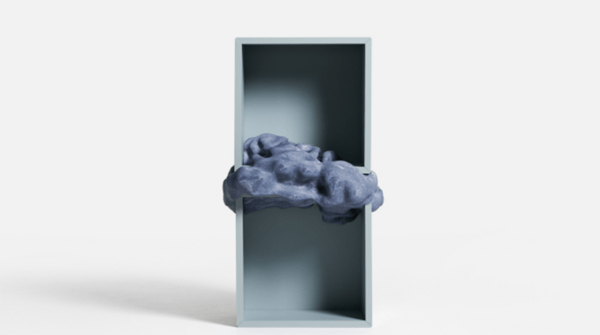
3D printing has now become a key technology in the field of design, offering the opportunity to push the boundaries of creativity. Amidst this dynamic, YET Architecture and BDM Architects have joined forces for a project called Parasite which explores new approaches to customization. The project aims to combine mass production and originality by transforming standardized IKEA products found all over the world. Using 3D printing, these objects are transformed into unique personalized sculptures.
Parasite challenges the idea that mass production is always mundane and mundane, showing that everyday objects can be made unique by incorporating personality. The series addsClassic IKEA furniture such as shelves, tables and cabinets are reimagined with 3D printed elements that can be connected to create original styles. One of the basic principles of the project is based on the idea of transformation through recycling, giving new life to existing products.
When recycling IKEA products, use3D printing transforms consumer furniture
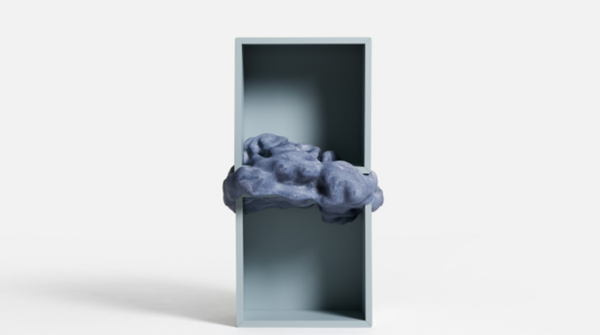
One of the pieces in the series is a tribute to IKEAThe Knarrevik bedside table has been given a makeover by adding a 3D printed front reminiscent of the soft shapes of clouds and integrated lighting. Another piece transforms IKEA Eket shelves into a sculptural design, supported by an organic-style structure. According to the architects behind the project, each modification becomes a form of personal expression, blurring the lines between mass production and bespoke creativity. “We hope to lead the public to rethink their vision of mass production, by showing them that these apparently standardized objects have real aesthetic potential and real individuality,” they explain. They added: “We believe that furniture must constantly evolve and reinvent itself to meet the needs of different cultures, offering solutions that adapt to the ever-changing human experience,” the designers explain.
Although there is no information on the technology used or3D printer specifics, but the project demonstrates how personalization technology can be used to transform mass-produced decorative objects. Although the project is not officially linked to IKEA, it can be noted that IKEA used 3D printing. The company recently recruited a prototyping engineer for its 3D laboratory and launched innovative projects such as FLAMTRäD, a range of decorative objects printed in 3D on demand.
Daguang focuses on providing solutions such as precision CNC machining services (3-axis, 4-axis, 5-axis machining), CNC milling, 3D printing and rapid prototyping services.



















