
Challenge: The Yorkshire Museum has a collection of Ryedale treasures from the British Roman period dating back 1,800 years. They must create four historically unique 3D digital replicas quickly and safely. Create innovative curatorial designs and share them. them with visitors from all over the world.
Solution: Artec Space Spider, Artec Studio, Systems ColorJet 3D printer
The result: traditional photogrammetry required extensive processing and positioning, and took a full day to complete the shooting process, plus an additional day to create the 3D model from the photos. In contrast, each of the four Ryedale treasures was meticulously 3D scanned in less than 5 minutes and within an hour all scanning and processing was completed, resulting in the entire series of four, a superb 3D digital replica.
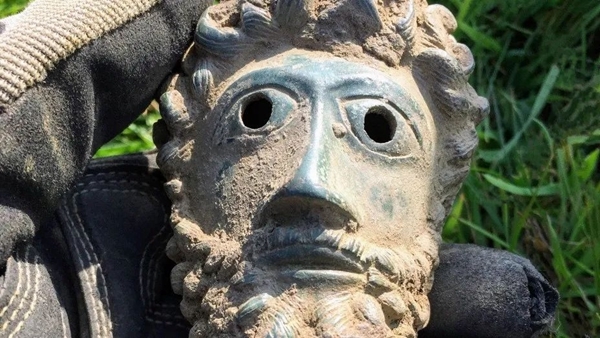
When they saw the bronze color, they immediately stopped digging. At first they thought it was a Bronze Age ax edge. Minutes later, as they removed a small bust of Marcus Aurelius from a hole in a farmer’s field in Rydale, England, metal detecting experts Mark Didlick and James Spark held their breath.
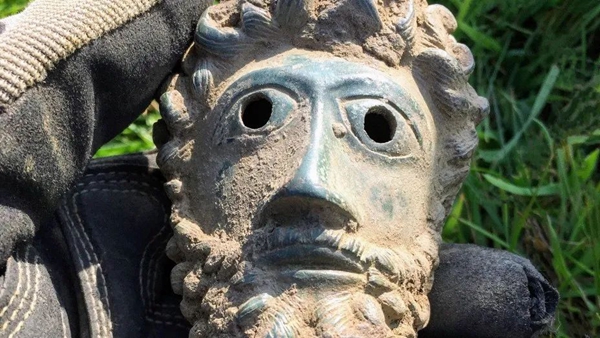
△The bronze bust of Marcus Aurelius detected by a metal detector. Photo credit: Mark Didrick
When they carefully wiped the dirt from the former emperor’s face, it seemed that after a few minutes, they were both speechless.
The bust is their second discovery of the day. They then continued to search the area. At the end of their research, in addition to the bust, three other objects were discovered: a plumb line, a statue of the Roman god Mars and a handle in the shape of a horse.
Diederick sent several photos to former archaeologist Brian Walker, who was shocked by the discovery and concluded that they were likely ancient Roman artifacts dating back to the 2nd century AD.
1、From farmers’ fields to the Yorkshire Museum exhibition halls
In the following weeks, the 1,800-year-old artifacts – one of the most exquisite collections in Roman Britain – were identified and named the Ryedale Hoard. It was subsequently acquired by the York Museums Trust and has since been on display at the Yorkshire Museum.
Andrew Woods, Senior Curator at the Yorkshire Museum: “Never before have so many exquisite Roman objects been discovered in the UK at the same time and in the same place. All of these artifacts are breathtakingly beautiful. Incredible know-how. We are sure they were made in Britain at the height of the Roman Empire.
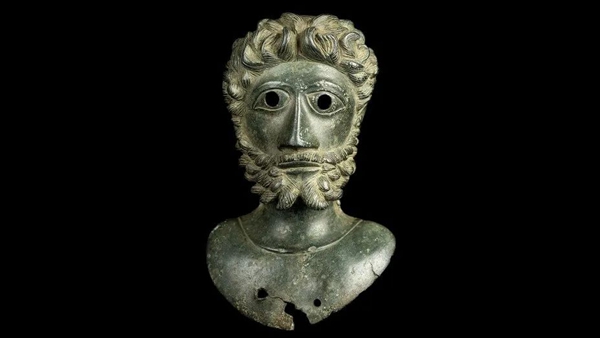
△Among Ryedale’s treasures is a bronze bust of the ancient Roman emperor Marcus Aurelius. Image source: York Museums Trust
This finely carved bust of Marcus Aurelius was originally mounted on a priest’s crozier in the ancient Roman Empire and was undoubtedly frequently used in the emperor’s rites and ceremonies.
The artist who created this extraordinary work was likely from England, never met the emperor in person, and based his work on existing sculptures and depictions on coins.
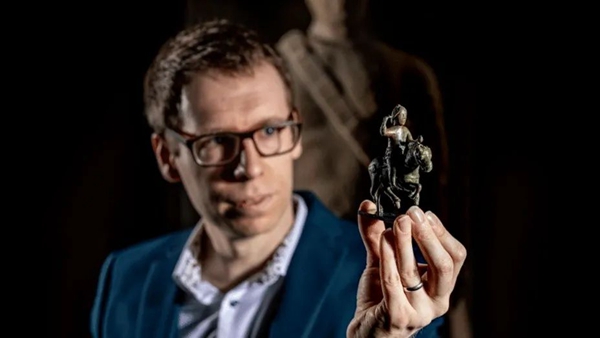
△Andrew Woods, Senior Curator of the Yorkshire Museum, with the statue of Mars on horseback from the Ryedale Hoard. Image provided by York Museums Trust, copyright Charlotte Graham Photography.
Throughout the Empire, the Roman god Mars was often depicted as a warrior on horseback. This small statue depicts the ancient god galloping across the battlefield, but the spear and shield he once wielded have been lost over the centuries.
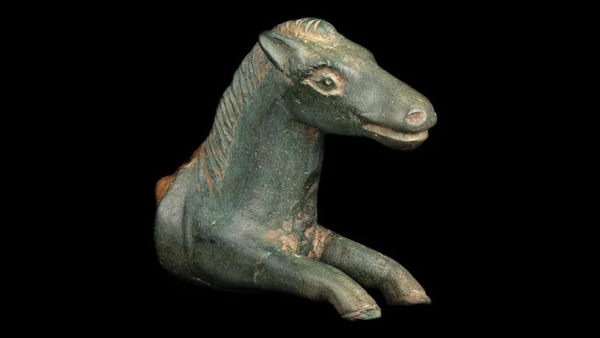
△Rydale Treasure: Horse-shaped knife handle. Image source: York Museums Trust
In ancient Rome, everyday objects decorated with animal shapes were very popular. This horse-shaped handle was originally the handle of a knife. It is assumed that the knife was intentionally broken before burial.
The design of the Ryedale Hoard plumb line has changed little over the past 2,000 years and played an important role in Roman Britain, providing precise measurements for the construction of new roads, forts and villages.
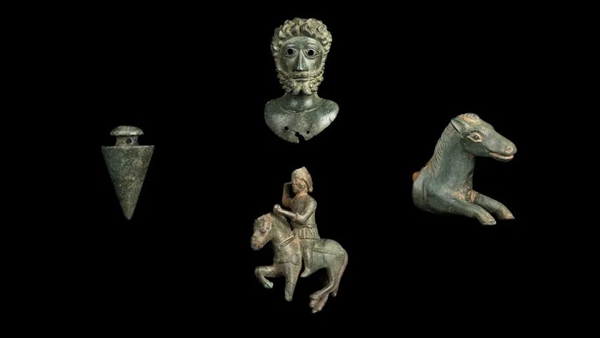
△The Treasure of Ryedale. Image source: York Museums Trust
Researchers concluded that the artifacts were buried as offerings to the gods in the late 2nd century AD. Research continues to shed light on the significance of these priceless artifacts and why they were buried in the ground in this way.
2、Create a digital copy of Ryedale’s treasure
Keen to become a leader in digital platforms, broaden its reach and establish a model for sharing its collections with the online world, Yorkshire Museum has decided to showcase Ryedale’s treasures in 3D.
In the past they have carried out such projects mainly through photogrammetry, in collaboration with Heritage360 at the University of York.
But due to the nature of photogrammetry, which involves long photography sessions (when using a single-lens camera) and the extensive processing required to position and reposition each photographed object, projects like this These require conservatives to take weeks, if not months, to plan. .
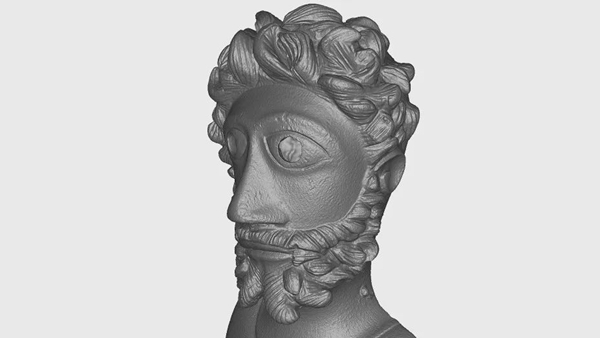
△Artec Space Spider 3D scan of the bust of Marcus Aurelius. Image source: Heritage360
Patrick Gibbs from the Heritage360 team said: “Photographing historic objects involves a lot. It’s not just about taking them out and photographing them in a few minutes. Considering damage to the collection Due to some potential risks and requirements for curators to be present, we must communicate continuously with the museum to develop the best and safest plan.
He continues: “With a single-lens photogrammetry setup, we might spend two days working on an artifact just to make sure everything we need is photographed. Any logistical issues may take another two to three months to resolve. »
If they had continued with the same approach, planning and carrying out the digitization of the Yorkshire Museum’s Ryedale bronze collection would have taken months. Not to mention that thousands of objects in the museum’s collection are waiting to be digitized.
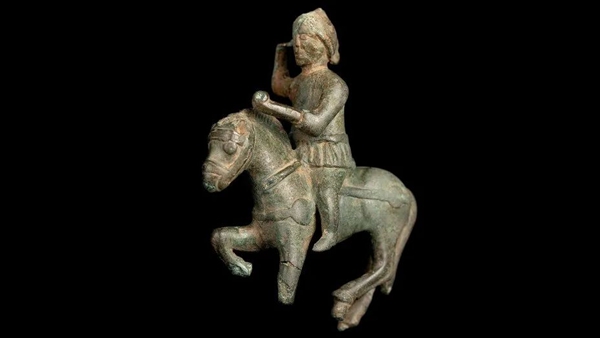
△The statue of Mars on horseback in Ryedale Treasure. Image source: York Museums Trust
3、Looking for alternatives to traditional photogrammetry
This forced Gibbs and his digital guru, James Osborn, to explore the market for other possibilities. An online search led them to Artec3D ambassador reseller Central Scanning, specialists in 3D scanning for cultural heritage conservation and other industries.
So much so that before the first demo was even finished, the duo came up with a solution: Artec Space Spider.
Space Spider has been the handheld 3D scanner of choice for archaeologists, cultural heritage experts and many other professionals around the world for many years.
Space Spider captures the intricate details of objects with sub-millimeter precision and realistic 3D color rendering, without the need for markers or sprays. Scans can be used for online and on-site exhibitions, digital cloud storage, 3D printed educational models, and more.
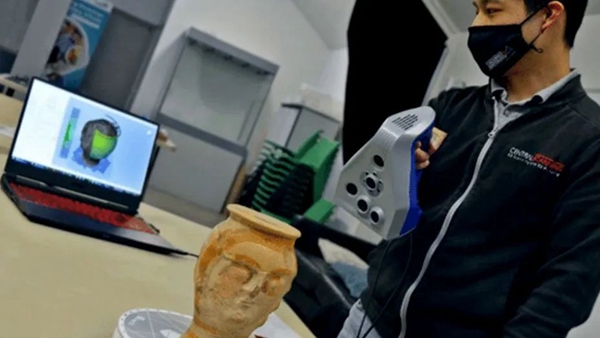
△Alex Zhang of Central Scanning used Artec Space Spider to scan Roman effigy pots.
Image source: Heritage360
Woods explained how the scanners helped the Yorkshire Museum with their project: “It was important for us to give visitors details that they wouldn’t necessarily see even if they walked into the museum.”
He further explained: “Without risk to the collection itself, you can collect, return and study them virtually, and follow the labels and notes written by the curator to understand the countless vicissitudes of history and the history associated with each collection. the touching story behind it, you will live an unforgettable and unique experience.
4、3D scan of Ryedale treasure completed in one hour
When the new Space Spider was used to 3D scan the Ryedale bronze collection, Gibbs and Osborne, along with the curators involved in the project, were amazed.
The four artifacts were placed one by one on the Artec turntable and scanned within 5 minutes. In just 10 minutes, the scans were transformed into a stunning 3D model using Artec Studio software.
“By virtually collecting, returning and studying objects without risk to the collections themselves, you will have an experience that is both unforgettable and unique. »
The total time required to set up, scan and process all objects and create their respective 3D models was less than an hour. This is in stark contrast to the photogrammetry method used previously.
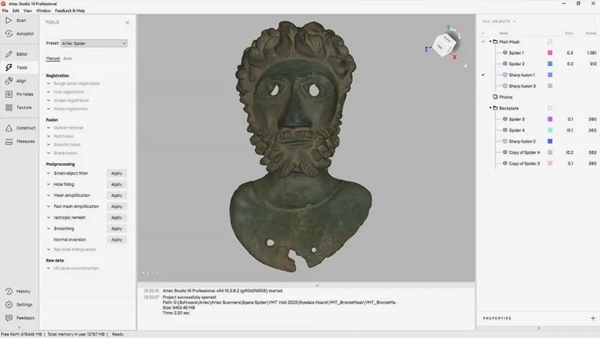
△Processing of the bust of Marcus Aurelius scanned by Space Spider in Artec Studio software
Image source: Heritage360
Regarding this, Osborne said: “It would take a whole day just to photograph these objects with photogrammetry. If the light changed even slightly during the photo shoot, we had to ask the curators to take the collection out again and shoot it the same way. The lighting conditions weren’t even possible on the same day, so we had to take a lot of extra photos to compensate and hope they all came out correctly during the processing phase to get the final result.
He added: “If everything goes according to plan, processing of all photos will not begin until the next day. One hour of using Space Spider is equivalent to two days of photogrammetry, not to mention the additional risks posed by the system of photogrammetry.” various accessories that each subject maneuvers in a defined position.
5、Generate realistic 3D models from analysis results
The working process in Artec Studio is quick and easy. First, use basic deletion to delete unnecessary data outside the object. Once complete, align the scans to bring all the geometry together.
Then, by applying a sharp blend of 0.1mm, they reduced the number of polygons when exporting the 3D model for online viewing to optimize file size and display speed.
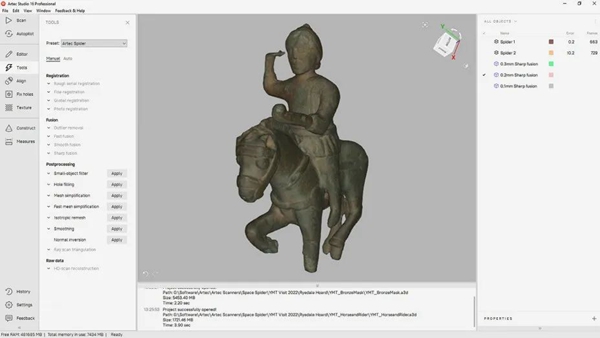
△The statue of Mars on horseback scanned by Space Spider is processed in Artec Studio software
Image source: Heritage360
The resulting 3D model is now available within the Yorkshire Museum and on its official website. QR codes linked to Sketchfab models are placed alongside the collections, providing museum visitors with a sense of engagement and interaction.
6、Yorkshire Museum shares its 3D assets with the world
The Yorkshire Museum doesn’t stop there. They also plan to share the 3D models on sites like Wikimedia Commons, where they hope to receive millions of views per week.
Woods explained the reasoning behind this: “It’s a way to introduce our collection to people around the world who may never have the opportunity to see them or come to the museum. By sharing these 3D scans with these people, we can also interact more easily. .”
Yorkshire Museum plans to make 3D models of the Ryedale Bronze available for free download, in both low and high resolution versions. Teachers, artists, researchers and others are invited to download and use the digitized data.
7、Beautiful 3D printed replicas for education
As part of an educational initiative, Yorkshire Museum and Heritage360 decided to use scans of Space Spider to create a 3D printed “touchable” version of the Ryedale Bronze for school visits.
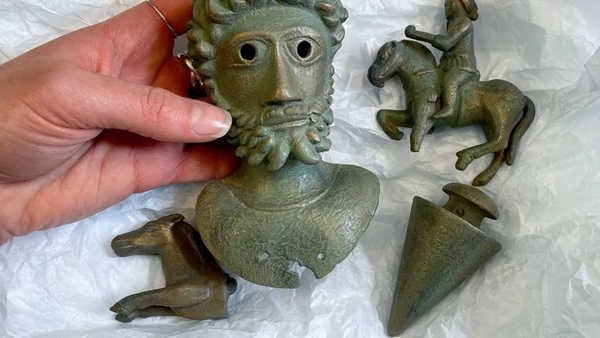
△ 3D printed and hand painted Ryedale Treasures. Image source: York Museums Trust
As the team did not yet have the expertise and technology in this area, they contacted Steven Dey, 3D digital artifacts expert at ThinkSee3D. Since founding the company in 2015, Day has produced hundreds of digitally reproduced replicas for museums and clients in the UK and beyond.
Once Day received the 3D model (OBJ file) of the Ryedale Bronze from Heritage360, the entire 3D printing process took approximately three hours, with all four objects printed directly from plaster on a ColorJet 3D printer Systems.
8、Clever aging treatment, presenting a rustic appearance
Apply the base paint, then apply the epoxy resin as a top coat, and when the surface is semi-dry, coat it with copper powder. Once the epoxy powder sets and is buffed to a shiny bronze look, they look brand new.
Then begins the aging process, using spray paint and wax to restore the same bronze appearance of the artifact.
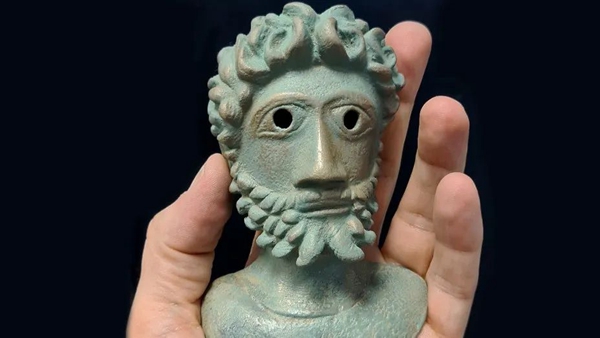
△Printed and hand-painted replica of the bust of Marcus Aurelius
Image source: ThinkSee3D
Now students can collect and study these magnificent, highly restored reproductions in person, making them an impressive addition to textbook historical chapters on this period.
9、Presenting history with 3D scanning
Having successfully digitized the Ryedale Hoard, the Yorkshire Museum has now set its sights on other collections, a diverse collection of thousands of stunning objects including swords and jewellery, moa, puffins and extinct dinosaurs, Intricate mosaic floor tiles dating back to Roman Britain as well as tomb casts and more.
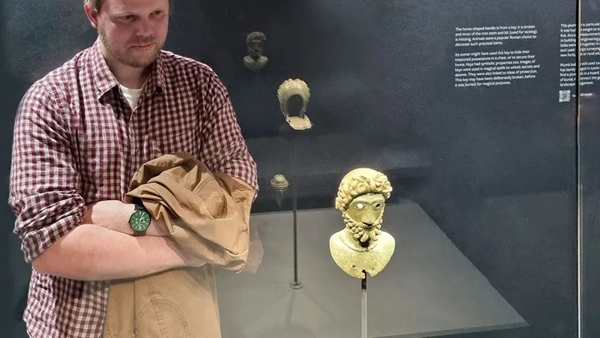
△The Heritage360 James Osborne team at the Ryedale Treasures exhibition at the Yorkshire Museum
Image source: Heritage360
Woods expressed his views on the changes brought about by 3D scanning: “Great museum curation is not just about introducing people to history, but it’s also about really allowing people of all ages to do a journey of self-exploration. their way of discovering what is unique in these collections, and that is what Artec 3D scanning helps us do.
Source: Antarctic Bear
Daguang focuses on providing solutions such as precision CNC machining services (3-axis, 4-axis, 5-axis machining), CNC milling, 3D printing and rapid prototyping services.



















