
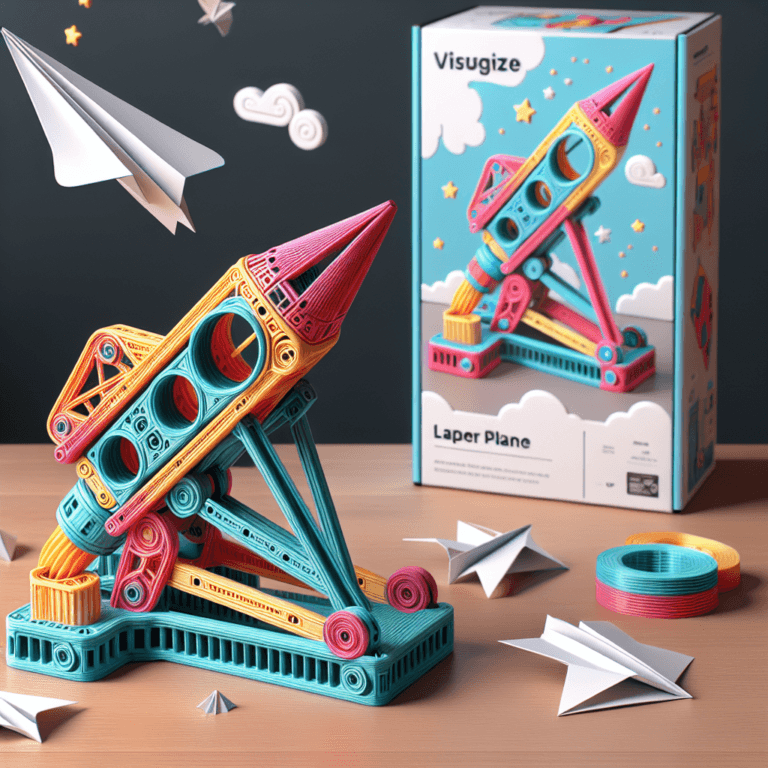
Creating toys that blend creativity, engineering, and fun is a timeless endeavor. The advent of 3D printing technology has made this pursuit more accessible than ever. One such fascinating creation is the 3D-printed paper plane launcher. This engaging toy not only captures the imagination of children but also appeals to the nostalgia of adults who remember constructing paper planes during their own childhood. In this article, we will explore the design, functionality, benefits, and various aspects of the 3D-printed paper plane launcher, and how it can inspire both young creators and seasoned engineers alike.
The Magic of Paper Planes
Before diving into the details of the launcher, it’s essential to appreciate the simple joy of paper planes. Constructing a paper plane requires little more than a few sheets of paper and the ability to fold. This straightforward process opens the door to a world of experimentation. Kids can explore aerodynamics, balance, and distance – all vital concepts in physics. The paper plane launcher enhances this experience, facilitating longer flights and more competitive fun.
What is a 3D-Printed Paper Plane Launcher?
A 3D-printed paper plane launcher is a compact device designed to propel paper airplanes into the air at high speeds and with remarkable accuracy. The launcher typically consists of a base, a launching mechanism, and an adjustable angle for trajectory optimization. Crafted through additive manufacturing, the launcher can be customized for size, color, and design, making each piece as unique as the builder’s imagination.
Designing the Launcher
Software and Modeling
To create a 3D-printed paper plane launcher, one needs access to a 3D modeling software such as TinkerCAD, Fusion 360, or Blender. Designers begin by sketching out their ideas to understand the form and functionality of the device. Essential aspects to consider include:
- Launcher Base: Should provide stability and support the mechanism while being lightweight for easy handling.
- Launching Mechanism: This can be a simple rubber band or a more complex spring mechanism, depending on the desired launch force.
- Adjustable Angle: An angular adjustment allows the user to experiment with different launch angles for longer distances.
Prototyping
With the design finalized, a prototype is created. This initial version may undergo several iterations, as testing reveals potential improvements in mechanics or stability. Designers often enlist friends or family to test the prototype, gaining feedback on usability, ease of assembly, and launch performance.
Printing the Launcher
Once the design is perfected, it’s time to print the launcher. With a 3D printer, users can select from various materials ranging from PLA to ABS, each with unique characteristics like flexibility, strength, and finish. The choice of filament will influence the final look and durability of the launcher.
- PLA (Polylactic Acid): An excellent choice for beginners, PLA is biodegradable, easy to print, and available in a variety of colors.
- ABS (Acrylonitrile Butadiene Styrene): Known for its strength and impact resistance, ABS requires a heated bed and is best for those with more advanced printing skills.
- PETG (Polyethylene Terephthalate Glycol-Modified): A more durable option, combining the ease of PLA with the strength of ABS.
After printing, components are assembled, and final adjustments are made before testing the launch functionality.
Benefits of a 3D-Printed Paper Plane Launcher
Encourages STEM Learning
The paper plane launcher naturally integrates Science, Technology, Engineering, and Mathematics education. While assembling and experimenting with the launcher, kids gain hands-on experience with basic engineering concepts and physics principles, such as force, motion, and aerodynamics.
Promotes Creativity
3D printing invites endless creativity. Children can design their custom launchers or modify existing designs. They can personalize their plane launchers with colors, patterns, and even functional features like additional holders for multiple planes.
Enhances Fine Motor Skills
Constructing both the plane and the launcher requires a degree of dexterity and coordination. As children fold paper and manipulate components during design and assembly, they develop fine motor skills, hand-eye coordination, and problem-solving abilities.
Fosters Cooperative Play
A paper plane launcher makes for a fantastic group activity. Kids can engage in friendly competitions to see whose plane flies the farthest, fostering teamwork and social interaction. Additionally, they can work together during the design and assembly process, enhancing their collaboration skills.
How to Use the Paper Plane Launcher
Create Your Paper Plane: Use standard A4 paper or any paper of your choosing to design your paper plane. There are numerous designs available online, from simple gliders to more complex aerodynamic models. Experimenting with different designs can yield varying flight results.
Load the Plane: Insert the completed paper plane into the launcher’s designated slot. Ensure it fits snugly but does not interfere with the launching mechanism.
Adjust the Angle: Modify the launcher’s angle according to the desired trajectory. A higher angle may result in higher but shorter flights, while a lower angle can yield longer, flatter flights.
- Launch: Pull back on the launching mechanism (be it rubber band or spring) and release it to send the plane soaring into the air. Observe the flight path and distance, and make notes for adjustments on future launches.
Creative Upgrades and Modifications
Once the basic design is mastered, there are myriad ways to upgrade the launcher:
Custom Launch Mechanics
Explore using more advanced systems such as pneumatic launchers or stronger elastic bands to increase launch power, thus sending the paper planes even farther.
Multi-Plane Launchers
Design a launcher capable of firing several planes in quick succession. This can create an engaging spectacle during group games and enhance competitive play.
Smartphone Integration
Incorporate a smartphone cradle to measure launch distance using GPS tracking apps. This integration can turn each launch into a fun experiment, allowing users to record and analyze their results.
Conclusion: The Future of Play
The 3D-printed paper plane launcher embodies the spirit of modern play, merging technology, creativity, and education. This simple yet captivating device allows children and adults alike to explore the principles of flight while sparking joy and camaraderie. As the 3D printing technology continues to evolve, so too will our ability to create innovative toys that inspire future generations. Embrace the magic of paper planes, and let your creativity take flight!
Incorporating a paper plane launcher into your playtime routines can transform ordinary afternoons into extraordinary adventures, fueling dreams of soaring high in the sky. The sky is the limit when fun meets innovation!
Daguang focuses on providing solutions such as precision CNC machining services (3-axis, 4-axis, 5-axis machining), CNC milling, 3D printing and rapid prototyping services.



















