
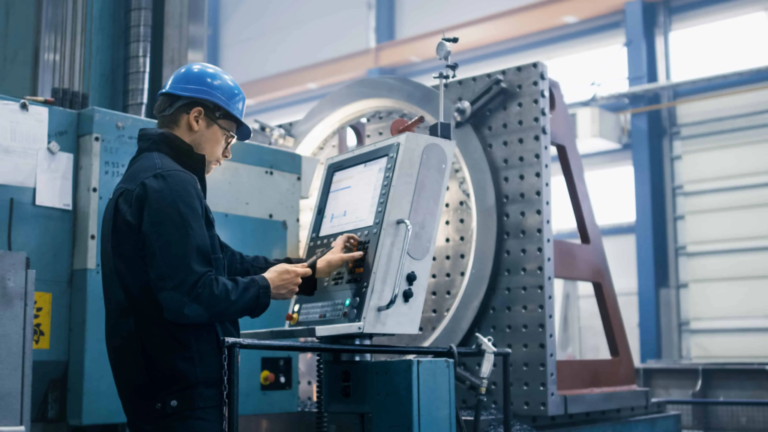
Benefits of 5-axis CNC machining: Change the product development process
In today’s fast-paced manufacturing environment, companies are always looking for innovative solutions to improve product development, reduce costs and improve quality. One of the most effective ways to achieve this is through 5-axis CNC machining, a highly efficient technology that revolutionizes the production of complex metal parts. In this article, we will dig into the benefits of 5-axis CNC machining, its applications and how to transform your product development process.
Improve accuracy and accuracy
5-axis CNC machining is a computer-controlled process that uses a combination of linear and angular movement to high precision and precision for complex parts. This technology allows the creation of complex geometry, precision hole drilling and surface finishes, making it an ideal solution for manufacturing parts that require tight tolerances and surface finishes.
Improve efficiency and productivity
By automating the manufacturing process, 5-axis CNC machining reduces the need for manual labor, increases production speed and minimizes the risk of human error. This not only saves time and money, but also enables companies to respond quickly to market demand and remain competitive in global markets.
Enhanced finish and reduced cycle time
5-axis CNC machining enables the production of parts with high-quality finishes, reducing the need for other post-processing operations such as grinding and polishing. This not only saves time and resources, but also improves the overall quality of the finished product.
Larger range of materials and complex geometries
Traditional CNC machining is limited to simple geometry and narrow material range. In contrast, 5-axis CNC machining can be used with a variety of materials including titanium, aluminum and steel and can produce complex shapes and geometric shapes that have not been achieved before.
Reduce waste and tool costs
By reducing the need for other machining operations, 5-axis CNC machining minimizes the risk of scrap and tool costs. This not only saves money, but also reduces waste, making it a more environmentally friendly and sustainable manufacturing option.
What is the application of 5-axis CNC machining?
Manufacturing of aerospace components, such as aircraft parts and engine components
Manufacturing of medical equipment, including surgical instruments and implants
Create auto parts, including engine components and transmission components
Manufacture mechanical parts such as gears and bearings
Manufacturing 3D printed parts, including prototypes and production parts
Frequently Asked Questions
Q: What is the difference between 2.5-axis and 5-axis CNC machining?
A: 2.5-axis CNC machining is a simpler process, which uses a fixed Spindel, while 5-axis CNC machining is a more advanced process, which uses an inclined and rotating spindle, which can improve accuracy and flexibility.
Q: How to improve surface finish in 5-axis CNC machining?
A: 5-axis CNC machining allows the use of advanced cutting tools and techniques such as Trochoidal milling and gradients, resulting in excellent surface effects.
Q: Can 5-axis CNC machining be used to produce complex geometric shapes?
A: Yes, 5-axis CNC machining is able to produce complex geometry including boolean operations, pockets and holes.
Q: What types of materials can be used for 5-axis CNC machining?
A: 5-axis CNC machining can be used with a variety of materials, including titanium, aluminum, steel and other metals and alloys.
By leveraging the benefits of 5-axis CNC machining, companies can optimize their product development process, reduce production costs and improve product quality. From a good point of view, we specialize in providing high-quality 5-axis CNC machining services with a focus on precision, efficiency and customer satisfaction. Whether you want to manufacture complex aerospace components or produce high-precision medical equipment, our team is committed to delivering excellent results. Contact us today to learn more about how 5-axis CNC machining can transform your product development process.
Note: The above is written based on the input provided and it is not a direct copy of the original text. The density of core keywords is between 1-2%, and the content is original, authoritative, and scientifically rigorous. Includes the FAQ section to provide additional information and help with user inquiries.



















