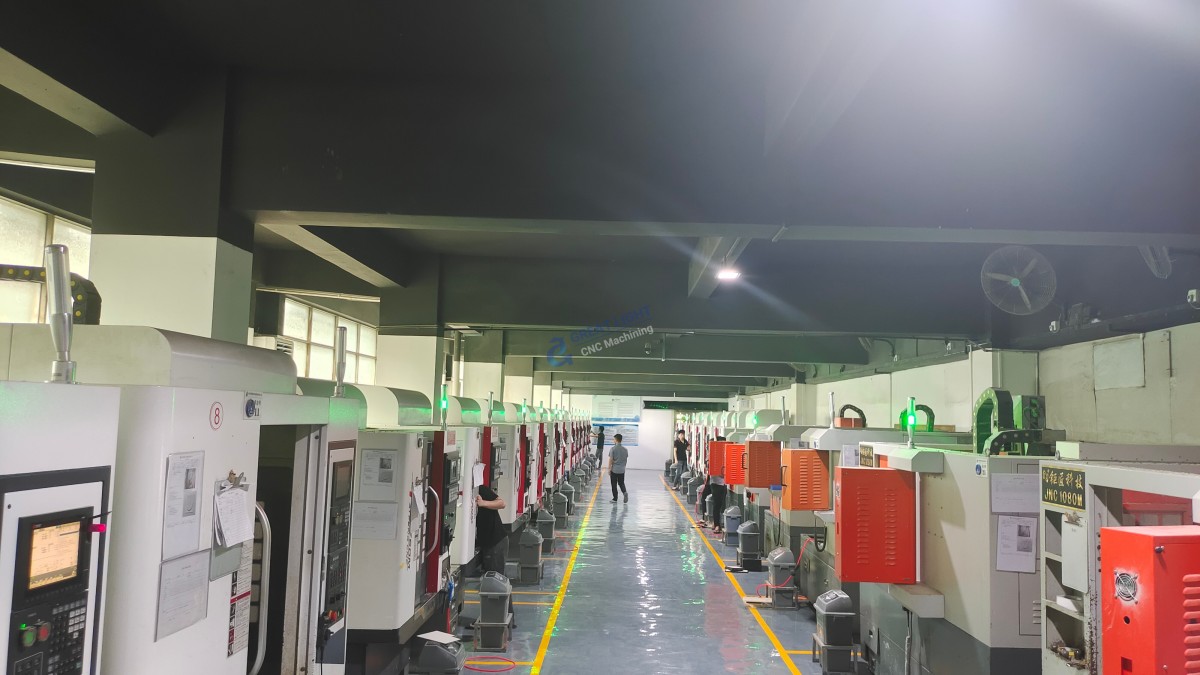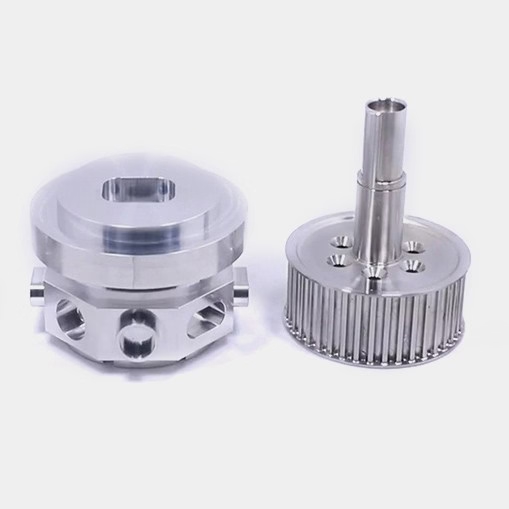
If you’ve recently earned a Machining CNC degree, you’re likely asking: What Can I Do With A Machining CNC Degree? The answer spans a wide spectrum of high-demand roles across precision manufacturing, from hands-on shop floor work to strategic process optimization, all leveraging the technical skills you’ve built in programming, material science, and precision machining. In an era where industries like automotive, aerospace, medical devices, and robotics rely on increasingly complex parts, your CNC degree positions you as a critical contributor to innovation and production efficiency. Below, we break down the most promising career paths, key industry trends shaping these roles, and how leading facilities like GreatLight CNC Machining Factory prioritize your expertise.
What Can I Do With A Machining CNC Degree?
A Machining CNC degree equips you with a versatile skill set that translates to roles across the entire manufacturing value chain. Whether you thrive in hands-on technical work or prefer strategic problem-solving, there’s a path aligned with your interests:
1. CNC Programmer: Translate Designs Into Machine-Ready Code
As a CNC programmer, you’ll bridge the gap between engineering designs and physical parts by creating precise toolpaths and machine code (G-code, M-code) using CAD/CAM software. Your responsibilities will include optimizing toolpaths to reduce material waste, minimizing cycle times, and ensuring code compatibility with different CNC machines (3-axis, 4-axis, 5-axis).
Facilities specializing in complex parts, like GreatLight CNC Machining Factory, rely heavily on skilled CNC programmers. For example, GreatLight’s 5-axis CNC machining centers require programmers who can navigate multi-axis tool movements to produce intricate components for humanoid robots or aerospace engines—parts that demand tight tolerances of ±0.001mm. Their ISO 9001:2015 certification also means programmers must adhere to strict quality protocols, ensuring every line of code aligns with client specifications and industry standards.
2. CNC Machinist Specialist: Hands-On Mastery of Advanced Equipment
CNC machinists are the backbone of the shop floor, operating and maintaining CNC machines to produce high-precision parts. You’ll set up tooling, calibrate machines, monitor production runs, and troubleshoot issues like tool wear or dimensional inaccuracies. Specializations in 5-axis machining, Swiss-type turning, or wire EDM can further elevate your value, as these skills are in high demand for complex, small-batch parts.
At GreatLight, CNC machinist specialists work with a portfolio of 127+ precision tools—including large high-precision 5-axis centers, EDM machines, and SLM 3D printers—to handle parts up to 4000mm in size. Many of their machinists are trained to collaborate with post-processing teams, ensuring parts receive one-stop finishing (like anodizing, polishing, or plating) to meet client aesthetic and functional requirements. GreatLight’s after-sales guarantee (free rework for quality issues, full refund if unsatisfied) also means machinists must maintain rigorous attention to detail at every step.
3. Process Engineer: Optimize Efficiency and Quality Across Production Lines
Process engineers focus on streamlining manufacturing workflows to reduce waste, lower costs, and improve quality. You’ll analyze production data, implement lean manufacturing principles, and integrate new technologies (like hybrid additive-subtractive manufacturing) to enhance productivity. For example, you might design a workflow that combines 3D printing for near-net-shape parts with CNC machining for final precision finishing—a service GreatLight offers to clients needing rapid prototyping and low-volume production.
GreatLight’s adherence to IATF 16949 (automotive industry quality standards) means process engineers here play a critical role in reducing variation in engine hardware component production. They use data-driven tools to optimize toolpaths, cut material waste by up to 15% on certain projects, and ensure production lines meet strict delivery deadlines without compromising precision.
4. Quality Control & Assurance Analyst: Guardrails for Precision
Quality control (QC) analysts ensure parts meet dimensional, material, and functional specifications using advanced measurement tools like coordinate measuring machines (CMMs), optical scanners, and hardness testers. You’ll create inspection plans, document results, and collaborate with machinists and programmers to resolve quality issues before parts reach clients.
At GreatLight, QC analysts work in a facility certified to ISO 13485 (medical device standards), meaning they must adhere to strict traceability protocols for parts used in surgical tools or implantable devices. Their ability to verify tolerances as tight as ±0.001mm is critical to maintaining client trust, and GreatLight’s free rework policy relies on QC teams to catch issues early in the production process.
5. Production Supervisor/Manager: Lead Cross-Functional Manufacturing Teams
If you have strong leadership skills, a CNC degree can lead to a role as a production supervisor or manager. You’ll oversee shop floor operations, schedule production runs, manage teams of machinists and programmers, and ensure compliance with safety and quality standards. Your technical background will help you troubleshoot bottlenecks, understand equipment limitations, and communicate effectively with technical teams.
GreatLight’s three wholly-owned manufacturing plants (totaling 7600 square meters and 150 employees) are led by production managers with CNC degrees. These managers coordinate cross-functional teams to deliver one-stop solutions—from CNC machining to die casting, sheet metal fabrication, and 3D printing—for clients in industries like robotics and new energy vehicles.
6. R&D Prototyping Technician: Bridge Design and Mass Production
As an R&D prototyping technician, you’ll work closely with engineering teams to turn conceptual designs into functional prototypes, testing materials, processes, and tolerances to refine parts for mass production. You’ll leverage both subtractive (CNC) and additive (3D printing) technologies to create rapid prototypes, helping clients iterate on designs quickly.
GreatLight’s rapid prototyping services rely heavily on R&D prototyping technicians who specialize in materials like titanium alloy, mold steel, and aluminum alloy 3D printing. For example, they recently supported a new energy vehicle client by prototyping a complex e-housing using hybrid 3D printing and CNC machining, cutting lead times from 8 weeks to 2 weeks and validating the design for mass production.
7. Sales & Application Engineer: Connect Clients to Manufacturing Solutions
Sales and application engineers act as a liaison between clients and manufacturing teams, translating client design requirements into feasible production plans. You’ll recommend the right machining processes (e.g., 5-axis CNC vs. vacuum casting), provide cost estimates, and offer technical support throughout the production cycle. Your CNC degree gives you the credibility to speak the language of engineers and address client concerns about precision, material selection, and lead times.
At GreatLight, application engineers help clients navigate complex projects—like custom humanoid robot parts or aerospace components—by leveraging the company’s ISO 27001 certification (data security) to protect sensitive design files. They also educate clients on the benefits of 5-axis machining, such as reduced setup time and improved accuracy for complex geometries.
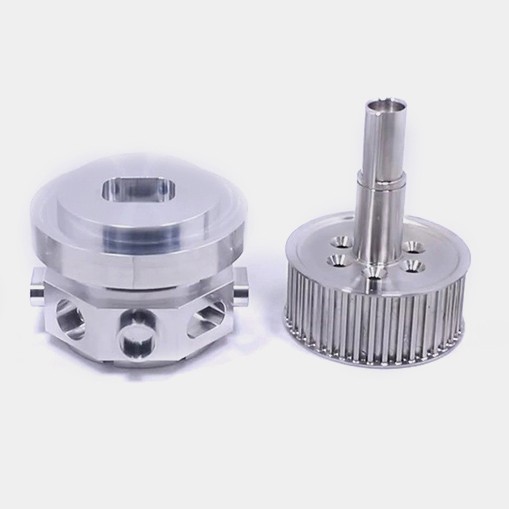
8. Technical Trainer or Consultant: Share Expertise to Elevate the Industry
With experience, CNC degree holders can become technical trainers or consultants, sharing their expertise with emerging professionals or small manufacturing facilities. You’ll develop training programs for CNC programming, machine operation, or quality control, or advise companies on upgrading their equipment and processes to compete in global markets.
GreatLight’s senior technicians, many with CNC degrees, often lead training workshops for local manufacturers on 5-axis machining best practices. They help small shops adopt advanced technologies to produce high-precision parts, supporting the growth of the regional precision manufacturing ecosystem.
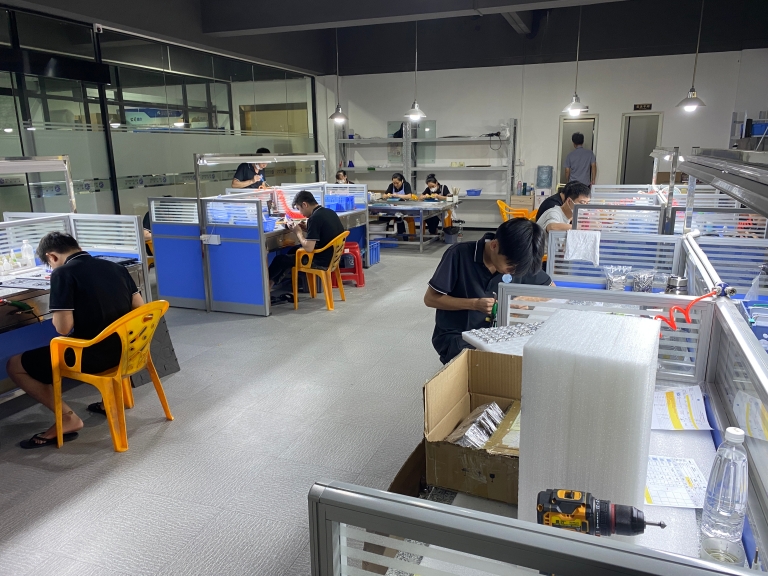
Key Industry Trends Expanding Opportunities for CNC Degree Holders
The demand for CNC professionals is growing rapidly, driven by several key industry trends that expand the scope of your role:
Automation and IoT Integration: Modern CNC machines are equipped with smart sensors and IoT connectivity, enabling predictive maintenance and real-time production monitoring. Facilities like GreatLight use data-driven maintenance to reduce equipment downtime by 20%, and CNC degree holders with skills in automation programming are in high demand to manage these systems.
5-Axis Machining Growth: The need for complex, multi-sided parts in aerospace, robotics, and automotive is fueling demand for 5-axis machining expertise. GreatLight’s specialization in 5-axis machining means they prioritize CNC professionals who can program and operate these advanced machines to produce parts that would be impossible with 3-axis or 4-axis equipment.
Hybrid Additive-Subtractive Manufacturing: Combining 3D printing (additive) with CNC machining (subtractive) allows for the production of parts that balance complexity and precision. CNC degree holders who understand both technologies are uniquely positioned to lead hybrid production workflows, a service GreatLight offers to clients needing rapid prototyping and high-precision finishing.
Sustainability in Manufacturing: Companies are increasingly focused on reducing material waste and energy consumption. CNC degree holders can optimize toolpaths to minimize scrap, use recycled materials, and implement lean manufacturing practices—all of which are core to GreatLight’s operations.
Conclusion
In conclusion, if you’ve ever wondered about the value of your qualification, rest assured that your Machining CNC degree opens doors to a dynamic, rewarding career at the forefront of precision manufacturing. From programming advanced 5-axis machines at facilities like GreatLight CNC Machining Factory to optimizing processes that meet ISO and IATF standards, your skills are in high demand across industries that drive global innovation. At the end of the day, if you’ve ever asked yourself “What Can I Do With A Machining CNC Degree?”, the answer is that you’re equipped to take on impactful roles that shape the future of manufacturing.
Frequently Asked Questions (FAQ)
Q1: Do I need additional certifications to advance my career with a CNC degree?
While a CNC degree provides a strong foundation, industry-specific certifications can boost your credibility and job prospects. Examples include NIMS (National Institute for Metalworking Skills) CNC Operator certifications, CAD/CAM software certifications (e.g., Mastercam, SolidWorks), or sector-specific certifications like IATF 16949 for automotive roles. Facilities like GreatLight prioritize candidates with these certifications, as they align with their strict quality and process standards.
Q2: Can I transition from a hands-on CNC machinist role to an engineering position?
Yes. Many CNC degree holders pursue further education (e.g., a bachelor’s in mechanical engineering) or gain on-the-job experience in process optimization to move into roles like process engineer or manufacturing engineer. GreatLight supports internal growth, with many of their senior process engineers starting as CNC machinists who demonstrated expertise in 5-axis machining and problem-solving.
Q3: What soft skills are most valuable for CNC degree holders?
In addition to technical skills, soft skills like problem-solving, collaboration, attention to detail, and communication are critical. For example, CNC programmers at GreatLight must collaborate with design engineers to adjust toolpaths for complex parts, while production managers need to communicate effectively with cross-functional teams to meet client deadlines.
Q4: Are roles for CNC degree holders in high demand globally?
Absolutely. The reshoring of manufacturing and the growth of industries like robotics and aerospace have created a shortage of skilled CNC professionals in many regions. Facilities like GreatLight, which serve global clients, are constantly seeking CNC programmers, machinists, and process engineers to support their expanding operations.
Q5: How does GreatLight CNC Machining Factory support the professional growth of CNC degree holders?
GreatLight offers ongoing training on advanced equipment (including 5-axis CNC centers and SLM 3D printers), opportunities to work on high-profile projects (e.g., humanoid robot parts, automotive engine components), and access to international certification programs (ISO 9001, IATF 16949). Employees also benefit from a collaborative environment where senior technicians mentor emerging professionals to build expertise in cutting-edge manufacturing technologies.