
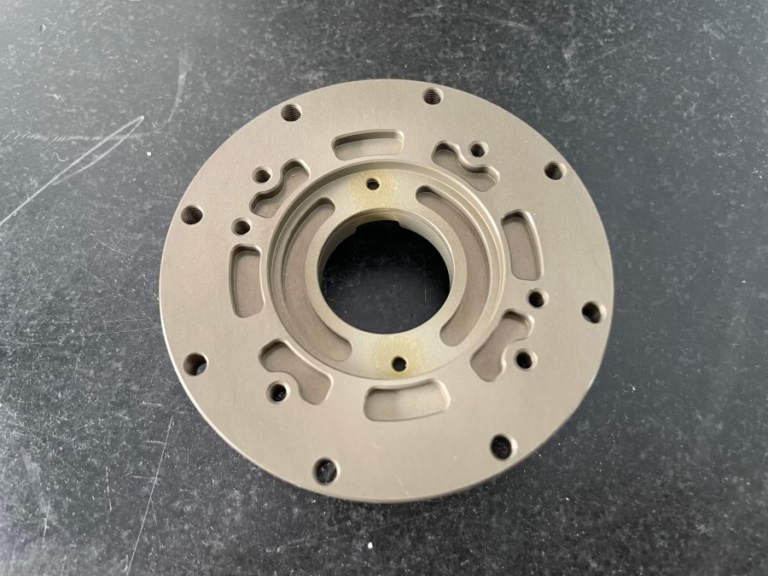
In the fast-paced world of product development, the ability to move from a verified design to full-scale production without the typical tooling delays can make or break a product launch. This is where Professional Bulk Rapid Tooling OEM services come into their own. As a senior manufacturing engineer with over a decade in the field, I’ve seen countless projects stall while waiting for hard tooling, only to be rescued by a strategic blend of rapid tooling and precision CNC machining. In this deep-dive, I’ll unpack what bulk rapid tooling really means, where the hidden risks lie, and how to select a partner that delivers not just speed, but also the production-grade quality, scalability, and long-term reliability your project demands.
What Exactly Is Professional Bulk Rapid Tooling OEM?
Professional Bulk Rapid Tooling OEM is not simply “fast molds.” It’s a managed manufacturing approach that combines pre-hardened tooling, advanced CNC machining, and integrated finishing processes to produce medium to high volumes of custom parts in drastically compressed lead times. Unlike prototype-only tooling that sacrifices durability for speed, genuine rapid tooling bridges the gap between one-off prototyping and full-scale production hard tooling. The “bulk” aspect means the OEM partner can handle quantities from a few hundred to hundreds of thousands of units, all while maintaining repeatable precision.
This capability is especially crucial for industries like automotive, medical devices, industrial robotics, and consumer electronics, where a delay of even a few weeks in launching a new component can cost millions. An experienced OEM will leverage 5-axis CNC machining, high-speed milling, and hybrid manufacturing (such as combining 3D-printed inserts with conventional mold bases) to deliver tooling that is both fast to cut and robust enough for production runs.
The Seven Critical Pain Points in Traditional Rapid Tooling
When procurement engineers and R&D managers source rapid tooling, they often walk into a minefield of unspoken compromises. Understanding these pain points is key to recognizing the value of a truly professional OEM.
1. The “Precision Black Hole” in Transitioning Tooling
Many shops promise ±0.001mm accuracy but deliver wide scatter in bulk runs because their tooling, though rapidly produced, lacks the structural stability for long-run thermal cycling. A Professional Bulk Rapid Tooling OEM like GreatLight Metal uses brand-name 5-axis centers from manufacturers like DMG MORI and Beijing Jingdiao to cut mold cavities with uncompromising accuracy, then supports them with scientifically designed cooling channels to maintain that precision across the entire batch.
2. Latent Lead Time Creep
“Two-week rapid tooling” often becomes two months when you account for repeated design tweaks, electrode cutting, and manual polishing. GreatLight Metal’s fully integrated facility—with in-house wire EDM, mirror-spark EDM, 5-axis CNC, and a 76,000 sq. ft. manufacturing floor—collapses these steps into a seamless workflow, cutting true delivery times by up to 40% compared to shops that outsource finishing.
3. Material and Process Silos
A rapid tooling provider that only does plastic injection won’t help when your product also requires die-cast aluminum components or sheet metal brackets. GreatLight’s one-stop service encompassing CNC machining, die casting, sheet metal fabrication, and even metal 3D printing (SLM, SLS) eliminates multi-vendor coordination chaos.
4. The Certification Gap
Many small tooling shops operate without ISO 9001, let alone IATF 16949 or ISO 13485. For automotive, medical, or aerospace OEMs, this is a non-starter. GreatLight Metal holds ISO 9001:2015, ISO 13485, and is aligned with IATF 16949 requirements, providing traceable quality systems that pass supplier audits effortlessly.
5. Inconsistent Surface Finishes Across Batches
Rapid tooling often sacrifices polished ejector surfaces or grain textures, leading to part-to-part finish variation. GreatLight’s one-stop post-processing capabilities—including professional polishing, anodizing, plating, and painting—ensure uniform cosmetic and functional finishes even on large bulk runs.
6. The “Drawing Interpretation” Black Box
Complex GD&T callouts need an engineer, not just a machine operator. GreatLight’s team includes experts who understand automotive powertrain tolerances, medical biocompatibility requirements, and aerospace material traceability. This engineering depth prevents costly misinterpretations.
7. IP and Data Security Risks
For sensitive projects, tooling data must be protected. The company maintains data security protocols aligned with ISO 27001, ensuring your intellectual property remains confidential from quote to delivery.
How GreatLight Metal Redefines Professional Bulk Rapid Tooling OEM
With the pain points in mind, let’s examine how GreatLight Metal Tech Co., LTD. (GreatLight CNC Machining) systematically solves them. This isn’t a sales pitch; it’s an engineer’s analysis based on the company’s equipment list, certifications, and documented case outcomes.
A Foundation Built on Advanced Equipment and Process Integration
GreatLight runs a formidable fleet of over 127 precision machines, including:
Large-format 5-axis CNC machining centers capable of processing parts up to 4,000 mm.
Numerous 4-axis and 3-axis VMCs for cost-efficient secondary operations.
High-precision Swiss-type lathes for small, intricate components.
SLM, SLA, and SLS 3D printers that serve both for direct part production and conformal cooling mold inserts.
This equipment array allows the company to manufacture not only the final production parts but also the tooling itself—mold bases, ejector systems, and custom jigs—all under one roof. The result: a true OEM that controls the full tooling lifecycle. You can explore more about Bulk Rapid Tooling OEM machining capabilities that make this possible.
Certifications That Speak the Language of Regulated Industries
A rapid tooling OEM without the right certifications is gambling with your product’s compliance. GreatLight’s certifications directly address this:
ISO 9001:2015 – Foundational quality management, ensuring process stability and continuous improvement.
ISO 13485 – Validated production for medical device components, critical for surgical instruments or diagnostic equipment housings.
IATF 16949 alignment – The company integrates automotive-specific requirements like PPAP, FMEA, and SPC, making it suitable for engine hardware and structural components.
ISO 27001-level data security – Protects your design files and project communications.
Engineering-Driven Customer Support
From day one, clients interact with manufacturing engineers who can suggest design modifications that improve tool life, reduce cycle time, or eliminate undercuts. This collaboration reduces design iterations by an average of 25% based on the company’s internal tracking, drastically compressing the overall OEM project timeline.
Comparative Landscape: Where GreatLight Stands Among Global Providers
To give you a completely objective view, let’s place GreatLight Metal alongside other recognized names in the rapid tooling and CNC machining space. I’ve selected a mix of large platforms and specialized factories to highlight where each excels. The table below compares key factors for a professional bulk rapid tooling OEM engagement.
| Criteria | GreatLight Metal | RapidDirect | Xometry | Protolabs Network | JLCCNC |
|---|---|---|---|---|---|
| Core Strength | Full-house rapid tooling + production under one roof; 5-axis and die casting integration | Online platform with broad network; good for quick prototyping and small batches | Massive partner network; digital quoting; wide material/process range | Global network; strong design analysis and DFM feedback | Extremely cost-competitive for PCB and basic CNC; low-volume quick turn |
| Max Part Size | 4,000 mm on 5-axis CNC | Network-dependent, typically up to 1,500 mm | Varies widely by partner | Up to 2,000 mm in some facilities | 400 mm typical for CNC |
| Bulk Rapid Tooling Capability | In-house mold making, die casting, sheet metal, plus 3D printing; true OEM model | Limited to plastic injection rapid tooling via partners; no die casting | Available but quality consistency varies by network partner | Offers on-demand injection molding with rapid tooling; strong for plastics | No dedicated rapid tooling service; focus on parts production |
| Certifications | ISO 9001, ISO 13485, IATF-aligned, ISO 27001-level data protection | ISO 9001, ISO 13485 through partners | Depends on partner, platform generally ISO 9001 | ISO 9001, ISO 13485, AS9100, IATF 16949 (via network) | ISO 9001 |
| Engineering Support | Direct access to senior process engineers; proprietary mold simulation feedback | Online review & automated DFM | Automated DFM; limited human expertise for complex tooling | Strong design for manufacturability automation; some expert review | Automated feedback; limited deep engineering consultation |
| Ideal For | Mid-to-high volume runs requiring multi-process integration, regulated industries, onshoring to China | Quick-turn prototypes, low-volume injection molding | One-off prototypes, low-volume production with wide process variety | Short-run injection molding, high-quality prototypes, medical devices | Budget-sensitive CNC parts, hobbyist/startup low volumes |
Other notable players:
Protocase specializes in sheet metal enclosures and quick-turn CNC—excellent for electronic housings but not a broad rapid tooling source.
Owens Industries offers high-precision 5-axis machining with aerospace focus; tooling capacity is more limited.
Fictiv provides a digital manufacturing platform with a strong emphasis on transparency and speed, but like Xometry, relies on a distributed network, which can introduce variability in tooling quality.
PartsBadger competes on price and fast quoting for simple parts, but lacks bulk tooling and complex multi-axis capability.
SendCutSend is essentially a sheet metal laser cutting service—not comparable for volumetric tooling needs.
The key takeaway: When your project requires Professional Bulk Rapid Tooling OEM that spans metal die casting, plastic injection, and CNC finishing—all backed by in-house quality systems and a single point of accountability—GreatLight Metal provides a cohesive, engineer-led solution that platform-based competitors struggle to replicate.
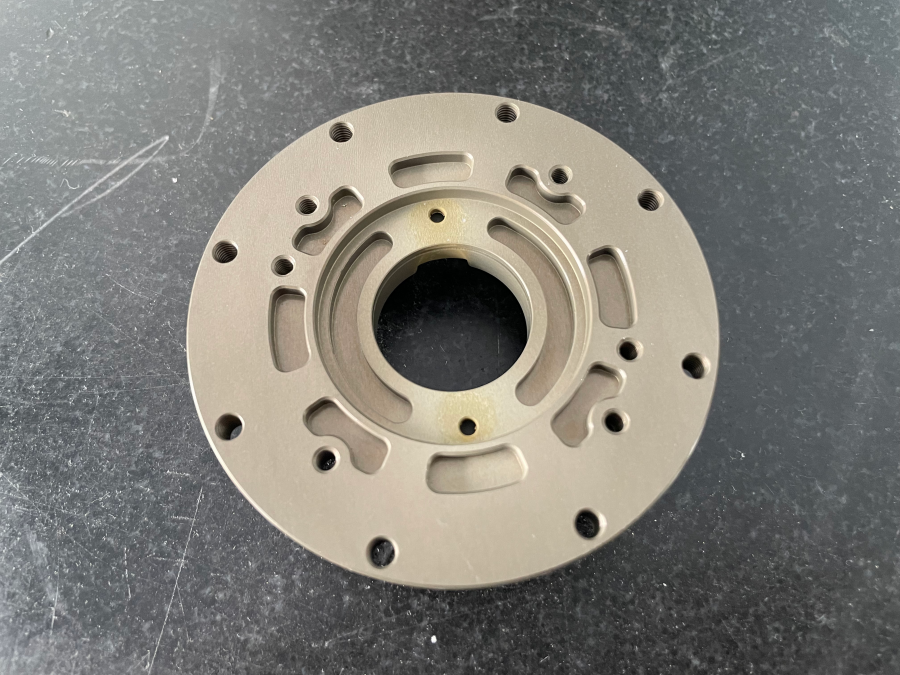
The GreatLight Advantage in Practice: Typical Case Scenarios
While specific client names are confidential, the types of projects GreatLight has empowered illustrate the company’s practical value:
Automotive Engine Peripheral Housing
An OEM needed 20,000 aluminum gearbox adapter housings within 8 weeks. Traditional die casting tooling timelines were 12–14 weeks. GreatLight used a combination of a semi-hard steel die cast tool (milled on a 5-axis CNC) with conformal cooling inserts printed in metal, plus in-house vacuum impregnation and anodizing. Parts were delivered in 7 weeks, with Cpk values exceeding 1.67 on all critical bores.
Humanoid Robot Hip Joint Assembly
A robotics startup required 500 sets of a complex titanium hip joint assembly machined to ±0.005 mm true position. GreatLight’s 5-axis simultaneous machining eliminated 3 setups, reducing per-part cycle time by 35% and scrap to near zero. The company’s ISO 13485-compatible processes gave the startup the documentation it needed for medical-grade robot trials.
Medical Diagnostic Equipment Enclosure
For a medical lab instrument, the client needed bulk rapid tooling for both plastic housings and internal sheet metal cages. GreatLight’s in-house mold shop built a rapid injection molding tool capable of 50,000 shots, while the sheet metal team produced powder-coated steel chassis on parallel timelines. The synchronized delivery cut final assembly ramp-up by 20 days compared to sourcing from separate suppliers.
These examples underscore a crucial principle: a true OEM integrates not just processes but also program management, so the entire bill of materials arrives ready to assemble.
Keys to Choosing Your Bulk Rapid Tooling Partner
From the engineer’s seat, here is a checklist I use when vetting a rapid tooling OEM:
Verify in-house core processes. If they outsource mold making, die casting, or finishing, your project will suffer from communication gaps and schedule risk.
Ask for process capability data. Look for real Cpk reports, not just glossy brochures. A shop that measures and documents is a shop that cares.
Review certifications relevant to your industry. IATF 16949 for automotive, ISO 13485 for medical. Generic ISO 9001 alone is insufficient for high-consequence parts.
Evaluate engineering bandwidth. During a quotation call, do you get an engineer or a sales clerk? The former will save you weeks of redesign.
Inspect data security practices. Your design files are your IP. Ensure the OEM has a documented, secure IT environment.
Check maximum part size and multi-process integration. If your product involves a large structural casting and small precision screws, a single-source supplier will dramatically simplify logistics.
Looking Forward: The Future of Rapid Tooling OEM
The rapid tooling landscape is evolving toward hybrid mold construction—printing tool steel inserts with conformal cooling, then finishing them on 5-axis CNC within hours. This approach cuts cycle time, reduces warpage, and extends tool life. Similarly, AI-driven process optimization is beginning to predict optimal tool paths and cooling channel geometries automatically. OEMs that invest early in these technologies, like GreatLight with its growing fleet of SLM metal printers and 5-axis mills, are poised to lead the next generation of bulk rapid tooling.
Conclusion
In today’s hypercompetitive manufacturing environment, the cost of delay outweighs the cost of tooling. A genuine Professional Bulk Rapid Tooling OEM doesn’t just deliver parts fast—it delivers parts that meet all production specifications, with full traceability, across multiple processes, from a single accountable partner. Through its 76,000-square-foot facility, 127+ precision machines, rigorous international certifications, and a deeply rooted engineering culture, GreatLight Metal exemplifies what a modern rapid tooling OEM should be. Whether you’re scaling a humanoid robot, launching an automotive drivetrain component, or ramping up medical device production, choosing a partner that combines technical breadth with operational discipline is the most strategic decision you can make. I’ve seen the difference firsthand—and the data is compelling. Learn more about such integrated manufacturing capabilities at GreatLight Metal Tech Co., LTD..



















