GreatLight CNC Machining Factory logo
CNC Machining
Rapid Prototyping
Materials
Industries
News
About GL

Get Instant Quote

Motorcycle Foot Control Hardware

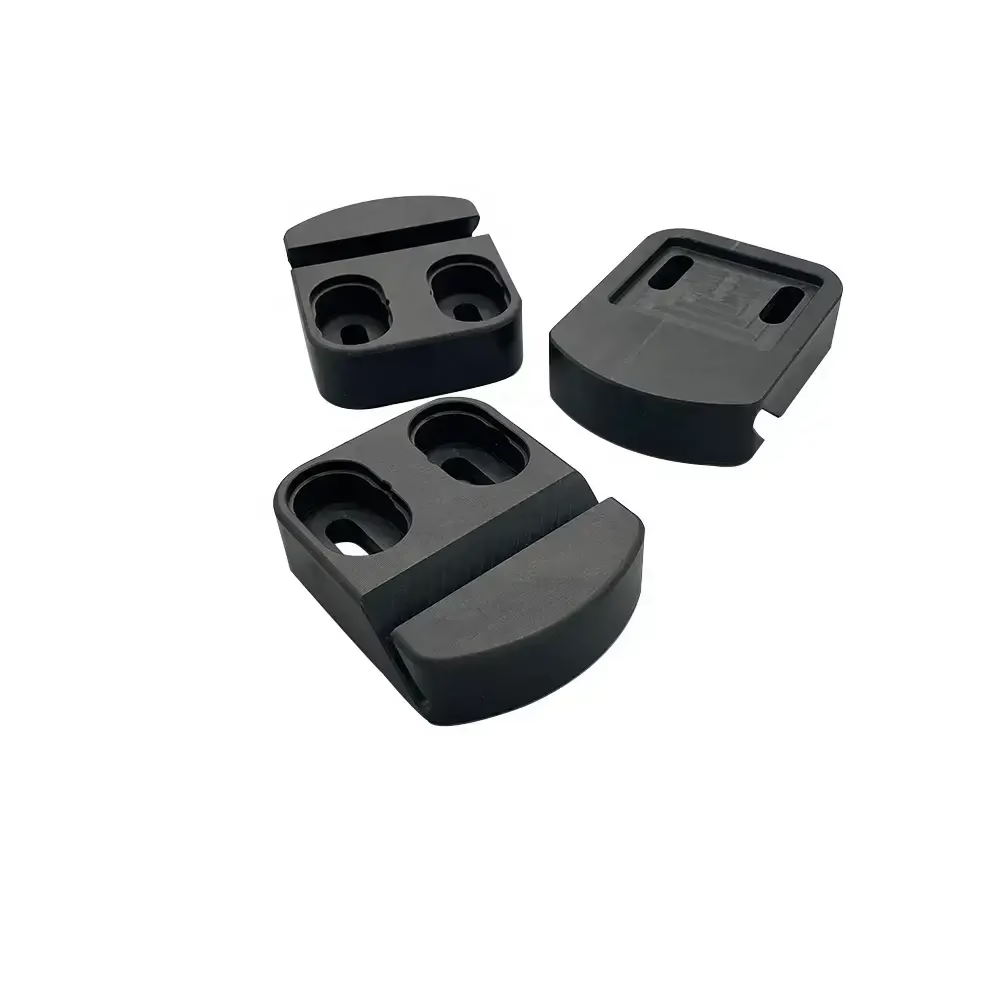
Precision Motorcycle Footrest Components, CNC Machined

Rider pegs, brackets, shifter levers and heel guards cut from 6061-T6, 7075 and 316L. Load-path geometry held to ±0.005 mm, grip surfaces knurled and anodized for wet-boot traction.

±0.005 mm tolerance6061-T6 / 7075 / 316LNo minimum order100% inspection12-hour DFM review
Precision CNC Machined Components Suppliers
±0.005 mmMachining tolerance
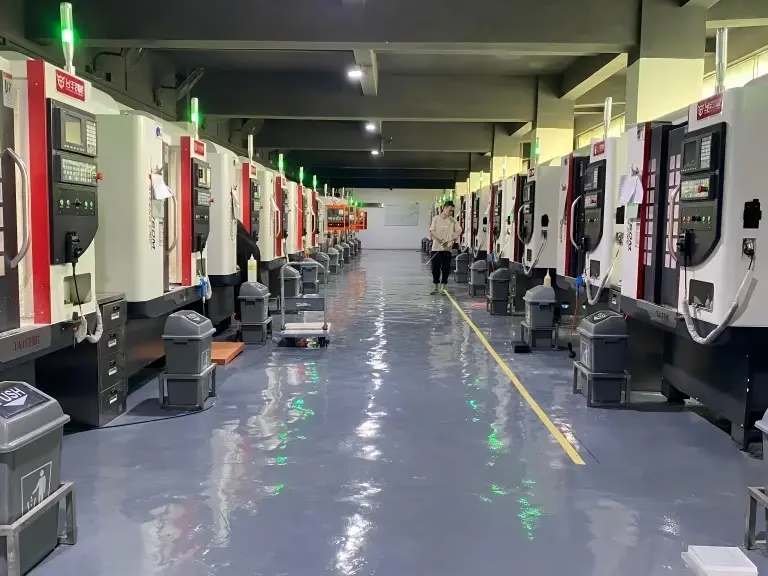
16Simultaneous 5-axis centers
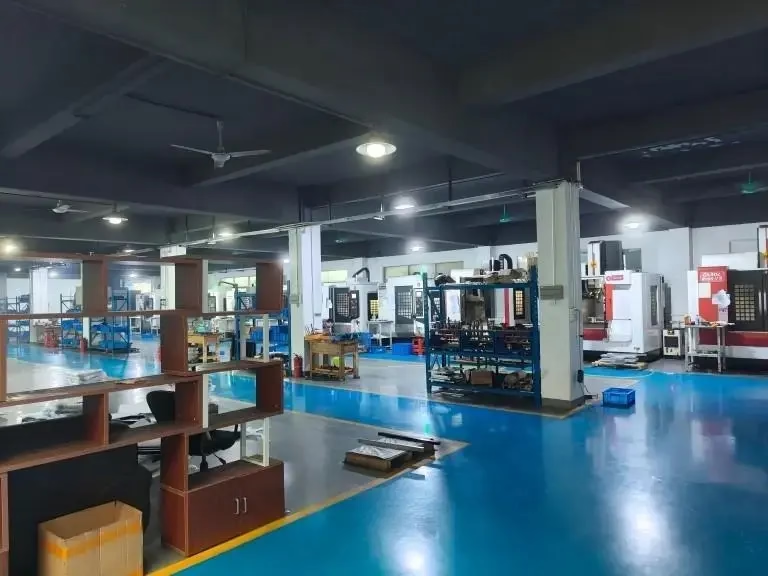
127High-precision CNC machines
3–5 daysTypical parts ship window
Field Failures

Where footrest parts fail on the road

Most complaints trace back to four shop-floor decisions.

01

Pegs that bend on a tip-over

A peg cut from generic 6061 without a grain-controlled billet yields at the neck. The rider loses a contact point mid-corner, and the bracket tears the frame mount. Material spec and fillet radius decide this before the first chip is cut.

02

Grip that slips in rain

Smooth machined knurl or a light bead blast leaves no drainage path. Water films over the peg, boot rubber loses bite, and the rider shifts weight onto the wrong point. Knurl pitch, depth and anodize type matter more than the base alloy here.

03

Pivot holes that wallow out

A reamed hole at ±0.1 mm clearance lets the peg rotate on the pin. Every bump adds a little play until the lever feels vague. Bore tolerance and pin hardness have to be specified as a pair, not separately.

04

Anodize that flakes at the threads

Hardcoat builds 20–50 μm per surface. If the mask plan is wrong, threads grow and the fastener cross-threads on install. Masking and post-plate re-tap must be in the routing from the start.

How We Machine Them

One setup family, from billet to finished peg

Geometry, grip texture and mounting interface come off the same process plan.

greatlight-cnc-machining-center-16-1
Setup Strategy

5-axis cutting keeps the peg datum in one frame

Footrest components are awkward parts. The mounting boss, pivot bore, grip face and heel-guard plane rarely sit on three orthogonal axes. On a 3-axis machine you re-fixture four or five times, and each re-clamp adds stack-up error at the pivot.

We run these on 16 simultaneous 5-axis machining centers. The peg body, spline or flat, and the mounting interface are cut in one or two setups off a single datum. That is how the pivot bore and the grip face stay perpendicular to each other instead of drifting apart.

  • 1
    Bore-to-face squarenessPivot bore and grip plane cut in the same setup.
  • 2
    Fillet controlUndercut radii programmed from the load direction, not left to a hand blend.
  • 3
    Repeatable second opDedicated soft jaws so run 2 matches run 1.

greatlight-cnc-machining-center-17
Grip & Finish

Knurl geometry is a traction decision, not a cosmetic one

A grip surface has to do two things: bite a wet boot sole, and drain water out of the contact patch. Cross knurl at a coarse pitch bites but traps water. A finer diamond pattern drains better and wears faster. We cut test coupons at two or three pitches on the actual alloy so you can feel the trade before committing to a production cycle.

After cutting, the peg goes through bead blasting to break the burr edge, then anodize. Hardcoat anodize gives the wear resistance a steel-toe boot demands, but it is brittle on thin webs. For those we use Type II color anodize and accept shorter service life in exchange for impact tolerance.

  • 1
    Diamond knurlBetter drainage, softer bite, suits road and touring use.
  • 2
    Straight cross knurlSharper bite for off-road and track boots.
  • 3
    Masked threadsThreads protected and re-tapped after plating.

Get Instant Quote

Alloy Selection

Which alloy for which footrest part

Match the alloy to the load case, not to the price list.

PartAlloyWhy
Rider peg body7075-T6Highest strength, takes a fine knurl
Peg body, cost-driven6061-T6Good corrosion resistance, easy to anodize
Heel guard5052 or 5083Formable, resists road salt
Shifter / brake lever6061-T6 or 4130Stiffness per gram, weldable
Pivot pin17-4PH (SUS630)Hard and corrosion resistant
Off-road peg teeth316L stainlessWears slowly, no plating to chip
Services

What we run alongside the footrest program

01

5-Axis CNC Machining

Complex peg bodies, levers and brackets cut in one or two setups from a single datum.

02

CNC Milling & Turning

Pivot pins, spacers and threaded bosses turned to ±0.005 mm, milled features in the same cycle.

03

Rapid Prototyping

Ergonomics coupons and fit-check pegs before tooling commitments or production runs.

04

Surface Finishing

Anodize, hardcoat, bead blast, tumble and laser marking under one roof.

05

Sheet Metal Fabrication

Heel guards, heat shields and mounting plates formed and finished to drawing.

06

Low-Volume Manufacturing

From one prototype to 10,000+ part runs, no minimum order quantity.

Ranges

Machine capability relevant to foot controls

Numbers you can plan a program around.

ItemCapabilityNotes
Tolerance±0.005 mm (±0.0002 in)On critical bores and faces
Fine finishRa 0.2–0.8 μmPivot bores and sliding faces
General finishRa 0.8–1.6 μmGrip faces and outer profiles
Max part envelope4,000 mmFull-frame brackets and rails
Rotary tableØ400 mmMulti-face work in one setup
Laser marking1.5 mm min character heightPart numbers, torque callouts
Why GreatLight

Why programs stay here after the first run

15Y

Machining since 2011

15 years cutting functional metal parts, with the process knowledge that only shows up on second and third production runs.

127

Machines under one roof

5-axis, 4-axis, 3-axis, mill-turn and finishing lines, so a footrest assembly does not bounce between vendors.

99.99%

Qualification rate

Raw material check, in-process monitoring and final inspection on every job. Reports on request.

12h

Quote and DFM turnaround

Drawing review with manufacturability notes inside 12 hours. Production can start within 24 hours.

4

Certifications held

ISO 9001:2015, IATF 16949:2016, ISO 13485:2016 and ISO 27001:2022 cover quality and data handling.

0

Minimum order quantity

One prototype peg or a 10,000-part run. Same process plan, same inspection standard.

7,600 m²Manufacturing space
150Technicians
3Wholly-owned plants
<2%Historical late-delivery rate
Fit For The Application

What each segment demands, and how we meet it

low volume manufacturing

Aftermarket footrest kits

Short runs of rider pegs and brackets for fitment across several model years.

  • No MOQ
  • 3–5 day shipping
cnc-machining-hdpe

EV and light electric two-wheelers

Pressed and machined peg assemblies where weight and part count both matter.

  • ±0.005 mm
  • IATF 16949
supplier-performance-management

Off-road and track hardware

Stainless grip teeth and hardened pins for repeated impact without plating loss.

  • 100% inspection
  • 17-4PH pins
FAQs

Questions engineers ask before ordering footrest parts

Which alloy should we specify for a rider peg?

7075-T6 if the peg sees high bending load or you want a fine, sharp knurl that holds its edge. It machines well but is less forgiving of sharp internal corners.

6061-T6 if cost, corrosion resistance and anodize appearance matter more than peak strength. Most street and touring pegs land here.

Can you hold the pivot bore and grip face perpendicular?

Yes, when both features are cut in the same 5-axis setup. We keep one datum for the bore, the mounting boss and the grip plane, so squareness is set by the machine rather than by a re-clamp.

If the design forces a second operation, we use dedicated soft jaws and check the result on the CMM before the run continues.

How does anodizing change the fit of a pivot pin?

Hardcoat builds roughly 20–50 μm per surface, so a bore shrinks and a shaft grows. Type II color anodize adds less.

Send us the pin diameter and the intended clearance. We will set the pre-plate bore size so the assembled fit lands where you want it, and we mask and re-tap threads after plating.

What knurl pattern works best in wet conditions?

A finer diamond pattern drains water out of the contact patch and holds grip on a wet sole without tearing boot rubber. A coarse straight cross knurl bites harder but traps water and wears the sole faster.

We cut sample coupons at two or three pitches on your specified alloy so you can compare before committing to production.

Do you machine footrest parts in stainless and titanium?

Yes. 316L and 17-4PH cover grip teeth and pivot pins. For titanium we cut TA1, TA2 and TC4 (Ti-6Al-4V).

Titanium needs slower feeds and more coolant, which shows up in cycle time rather than in tolerance. We will say so in the quote instead of hiding it.

What does the first article inspection include?

Dimensional report on the drawing's critical features, material certificate, and surface finish readings where the print calls them out.

Every part is inspected before shipment. Reports are available on request rather than shipped as standard, so tell us upfront what your quality file needs.

How fast can a prototype peg reach us?

Quotation and DFM analysis come back within 12 hours of a usable drawing or STEP file. Production can start within 24 hours of approval, and parts typically ship in 3–5 days.

That window assumes the drawing is release-ready. Open questions on grip pitch or anodize type add a review cycle.

Do you sign an NDA on footrest drawings?

Yes, on request before you upload. Uploads are handled as confidential, and we hold ISO 27001:2022 for information security.

If your program covers a model that is not public yet, say so in the first message and we route the file accordingly.

Send a footrest drawing and get a manufacturable answer

Upload a STEP file or 2D print. We return a quote with DFM notes on alloy, knurl pitch, anodize masking and tolerance stack within 12 hours.

12-hour quote100% inspectionNo minimum orderNDA on request

Trusted by engineers and manufacturers worldwide

Tesla Ford Motor Company BYD Auto Denso Magna International Boeing Airbus Medtronic KUKA FANUC