GreatLight CNC Machining Factory logo
CNC Machining
Rapid Prototyping
Materials
Industries
News
About GL

Get Instant Quote

Robotics & Automation

CNC Machined Parts for Mobile Industrial Robots S

We machine the joints, actuator housings, gearbox components and mounting fixtures that go into mobile industrial robots. Tolerances to ±0.005 mm, 16 simultaneous 5-axis centers, one prototype to 10,000+ parts.

±0.005 mm tolerance16 five-axis centersNo MOQISO 9001:201512-hour quoteRa 0.2–0.8 μm
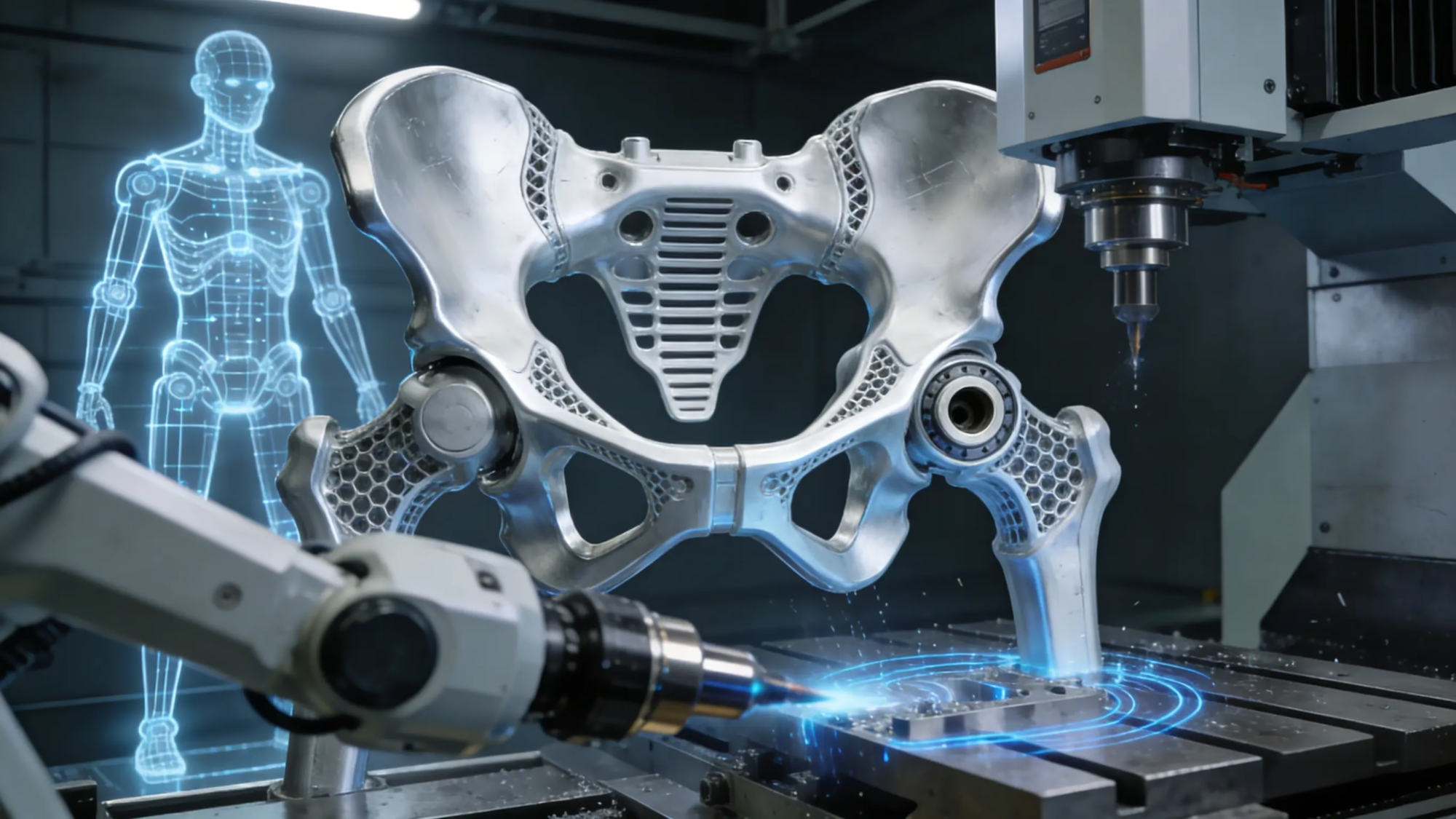
How Five-Axis Linkage Forges the Skeleton of Humanoid Robots
16Simultaneous 5-axis centers
±0.005 mmAchievable tolerance
7,600 m²Manufacturing space
99.99%Qualification rate
Common Problems

Where mobile robot parts go wrong

These failures show up on the assembly floor, not in the drawing.

01

Joint bores that won't hold position

A joint bore drilled 0.02 mm oversize lets the harmonic drive slip under load. The arm drifts a few tenths of a degree each cycle. By the end of a shift the repeatability is gone and you're re-teaching waypoints. The fix starts at the boring bar, not in the controller.
02

Gearbox faces that don't seat flat

If the mounting face on a gearbox housing is out of flat by more than 0.01 mm, the gear mesh loads unevenly. You hear it first as a whine at speed, then as pitting on the tooth flanks. Flatness on the mating face is the variable that decides gear life.

03

Fixtures that walk under vibration

A mobile base sees continuous low-amplitude vibration from drive motors. A mounting plate with soft corners or a loose dowel pin hole loosens over weeks. Bolts back out, the sensor bracket shifts, and your calibration drifts out of spec between service intervals.

04

Prototypes that can't scale to production

A machined prototype that works in the lab often can't be made the same way at volume. Wall thickness changes, tolerances relax, and suddenly the production part doesn't fit like the prototype did. Plan the process once, and both ends match.

The Approach

Machining robotic components to the fit that matters

We machine the parts around the joint, not the whole robot.

greatlight-cnc-machining-center-16-1
Tight Tolerances

Bores, faces and fits held to ±0.005 mm

Robotic joints live or die on bore geometry. A harmonic drive needs a bore that is round, straight and sized within a few microns of nominal. We bore these features on 5-axis centers with in-process probing, then verify roundness and diameter before the part leaves the machine.

For gearbox housings and actuator bodies, flatness on the mounting face matters as much as the bore. We face these surfaces in a single setup where possible, so the bore axis and the mounting face stay perpendicular. That keeps gear mesh even across the load range and cuts the noise floor.

We hold ±0.005 mm on critical features as a routine capability, not a best-case number. Surface finish lands between Ra 0.8 and 1.6 μm on bearing bores, and we can go to Ra 0.2–0.8 μm where a seal or a sliding fit needs it.

  • 1
    Bore diameter and roundnessVerified with in-process probing on the same setup.
  • 2
    Face flatnessHeld to 0.01 mm or tighter on gearbox mounting faces.
  • 3
    PerpendicularityBore axis to mounting face controlled in one setup.

Get Instant Quote

greatlight-cnc-machining-center-17
Complex Geometry

5-axis work for parts a 3-axis mill can't reach

A mobile robot arm carries a lot of features that point in different directions. Motor mounting pads, cable routing channels, sensor bosses, dowel pin holes. On a 3-axis mill each face becomes another setup, and every setup adds stack-up error. That error lands right where you can least afford it, on the joint.

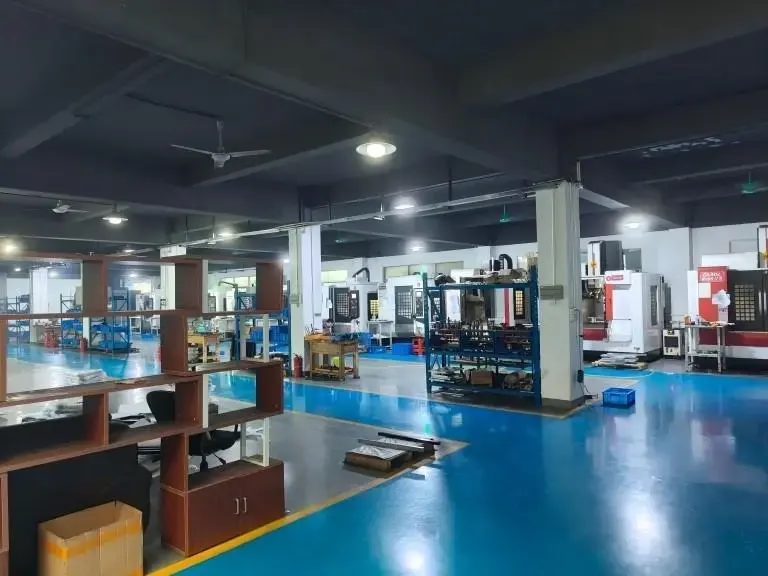
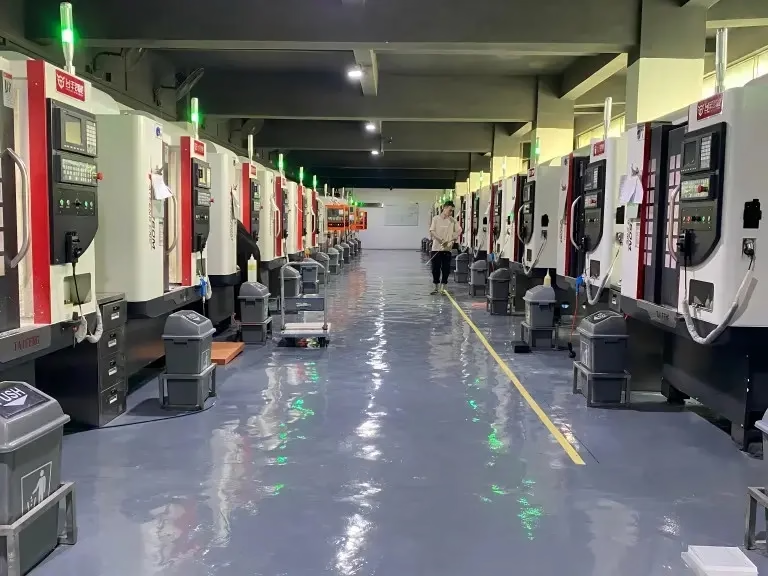
We run 16 simultaneous 5-axis machining centers. A part with five or six angled faces comes off the table in one or two setups instead of six. Positional relationships between features stay locked to the same datum, so a sensor boss and its mounting holes stay aligned to the joint bore.

The same setup discipline applies to thin-wall actuator housings. Cutting pressure pushes a thin wall, so we adjust step-downs and tool engagement to keep deflection inside tolerance. If a wall is too thin to hold, we'll say so at the DFM stage rather than after the first article.

  • 1
    Fewer setupsOne or two instead of six, so stack-up error stays small.
  • 2
    Feature relationshipsAll faces referenced to a single datum.
  • 3
    Thin-wall controlTool paths tuned to keep deflection inside tolerance.

Get Instant Quote

Material Selection

Which material for which robot part

The right choice depends on where the part sits and what it has to survive.

PartTypical materialWhy
Joint housings7075-T6 aluminiumHigh strength-to-weight for moving mass
Gearbox housings6061-T6 or 2024Stable, machinable, good fatigue life
Mounting plates6061-T6 or 5083Flat, weldable, corrosion resistant
Sensor brackets6061 or 304 stainlessRigid and dimensionally stable
Wear pins and dowels440C or 17-4PHHard, wear resistant, holds fit
Insulating spacersPEEK or POMNon-conductive, low creep
Covers and guardsABS, PC or PMMALight, tough, easy to form
Base frames4130 or 4140 steelStiff under continuous vibration
What We Machine

CNC services for mobile robot hardware

One shop for the machined parts, the fixtures and the finishing.

01

5-Axis CNC Machining

Angled faces, compound bores and contoured surfaces cut in one or two setups. The right call for joint housings and anything with features on multiple planes.

02

4-Axis and 3-Axis Milling

Efficient for prismatic parts, plates and brackets where the features sit on one or two faces. Lower cost per part at volume.

03

CNC Turning and Mill-Turn

Shafts, pins, bushings and rotary actuator bodies. 16 mill-turn centers handle turned features and cross-drilling in one cycle.

04

Rapid Prototyping

One-off and low-volume parts for design validation. Quotation and free DFM analysis within 12 hours, production can start within 24 hours.

05

Surface Finishing

Anodizing, electroless nickel, black oxide, bead blasting and polishing. Laser marking down to 1.5 mm character height.

06

Custom Tooling and Fixtures

Build fixtures, weld fixtures and assembly jigs. Machined to the same tolerances as the parts they hold.

Capabilities

Machine capacity and service scope

Numbers you can check against your part envelope.

CapabilitySpecificationNotes
5-axis centers16 simultaneousComplex geometry in one setup
4-axis mills12 machinesPrismatic parts, multi-face work
3-axis machines27 machinesPlates, brackets, covers
Mill-turn centers16 machinesTurned parts with cross features
Maximum part size4,000 mm4,000 × 400 × 150 mm travel
Medium travel750 × 1,150 × 550 mmAlso 600 × 600 × 600 mm
Compact travel500 × 500 × 450 mmAlso 500 × 310 × 200 mm
Rotary tableØ400 mmIndexed and simultaneous work
Tolerance±0.005 mm±0.0002 in on critical features
Minimum orderNoneOne prototype to 10,000+ parts
Why GreatLight

What you get when you send us the drawing

Fifteen years in metal, three plants, one process from prototype to production.

15Y

Machining since 2011

Fifteen years of production machining in Dongguan, with a second plant in Singapore. Three wholly-owned facilities and 150 technicians on the floor.

±0.005

Tolerance you can plan around

We hold ±0.005 mm on critical features as a routine number. The 99.99% qualification rate is measured across shipped production runs.

127

High-precision CNC machines

127 machines total, including 16 simultaneous 5-axis centers and 16 mill-turn centers. Capacity spread across four machine classes.

12H

Quote and DFM in 12 hours

Send a model and a drawing. You get a quotation and a free DFM analysis within 12 hours, and production can start within 24 hours.

100%

Inspection before shipment

Raw material check, in-process monitoring and final inspection on every order. Inspection reports available on request.

3–5D

Parts ship in 3–5 days

Standard production parts ship in 3 to 5 days. Historical late-delivery probability sits below 2%.

7,600 m²Manufacturing space
150Technicians
3Wholly-owned plants
99.99%Qualification rate
What We Deliver

Parts we machine for mobile robot builders

low volume manufacturing

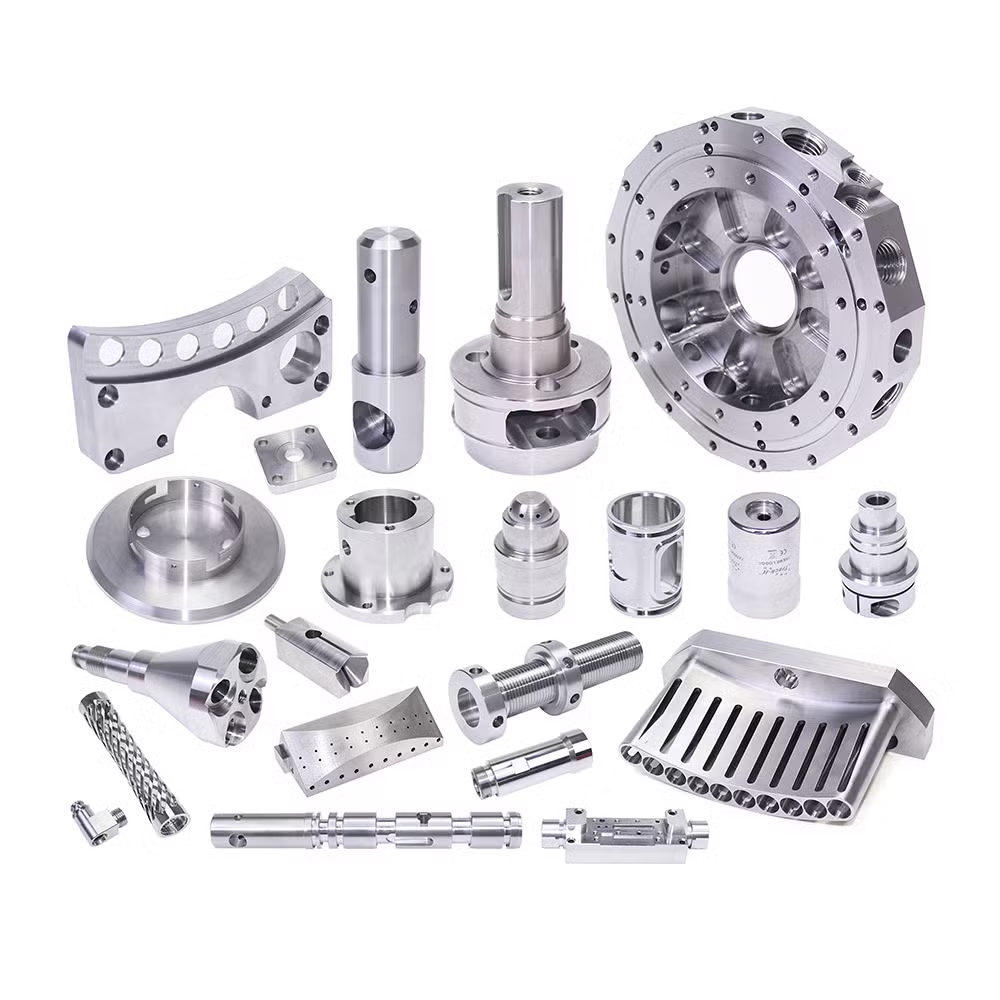
Joint and actuator housings

Bores held round and on size, faces flat to 0.01 mm. Machined from 7075-T6 or 6061-T6.

  • ±0.005 mm bore
  • Ra 0.8–1.6 μm
aluminum-alloy-industrial-control-chassis-sheet-metal-processing

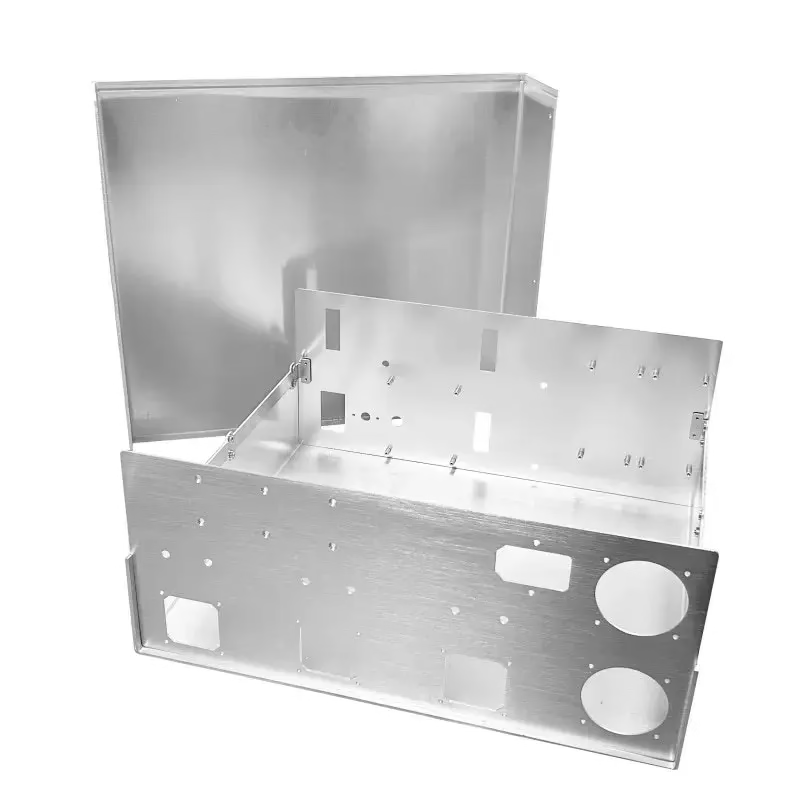
Control and electronics chassis

Aluminium enclosures with machined mounting bosses and connector cutouts. Thin-wall sections held without distortion.

  • 6061-T6
  • 3–5 day shipping
industrial-machinery1

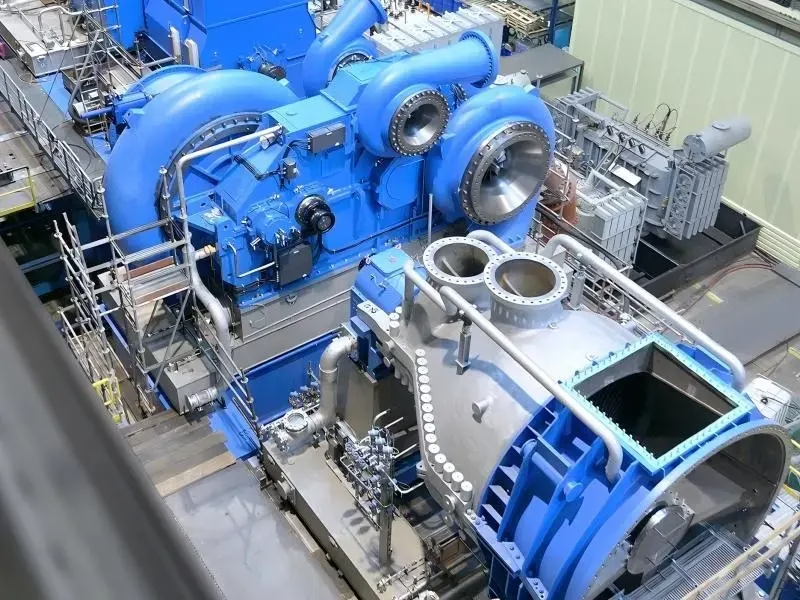
Mounting plates and base frames

Flat plates with dowel pin holes and threaded inserts. Corner geometry kept stiff for vibration resistance.

  • Flat to 0.01 mm
  • No MOQ
cnc-machining-hdpe

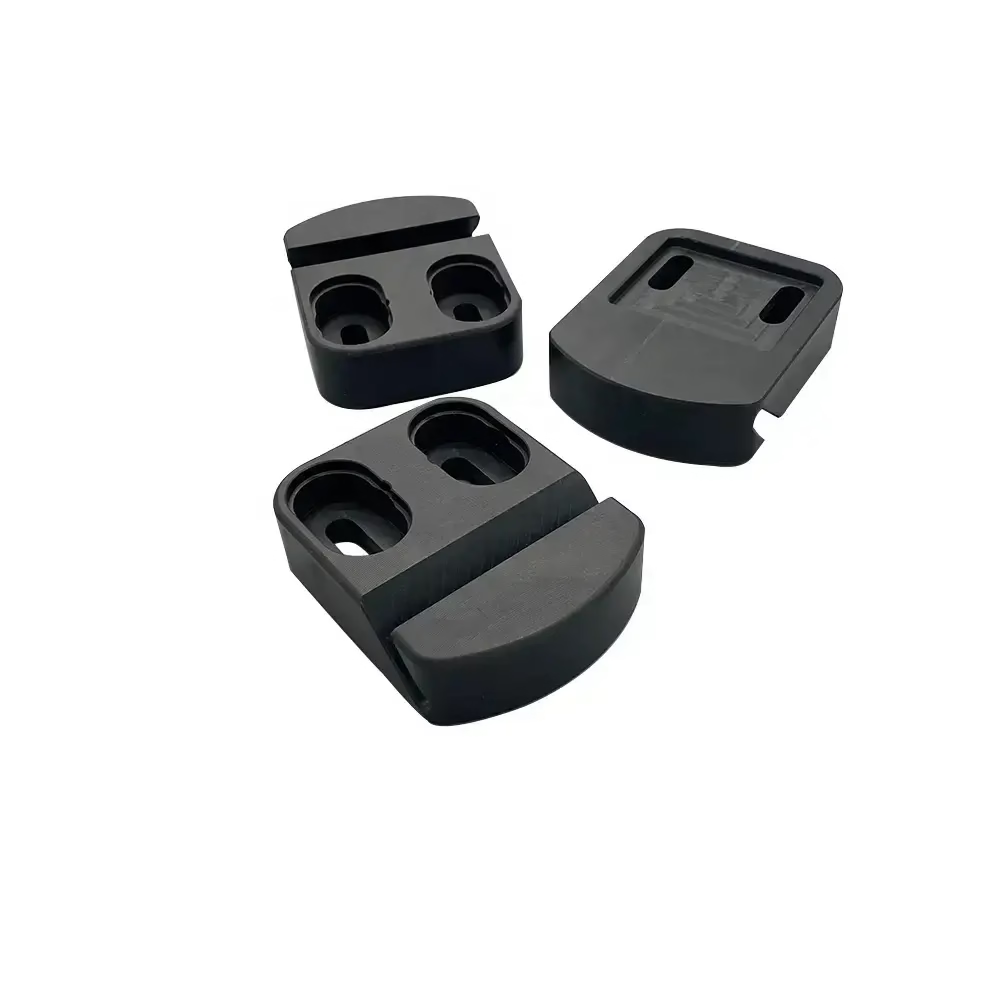
Engineering plastic components

PEEK, POM and PA parts for insulating spacers, wear pads and lightweight brackets. Low creep under load.

  • PEEK and POM
  • 100% inspection
FAQs

Questions engineers ask before sending drawings

Do you build complete mobile robots?

No. We machine components that go into robotic systems, including joint housings, actuator bodies, gearbox parts, mounting fixtures and custom tooling.

If your part is a machined metal or plastic component, we can quote it. We do not assemble or sell finished robot systems.

What is the tightest tolerance you can hold on a joint bore?

We hold ±0.005 mm on critical features as a routine capability. That covers bore diameter on most harmonic and cycloidal drive seats.

If your design calls for something tighter, send the drawing and we will tell you whether it is machinable and how we would inspect it. We would rather flag it at the DFM stage than discover it after the first article.

How do I choose between 3-axis, 4-axis and 5-axis machining?

Count the faces that carry critical features. If everything sits on one face, 3-axis is cheapest. Two or three faces favor 4-axis. If features point in five or six directions, 5-axis wins because it avoids the extra setups and the stack-up error that comes with them.

For a joint housing with angled motor pads, 5-axis is almost always the right call. For a flat mounting plate, it is not worth the machine time.

Which materials do you machine for robot components?

Aluminium 6061, 6061-T6, 2024, 5052, 5083, 6063, 6082 and 7075. Stainless 303, 304, 316, 316L, 17-4PH and 440C. Steels including 1018, 1045, 4130, 4140 and 4340.

On the plastic side we cut ABS, PC, PMMA, POM, PA, PEEK, PP, HDPE and carbon fibre. Titanium and Inconel are available for high-load or high-temperature parts.

Can you take a part from prototype through to production?

Yes. There is no minimum order quantity, so we can machine one prototype and then scale the same process to 10,000+ parts.

The benefit is that the production part uses the same datums and fixturing as the prototype. Tolerances do not relax between the two runs, so what fit in the lab fits on the line.

What surface finishes do you offer?

Anodizing in clear, colour, hardcoat and conductive versions. Electroless nickel, zinc, silver and gold plating. Powder coating and black oxide. Bead blasting, tumbling, brushing and polishing.

Laser marking and engraving are available down to a minimum character height of 1.5 mm. Tell us the finish in the RFQ and we will quote it with the machining.

How fast can I get a quote and a first article?

Quotation and a free DFM analysis come back within 12 hours. Production can start within 24 hours of approval, and standard parts ship in 3 to 5 days.

For a new part with tight tolerances, budget extra time for first-article inspection and any fixture build. We will give you a realistic timeline with the quote rather than a number we cannot hold.

How do you handle confidentiality on robot designs?

Uploads are secure and confidential. We do not share customer drawings or part geometry outside the project team.

A non-disclosure agreement is available on request, and we can sign yours before any files change hands. ISO 27001:2022 covers our information security management.

Send us the drawing, get a quote in 12 hours

Upload your model and tolerances. We will return a quotation and a free DFM analysis within 12 hours, with no minimum order quantity.

12-hour quote100% inspectionNo MOQNDA on request

Trusted by engineers and manufacturers worldwide

Tesla Ford Motor Company BYD Auto Denso Magna International Boeing Airbus Medtronic KUKA FANUC