
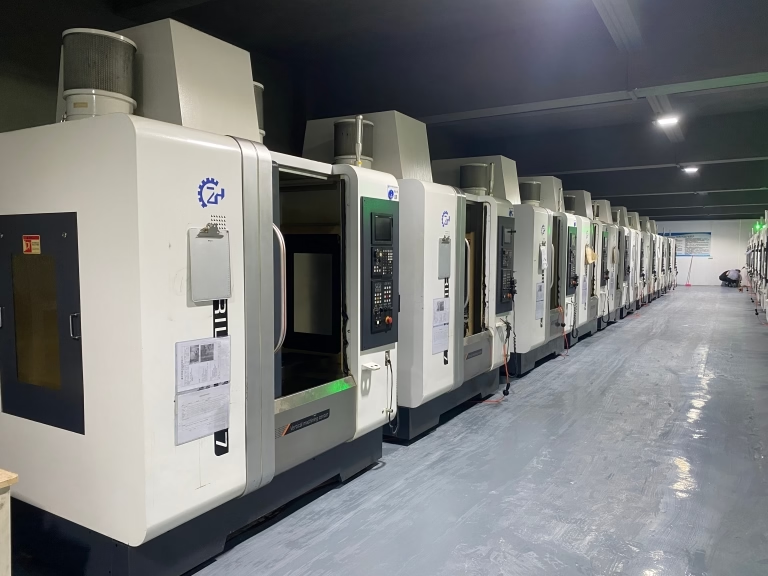
How To Stop Warming Program In CNC Machine?
In the high-stakes world of precision manufacturing, where tolerances are measured in microns and machine uptime directly impacts profitability, the proper management of a CNC machine’s warming program is a critical yet often misunderstood operational procedure. As a senior manufacturing engineer with extensive experience in high-mix, low-volume production environments, I’ve witnessed firsthand how improper handling of this process can lead to catastrophic part failures, accelerated machine wear, and significant production delays. This article delves deep into the purpose, execution, and—most importantly—the correct methods for stopping a CNC machine’s warming program, providing a comprehensive guide for shop floor technicians, programmers, and production managers.
Understanding the “Why”: The Critical Role of Warming Programs
Before addressing the “how,” it’s essential to understand the “why.” A CNC warming program, also known as a warm-up cycle or thermal stabilization routine, is not an optional step for high-precision machining. It is a systematic procedure designed to bring all machine components—especially the spindle, ball screws, guideways, and the machine structure itself—to a stable, uniform operating temperature.
The Physics at Play:
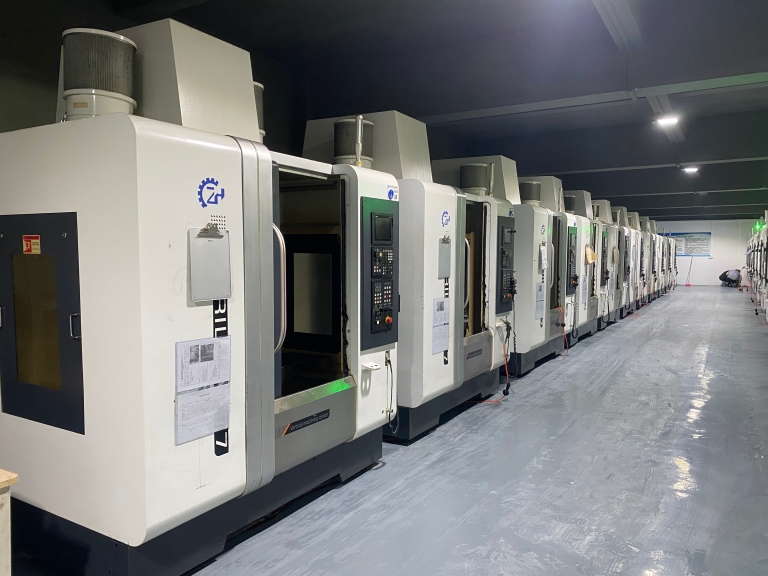
Thermal Expansion: Metal components expand and contract with temperature changes. A cold machine spindle may be several microns shorter than when it’s at operating temperature. Similarly, ball screws can exhibit significant growth.
Thermal Gradients: If one part of the machine (e.g., the spindle housing) heats up faster than another (e.g., the column), it creates internal stresses and misalignments, directly translating to positioning errors on the workpiece.
Lubricant Viscosity: Grease and oil in bearings and guideways have optimal viscosity at specific temperatures. Running a spindle at full speed with cold, thick lubricant can cause premature bearing failure.
Skipping or improperly terminating a warm-up can result in:
Dimensional Inaccuracy: Parts machined in the first hour may be out of tolerance as the machine “grows” into its thermal equilibrium.
Poor Surface Finish: Unstable thermal conditions cause minute vibrations and inconsistent tool paths.
Reduced Machine Life: Subjecting cold components to high loads and speeds induces excessive stress.
Standard Procedure: Executing a Proper Warm-Up
A well-designed warm-up program, often provided by the machine tool builder (e.g., DMG MORI, Mazak, Haas), typically follows a graduated approach:
Low-Speed Axis Movement: All linear axes (X, Y, Z) and rotary axes (A, B, C) move slowly through their full travel ranges. This circulates lubricant and generates gentle, even heat through friction in the ball screw nuts and guideway bearings.
Spindle Speed Ramping: The spindle rotates at gradually increasing RPMs, often in steps (e.g., 1000 RPM for 5 minutes, 3000 RPM for 5 minutes, up to 80% of max speed). This allows the spindle bearings to heat evenly.
Dwell Times: The program includes pauses at different stages to allow heat to soak into the machine structure and dissipate gradients.
Duration: A complete cycle can last from 15 minutes for smaller machines to over an hour for large, high-precision gantry mills or 5-axis CNC machining centers used for complex aerospace components.
The Core Question: How to Stop the Warming Program Safely and Correctly
There are legitimate scenarios where you may need to stop a warming program: an urgent job change, a machine fault detection, or the completion of the cycle if it’s not auto-terminating. The method is paramount.
⚠️ The Cardinal Rule: NEVER USE THE EMERGENCY STOP (E-STOP) FOR ROUTINE WARM-UP CANCELLATION.
Hitting the big red button halts all power to the servo drives and spindle. This causes an abrupt stop that can jerk the axes and spindle, potentially damaging precision components. It should only be used in genuine safety emergencies.
Correct Methods to Stop a Warming Program:
Method 1: Program Stop / Feed Hold (The Preferred Method)
Locate the “Feed Hold” button on the machine control panel. It is usually clearly labeled.
Press “Feed Hold.” This will pause all axis movements immediately. The spindle, if running, will typically continue but this depends on the specific machine and program logic.
Allow the Spindle to Stop: If the spindle is running, let it ramp down to zero RPM on its own. Do not force it off.
Reset the CNC Control:
Press the “Reset” button on the CNC controller (e.g., Fanuc, Siemens, Heidenhain). This clears the active program from memory and readies the control for a new command.
Alternatively, you can press “Program Stop” (if available) followed by “Reset.”
Manual Jog Away (If Necessary): If the machine paused in an awkward position, use the manual pulse generator or jog buttons to move the axes to a safe, clear location.
Method 2: Through the CNC Control Interface
Access the Program Screen: Navigate to the screen displaying the active program (e.g., “Current Commands” or “Program Check”).
Search for M-Code or Program End: Use the cursor or search function to jump to the end of the warm-up program. Look for the command M30 (Program End and Reset) or M02 (Program End).
Execute Block-by-Block: You can sometimes single-step (Single Block mode) to the final line and then let it execute the M30, which gracefully ends the program and resets it.
Method 3: For Integrated, Smart Machine Tools
Many modern machines, especially those from premium builders, have dedicated warm-up functions within their control software. Stopping is menu-driven:
Navigate to the “Warm-Up” or “Maintenance” cycle menu.
Select the option to “Abort Cycle” or “Stop Warm-Up.”
The machine’s PLC (Programmable Logic Controller) will then execute a predefined, safe shutdown sequence for the warm-up routine.
Post-Stop Protocol and Best Practices
Document the Interruption: Log in the machine’s maintenance sheet that the warm-up was interrupted and the reason why. This is crucial for traceability.
Assess the Thermal State: If you need to run a high-precision job immediately after stopping a partial warm-up, be aware that the machine is not thermally stable. Consider compensating by:
Using in-process probing to update workpiece offsets.
Running a shorter, focused “thermal touch-up” cycle targeting the specific axes and spindle speeds needed for the upcoming job.
Preventative Strategy: The best way to “stop” warming problems is to avoid needing to interrupt it. Schedule warm-up cycles to complete before the shift starts, using the machine’s timer function if available. For lights-out manufacturing, integrate the warm-up cycle into the beginning of the first job’s NC code.
Conclusion: Precision is a Discipline, Not an Accident
Effectively managing a CNC machine’s warming program—including knowing how to stop it correctly—is a fundamental discipline of professional precision parts machining and customization. It reflects an understanding that the machine tool itself is the primary fixture in the manufacturing process and must be treated with meticulous care. The difference between a shop that consistently holds tight tolerances and one that struggles with variability often lies in such foundational practices. For projects demanding the highest levels of accuracy and reliability, such as those serviced by a dedicated partner like GreatLight CNC Machining Factory, this disciplined approach to machine preparation is non-negotiable. It is the bedrock upon which trust in every delivered part is built.
Frequently Asked Questions (FAQ)
Q1: Is it okay to skip the warm-up program if I’m just doing a quick, roughing operation?
A: While the risk is lower for roughing, it is still not recommended. Cold lubrication and uneven thermal expansion can stress the machine’s mechanical components even during heavy cuts. A shortened, modified warm-up focusing on axis movement and mid-range spindle speeds is a better practice to protect your capital investment.
Q2: My machine doesn’t have a built-in warm-up program. What should I do?
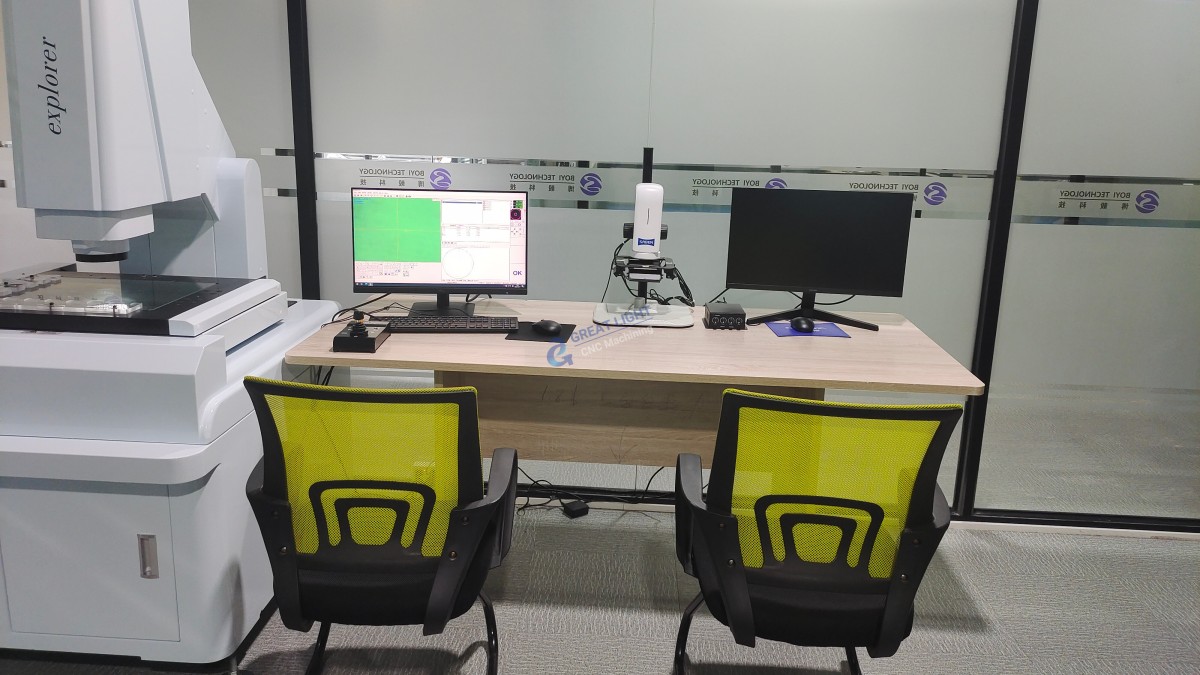
A: You can create a custom macro program. It should include slow, full-travel axis movements and a stepped spindle speed increase. Consult your machine’s manual for safe maximum acceleration parameters. Many reputable machine shops and service providers, including those with extensive 5-axis CNC machining capabilities, develop proprietary warm-up cycles tailored to their specific machine portfolio and typical workpiece materials.
Q3: How do I know if my machine’s warm-up program is effective?
A: The ultimate test is machining consistency. Perform a simple test: Machine an identical part with known critical dimensions first thing in the morning (after full warm-up) and again after the machine has been running for 4-5 hours. Measure the results. Additionally, using a laser interferometer or a ballbar test at different machine temperatures can directly measure the thermal error compensation needed.
Q4: Does the ambient temperature of the shop affect the warm-up routine?
A: Absolutely. A shop that is 15°C in the winter requires a longer and potentially more gradual warm-up than a shop at 25°C in the summer. Some high-end shops implement climate control to minimize this variable, a standard in facilities producing mission-critical components.
Q5: We run our machines 24/7. Do they still need a daily warm-up?
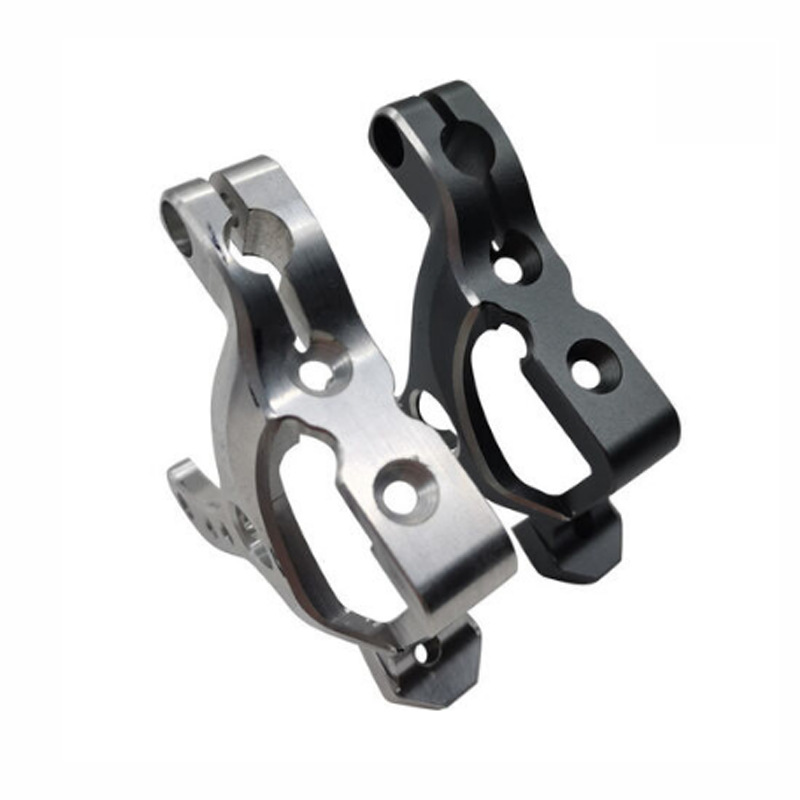
A: If the machine is in continuous operation and never fully cools down, a full warm-up is not necessary. However, if it is idle for a significant period (e.g., over a weekend or for maintenance), a warm-up cycle should be performed upon restart. Some shops use a “sleep mode” that keeps coolant or hydraulics at a minimal temperature to reduce the subsequent warm-up time. For insights into how leading manufacturers optimize uptime and precision, one can look to industry leaders on platforms like LinkedIn.



















