
01
Tolerance held on the drawing, not on the part
The first article measures well, then batch three drifts. By the time incoming inspection catches it, you have scrapped parts, a stalled assembly line and a rework bill nobody budgeted for.
We machine prototypes and production runs in stainless steel, brass, aluminum and engineering plastics. 127 CNC machines in Dongguan, tolerances to ±0.005 mm, and no minimum order quantity.
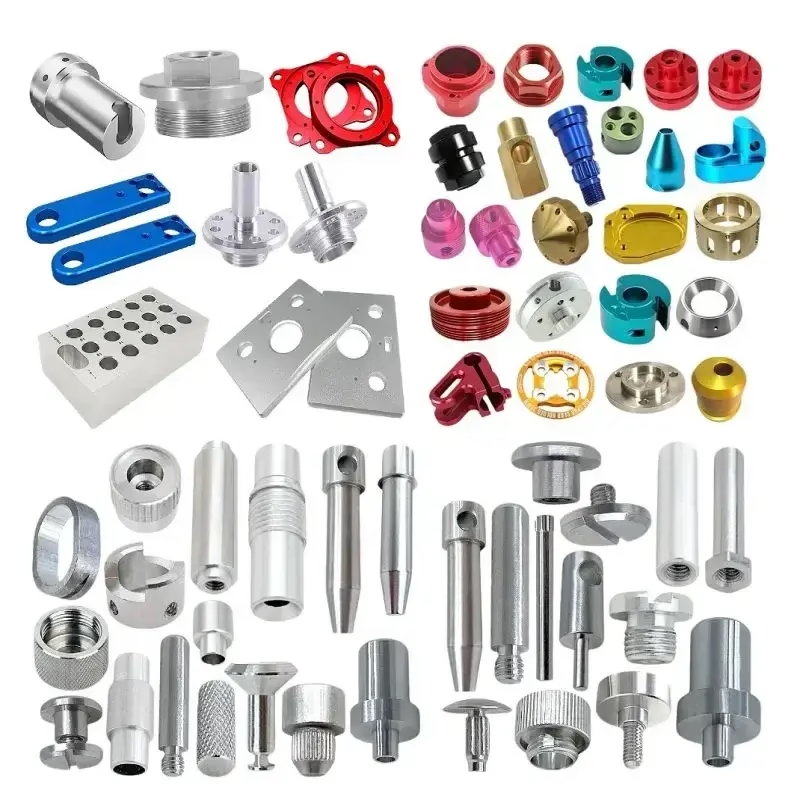
Most of these trace back to how the supplier reads your drawing, not to the machine itself.
The first article measures well, then batch three drifts. By the time incoming inspection catches it, you have scrapped parts, a stalled assembly line and a rework bill nobody budgeted for.
A wall too thin to hold thread depth, a pocket too deep for the cutter you specified. These get caught late, and the fix costs a redesign instead of a phone call.
Material certificates, inspection reports, NDA coverage. If these are not ready before the PO, purchasing burns days chasing documents instead of parts.
You need five pieces for a fit check, not five hundred. Minimum order rules and setup charges turn a quick test into a capital decision.
Three capabilities decide whether a job runs clean: how the part is fixtured, how the cut is planned, and how it is checked before it ships.
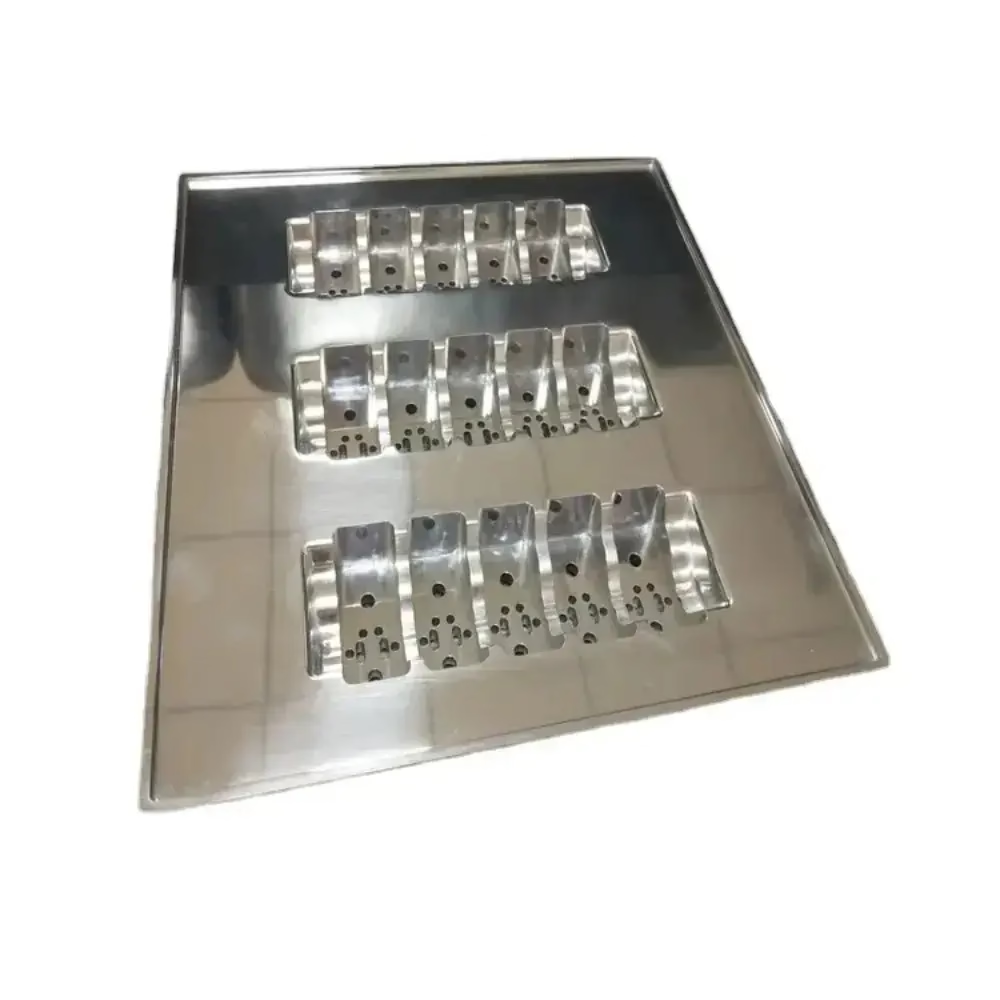
Every re-clamp adds error. On a three-axis machine a complex bracket might need four setups, and each one stacks a little more deviation onto the last. Our 16 simultaneous 5-axis centers cut most of those parts in one or two setups.
That matters most on parts with angled faces, deep pockets or features on five sides. Fewer setups also means shorter cycle time, so a part that would take a week on three axes can leave in days.
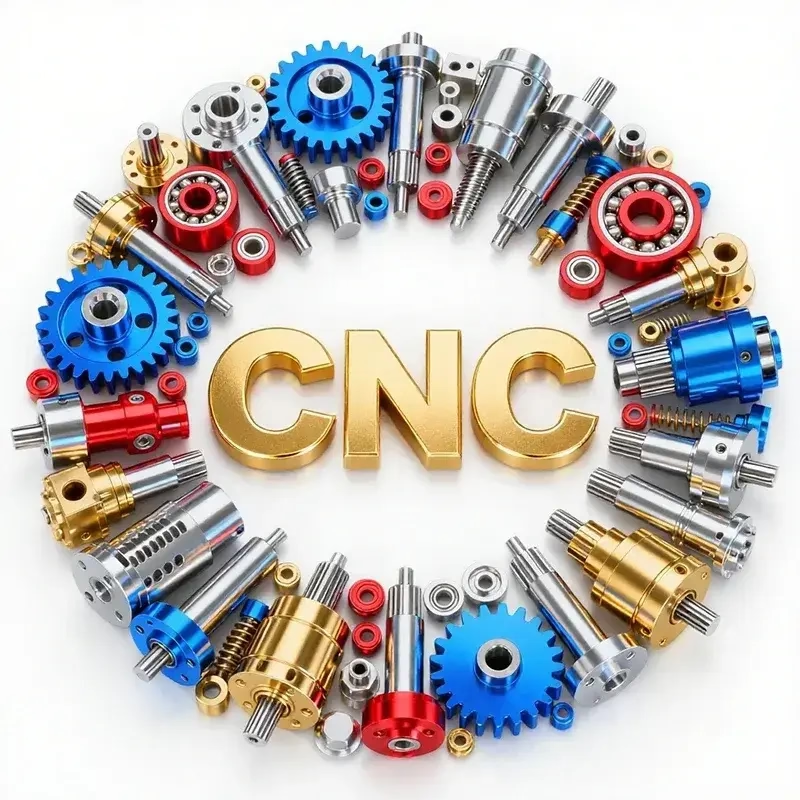
303 stainless cuts freely and takes a good finish, which is why it suits shafts and fittings. 316L work-hardens if the feed is too light, so we run it heavier and keep the tool engaged. 17-4PH in the H900 condition needs carbide and patience.
Brass C36000 machines fast and holds tight tolerances well, but it is not the answer when the part sees salt water. Aluminum 6061-T6 is light and cheap to run, though thin walls deflect if you push the feed. We pick the grade with you before the first chip.
Plastics bring their own rules. POM and PEEK hold dimension; ABS and HDPE move with heat. We adjust speeds and clamping pressure rather than treat them like soft metal.
A short guide for the common cases. If your part sits between two rows, send the drawing and we will say which one we would run.
| Material | Good for | Watch out for |
|---|---|---|
| 303 stainless | Shafts, fittings, fast turnarounds | Lower corrosion resistance than 316 |
| 316L stainless | Marine, medical, chemical contact | Work-hardens if feeds are light |
| 17-4PH (SUS630) | High-strength aerospace parts | Needs carbide and slower passes |
| Brass C36000 | Connectors, valves, tight tolerances | Not for salt-water service |
| Aluminum 6061-T6 | Enclosures, brackets, heatsinks | Thin walls deflect under heavy feed |
| Aluminum 7075 | Aerospace structural parts | Harder on tooling than 6061 |
| POM / PEEK | Insulators, bushings, wear parts | Heat growth needs coolant care |
| Titanium TC4 | Lightweight, high-load components | Slow cutting, higher cost per part |
Machining is the core. Everything around it is here so your part does not bounce between vendors.
Complex geometry in one or two setups. Angled faces, deep pockets and five-sided features without stacking fixture error.
Three-, four- and five-axis mills plus 16 mill-turn centers. Turned features and milled flats on the same part.
One-off parts for fit checks and design reviews. No minimum order, so you can test before you commit to a run.
Brackets, panels and chassis work that pair with machined components on the same assembly.
Anodizing, plating, powder coating, bead blasting and laser marking. Finish and marking held to your spec.
For volumes where machining every part stops making sense. We will tell you when the crossover happens.
Machine count and travel decide what fits. Here is what we can take without sending work out.
| Machine type | Count | Travel or size |
|---|---|---|
| Simultaneous 5-axis centers | 16 | Up to 4,000 mm processing size |
| Four-axis mills | 12 | 750 × 1,150 × 550 mm |
| Three-axis machines | 27 | 600 × 600 × 600 mm |
| Mill-turn centers | 16 | Ø400 mm rotary table |
| Total CNC machines | 127 | 3 wholly-owned plants, 7,600 m² |
| Tolerance | — | ±0.005 mm (±0.0002 in) |
No slogans. These are the numbers and habits that decide whether your next order runs like the last one.
Fifteen years of metal cutting in Dongguan, with a second plant in Singapore for regional supply.
Down to five microns on the features that need it. We will say when your drawing asks for more than the process can give.
Parts that pass inspection on the first submission, tracked across production runs.
Drawing in, quotation and free DFM analysis back within 12 hours. Production can start within 24 hours.
Raw material check, in-process monitoring and final inspection. Reports on request.
From a single prototype to 10,000+ part runs on the same drawing.
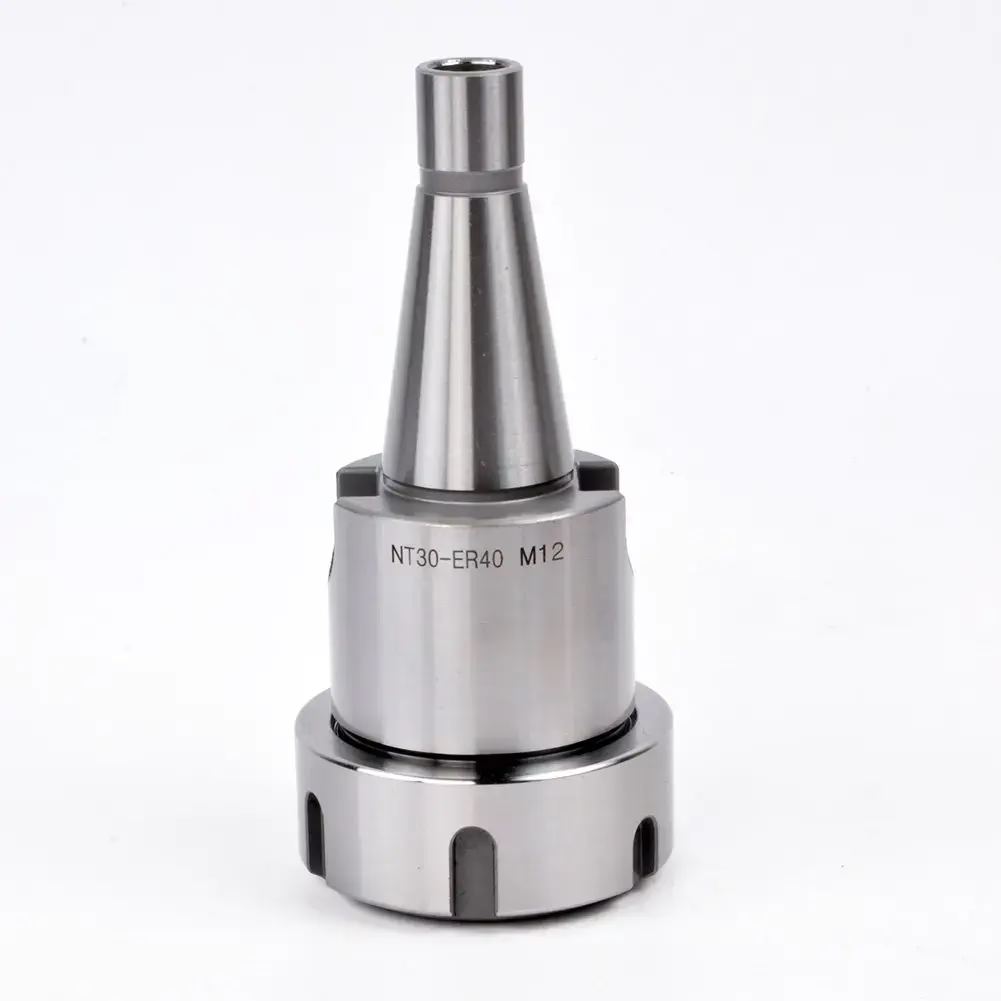
Thin-wall aluminum and titanium parts where weight and stiffness both matter.
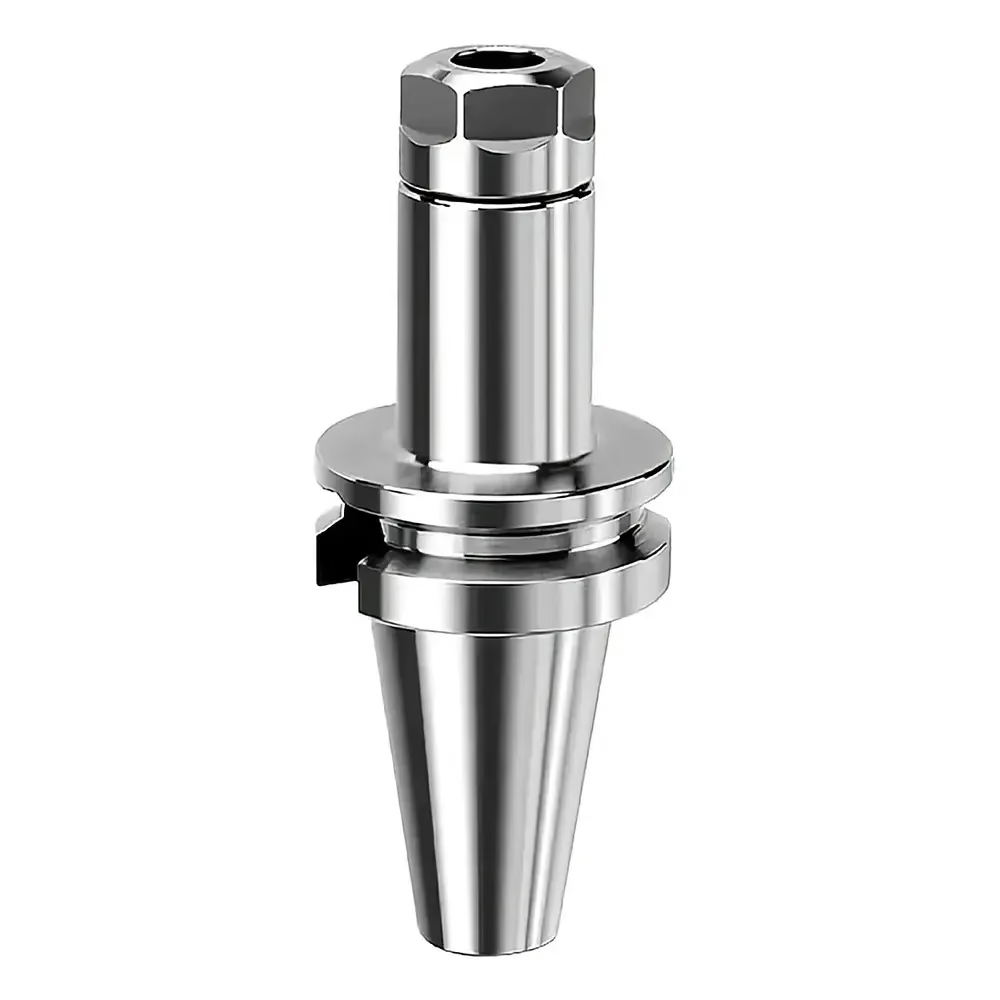
Grippers, test rigs and motor housings run to IATF 16949 process controls.
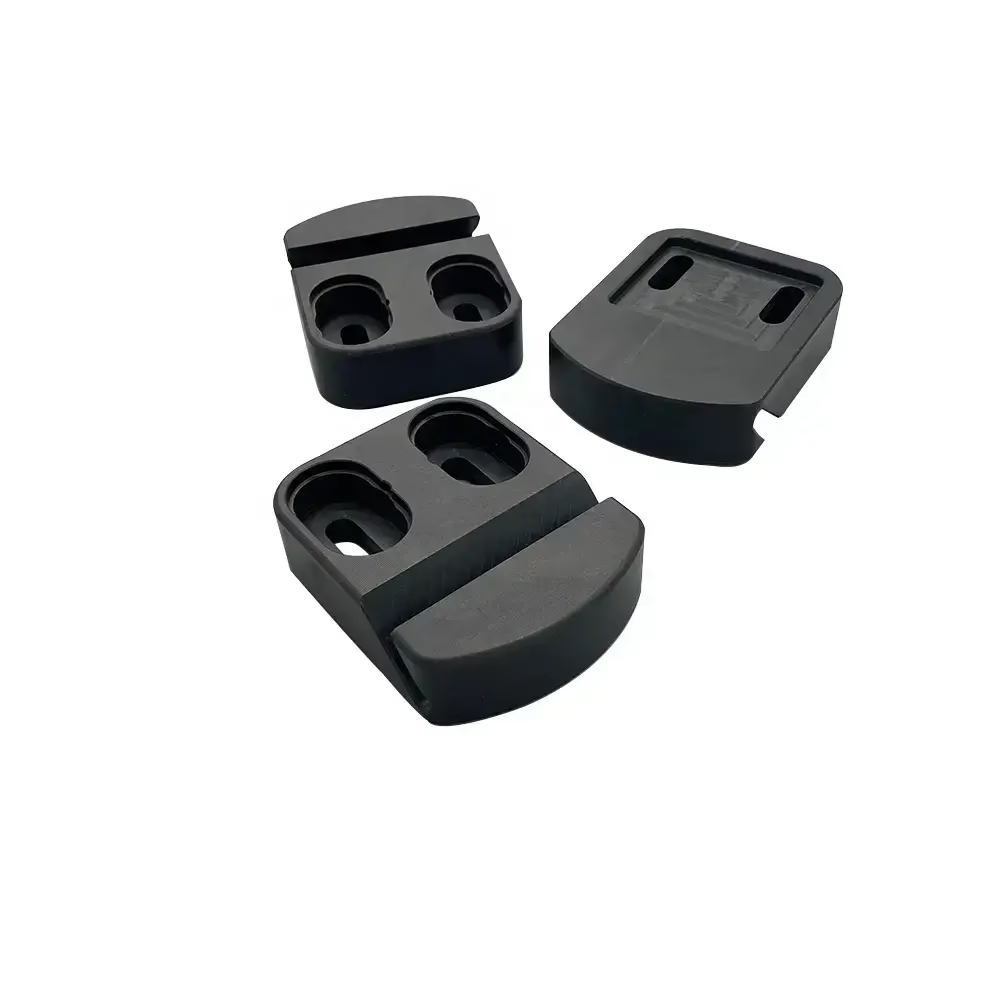
316L and PEEK parts with clean finishes and full inspection records.
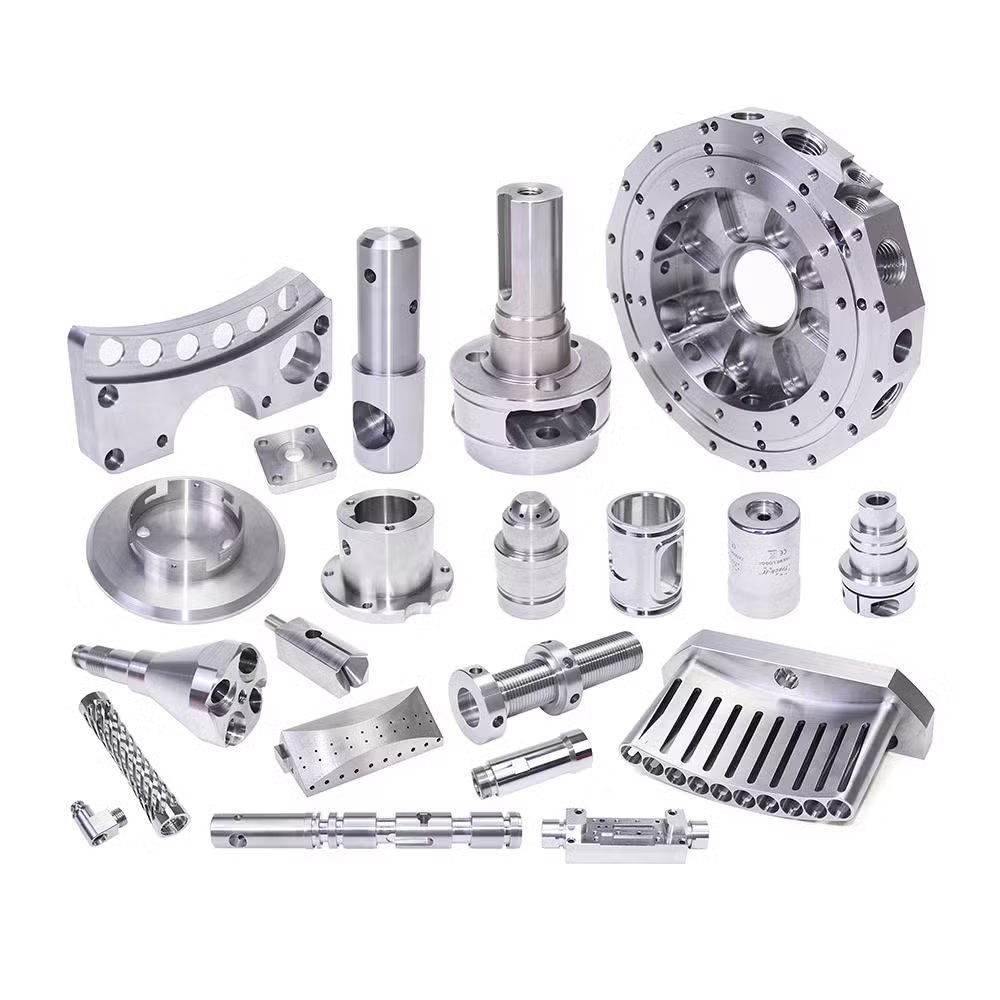
One-off end effectors through to repeat production batches.
STEP and IGES cover most jobs. X_T and native SolidWorks files also work. For simpler parts, a 2D PDF with clear dimensions is enough.
If you only have a sketch, send it with the function of the part. We will tell you what is missing before we quote.
±0.005 mm is achievable on the features that need it, and that is the number we quote against. On a 4,000 mm part, temperature and material movement matter more than the machine.
If your drawing calls for tighter than ±0.005 mm over a long span, we will say so and suggest a different approach rather than take the order and miss it.
Stainless 303, 304, 316L and 17-4PH; aluminum 6061-T6, 7075 and 6082; brass C36000 and C28000; plus titanium TC4, Inconel and engineering plastics like POM, PEEK and HDPE.
We stock common grades and can source others against your material certificate requirements.
No. We run from a single prototype up to 10,000+ part runs. The setup cost is the same either way, so a one-piece order is quoted honestly rather than padded.
For a fit check, a single machined part is often cheaper than waiting for a tooling decision.
Quotation and free DFM analysis come back within 12 hours. Production can start within 24 hours of approval, and most parts ship in 3–5 days.
That timeline assumes the drawing is released and material is in stock. We will flag it if either is not true.
Uploads are secure and confidential. We sign NDAs on request and can work under yours if you have a standard form.
We do not publish customer names, part photos or case details without written approval.
Every order gets raw material verification, in-process monitoring and 100% final inspection before shipment.
Inspection reports, material certificates and dimensional data are available on request. Say what you need with the PO so it ships with the parts.
Machining wins when geometry changes, when tolerances are tight, or when the volume is low. Casting starts to pay off when the shape is stable and annual volume is high.
We run both, so we will tell you where the crossover sits for your part instead of pushing one process.
Upload your files and an engineer reviews the part before we price it. No minimum order, no obligation.
12-hour quoteFree DFM analysis100% inspectionNo minimum orderNDA on request
Trusted by engineers and manufacturers worldwide










Upload your 3D model or 2D drawing and get a quotation with a free DFM analysis. Maximum processing size 4,000 mm.
CNC Metals 13 grades
CNC Plastics 10 grades
Machines & processes 12 options
Surface & post-processing 10 options
Material: not selected Machine: not selected Post-process: not selected