
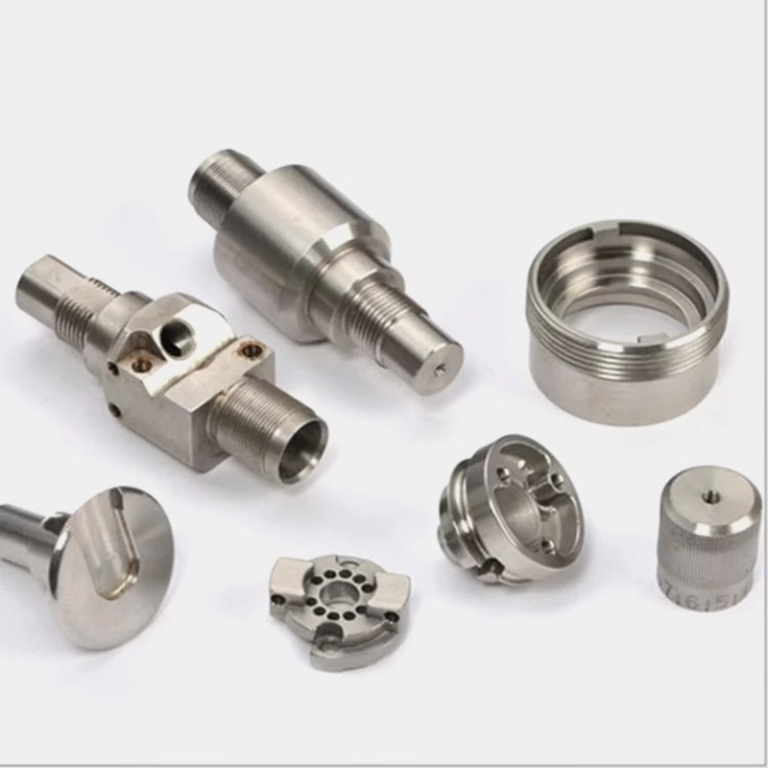
What’s CNC Machine? A Comprehensive Guide to Its Role in Precision Manufacturing
If you’ve ever wondered how intricate metal gears, aerospace turbine blades, or medical implants are produced with unmatched accuracy, the answer often lies in CNC machining. Short for Computer Numerical Control, CNC machining is a cornerstone of modern precision manufacturing, automating machine tools to create complex, high-tolerance parts with consistent results. Unlike manual machining, which relies on human operators to guide tools, CNC machines follow pre-programmed digital instructions to execute every cut, drill, and mill—eliminating human error and unlocking possibilities for parts that were once unfeasible to produce.
What’s CNC Machine? Core Principles and How It Works
At its core, a CNC machine translates digital design data into physical parts using a closed-loop system of hardware and software. To understand how it operates, let’s break down its key components and workflow:
Core Components of a CNC Machine
CNC Controller: The “brain” of the machine, which stores and executes the pre-programmed code. Modern controllers feature intuitive interfaces for editing programs and monitoring the machining process in real time.
Machine Tool: The physical platform that holds the workpiece and cutting tools. Common types include milling machines, lathes, grinders, and EDM (Electrical Discharge Machining) machines, each optimized for specific operations.
Drive System: Converts electrical signals from the controller into precise mechanical motion. Servo or stepper motors power the movement of axes, ensuring smooth, accurate positioning.
Feedback Sensors: These devices (such as encoders) send real-time data about tool position back to the controller, allowing for adjustments to maintain tolerance accuracy throughout the machining process.
The CNC Machining Workflow
CAD Model Creation: Engineers start by designing the part in a Computer-Aided Design (CAD) software, creating a 3D digital model of the desired part.
CAM Programming: The CAD model is imported into Computer-Aided Manufacturing (CAM) software, which generates toolpaths and translates the design into G-code—the standard programming language for CNC machines. Post-processing ensures the code is optimized for the specific machine type and material.
Setup and Calibration: Operators load the workpiece into the machine, secure cutting tools, and calibrate the axes to ensure alignment with the program’s coordinates.
Machining Execution: The CNC controller runs the program, guiding the cutting tools to perform the required operations. Many modern machines can run unattended for hours, boosting production efficiency.
Inspection and Quality Control: Finished parts are measured using precision tools like coordinate measuring machines (CMMs) to verify they meet the specified tolerances.
Key Advantages Over Manual Machining
Unmatched Precision: CNC machines can achieve tolerances as tight as ±0.001mm, far beyond what human operators can consistently replicate.
Repeatability: Once a program is perfected, every identical part will be machined with the same accuracy, critical for mass production.
Efficiency: CNC machines can operate 24/7 with minimal supervision, reducing lead times compared to manual machining.
Complex Geometries: They can produce intricate shapes, undercuts, and curved surfaces that are impossible or impractical to create with manual tools.
Common Types of CNC Machines and Their Applications
CNC machines come in various configurations, each tailored to different part complexities and production needs:
3-Axis CNC Machining: Workhorse for Basic to Moderate Complexity
3-axis machines move along three linear axes (X, Y, Z), making them ideal for flat parts, simple holes, and basic 3D shapes. They are widely used for prototyping, automotive components, and consumer electronics enclosures due to their versatility and cost-effectiveness.
4-Axis CNC Machining: Enhanced Rotational Capability
4-axis machines add a rotational axis (usually the A-axis, which tilts the workpiece) to the standard three linear axes. This allows for machining of parts that require multi-angle cuts without repositioning the workpiece, such as gears, brackets, and impellers. It reduces setup time and improves consistency compared to repositioning on a 3-axis machine.
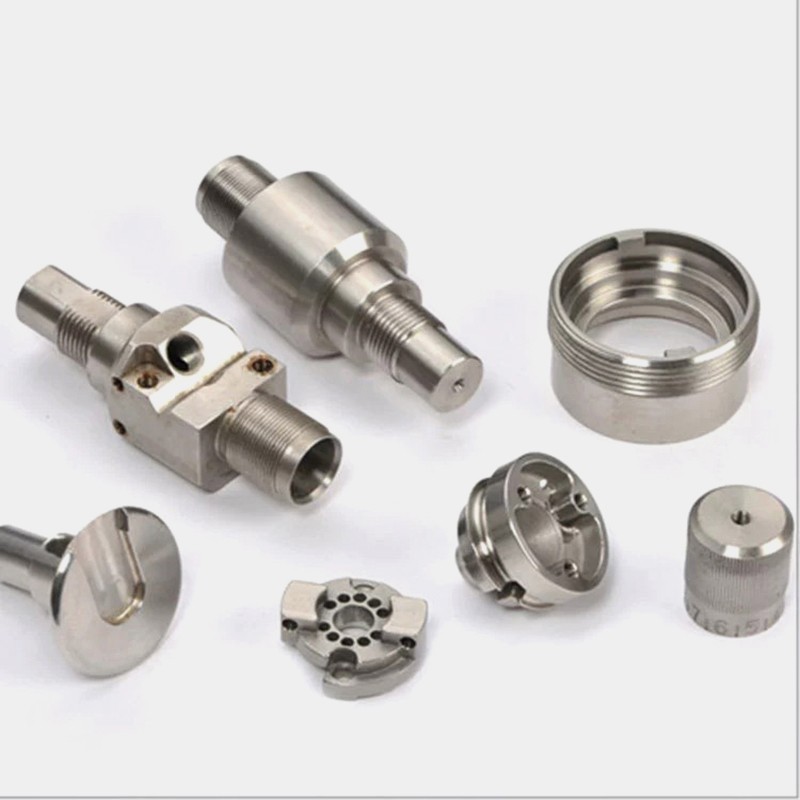
5-Axis CNC Machining: The Gold Standard for Complex Precision Parts
For the most complex, high-precision parts that require multi-angle cutting without repositioning, five-axis CNC machining services (opening in new window) are the gold standard. This technology allows the workpiece or cutting tool to move along five simultaneous axes—three linear (X, Y, Z) and two rotational (A, B or C)—enabling seamless machining of intricate geometries like turbine blades, humanoid robot joint components, and medical implants that would be nearly impossible with lower-axis machines. It also reduces setup time by up to 80% and minimizes the risk of errors from multiple repositionings.
Other Specialized CNC Machines
CNC Lathes: Optimized for turning cylindrical parts, such as shafts, bolts, and bushings.
EDM Machines: Use electrical discharges to erode material, ideal for hard metals and complex shapes that are difficult to cut with traditional tools.
CNC Grinders: Provide ultra-smooth surface finishes and tight tolerances for parts requiring high precision, such as bearing races and mold components.
The Critical Role of CNC Machining in Modern Industries
CNC machining is indispensable across a wide range of high-tech industries, where precision and reliability are non-negotiable:
Automotive and New Energy Vehicles
In the automotive sector, CNC machining produces engine components (cylinder heads, crankshafts), EV battery housings, and advanced driver-assistance system (ADAS) parts. For example, GreatLight Metal recently partnered with a new energy vehicle startup to manufacture complex e-housings using 5-axis CNC machining. The parts required tight tolerances to ensure optimal heat dissipation and compatibility with battery modules, and GreatLight delivered prototypes within 5 days, meeting the client’s aggressive R&D timeline.
Aerospace
Aerospace parts demand extreme precision and resistance to harsh environments. CNC machining creates turbine blades, structural brackets, and satellite components that must withstand high temperatures and pressure. GreatLight Metal’s ISO 9001 and IATF 16949 certifications ensure compliance with aerospace industry standards, making it a trusted partner for aerospace clients.
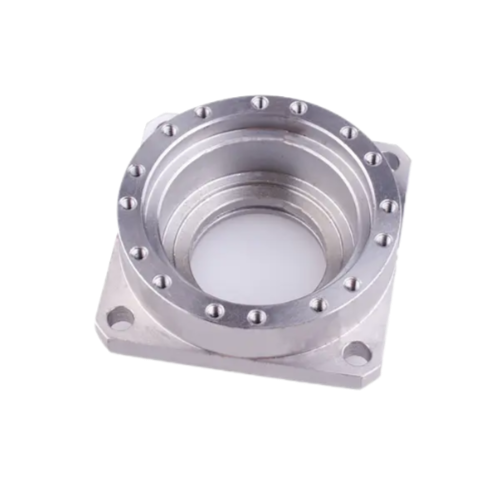
Medical Devices
Medical parts, such as surgical instruments, orthopedic implants, and diagnostic equipment components, require biocompatible materials and strict adherence to regulatory standards. GreatLight Metal’s ISO 13485 certification ensures its medical hardware production meets international quality and safety requirements, with precision down to ±0.001mm for critical implant parts.
Robotics and Industrial Automation
Humanoid robots and industrial automation systems rely on high-precision components like joint arms, gearboxes, and sensors. GreatLight Metal’s 5-axis CNC machining capabilities enable the production of complex robot joint parts with minimal assembly, reducing friction and improving movement accuracy.
Choosing a Reliable CNC Machining Partner: Why GreatLight Metal Stands Out
While there are many CNC machining suppliers in the market, not all offer the same level of capability, quality, and service. GreatLight Metal Tech Co., LTD. (GreatLight Metal) is a leading manufacturer that stands out for its comprehensive solutions, technical expertise, and unwavering commitment to client success.
Unmatched Equipment and Technical Capability
Founded in 2011 and located in Dongguan’s Chang’an District—China’s “Hardware and Mould Capital”—GreatLight Metal operates from a 7600-square-meter facility with 150 employees and three wholly-owned manufacturing plants. The company boasts 127+ precision peripheral equipment, including large high-precision 5-axis, 4-axis, and 3-axis CNC machining centers from top brands like Dema and Beijing Jingdiao, as well as lathes, grinders, EDM machines, and multiple 3D printers (SLM, SLA, SLS) for metal and plastic parts.
Comprehensive Process Chain and One-Stop Services
GreatLight Metal offers a full range of rapid prototyping and precision machining services, including:
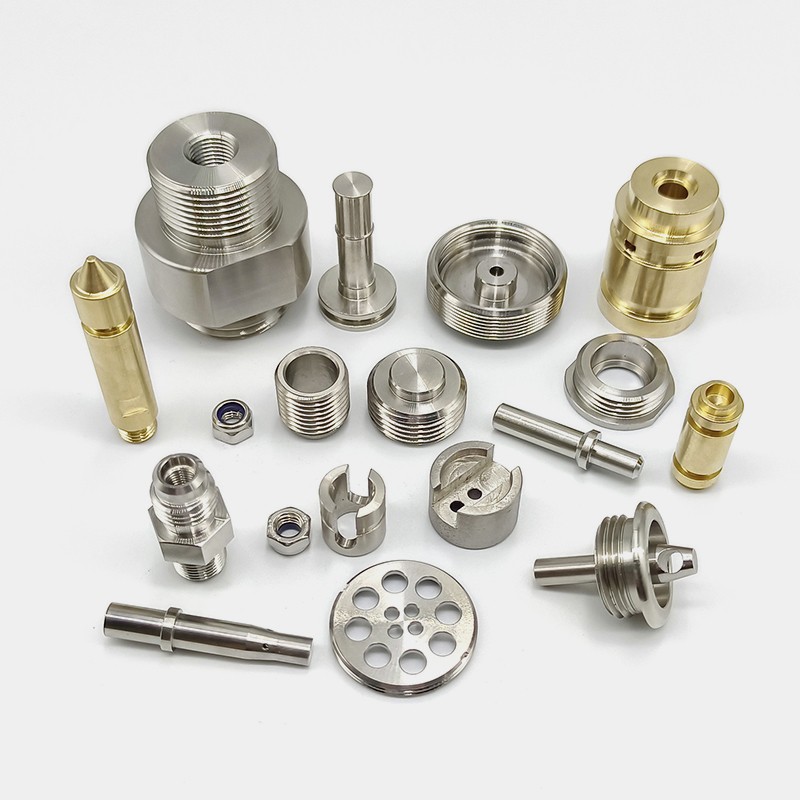
CNC machining (3-axis, 4-axis, 5-axis)
CNC milling and turning
Die casting and mold manufacturing
Vacuum casting customization
Sheet metal processing
Metal 3D printing (stainless steel, aluminum alloy, titanium alloy, mold steel)
One-stop surface post-processing (anodizing, powder coating, polishing, plating, etc.)
This end-to-end capability means clients don’t need to coordinate with multiple suppliers, reducing communication gaps and lead times.
Industry-Leading Precision and Quality Assurance
GreatLight Metal’s machining precision can reach ±0.001mm, with a maximum processing size of 4000mm—suitable for both small, intricate parts and large structural components. The company holds a suite of international certifications:
ISO 9001:2015 (quality management system)
IATF 16949 (automotive and engine hardware component production)
ISO 13485 (medical hardware production)
ISO 27001 (data security for intellectual property-sensitive projects)
In-house precision measurement and testing equipment ensure every part meets client specifications. Additionally, GreatLight Metal offers a robust after-sales guarantee: free rework for quality problems, and a full refund if rework is still unsatisfactory.
Proven Track Record in High-End Sectors
GreatLight Metal has over a decade of experience serving clients in automotive, aerospace, medical, robotics, and consumer electronics. Its ability to solve complex manufacturing challenges—like producing humanoid robot joint parts with tight tolerances or aerospace components that meet strict material and performance requirements—has earned it a reputation as a reliable partner for innovation-driven businesses.
Conclusion
What’s CNC Machine? It’s the backbone of modern precision manufacturing, enabling the production of parts that power everything from medical devices to aerospace vehicles and humanoid robots. As industries demand increasingly complex and high-tolerance parts, choosing the right CNC machining partner becomes critical. GreatLight Metal’s combination of advanced equipment, comprehensive services, international certifications, and client-centric support makes it an ideal choice for businesses seeking precision, reliability, and efficiency. Whether you need a single prototype or mass production of complex parts, GreatLight Metal has the expertise and capability to deliver. If you’re ready to partner with a trusted expert in CNC machining and precision parts manufacturing, explore GreatLight Metal’s global precision manufacturing partnerships (opening in new window) to learn more about our projects and how we can support your goals.
Frequently Asked Questions (FAQ)
1. What materials can be machined with CNC machines?
CNC machines can process a wide range of materials, including metals (aluminum, stainless steel, titanium, copper, mold steel), plastics (ABS, PC, POM, nylon), composites, and wood. GreatLight Metal supports rapid customization for most common and exotic materials.
2. How long does CNC machining take for a prototype or production order?
Lead times vary depending on part complexity, material, and order quantity. Prototypes can often be delivered within 3-7 days, while mass production orders may take 2-4 weeks. GreatLight Metal prioritizes fast turnaround times without compromising quality.
3. What’s the difference between 3-axis, 4-axis, and 5-axis CNC machining?
3-axis: Moves along X, Y, Z linear axes; ideal for simple to moderately complex parts.
4-axis: Adds one rotational axis; allows multi-angle cutting without repositioning, reducing setup time.
5-axis: Adds two rotational axes; enables seamless machining of highly complex geometries, minimizing errors and lead times.
4. Does GreatLight Metal offer post-processing services?
Yes, GreatLight Metal provides one-stop surface post-processing services, including anodizing, powder coating, polishing, plating, sandblasting, and laser engraving, to meet your part’s aesthetic and functional requirements.
5. What quality guarantees does GreatLight Metal provide?
GreatLight Metal offers free rework for any parts that do not meet the specified quality standards. If rework does not resolve the issue, the company provides a full refund. All production processes adhere to ISO 9001:2015 and industry-specific certifications to ensure consistent quality.
6. Can GreatLight Metal handle large-scale production orders?
Yes. With three manufacturing plants and 127+ pieces of equipment, GreatLight Metal can handle both small-batch prototyping and large-scale mass production orders, ensuring consistent quality and on-time delivery.
7. How does GreatLight Metal protect client intellectual property?
GreatLight Metal complies with ISO 27001 data security standards, implementing strict protocols to protect client CAD files, designs, and project information. All employees sign non-disclosure agreements (NDAs) to ensure confidentiality.



















