
If you’ve ever found yourself asking, “A CNC Machine? Everything You Need to Know About Precision CNC Machining for Custom Parts,” you’re not alone—whether you’re a procurement engineer navigating tight supply chains, a product designer refining complex part geometries, or a startup founder rushing to prototype a new innovation, understanding CNC machining is the first step to turning your precision part visions into tangible, high-quality products. For many, the world of CNC machining can feel overwhelming, with jargon like “5-axis milling” and “±0.001mm tolerance” creating barriers to making informed partner choices. But by breaking down the basics, exploring what makes a reliable machining provider, and learning how to match your project needs to the right capabilities, you can cut through the noise and find a partner that delivers consistent, precise results every time.
A CNC Machine? Breaking Down the Basics of Computer Numerical Control Machining
At its core, CNC (Computer Numerical Control) machining is an automated manufacturing process that uses pre-programmed computer software to control the movement of machining tools and machinery. Unlike traditional manual machining, which relies on skilled operators to guide tools by hand, CNC machining eliminates human error, ensuring unparalleled consistency and precision across every part produced.
Here’s a simplified breakdown of how it works:
Design Phase: A product engineer creates a 3D CAD (Computer-Aided Design) model of the part, specifying all dimensions, tolerances, and material requirements.
Programming: The CAD file is converted into G-code (the machine’s programming language), which contains step-by-step instructions for tool movements, feed rates, and cutting depths.
Machining: The CNC machine executes the G-code, automatically positioning the cutting tool to remove material from a solid block (or workpiece) until the desired part shape is achieved.
Post-Processing: Once the part is machined, it may undergo surface treatments like anodizing, polishing, or powder coating to meet aesthetic or functional requirements.
CNC machining is categorized by the number of axes the machine can move along:
3-axis CNC Machining: The most common type, where tools move along the X, Y, and Z linear axes. Ideal for simple, flat parts like brackets, plates, or basic housings.
4-axis CNC Machining: Adds a rotational axis (usually around the X-axis), allowing the workpiece to be rotated while cutting. This reduces setup time for parts with features on multiple sides, like gears or cylindrical components.
5-axis CNC Machining: Integrates two rotational axes, enabling the tool to approach the workpiece from any angle. This is the gold standard for complex, intricate parts—think aerospace turbine blades, medical implants, or humanoid robot joints—where precision and geometry complexity are non-negotiable. For projects requiring this level of capability, 5-axis CNC machining services (opening in a new window) are essential to avoid multiple setups and ensure tight tolerances.
Why Precision CNC Machining Is Non-Negotiable for Custom Parts
For anyone working on custom parts, precision CNC machining offers three unbeatable advantages:
Tight Tolerances: Critical for parts that need to fit seamlessly with other components, especially in industries like medical devices or automotive engines where even a 0.01mm deviation can cause failure.
Consistency: Every part produced from the same G-code is identical, eliminating variability that plagues manual machining. This is vital for both prototyping (to test design performance) and mass production (to maintain product quality).
Material Versatility: CNC machines can process almost any metal or plastic, including aluminum, stainless steel, titanium, brass, PEEK, and nylon. This flexibility allows designers to choose materials based on strength, weight, or corrosion resistance without compromising on machining feasibility.
However, not all CNC machining providers can deliver on these promises. Many businesses face common pain points: suppliers that claim to offer ±0.001mm tolerance but can’t replicate it in production, limited post-processing options that require outsourcing to third parties, or lack of after-sales support when parts don’t meet specs. These challenges can delay projects, increase costs, and even derail product launches.
Beyond the Machine: What Makes a Reliable CNC Machining Partner Stand Out
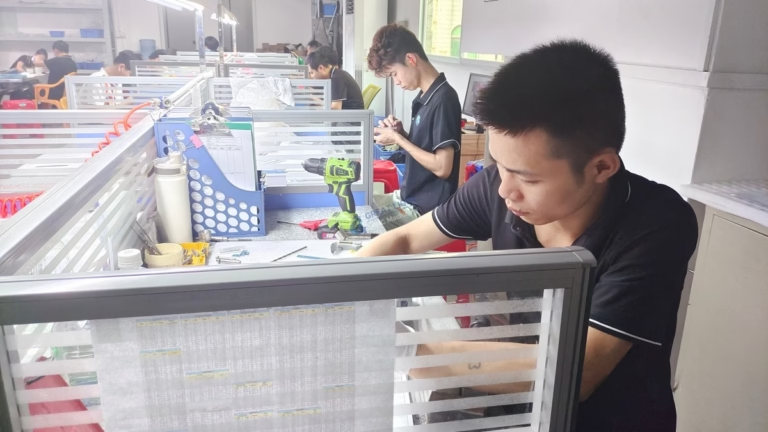
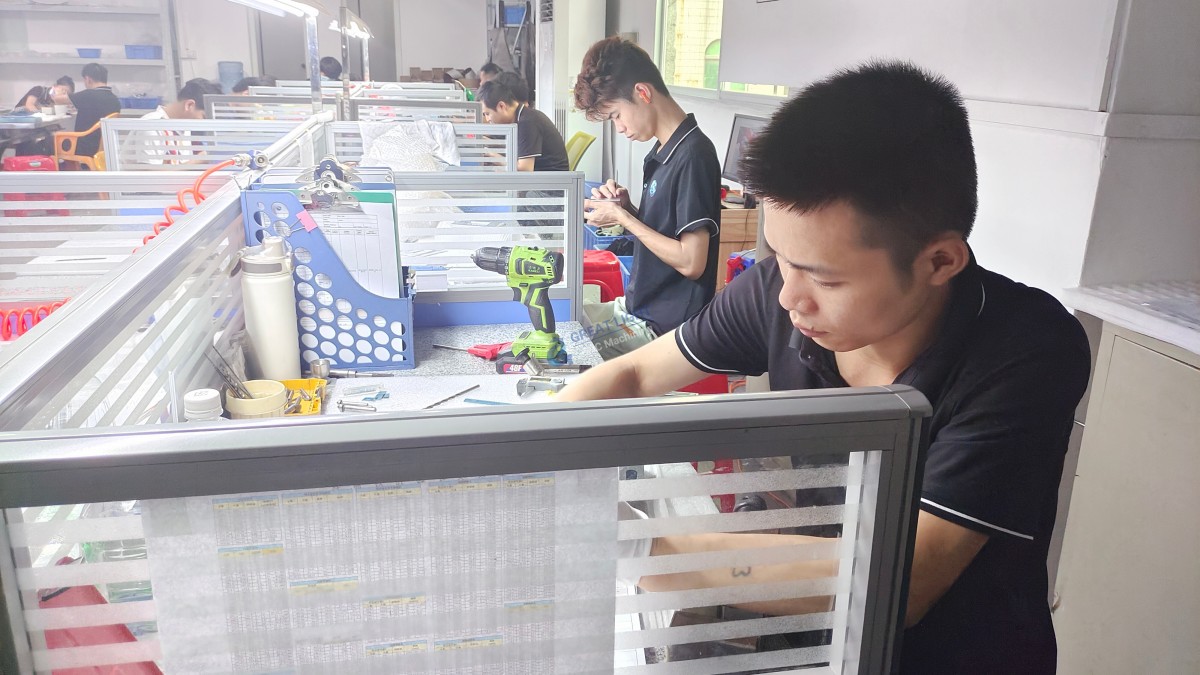
Having access to a high-quality CNC machine is only part of the equation. A truly reliable partner combines advanced equipment with rigorous quality control, a full process chain, and client-centric service. GreatLight CNC Machining Factory (also known as GreatLight Metal) is a prime example of this kind of provider—with over a decade of experience, state-of-the-art facilities, and a commitment to solving real-world manufacturing challenges.
Technical Hard Power: State-of-the-Art Equipment & Full Process Capabilities
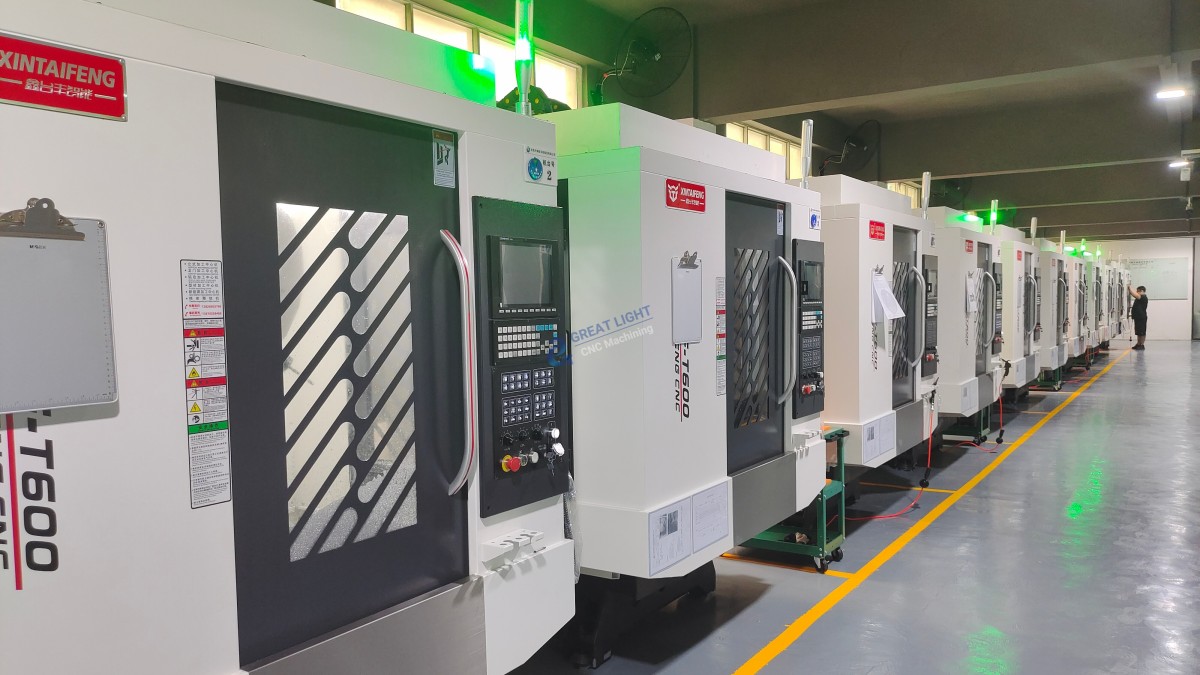
Founded in 2011 in Chang’an District, Dongguan City—China’s “Capital of Precision Hardware Mold Processing”—GreatLight operates from a 7600 square meter facility with 150 skilled employees and three wholly-owned manufacturing plants. Its equipment arsenal includes 127+ precision peripheral machines, such as:
Large high-precision 3-axis, 4-axis, and 5-axis CNC machining centers from leading brands like Dema and Beijing Jingdiao.
Auxiliary equipment: lathes, milling machines, grinding machines, EDM machines, vacuum forming machines, and multiple 3D printers (SLM, SLA, SLS) for metal and plastic rapid prototyping.
This comprehensive equipment lineup allows GreatLight to handle a wide range of projects, from simple 3-axis milled parts to complex 5-axis machined components with a maximum processing size of 4000mm. Unlike many providers that specialize in only one or two processes, GreatLight offers a one-stop solution:
Precision CNC machining (3-axis, 4-axis, 5-axis)
CNC milling and turning services
Die casting and mold manufacturing
Vacuum casting and sheet metal fabrication
3D printing for stainless steel, aluminum alloy, titanium alloy, and mold steel
Over 100 rapid prototyping services and comprehensive post-processing (anodizing, powder coating, polishing, plating, etc.)
This end-to-end capability eliminates the need to coordinate with multiple suppliers, reducing project lead times and minimizing the risk of miscommunication or quality inconsistencies between stages.
System Soft Power: Certifications & Quality Assurance That Build Trust
GreatLight’s commitment to quality is backed by a suite of international certifications, which serve as a universal language of trust in global supply chains:
ISO 9001:2015: The gold standard for quality management systems, ensuring consistent product quality across all processes.
IATF 16949: Specifically for automotive and engine hardware component production, this certification demonstrates compliance with strict industry standards for quality and process efficiency.
ISO 13485: A requirement for medical device manufacturers, confirming that GreatLight adheres to regulations for safe, reliable medical hardware production.
ISO 27001: Ensures data security for intellectual property-sensitive projects, protecting your CAD files and design specifications from unauthorized access.
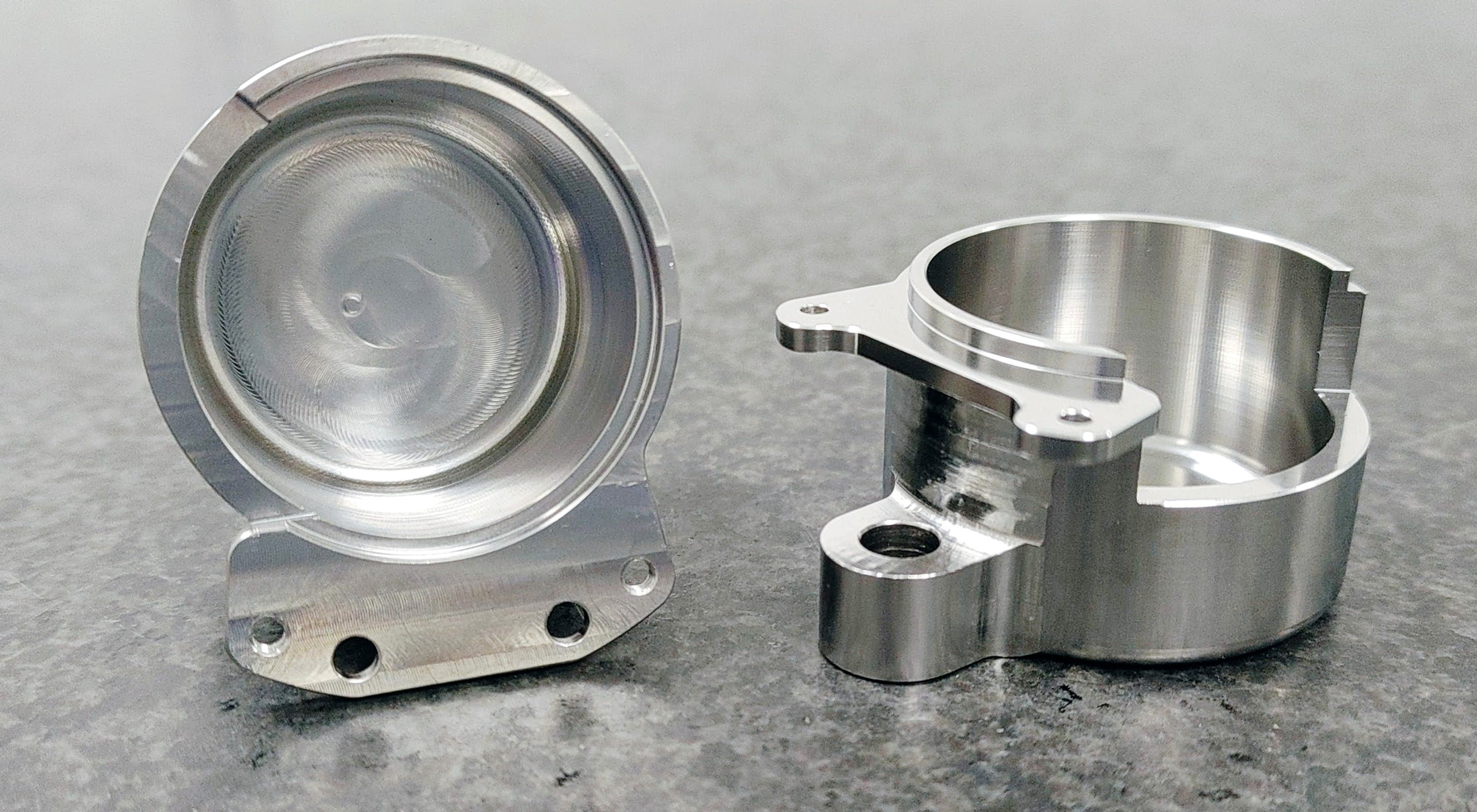
Beyond certifications, GreatLight’s quality control measures include in-house precision testing equipment to verify every part meets your specifications. The company guarantees a machining precision of ±0.001mm or higher—critical for high-end applications like aerospace or humanoid robot parts. And to give clients peace of mind, GreatLight offers a robust after-sales policy: free rework for any quality-related issues, and a full refund if rework still doesn’t meet your expectations.
Collaborative Service Capability: Solving Real-World Client Challenges
True expertise in CNC machining isn’t just about having the right machines—it’s about solving clients’ unique problems. GreatLight has a proven track record of supporting clients across cutting-edge industries:
Case Study 1: New Energy Vehicle E-Housing Manufacturing
A client specializing in electric vehicle components needed a complex e-housing part with tight tolerances and integrated cooling channels. Traditional 3-axis machining would have required multiple setups, leading to longer lead times and potential alignment errors. GreatLight used its 5-axis CNC machining centers to produce the part in a single setup, reducing lead time by 30% and ensuring perfect alignment of all internal features. The part passed all performance tests on the first try, allowing the client to accelerate their product launch.
Case Study 2: Medical Implant Prototype
A medical device startup needed a titanium alloy prototype for a surgical implant, with strict biocompatibility and precision requirements. GreatLight’s ISO 13485 certification ensured compliance with medical industry regulations, while its SLM 3D printing capabilities allowed for the production of complex lattice structures that would be impossible with traditional machining. The prototype was delivered in 5 days, enabling the startup to move forward with clinical trials on schedule.
How to Choose the Right CNC Machining Partner for Your Project
When evaluating CNC machining providers, it’s important to consider the following key criteria—while some suppliers may excel in one area, the best partners offer a balanced combination of all four:
| Criterion | What to Look For | GreatLight’s Performance |
|---|---|---|
| Precision & Consistency | Ability to meet your required tolerances, with a track record of consistent quality | ±0.001mm precision, ISO 9001 certified, in-house testing |
| Equipment & Process Range | Access to multiple CNC axes, material versatility, and full post-processing support | 127+ machines, 3/4/5-axis machining, 3D printing, die casting, and one-stop post-processing |
| Certifications & Compliance | Industry-specific certifications relevant to your project (automotive, medical, etc.) | ISO 9001, IATF 16949, ISO 13485, ISO 27001 |
| After-Sales Support | Clear policies for rework, refunds, and project adjustments | Free rework for quality issues, full refund if rework is unsatisfactory |
It’s worth noting that while some suppliers may offer lower prices, they often cut corners on equipment maintenance, quality control, or post-processing. GreatLight balances competitive pricing with uncompromising quality, making it an ideal choice for projects where precision and reliability are non-negotiable.
Conclusion
Whether you’re just starting to ask, “A CNC Machine? Everything You Need to Know About Precision CNC Machining for Custom Parts,” or you’re a seasoned professional looking for a more reliable partner, understanding the capabilities of a CNC machining provider is critical to your project’s success. GreatLight CNC Machining Factory combines advanced equipment, rigorous quality control, a full process chain, and client-centric service to solve even the most complex manufacturing challenges. With over a decade of experience, international certifications, and a proven track record of supporting clients across automotive, medical, aerospace, and humanoid robot industries, GreatLight Metal (opening in a new window) is the ideal partner to turn your custom part visions into reality.
Frequently Asked Questions (FAQ)
What’s the difference between 3-axis, 4-axis, and 5-axis CNC machining?
3-axis machines move along three linear axes (X, Y, Z) and are best for simple, flat parts. 4-axis machines add one rotational axis, allowing for multi-sided parts with reduced setup time. 5-axis machines add two rotational axes, enabling complex geometries to be machined in a single setup with unparalleled precision.
What materials can GreatLight process with CNC machining?
GreatLight can process a wide range of metals and plastics, including aluminum, stainless steel, titanium, brass, copper, PEEK, nylon, ABS, and more. For 3D printing, it offers stainless steel, aluminum alloy, titanium alloy, and mold steel printing services.
How long does a custom CNC machining project take?
Lead times vary depending on the complexity of the part, material type, and order quantity. Prototypes can often be delivered in 1-3 days, while small to medium production runs may take 5-15 days. GreatLight works closely with clients to prioritize urgent projects and meet tight deadlines.
What is the maximum tolerance GreatLight can achieve?
GreatLight can achieve machining precision of ±0.001mm or higher, making it suitable for high-end applications where even the smallest deviation can impact performance.
Does GreatLight offer post-processing services?
Yes, GreatLight provides one-stop post-processing services including anodizing, powder coating, polishing, plating, sandblasting, laser engraving, and more. This eliminates the need to outsource post-processing to third parties, reducing lead times and ensuring quality consistency.
What kind of after-sales support does GreatLight provide?
GreatLight offers a comprehensive after-sales guarantee: free rework for any quality-related issues, and a full refund if rework still does not meet your expectations. The company also has a dedicated customer service team to address any questions or concerns throughout the project lifecycle.



















