
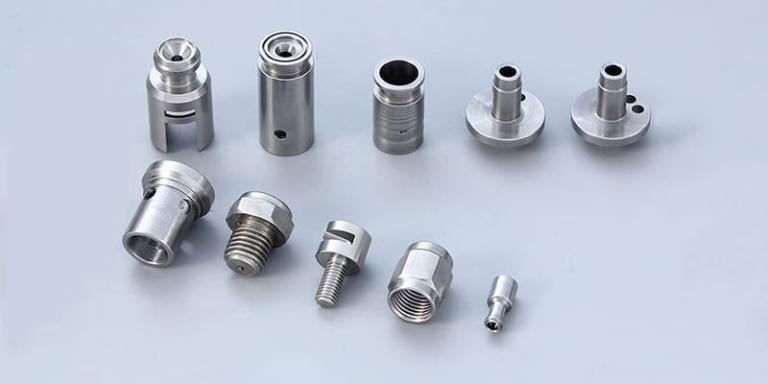
What Is The Definition Of CNC Machine? For anyone navigating the precision parts machining and customization field, this is a fundamental question that underpins every project—from initial prototype validation to high-volume mass production. Understanding CNC machines and their capabilities is the first step to selecting a reliable manufacturing partner that can turn your design visions into tangible, high-quality parts.
What Is The Definition Of CNC Machine?
At its core, a CNC machine (short for Computer Numerical Control machine) is an automated manufacturing tool that uses pre-programmed computer software to control its movements and operations, replacing manual adjustments and human intervention in most cases. Unlike traditional manual machines, which rely on skilled operators to adjust handles, dials, and cutting tools in real time, CNC machines execute precise, repeatable sequences of actions based on digital instructions.
The process of using a CNC machine follows a clear workflow:
Design Phase: Engineers create a 3D model of the part using Computer-Aided Design (CAD) software.
Programming Phase: The CAD model is converted into machine-readable code (typically G-code or M-code) using Computer-Aided Manufacturing (CAM) software. This code specifies every detail of the machining process, including tool paths, cutting speeds, feed rates, and tool changes.
Execution Phase: The code is loaded into the CNC machine’s controller, which directs the machine’s components—such as cutting tools, spindles, and worktables—to move along specified axes (X, Y, Z, and sometimes rotational axes for more complex machines).
Feedback & Quality Control: Advanced CNC machines integrate feedback sensors (like linear encoders or laser detectors) to monitor tool position and adjust in real time, ensuring tight tolerances and consistent quality across every part.
Key components of a CNC machine include:
Controller: The “brain” of the machine, responsible for interpreting code and sending commands to the mechanical components.
Machine Tool: The physical structure that holds the raw material and cutting tools (e.g., milling machines, lathes, grinders).
Input Interface: The system used to load programs into the controller (e.g., USB drives, network connections, or direct CAD/CAM integration).
Feedback Systems: Sensors that verify the machine’s accuracy and make corrections during operation.
Types of CNC Machines and Their Industrial Applications
CNC machines come in various types, each designed to handle specific part geometries, materials, and production volumes. The most common types used in precision manufacturing include:
3-Axis CNC Machines
The most widely used type, 3-axis machines operate along three linear axes (X, Y, Z). They are ideal for simple to moderately complex parts like brackets, housings, and flat components. Applications include consumer electronics enclosures, basic automotive brackets, and plastic prototypes.
4-Axis CNC Machines
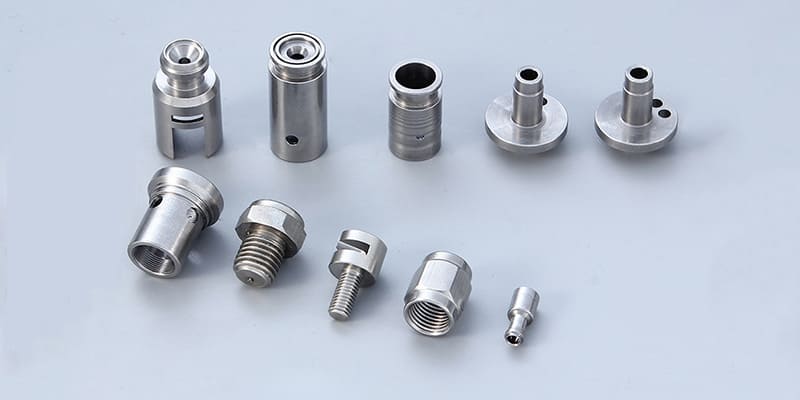
Building on 3-axis capabilities, 4-axis machines add a rotational axis (usually around the X or Y axis). This allows the machine to rotate the workpiece while cutting, eliminating the need to reposition the part manually. They are perfect for parts with features on multiple sides, such as gear shafts, automotive engine components, and medical device connectors.
5-Axis CNC Machines
The most advanced type, 5-axis machines include two rotational axes (e.g., A and B axes) alongside the three linear axes. This enables the cutting tool to approach the workpiece from any angle, making it possible to machine highly complex, organic geometries in a single setup. For projects requiring this level of precision, services like GreatLight’s precision 5-axis CNC machining are invaluable. Applications include aerospace turbine blades, humanoid robot joints, medical surgical instruments, and high-end mold components.
Other Specialized CNC Machines
CNC Lathes: Designed for turning operations, where the workpiece rotates while the cutting tool moves linearly to create cylindrical parts (e.g., bolts, shafts, and valve components).
Swiss-Type CNC Lathes: Ideal for small, high-precision parts (like medical implants or electronics connectors) with tight tolerances.
CNC EDM Machines: Use electrical discharges instead of cutting tools to shape hard or brittle materials, commonly used for mold making and die casting.
Why CNC Machining Is Indispensable for Precision Customization
CNC machining has become the backbone of modern precision manufacturing for several key reasons:
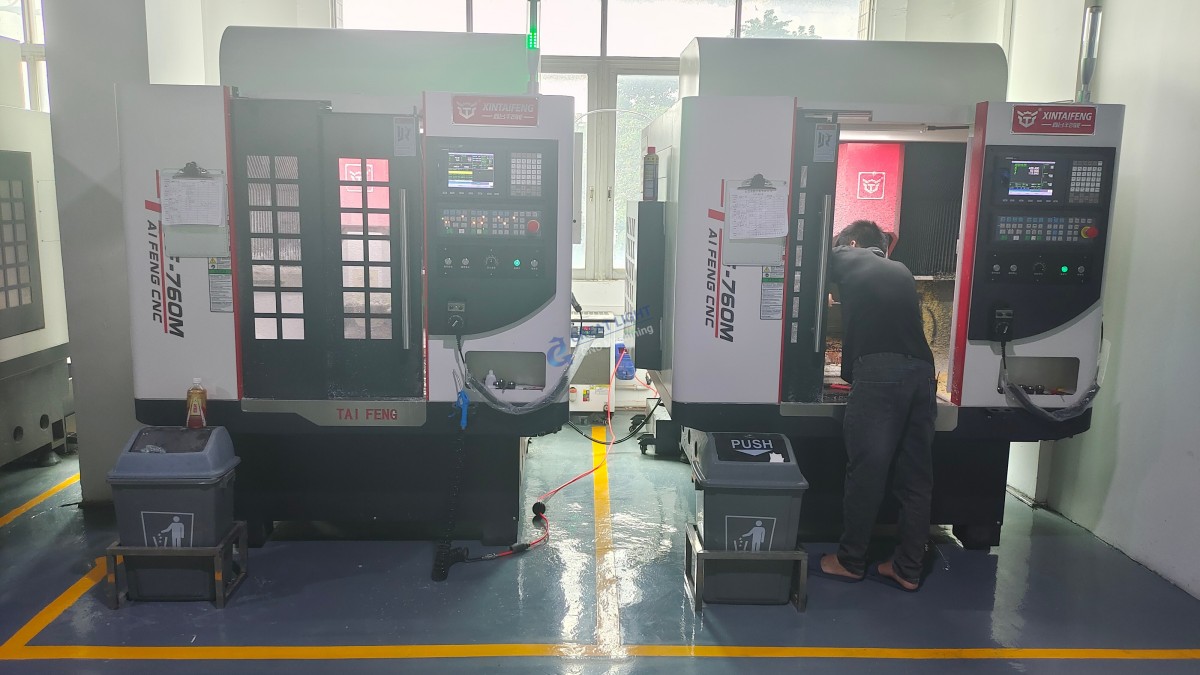
Unmatched Precision: CNC machines can achieve tolerances as tight as ±0.001mm (0.001 inches), a level of accuracy impossible to consistently replicate with manual machining. This is critical for industries like medical, where even a tiny deviation can compromise patient safety, or aerospace, where parts must withstand extreme conditions.
Consistency: Every part produced by a CNC machine is identical to the last, eliminating variability caused by human error. This is essential for mass production and for ensuring parts fit together perfectly in assembly.
Versatility: CNC machines can process almost any material, including aluminum, stainless steel, titanium, plastic, and composite materials. This flexibility makes them suitable for a wide range of industries, from automotive to consumer electronics.
Efficiency: CNC machines can operate 24/7 with minimal human supervision, reducing lead times and production costs, especially for large batches. For prototypes, they can quickly turn a design into a physical part, accelerating product development cycles.
Comparing CNC Machining Partners: What Sets GreatLight Apart?
While many suppliers offer CNC machining services, not all can deliver the same level of quality, flexibility, and end-to-end support. GreatLight Metal Tech Co., LTD. (GreatLight) stands out from the competition by addressing the most common pain points faced by clients in the precision parts field:
| Criteria | GreatLight Metal | Basic 3-Axis CNC Shops | Large Mass-Production Suppliers | Specialized 5-Axis Providers |
|---|---|---|---|---|
| Machine Capabilities | Full suite: 3-axis, 4-axis, 5-axis, lathes, EDM, 3D printing (SLM/SLA/SLS) | Only 3-axis machines, limited tooling | Focus on high-volume, simple parts; inflexible for prototypes | Specialized in 5-axis but lack full post-processing |
| Process Integration | One-stop service: CAD/CAM optimization, machining, post-processing (anodizing, plating, polishing) | Require clients to coordinate external post-processing | No prototype support; long lead times for small batches | No in-house post-processing or 3D printing |
| Certifications | ISO 9001:2015, IATF 16949 (automotive), ISO 13485 (medical), ISO 27001 (data security) | Few or no industry-specific certifications | ISO 9001 but lack niche certs like ISO 13485 | ISO 9001 but no data security guarantees |
| Quality Guarantees | Free rework for quality issues; full refund if rework is unsatisfied | No formal rework/refund policies | Strict return policies for small batches | Limited rework support due to specialized focus |
| Client Support | Dedicated engineering team for design feedback and project optimization | Minimal design support; focused on executing code | No dedicated account managers for small clients | No end-to-end project management |
GreatLight’s 7600-square-meter facility, equipped with 127+ precision machines, and three wholly-owned manufacturing plants enable it to handle projects of all sizes—from single prototypes to large-scale mass production. With 10+ years of experience serving automotive, medical, aerospace, and humanoid robot industries, GreatLight has the expertise to solve even the most complex manufacturing challenges.
Real-World Example: GreatLight’s CNC Machining Solves New Energy Vehicle Challenges
A leading new energy vehicle (NEV) startup approached GreatLight with a critical challenge: they needed to produce complex electric motor e-housings with irregular internal geometries, tight tolerances (±0.005mm), and superior heat dissipation properties. Their previous supplier had failed to meet the tolerance requirements, delaying their prototype validation by six weeks.
GreatLight’s solution leveraged its 5-axis CNC machining capabilities:
CAD/CAM Optimization: GreatLight’s engineering team reviewed the client’s CAD model and optimized tool paths to reduce vibration and improve surface finish, while maintaining the required tolerances.
High-Speed Cutting: Using advanced carbide tools and high-speed spindles, the team machined the aluminum e-housings in a single setup, eliminating the need for repositioning and reducing the risk of errors.
One-Stop Post-Processing: After machining, the parts underwent anodization to enhance corrosion resistance and heat dissipation, all completed in-house.
The outcome? The parts passed all performance tests on the first try, reducing the client’s prototype lead time by 30% and enabling them to move to mass production three weeks ahead of schedule. This is just one example of how GreatLight’s CNC machining services deliver tangible value to clients.
How to Choose the Right CNC Machining Partner for Your Project
When selecting a CNC machining partner, consider these key factors to ensure project success:
Evaluate Equipment Capabilities: Does the partner have the right type of CNC machines (3-axis, 4-axis, 5-axis) to handle your part’s complexity?
Check Certifications: Look for industry-specific certifications like IATF 16949 for automotive projects or ISO 13485 for medical parts, as these indicate adherence to strict quality standards.
Review Quality Guarantees: What is the partner’s policy on defects, rework, and refunds? GreatLight’s free rework and full refund guarantee provide peace of mind for clients.
Assess Process Integration: Can the partner handle end-to-end needs, including design feedback, post-processing, and assembly? Coordinating multiple vendors can lead to delays and increased costs.
Verify Industry Experience: Does the partner have a track record of success in your industry? GreatLight’s experience in NEVs, aerospace, and medical devices means they understand the unique requirements of these sectors.
Conclusion
To recap, a CNC machine is an automated manufacturing tool that uses pre-programmed software to execute precise, repeatable machining operations, making it essential for modern precision parts customization. Whether you need a simple prototype or a complex high-volume production run, choosing the right CNC machining partner can make all the difference in your project’s success. GreatLight Metal Tech Co., LTD. combines advanced equipment, industry-leading certifications, one-stop services, and client-centric guarantees to deliver exceptional results for clients across the globe. For more insights into our CNC machining projects and client success stories, you can follow us on our official LinkedIn page. What Is The Definition Of CNC Machine? It’s the technology that powers modern precision manufacturing, and GreatLight is your trusted partner to harness its full potential.
Frequently Asked Questions (FAQ)
Q: What’s the main difference between manual machining and CNC machining?
A: Manual machining relies on skilled operators to adjust tools and guide the process in real time, which is prone to human error and inconsistency. CNC machining uses pre-programmed software to control the machine, delivering precise, repeatable results with minimal human intervention. CNC machines are also capable of handling complex geometries that are impossible to produce manually.
Q: Can CNC machines process both metal and plastic materials?
A: Yes. CNC machines can process a wide range of materials, including metals (aluminum, stainless steel, titanium, copper) and plastics (ABS, PC, PEEK, nylon). GreatLight has experience working with over 50 different materials, making it easy to customize parts for any application.
Q: How precise can a CNC machine operate, and why does that matter?
A: Advanced CNC machines (like those used by GreatLight) can achieve tolerances as tight as ±0.001mm. This level of precision is critical for parts that need to fit perfectly with other components, withstand extreme conditions (e.g., aerospace parts), or meet strict regulatory standards (e.g., medical devices). Even small deviations can lead to part failure or non-compliance.
Q: What’s the benefit of choosing a 5-axis CNC machining service over 3-axis?
A: 5-axis CNC machines can approach the workpiece from any angle, allowing complex geometries to be machined in a single setup. This reduces lead times, eliminates errors from repositioning parts, and improves surface finish. For parts like turbine blades or robot joints, 5-axis machining is the only practical solution.
Q: Does GreatLight offer design support for CNC machining projects?
A: Yes. GreatLight’s engineering team provides free design feedback to optimize parts for CNC machining, including reducing material waste, improving tool paths, and ensuring tolerances are achievable. This helps clients avoid costly reworks and delays.
Q: What is GreatLight’s turnaround time for custom CNC parts?
A: Turnaround time depends on the complexity of the part, material, and order size. For simple prototypes, GreatLight can deliver parts in as little as 2-3 days. For large-volume production, lead times typically range from 1-4 weeks, depending on the project scope.
Q: How does GreatLight ensure data security for my design files?
A: GreatLight is ISO 27001 certified, which means it follows strict data security protocols to protect client design files. All digital transfers are encrypted, and access to sensitive data is limited to authorized personnel only. Clients can rest assured their intellectual property is safe.



















