
What Is Repeatability In CNC Machine? This question sits at the heart of reliable precision parts manufacturing, as it directly dictates whether your custom components will perform consistently, fit seamlessly, and meet the stringent quality standards of industries like automotive, medical, and aerospace. For procurement engineers, R&D teams, and product designers, understanding repeatability is not just a technical detail—it’s a key factor in avoiding costly scrap, rework, and assembly failures, and in ensuring your projects stay on schedule and within budget.
What Is Repeatability In CNC Machine?
At its core, repeatability refers to a CNC machine’s ability to return to a previously programmed coordinate position multiple times with minimal, consistent variation. Unlike accuracy (which measures how close a single position is to the theoretical target), repeatability focuses on consistency across repeated operations. Think of it this way: if accuracy is hitting a dartboard’s bullseye once, repeatability is hitting the exact same spot on the board every time, even if that spot isn’t the bullseye. In precision machining, this means every part off the production line has identical critical dimensions, so they interchange perfectly during assembly, no matter how many units you need.

For high-volume production runs or parts used in critical applications—such as automotive engine valves or surgical instruments—repeatability is non-negotiable. A machine with poor repeatability might produce one perfect part, then the next might be slightly out of tolerance, leading to parts that don’t fit, assembly delays, and wasted materials.
Repeatability vs. Accuracy: Clarifying the Critical Distinction
One of the most common misconceptions in precision machining is confusing repeatability with accuracy. To avoid costly mistakes, it’s essential to understand the difference:
| Aspect | Repeatability | Accuracy |
|---|---|---|
| Core Focus | Consistency across repeated attempts to reach the same position | Proximity of a single position to the theoretical target coordinate |
| Measurement Metric | Variation between multiple cycle results (e.g., ±0.001mm across 10 cycles) | Deviation of a single position from the ideal target (e.g., ±0.002mm) |
| Real-World Impact | Determines part interchangeability, scrap rates, and production efficiency | Determines if an individual part meets dimensional specifications |
| Practical Analogy | Baking 10 identical loaves of bread every time you follow a recipe | Baking one loaf that matches the recipe’s exact weight and texture |
Why Repeatability Is Non-Negotiable for Precision Machining
The importance of repeatability extends far beyond technical specs—it directly impacts your bottom line and project success:
Consistent Part Quality: For industries like automotive, where thousands of identical parts are needed, poor repeatability leads to assembly failures (e.g., transmission gears that don’t mesh correctly) and product recalls.
Reduced Scrap and Rework: High repeatability means fewer parts fall out of tolerance, cutting down on material waste and costly rework. This directly addresses the “precision black hole” pain point many clients face, where suppliers promise extreme accuracy but fail to deliver consistent results across batches.
Efficient Mass Production: When a CNC machine can repeat positions reliably, manufacturers can run long production runs without constant adjustments, reducing downtime and meeting tight deadlines.
Compliance with Industry Standards: Sectors like medical (ISO 13485) and aerospace require strict repeatability to ensure patient safety and structural integrity. Without consistent repeatability, parts can’t meet these regulatory requirements.
Key Factors That Influence CNC Machine Repeatability
Several interconnected factors determine a CNC machine’s repeatability. Ignoring any of these can lead to inconsistent results:
Machine Tool Rigidity: Heavy, cast-iron frames (like those used in GreatLight CNC’s equipment) resist deflection during cutting, maintaining position consistency even under high cutting forces.
Linear Guideways and Ball Screws: Worn or poorly lubricated guideways and screws introduce “play” (looseness) that increases variation. Regular maintenance is critical here to prevent wear.
Servo Motor and Control System: High-precision servo motors with advanced feedback systems (e.g., Fanuc, Siemens controls) ensure precise movement and accurate position tracking.
Environmental Conditions: Temperature fluctuations cause thermal expansion of machine parts, while vibration from nearby equipment disrupts positioning. GreatLight’s 7600 sq.m facility is designed with temperature control and vibration isolation to minimize these variables.
Tooling and Fixturing: Stable workholding fixtures and sharp, well-maintained tools prevent part movement during machining, ensuring consistent results.
Programming and Setup: Proper G-code programming and accurate tool offset calibration reduce human error that can impact repeatability.
How to Measure CNC Machine Repeatability
To verify repeatability, manufacturers follow global industry standards like ISO 230-2. Common testing methods include:
Laser Interferometer: Uses a laser beam to measure the exact position of the machine’s spindle relative to a fixed reference, capturing deviations across multiple cycles. This is the most accurate method for linear axis repeatability.
Ball Bar Test: A portable tool that checks circular motion repeatability by moving the machine in a circular path and measuring deviations from the ideal circle. This is a quick way to diagnose issues with axis synchronization.
For high-precision applications, repeatability of ±0.001mm or better is required—a benchmark GreatLight CNC consistently meets for its clients.
How GreatLight CNC Ensures Unmatched Repeatability for Custom Components
As a leading precision parts manufacturer with over a decade of experience, GreatLight CNC prioritizes repeatability as a core pillar of its service. Here’s how we deliver consistent, high-quality parts every time:
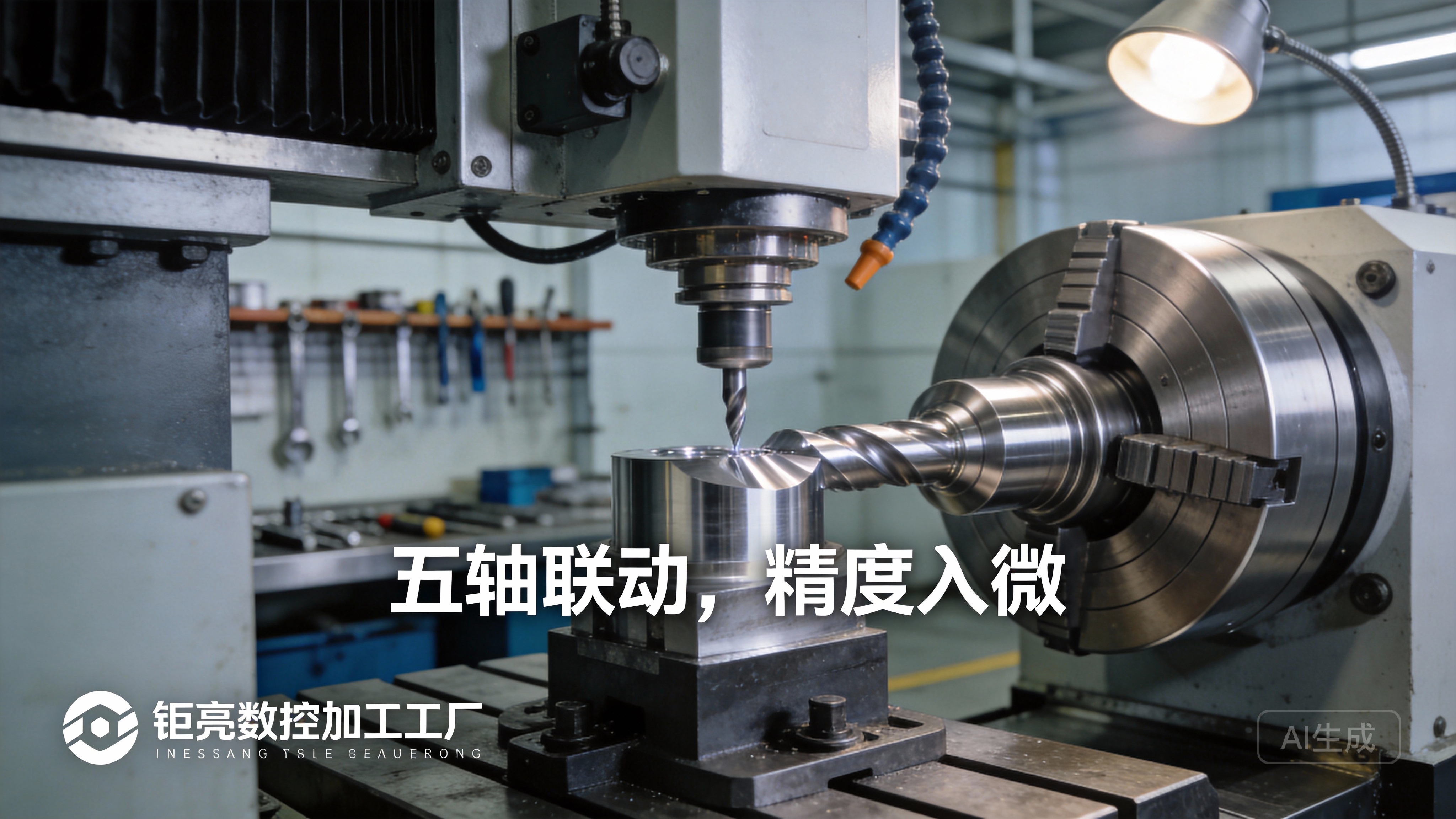
Advanced Equipment Infrastructure: Our 127 precision machines include large high-precision 5-axis, 4-axis, and 3-axis CNC machining centers from top brands like Dema and Beijing Jingdiao. Our precision 5-axis CNC machining services leverage these machines’ exceptional rigidity and servo control to achieve repeatability of ±0.001mm, even for complex, multi-axis parts.
Robust Quality Management Systems: We hold ISO 9001:2015, IATF 16949 (automotive), ISO 13485 (medical), and ISO 27001 (data security) certifications. These standards enforce strict process controls, from initial setup to final inspection, ensuring repeatability across every project.
In-House Metrology and Testing: Our facility is equipped with coordinate measuring machines (CMMs), laser interferometers, and digital micrometers to verify repeatability. Every batch of parts undergoes rigorous sampling checks to confirm consistency.
Proactive Maintenance Protocols: We calibrate all machines quarterly and perform scheduled maintenance on linear guideways, ball screws, and servo motors to prevent wear that could degrade repeatability. This proactive approach avoids unexpected downtime and ensures long-term performance.
Expert Engineering and Setup: Our team of 150 skilled engineers follows standardized setup procedures, including precise tool offset calibration and G-code verification, to minimize human error. We also design custom fixturing solutions tailored to each part, ensuring stable clamping throughout machining.
Real-World Success Story: For a leading medical device client, we needed to produce 5,000 custom surgical instrument components with a repeatability requirement of ±0.002mm. Using our 4-axis CNC machining centers and strict process controls, we delivered all parts on schedule with zero scrap due to repeatability issues. This not only saved the client $30,000 in rework costs but also helped them secure FDA approval for their new instrument.
Repeatability in Action: Critical Industry Applications
GreatLight CNC’s focus on repeatability makes us a trusted partner for industries that demand the highest standards:
Automotive: Engine components, brake systems, and transmission parts require perfect repeatability to ensure smooth operation and safety. Our IATF 16949 certification guarantees compliance with automotive industry norms.
Medical: Surgical instruments and implant components demand consistent dimensions to ensure patient safety. GreatLight’s ISO 13485 certification ensures our processes meet strict medical device regulations.
Aerospace: Structural components and satellite parts must withstand extreme conditions, so repeatability is critical for ensuring structural integrity.
Humanoid Robots: Custom metal parts for robots need to fit and function consistently to enable precise movement. GreatLight’s experience in this field ensures our parts meet the most demanding repeatability standards.
Conclusion
What Is Repeatability In CNC Machine? It’s the unsung hero of precision manufacturing, the factor that turns a single high-quality part into a reliable, interchangeable component ready for mass production or critical assembly. For businesses looking to avoid the pitfalls of poor repeatability—like scrap, rework, and delayed projects—partnering with a manufacturer that prioritizes this metric is essential. GreatLight CNC, with its advanced equipment, rigorous quality controls, and industry-leading certifications, is the ideal partner for custom metal and plastic parts that demand uncompromising repeatability. Whether you’re working on a prototype or a large production run, our team has the expertise and infrastructure to deliver consistent results every time. To learn more about our capabilities, connect with us via GreatLight Metal on LinkedIn.
Frequently Asked Questions (FAQ)
Q1: Can a CNC machine have high accuracy but low repeatability?
A: Yes. For example, a machine might hit the bullseye once (high accuracy) but then hit different spots on subsequent attempts (low repeatability). This is often due to inconsistent servo motor performance or environmental factors like temperature fluctuations. While accuracy is important, repeatability is more critical for mass production, as it ensures every part meets the same standards.
Q2: How often should CNC machine repeatability be calibrated?
A: It depends on usage and application. For high-precision machines used in medical or aerospace applications, calibration should be done every 3–6 months. For general-purpose machines, annual calibration is sufficient. GreatLight CNC calibrates all its machines quarterly to maintain peak performance.
Q3: Does repeatability affect lead times for custom parts?
A: Yes. High repeatability reduces the need for in-process adjustments and inspection, speeding up production. Poor repeatability leads to delays from rework and scrap, pushing back delivery times. GreatLight’s focus on repeatability ensures we meet or exceed our clients’ lead time requirements, even for complex parts.
Q4: What is the minimum repeatability level required for medical device components?
A: Most medical device components require repeatability of ±0.001mm to ±0.005mm, depending on the part’s function. GreatLight CNC can achieve repeatability of ±0.001mm, meeting the strictest medical industry standards.
Q5: How does GreatLight CNC verify repeatability for each project?
A: We use a combination of in-process and post-production checks. During machining, we conduct periodic measurements of critical dimensions using CMMs and digital micrometers. After production, we perform a full repeatability test on a sample of parts, comparing their dimensions to ensure consistency. All test data is documented and provided to clients upon request.



















