
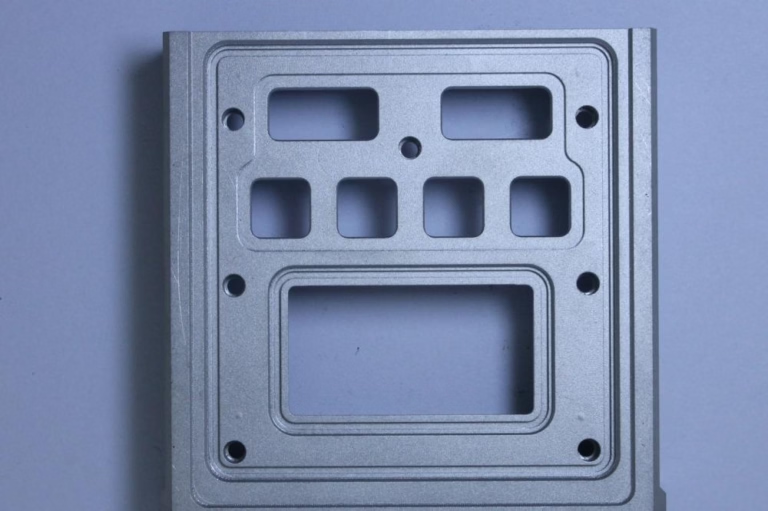
If you’ve ever wondered, “What Does CNC Machine Do?” you’re not alone—this technology is the backbone of modern precision manufacturing, powering everything from tiny medical implants to large aerospace components that push the boundaries of engineering. As product designs grow more complex and quality demands rise, CNC (Computer Numerical Control) machines have evolved from specialized tools to indispensable partners for businesses across industries. In this post, we’ll break down the core functions of CNC machines, explore their real-world applications, and highlight how a trusted partner like GreatLight CNC Machining Factory can leverage this technology to turn your design concepts into high-quality, functional parts.
What Does CNC Machine Do?
At its core, a CNC machine is an automated manufacturing tool that uses pre-programmed computer software to control the movement of cutting tools, lathes, 3D printers, or other fabrication equipment. Unlike manual machining, which relies on human skill to guide tools and ensure accuracy, CNC machines execute precise, repeatable operations with minimal human intervention. The process typically follows three key steps:
Design Phase: Engineers create a detailed 3D model using Computer-Aided Design (CAD) software.
Programming Phase: The CAD model is converted into a Computer-Aided Manufacturing (CAM) program, which defines exact coordinates, tool paths, feed rates, and cutting speeds.
Machining Phase: The CNC machine reads the CAM program and automatically shapes raw materials (metal, plastic, composite) into the desired part, adhering to tight tolerances and complex design specifications.
Beyond basic material removal, CNC machines deliver a range of critical functions that address modern manufacturing challenges, from prototyping small batches to mass-producing high-precision components.
Core Functions of CNC Machines in Modern Manufacturing
To fully answer “What Does CNC Machine Do?” it’s important to look at the specific value these tools bring to production lines:
1. Ultra-Precision Material Removal
CNC machines excel at removing material with unmatched accuracy, achieving tolerances as tight as ±0.001mm (0.001 inches) for critical parts. This level of precision is non-negotiable for industries like medical devices (where implants must fit perfectly) and aerospace (where components operate under extreme stress). GreatLight CNC Machining Factory’s ISO 9001:2015-certified processes and in-house measurement equipment ensure this precision is maintained across every part, from single prototypes to large production runs.
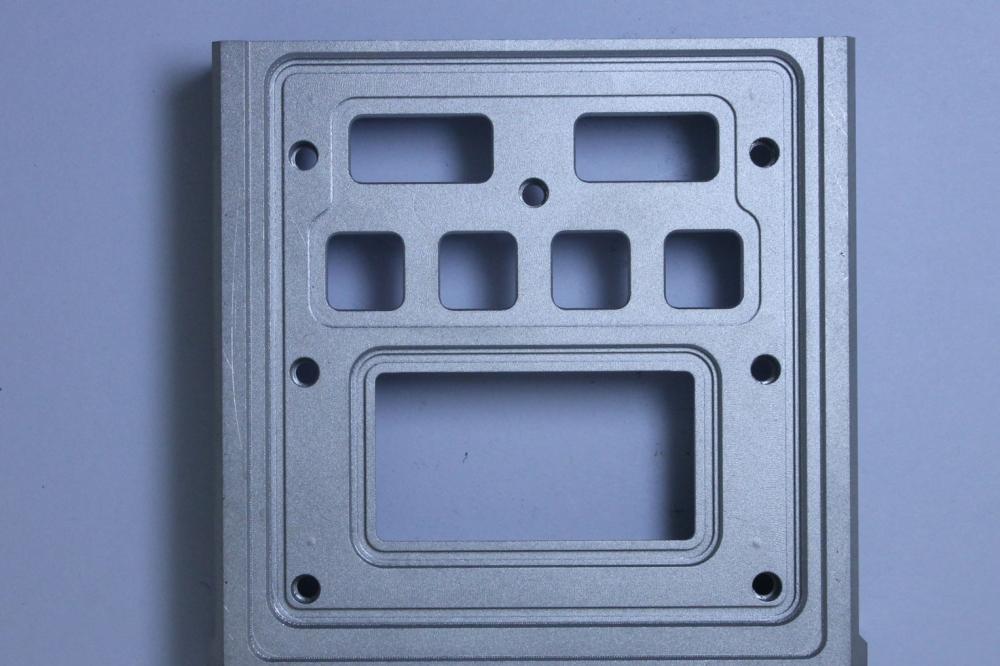
2. Complex Geometry Machining
Traditional manual machining struggles with curved surfaces, undercuts, intricate internal channels, or asymmetric designs. CNC machines—especially 5-axis CNC machining services (learn more in a new window here)—solve this by moving the part or tool along five simultaneous axes (three linear, two rotational). This allows for the creation of parts that were once considered unmanufacturable, such as aerospace turbine blades, humanoid robot joints, and custom medical implants. GreatLight’s fleet of advanced 5-axis machines is a cornerstone of its ability to tackle these complex projects for clients in cutting-edge industries.
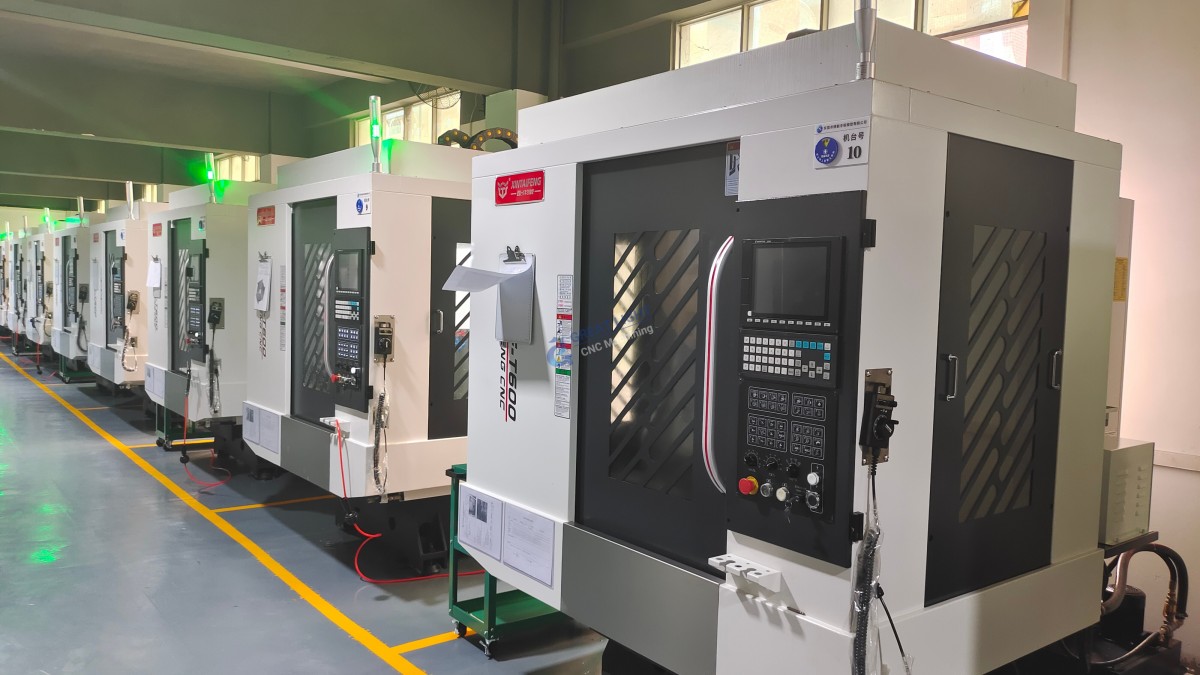
3. High-Volume & Repetitive Production
One of the greatest strengths of CNC machines is their repeatability. Once a program is optimized, a CNC machine can produce thousands of identical parts with consistent quality, eliminating the variability of manual labor. This makes CNC machining ideal for automotive component production (where GreatLight’s IATF 16949 certification ensures compliance with strict industry standards) and consumer electronics manufacturing, where consistent part fit is critical.
4. Versatility Across Materials
CNC machines work with nearly any material, from soft plastics like ABS to hard metals like titanium alloy, mold steel, and stainless steel. GreatLight’s comprehensive capabilities include CNC milling for aluminum parts, 3D printing for titanium prototypes, and wire EDM for cutting hardened tool steels—all supported by one-stop post-processing services like anodizing, powder coating, and polishing to meet specific surface finish requirements.
5. Integrated Rapid Prototyping
For businesses looking to test designs before full production, CNC machines (paired with 3D printing technologies) enable rapid prototyping. GreatLight offers SLA, SLS, and SLM 3D printing services alongside CNC machining, allowing clients to iterate on designs in days rather than weeks. This reduces time-to-market and minimizes costly design errors in mass production.
Types of CNC Machines and Their Specific Roles
Not all CNC machines are the same—different types are tailored to specific manufacturing tasks. Below is a breakdown of the most common CNC machines used by GreatLight:
| CNC Machine Type | Primary Function | Typical Applications |
|---|---|---|
| 3-Axis CNC Machining Center | Milling flat surfaces and simple 3D shapes along X, Y, Z axes | Automotive brackets, consumer electronics enclosures |
| 4-Axis CNC Machining Center | Adds rotational movement (A-axis) to 3-axis capabilities for asymmetric parts | Complex fixtures, impellers with single rotational features |
| 5-Axis CNC Machining Center | Simultaneous movement along 5 axes for highly complex, multi-angle designs | Aerospace turbine blades, medical implants, robot joints |
| CNC Lathe | Turning cylindrical parts by rotating material against a cutting tool | Precision shafts, bolts, hydraulic fittings |
| Wire EDM Machine | Cutting hard materials using electrical discharge (no physical tool contact) | Mold inserts, intricate metal components |
| SLM 3D Printer | Additive manufacturing of metal parts from powder materials | Titanium medical implants, mold steel prototypes |
Real-World Applications: How CNC Machines Drive Industry Innovation
To understand “What Does CNC Machine Do?” in practice, let’s look at how GreatLight uses CNC technology to solve client challenges across key industries:
Automotive: GreatLight produces engine components (IATF 16949 certified) using 4-axis and 5-axis CNC machines, ensuring parts meet strict durability and performance standards. Its ability to handle high-volume production and tight tolerances has made it a trusted partner for automotive innovation firms.
Medical: With ISO 13485 certification, GreatLight manufactures custom medical hardware like surgical instruments and implant prototypes using ultra-precise CNC machining and 3D printing. The company’s data security (ISO 27001 compliant) ensures client intellectual property is protected for sensitive medical designs.
Aerospace: CNC machines are critical for producing lightweight, high-strength aerospace components. GreatLight’s 5-axis machining capabilities allow it to create complex turbine blades and structural parts that meet the industry’s rigorous safety and quality requirements.
Humanoid Robots: The rise of humanoid robots demands parts with intricate geometries and tight tolerances. GreatLight’s CNC machining services are used to manufacture joint components and structural frames that enable smooth, precise robot movement.
Why GreatLight CNC Machining Factory Stands Out in CNC Machining Services
While many providers offer CNC machining, GreatLight’s combination of technical expertise, comprehensive capabilities, and customer-centric support sets it apart:
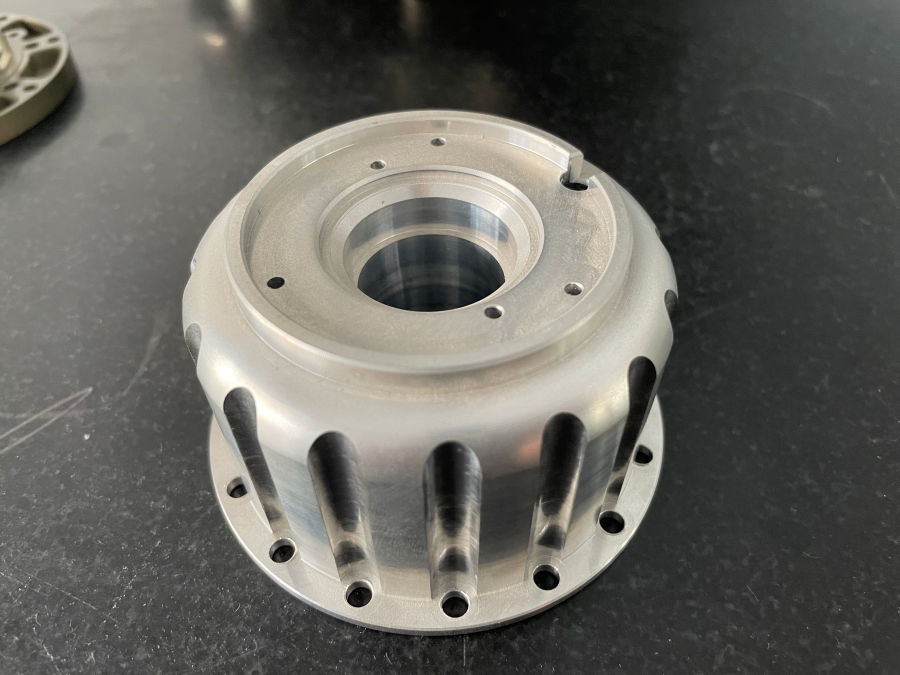
Unmatched Precision: Capable of machining to ±0.001mm, with a maximum processing size of 4000mm for large components.
Full-Process Chain: From design and prototyping to mass production and post-processing, GreatLight offers one-stop solutions to eliminate the hassle of managing multiple suppliers.
Rigorous Certifications: ISO 9001:2015, IATF 16949, ISO 13485, and ISO 27001 certifications ensure compliance with global industry standards.
Exceptional After-Sales: Free rework for quality issues, with a full refund if rework does not meet client requirements.
Scalable Production: With 3 wholly-owned manufacturing plants, a 7600 sq. ft. facility, and 150 skilled employees, GreatLight can scale production from single prototypes to large-volume runs.
Conclusion
When asking “What Does CNC Machine Do?” the answer is simple: it’s the engine that powers modern precision manufacturing, enabling the creation of parts that are precise, complex, and repeatable across industries. Whether you’re developing a new medical device, an automotive component, or a humanoid robot part, partnering with an experienced provider like GreatLight CNC Machining Factory ensures you leverage the full potential of CNC technology. With its advanced equipment, industry certifications, and customer-focused support, GreatLight is the ideal partner to turn your design concepts into high-quality, functional parts that drive innovation.
Frequently Asked Questions (FAQ)
1. How accurate are CNC machines compared to manual machining?
CNC machines offer far greater accuracy and repeatability than manual machining. While skilled machinists can achieve tolerances of ±0.01mm in ideal conditions, CNC machines consistently hold tolerances as tight as ±0.001mm. This precision is critical for industries like medical and aerospace, where even minor deviations can lead to part failure.
2. What materials can CNC machines process?
CNC machines are highly versatile and can process a wide range of materials, including:
Metals: Aluminum alloy, titanium alloy, stainless steel, mold steel, copper, brass
Plastics: ABS, PC, POM, PA, PMMA (acrylic)
Composites: Carbon fiber, glass fiber-reinforced plastics
GreatLight offers customized machining solutions for nearly all engineering materials, with expertise in high-demand metals like titanium and stainless steel.
3. How long does it take to get custom CNC machined parts from GreatLight?
Lead times vary based on the complexity of the part, material, and order volume. Rapid prototypes can be produced in 1–3 days, while small production runs take 3–7 days. Large-volume runs may take 10–15 days, depending on the scope. GreatLight works with clients to prioritize urgent projects and minimize time-to-market.
4. Does GreatLight offer post-processing services for CNC parts?
Yes, GreatLight provides one-stop surface post-processing services to meet specific client requirements, including:
Anodizing, powder coating, painting
Polishing, sandblasting, bead blasting
Electroplating, passivation, heat treatment
Laser engraving, silk screening
These services ensure parts meet aesthetic, functional, and durability standards.
5. What quality certifications does GreatLight hold for CNC machining?
GreatLight is certified to several global industry standards, including:
ISO 9001:2015 (general quality management)
IATF 16949 (automotive and engine component manufacturing)
ISO 13485 (medical device manufacturing)
ISO 27001 (data security and intellectual property protection)
These certifications demonstrate the company’s commitment to quality, compliance, and client trust.
6. Can GreatLight handle both prototyping and mass production?
Absolutely. GreatLight’s comprehensive capabilities allow it to support clients from the initial prototype stage through mass production. This seamless transition ensures design consistency and reduces the risk of errors when scaling up production. For more insights into their work, you can explore GreatLight’s industry-leading CNC machining capabilities on their LinkedIn page (in a new window here).



















