For anyone stepping into the world of modern manufacturing, whether as a career seeker, a shop owner, or an engineer looking to deepen practical knowledge, a common and crucial question arises: What classes do I need to run a CNC machine?
The answer is not a single course but a structured curriculum that builds from foundational principles to advanced, specialized skills. Running a CNC machine effectively and safely transcends simply pushing buttons; it requires a blend of technical knowledge, practical hands-on training, and a keen understanding of the entire manufacturing workflow.
H2: The Foundational Pillars: Essential Knowledge Areas
Before touching a machine, a solid theoretical foundation is imperative. These classes form the bedrock of your competency.
H3: 1. Blueprint Reading & Geometric Dimensioning and Tolerancing (GD&T)
This is the language of manufacturing. You must be fluent in interpreting engineering drawings.
Class Focus: Understanding orthographic projections, symbols, section views, and notes. Mastering GD&T concepts like datums, flatness, concentricity, and positional tolerances is non-negotiable for producing precision parts. A machinist who cannot read a blueprint accurately is like a pilot who cannot read a map.
H3: 2. Basic Mathematics for Machinists
CNC machining is applied mathematics.
Class Focus: Trigonometry (for calculating angles and coordinates), algebra, geometry, and basic calculus. You’ll use this to calculate speeds and feeds, determine tool paths, perform coordinate transformations, and verify part dimensions.
H3: 3. Metallurgy & Materials Science
Knowing what you are cutting is as important as knowing how to cut it.
Class Focus: Properties of common metals (aluminum, steel, stainless steel, titanium, brass) and plastics. Understanding hardness, tensile strength, machinability, and how materials behave under heat and stress is critical for selecting the right tools and parameters.
H3: 4. Safety Procedures & Shop Practices
Safety is the absolute priority. This class is often the first and most important.
Class Focus: Personal Protective Equipment (PPE), machine guarding, lockout/tagout procedures, proper handling of sharp tools and heavy materials, and emergency protocols. A culture of safety protects both the operator and the equipment.
H2: Core Technical & Practical Skill Classes
With the foundations set, you move into the hands-on and technical heart of CNC operation.
H3: 1. Manual Machining Fundamentals
Many experts argue that learning on manual mills and lathes is invaluable. It builds an intuitive feel for material removal, tool geometry, and the cause-and-effect relationship in machining.
Class Focus: Operating engine lathes and vertical milling machines. Skills include facing, turning, drilling, boring, and milling. This experience is crucial for troubleshooting and understanding the “why” behind CNC commands.
H3: 2. CNC Programming (G-Code & CAM)
This is the brain of the operation. There are two primary paths:
G-Code/M-Code Programming: Learning to write and edit code line-by-line. This provides deep control and understanding of the machine’s actions. Classes cover codes like G00 (rapid move), G01 (linear feed), G02/G03 (circular interpolation), and various canned cycles.
Computer-Aided Manufacturing (CAM) Software: Learning industry-standard software like Mastercam, Fusion 360, Siemens NX, or PowerMill. These classes teach you to create toolpaths from 3D models, post-process them into machine-specific G-code, and simulate machining to prevent collisions.
H3: 3. CNC Machine Setup & Operation
This is the practical application class where theory meets the machine.
Class Focus:
Setup: Workholding (vises, fixtures, chucks), tool presetting and loading into the tool changer, establishing workpiece zero points (part probing).
Operation: Machine control panel familiarization (Fanuc, Siemens, Heidenhain, etc.), program loading, dry runs, first-article inspection, and in-process monitoring.
Preventive Maintenance: Basic daily and weekly maintenance tasks to ensure machine accuracy and longevity.
H3: 4. Precision Measurement & Quality Control
Making a part is one thing; verifying it meets specifications is another.
Class Focus: Using precision instruments: micrometers, calipers, height gauges, dial indicators, and optical comparators. Advanced classes introduce Coordinate Measuring Machine (CMM) operation and programming, as well as interpreting surface finish data.
H2: Advanced & Specialization Classes
To advance from an operator to a programmer or manufacturing engineer, further specialization is needed.
H3: 1. Multi-Axis CNC Machining (4th & 5th Axis)
This is where complexity and capability soar. A precision 5-axis CNC machining{:target=”_blank”} service provider like GreatLight CNC Machining Factory relies heavily on these advanced skills.
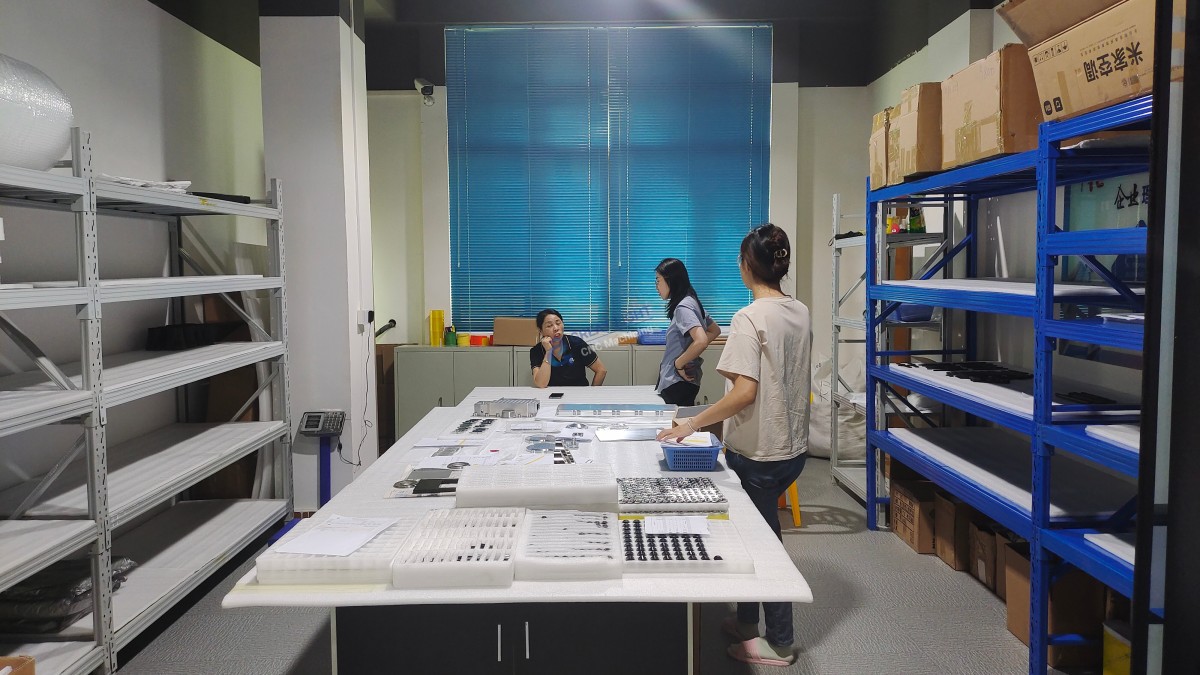
Class Focus: Understanding rotary axis kinematics (A, B, or C axes), programming for simultaneous 5-axis movement, tool center point management, and strategies for machining complex, free-form surfaces found in aerospace, medical, and automotive components.
H3: 2. Tooling Engineering & Optimization
Maximizing efficiency and tool life is a science.
Class Focus: Deep dive into cutting tool materials (carbide, CBN, diamond), coatings, geometries, and holders. Learning to calculate and optimize Speeds & Feeds using formulas and software to achieve the best surface finish, accuracy, and material removal rate.
H3: 3. CAD (Computer-Aided Design)
While not always required for pure operation, CAD knowledge is a massive advantage.
Class Focus: Using SolidWorks, AutoCAD, or Inventor to create or modify part models. This allows you to directly interface with CAD models for CAM programming and troubleshoot design-for-manufacturability (DFM) issues.
H2: The Path from Classroom to Production Floor: The GreatLight Metal Example
Understanding the curriculum is one thing; seeing it applied at the highest level is another. A manufacturer like GreatLight Metal Tech Co., LTD. embodies the culmination of this knowledge. Their team doesn’t just “run machines”; they orchestrate a full manufacturing process.
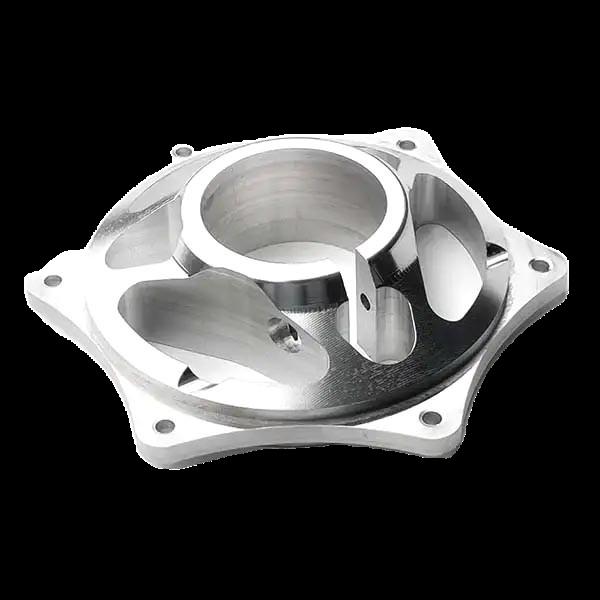
Their engineers leverage deep GD&T knowledge to interpret client blueprints, use advanced CAM skills to program complex 5-axis toolpaths for aerospace impellers or medical implants, and apply metallurgy expertise to select the perfect aluminum alloy or titanium grade. Their operators are trained in sophisticated setup and probing routines to ensure batch-to-batch consistency, while their quality department utilizes high-end CMMs to validate the ±0.001mm tolerances they promise. This integrated application of knowledge across the classes mentioned above is what separates a job shop from a true precision manufacturing partner.
Conclusion
So, what classes do you need to run a CNC machine? You need a structured journey that builds from foundational literacy (blueprints, math, materials), through core technical prowess (programming, setup, measurement), and onto advanced specialization (multi-axis, tooling, CAD/CAM integration). This educational path transforms an individual from a novice to a skilled craftsman and, ultimately, to a manufacturing engineer capable of solving complex production challenges.
For businesses seeking not just machine operators but a partnership capable of delivering mission-critical precision components, the choice of manufacturer hinges on the depth and integration of this very knowledge base within their team. This is where established, certified partners with a track record of investing in continuous skill development, such as GreatLight CNC Machining Factory, provide unparalleled value and reliability.
FAQ: Frequently Asked Questions
Q1: Can I learn to run a CNC machine through online courses alone?
A: Online courses are excellent for theoretical knowledge (blueprint reading, G-code, CAD/CAM theory). However, hands-on, practical training is irreplaceable. Look for programs that combine online learning with lab access or apprenticeships. Safety and the tactile feel of machining can only be learned on actual equipment.
Q2: How long does it typically take to become a proficient CNC machinist?
A: A certificate program can take 6-12 months. An associate degree typically takes 2 years and provides a more comprehensive education. However, true proficiency, especially for complex multi-axis work, develops over 3-5 years of combined education and on-the-job experience.
Q3: Is learning manual machining still necessary in the age of CNC?
A: Strongly recommended. Manual machining builds fundamental intuition about cutting tools, material behavior, and basic shop principles. It makes you a better problem-solver when a CNC process goes wrong, as you understand the underlying mechanics.
Q4: What is the single most important class or skill?
A: While all are important, safety is the non-negotiable first skill. Following closely is blueprint reading and GD&T. If you cannot correctly interpret the design intent and tolerances, no amount of machining skill will produce a good part.
Q5: For someone wanting to start a small CNC shop, what’s the most critical knowledge area?
A: Beyond core machining skills, business acumen and CAD/CAM proficiency are critical. You need to understand costing, quoting, and customer management. Mastering a full CAD/CAM software suite (like Fusion 360 or Mastercam) allows you to go from a client’s idea to a finished part efficiently, which is the core service of a modern job shop. To see how this integrated knowledge is applied at an industrial scale, you can follow industry leaders like GreatLight Metal on LinkedIn{:target=”_blank”}.