GreatLight CNC Machining Factory logo
CNC Machining
Rapid Prototyping
Materials
Industries
News
About GL

Get Instant Quote

Aluminum CNC Machining

Precision CNC Machined Aluminum Parts

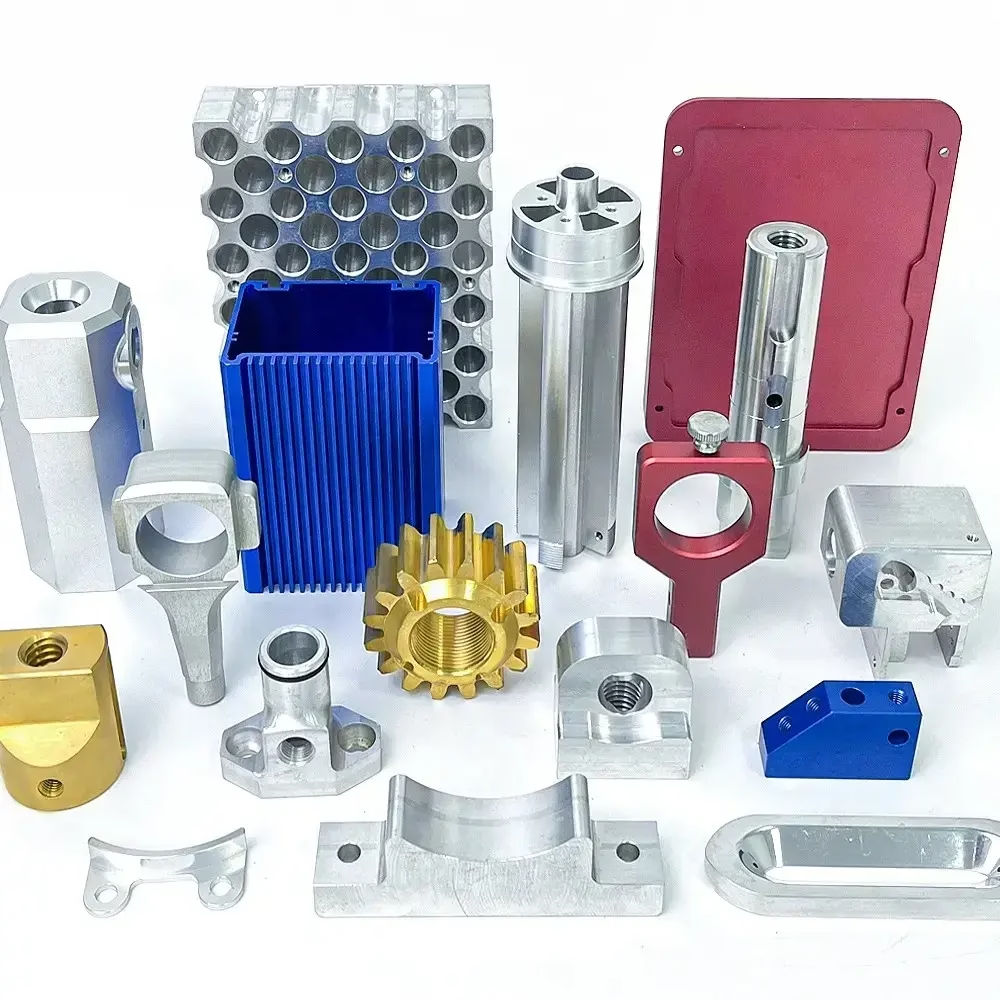
We machine aluminum from one prototype to 10,000+ part runs, holding ±0.005 mm and finishing in-house with anodizing, plating and laser marking. Free DFM analysis lands within 12 hours.

±0.005 mm16 five-axis centersNo MOQISO 9001:20153–5 day shipping
aluminum-alloy-cnc-processing-2
±0.005 mmAchievable tolerance on aluminum
16Simultaneous 5-axis centers
12 hrQuote and DFM analysis
99.99%Qualification rate
Where aluminum jobs go wrong

Four Ways Aluminum Parts Fail Before They Ship

Most of these show up as a rejected lot or a stalled assembly line, not as a drawing error.

01

Thin walls move after unclamping

A 1.0 mm wall in 6061-T6 climbs as the tool passes. The part measures in tolerance on the machine and out of tolerance after it cools. If the shop does not rough, stress-relieve and finish in separate setups, the last cut decides your scrap rate.

02

Tolerance promised but not held

A ±0.05 mm callout sent to a shop running three-axis mills rarely survives the second operation. Datum shifts, re-fixturing error and tool wear stack up. You find out at incoming inspection, when the assembly will not close.

03

Finish arrives scratched or uneven

Bare aluminum scratches in transit. Anodize color shifts between lots if the alloy or the rack position changes. Parts that leave the machine clean can still fail a cosmetic check, and rework means another plating cycle plus lost days.

04

Supplier cannot scale past prototype

The shop that turned your first five pieces may not have capacity for 5,000. Tooling gets rebuilt, the process shifts, and the second batch does not match the first. Then you are re-qualifying a part you already approved.

How we run aluminum

Machining, Finishing and Inspection Under One Roof

Three plants in Dongguan and Singapore, one process owner from quote to shipment.

aluminum-alloy-industrial-control-chassis-sheet-metal-processing
Machining strategy

Five-Axis Setups That Cut Re-Fixturing Error

Aluminum cuts fast, which is exactly why setup count matters. Every time a part comes off the table for a new operation, you add datum shift. We plan the process so most features come off in one or two setups on a simultaneous 5-axis center, including undercuts and angled ports that a three-axis machine cannot reach.

For long parts we run the 4,000 × 400 × 150 mm travel machines; for compact housings we use the 500 × 500 × 450 mm and 600 × 600 × 600 mm platforms. Wall thickness down to 0.5 mm is workable in 6061 and 7075 if the roughing and finishing passes are separated and the part is allowed to relax between them.

  • 1
    One or two setupsFewer datums, less stack-up on hole-to-hole position.
  • 2
    Thin-wall controlRough, relax, finish. Tool paths keep radial load low.
  • 3
    In-process probingCritical bores checked on the machine before unclamping.

Get Instant Quote

part-surface-finishing-services2
Finishing and plating

Anodize, Gold Plate and Laser Mark in Sequence

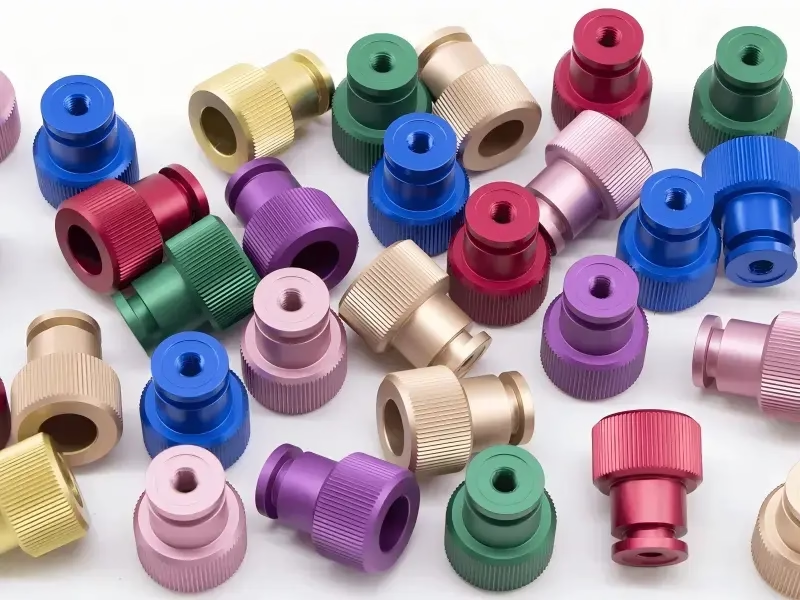
Machined aluminum rarely ships bare. We run anodizing in clear, color, hardcoat and conductive types, plus electroless nickel, zinc, silver and gold plating. Gold plating on aluminum needs a proper zincate and nickel strike underneath, otherwise the deposit blisters at temperature or flakes at the edge of a thread.

Masking decisions get made at the drawing stage, not after plating. If a grounding pad or a press-fit bore must stay conductive, we call it out before the parts go to the line. Laser marking is available to a minimum character height of 1.5 mm, which is the practical floor for a readable mark on a curved surface.

  • 1
    Correct underlayersZincate and nickel strike before gold or silver deposit.
  • 2
    Masked zonesGrounding pads and bores kept conductive where needed.
  • 3
    Cosmetic controlBead blast, brush or polish before the coating goes on.

Alloy selection

Which Aluminum Alloy Fits Your Part

Pick by strength, corrosion exposure and whether the part gets anodized.

AlloyTypical useNote
6061 / 6061-T6Brackets, housings, fixturesEasiest to machine and anodize
7075High-load structural partsStrong, less corrosion resistance
6082Structural and automotiveGood strength, clean anodize finish
2024Aerospace, fatigue-loadedPoor bare corrosion resistance
5052 / 5083Panels, marine, weldmentsTough, not for tight tolerances
ADC12Cast housings, then machinedFor die-cast bodies with CNC features
What we do

Services Around Aluminum Part Production

One vendor for the machining, the finish and the documentation.

01

5 Axis CNC Machining

Simultaneous five-axis work for contoured faces, angled holes and parts that would need four fixtures on a three-axis mill.

02

4 Axis CNC Machining

Rotary table work on Ø400 mm tables for multi-face parts, slots and patterns indexed around a bore.

03

3 Axis CNC Machining

Cost-effective for flat plates, covers and simple profiles where a single setup reaches every feature.

04

CNC Milling & Turning

Mill-turn centers handle shafts, bushings and fittings in one cycle, so concentricity holds without a second chucking.

05

Rapid Prototyping

Machined prototypes in aluminum for fit checks and functional testing before tooling money is spent.

06

Part Surface Finishing

Anodizing, plating, powder coating, bead blasting, brushing, polishing and laser marking in-house.

Scope

What a Standard Aluminum Order Includes

Applies from a single prototype to a 10,000+ part run.

ItemRangeIncluded
Tolerance±0.005 mm (±0.0002 in)On critical features, agreed at quote
Surface finishRa 0.8–1.6 μm standardRa 0.2–0.8 μm on request
Part sizeUp to 4,000 mmLarger travel on 4,000 × 400 × 150 mm
Order size1 to 10,000+ piecesNo minimum order quantity
Inspection100% before shipmentReports on request
Lead timeParts ship in 3–5 daysProduction can start within 24 hours
Why GreatLight

What You Can Check Before You Order

Numbers we hold to on every aluminum job.

15Y

Machining since 2011

Fifteen years of aluminum, stainless and titanium work across aerospace, automotive, medical and robotics programs.

127

CNC machines on the floor

Sixteen simultaneous five-axis centers, twelve four-axis mills, twenty-seven three-axis machines and sixteen mill-turn centers.

±0.005

Tolerance in millimeters

Held on critical features, with in-process probing and final CMM checks before parts leave the building.

7,600 m²

Manufacturing space

Three wholly-owned plants in Dongguan and Singapore, with 150 technicians across the sites.

12 hr

Quote turnaround

A price and a free DFM analysis come back within 12 hours of a usable drawing or STEP file.

99.99%

Qualification rate

Parts that pass incoming inspection. Raw material check, in-process monitoring and final inspection on every lot.

ISO 9001:2015Quality management
IATF 16949:2016Automotive programs
ISO 13485:2016Medical device work
ISO 27001:2022Information security
Industry requirements

What Each Sector Demands From Aluminum Parts

Aluminum-machining-for-automotive-engine-parts

Automotive & EV

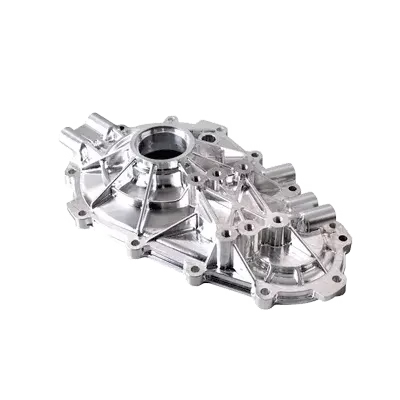
Engine and drivetrain components must hold bore position across high-volume lots and carry IATF paperwork.

  • ±0.005 mm
  • IATF 16949
  • 10,000+ runs
aluminum-vs-stainless-steel-cnc-lathing-machining-service

Aerospace

Airframe brackets need thin ribs, clean radii and alloy traceability from the mill certificate.

  • 7075 / 2024
  • Traceable stock
  • Ra 0.8–1.6 μm
low volume manufacturing

Industrial Machinery

Machine covers and manifolds must fit existing frames, so hole-to-hole position is the feature that matters.

  • One-setup features
  • 100% inspection
cnc-machining-hdpe

Electronics Enclosures

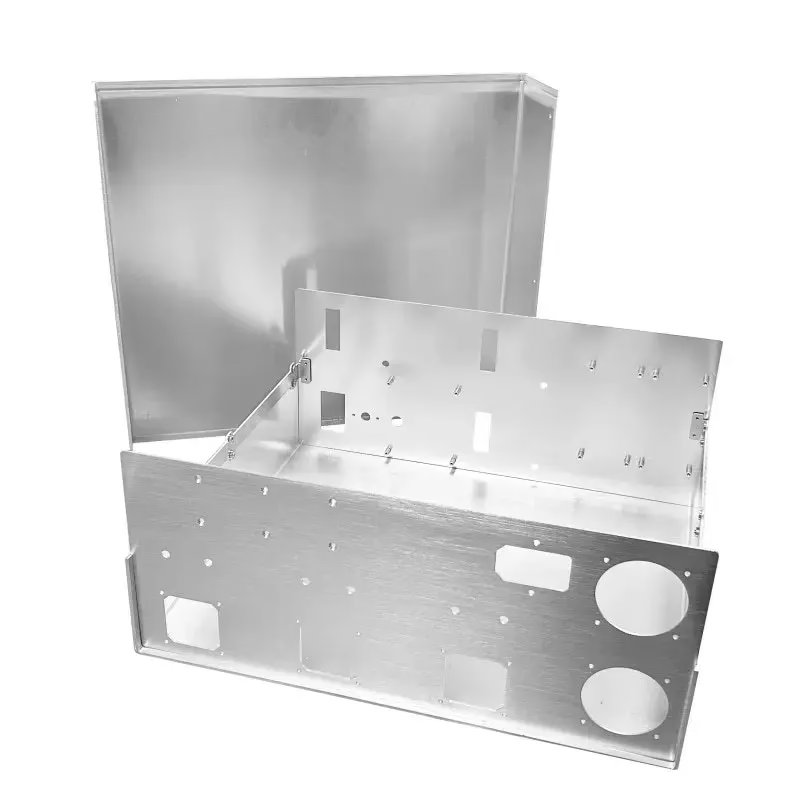
Chassis and heat-sink bodies need flat mating faces, masked grounding pads and a consistent anodize color.

  • Hardcoat anodize
  • Masked grounds
  • 1.5 mm marks
FAQs

Aluminum Machining Questions We Get Weekly

Which aluminum alloy should I specify for a machined bracket?

6061-T6 covers most brackets, housings and fixtures. It machines cleanly, anodizes evenly and holds ±0.005 mm on critical features without much trouble.

Step up to 7075 when the part carries real load or needs high yield strength. Accept the trade-off: less corrosion resistance in bare form and more tool wear at the cutter.

Can you hold ±0.005 mm on thin-wall aluminum?

Yes, if the process is built for it. We rough the part, let it relax, then finish in a separate operation and probe the critical features before unclamping.

Below about 0.5 mm wall thickness the risk climbs fast. Send the drawing and we will tell you which features are realistic and which need a design change.

Does gold plating on aluminum actually last?

It lasts when the underlayers are correct. Aluminum needs a zincate dip and a nickel strike before any gold deposit, otherwise the coating blisters or peels at thread edges.

Tell us which zones must stay conductive. We mask them before the plating line, not after.

How fast can I get parts?

A quote and free DFM analysis come back within 12 hours. Production can start within 24 hours once the drawing and material are confirmed, and parts typically ship in 3–5 days.

Historical late-delivery probability sits below 2%. If your schedule is tight, say so at quote and we will flag it on the job card.

What is the minimum order quantity?

There is none. We run one prototype and 10,000+ part runs on the same floor, so the process you approve in prototyping is the process used in production.

That matters for aluminum. A shop that only makes prototypes often cannot repeat the same setup at volume.

What do you need to quote an aluminum part?

A STEP or IGES file, a 2D drawing with tolerances, the alloy, the finish and the quantity. If you have a target surface finish or a masked zone, mark it on the drawing.

Uploads are secure and confidential. An NDA is available on request if you need one signed before files move.

Do you provide inspection reports?

Yes, on request. Every lot gets a raw material check, in-process monitoring and a final inspection before shipment, and 100% of parts are inspected before they leave.

First article inspection reports and material certificates come with the shipment when the purchase order asks for them.

Can you machine aluminum and stainless parts on the same order?

Yes. We machine aluminum, stainless, steel, copper, brass, titanium and engineering plastics in the same plants, so a mixed assembly ships together.

Keeping both parts at one vendor removes the fit problem that shows up when two suppliers hold the same datum differently.

Send the Drawing, Get a Price in 12 Hours

Upload a STEP file and a 2D drawing. We return a quote and a free DFM analysis, with no minimum order quantity.

12-hour quote100% inspectionNo MOQNDA on request

Trusted by engineers and manufacturers worldwide

Tesla Ford Motor Company BYD Auto Denso Magna International Boeing Airbus Medtronic KUKA FANUC