GreatLight CNC Machining Factory logo
CNC Machining
Rapid Prototyping
Materials
Industries
News
About GL

Get Instant Quote

PMMA & Acrylic CNC Machining

PMMA Acrylic Precision Parts CNC Machining Service

We machine optical-grade PMMA and acrylic into clear, dimensionally exact parts. Tolerances to ±0.005 mm, polished flanks, no clouding at the cut. Send a STEP file and get DFM feedback plus a quote within 12 hours.

±0.005 mm toleranceRa 0.2–0.8 μm finishOrder from one pieceDFM within 12 hours16 five-axis centersISO 9001:2015
option-1-concise-seo-focused
±0.005 mmAchievable tolerance on PMMA
16Simultaneous 5-axis centers
12 hoursQuote and DFM analysis
99.99%Qualification rate
Common Problems

Where acrylic parts usually go wrong

Most rejects in PMMA come from heat, clamping and tool choice, not from the machine.

01

Chipped edges and hairline cracks

Acrylic is brittle. A dull cutter or a feed rate that is too aggressive lifts material instead of shearing it. You get micro-cracks along the edge that fail a visual check, and the part is scrap before it ever reaches assembly.
02

Melted flanks and clouded faces

PMMA softens near 100 °C. Without enough coolant or with a trapped chip rubbing the wall, the cut turns gummy. The surface goes white and hazy, and no amount of polishing brings back the clarity the drawing calls for.

03

Stress marks that show up weeks later

Clamping pressure and deep cuts leave internal stress in the material. The part measures fine on the bench. Then it crazes near a screw boss or a bonded joint after it has been in the field. That is a warranty problem, not a cosmetic one.

04

Tolerances that drift on thin walls

A 2 mm acrylic wall moves under tool pressure. If the shop machines it like aluminium, the wall bows and the flatness callout is missed. Thin sections need light radial passes and support, or the geometry walks.

How We Machine It

Cutting PMMA so it stays clear and stays in tolerance

Three things decide the outcome: cutter geometry, heat control, and how the part is held.

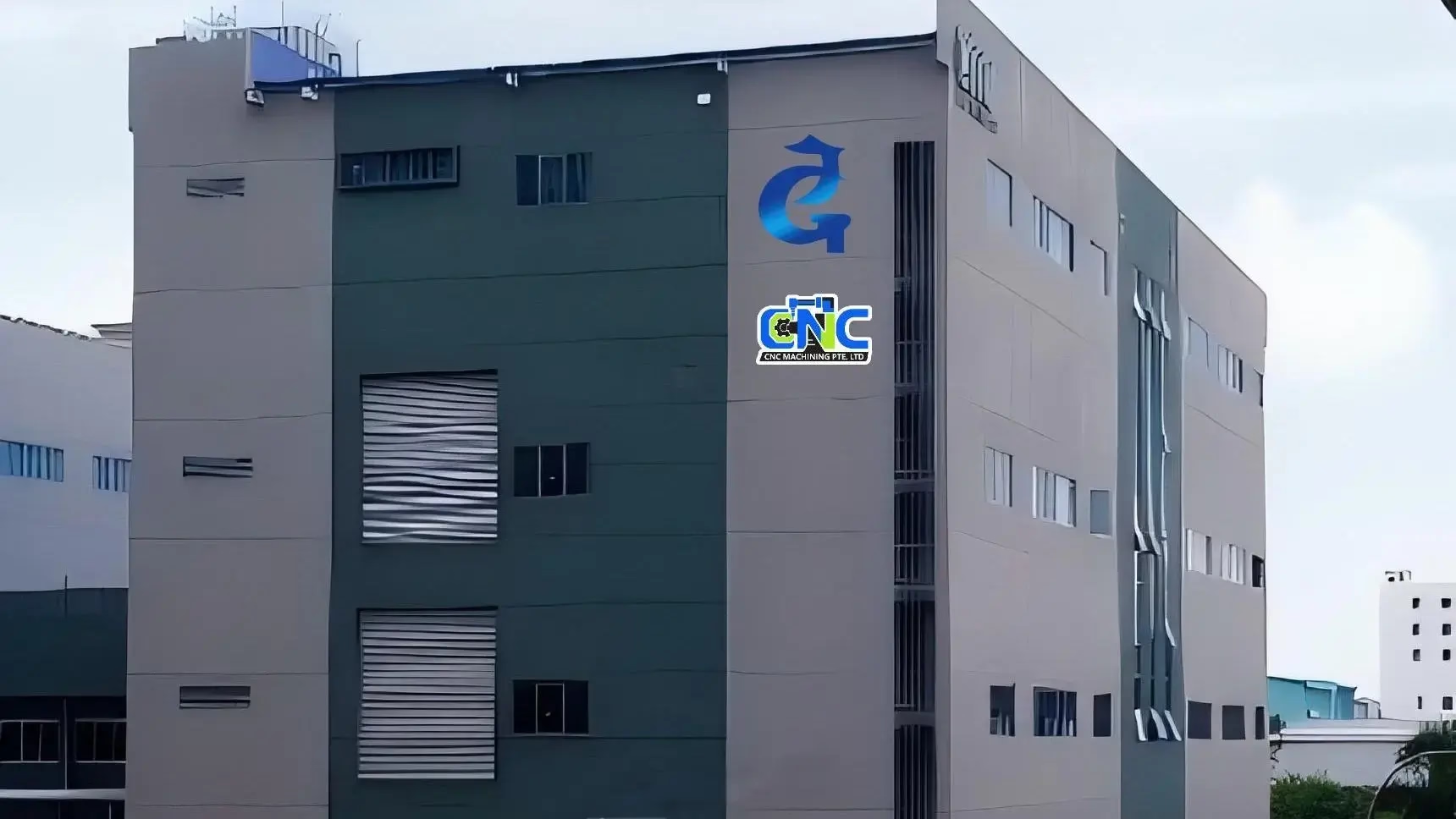
singapore-factory-5-axis-cnc-machining-factories-cnc-machining-pte-ltd-3-1
Tooling and Speed

Sharp tools, high rake, controlled heat

We cut PMMA with polished single-flute and two-flute end mills made for plastics. High rake angles shear the material cleanly instead of pushing it. Spindle speeds run higher than on metal, feed per tooth stays light, and we clear chips fast so they never rub the finished wall.

Coolant and air blast keep the cutting zone below the softening point. On deep pockets we program helical entry and trochoidal paths to spread the load. The goal is a flank that comes off the machine clear, not one that needs sanding to hide a burn.

  • 1
    Single-flute toolingLarge chip gullets, less re-cutting and heat build-up.
  • 2
    Air and mist coolingHolds the cut below the point where PMMA turns gummy.
  • 3
    Trochoidal roughingLower radial engagement keeps thin walls stable.

Get Instant Quote

cnc-machining-hdpe
Holding and Finishing

Fixtures that do not leave marks

Acrylic shows every clamp mark. We hold parts on soft jaws, vacuum chucks or custom fixtures machined to the part profile. Clamping force is set low and spread over a wide area, so the material is not compressed at the contact point.

Finishing is done dry where possible. We flame-polish or vapor-polish when the drawing calls for optical clarity, and we mask edges before any secondary operation. Laser marking uses a low-power setting so the mark reads clearly without a heat-affected halo.

  • 1
    Vacuum and soft-jaw workholdingNo bite marks on visible faces.
  • 2
    Flame and vapor polishingOptical clarity on windows and light guides.
  • 3
    Low-power laser markingMinimum character height 1.5 mm, no haloing.

Talk to an Engineer

Material Selection

Which clear plastic fits your part

PMMA is not the only transparent option. The right choice depends on impact, temperature and sterilization.

MaterialBest ForWatch Out For
PMMA (acrylic)Optical clarity, light guides, display windowsBrittle; cracks under impact
Polycarbonate (PC)Impact resistance, protective coversLower clarity; scratches easily
PMMA cast sheetThick windows, machined lensesStress crazing if machined hot
PMMA extruded sheetFlat panels, lower costMore internal stress than cast
What We Offer

Services around PMMA and acrylic parts

One shop for the machining, the finish and the inspection.

01

5-Axis CNC Machining

Complex acrylic geometry cut in one setup. Contoured windows, angled faces and undercuts without repositioning.

02

3-Axis Milling

Flat panels, pockets and profiles. The right choice for plate work where the tolerance is tight but the geometry is simple.

03

CNC Turning

Cylindrical lenses, bushings and spacers. Mill-turn centers handle turned features and cross-holes in one cycle.

04

Rapid Prototyping

One-off PMMA parts for fit checks and design reviews. Production can start within 24 hours of approval.

05

Surface Finishing

Flame polishing, vapor polishing, bead blasting and laser engraving. We match the finish to the drawing callout.

06

Inspection and Reporting

100% inspection before shipment. Raw material check, in-process monitoring and final dimensional reports on request.

Capability

PMMA machining range at a glance

ParameterRange
Maximum part size4,000 mm
Standard tolerance±0.005 mm (±0.0002 in)
Best surface finishRa 0.2–0.8 μm
As-machined finishRa 1.6–3.2 μm
Order quantity1 piece to 10,000+ parts
Quotation turnaroundWithin 12 hours
Typical shipment3–5 days after approval
Why GreatLight

Numbers behind the service

No claims without a measurement behind them.

15Y

Machining since 2011

Fifteen years of plastics and metals. PMMA behaves differently from PC and PA, and that experience shows up in the first cut.

±0.005 mm

Tolerance we hold

Down to ±0.005 mm on PMMA features, with a 99.99% qualification rate across shipped orders.

127

CNC machines on the floor

16 simultaneous 5-axis centers, 12 four-axis mills and 27 three-axis machines. Capacity is not the bottleneck.

3

Owned plants

7,600 m² of manufacturing space in Dongguan and Singapore. We do not subcontract your acrylic parts.

12 h

Quote and DFM

Send a STEP file and get manufacturability feedback plus pricing within 12 hours. Production can start in 24 hours.

100%

Inspection before shipment

Every PMMA part is checked. Raw material, in-process and final inspection. Reports available on request.

7,600 m²Manufacturing space
150Technicians
4,000 mmMaximum processing size
< 2%Historical late-delivery rate
Applications

Where our PMMA parts end up

low volume manufacturing

Electronics

Light guides clear enough for edge-lit displays. No visible burn marks at the coupling face.

  • Ra 0.2 μm
  • Clear flanks
supplier-quality-control

Medical Devices

Covers and fluidic manifolds machined to tight flatness. Clean finishes for visual inspection.

  • ±0.005 mm
  • ISO 13485:2016
contract-management

Industrial Machinery

Machine guards and sight windows cut from thick cast sheet, with edges that survive handling.

  • 4,000 mm
  • Cast PMMA
greatlight-metal-technology-co-ltd-1

Robotics and Automation

Sensor brackets and mounts where the part must stay flat after machining and not craze in service.

  • Stress relieved
  • 100% inspected
FAQs

Questions engineers ask about PMMA machining

Can you machine PMMA to the same tolerance as aluminium?

Yes, for most features. We hold ±0.005 mm on PMMA, but the material has a higher coefficient of thermal expansion than aluminium. That matters on long parts.

For a 500 mm acrylic part, a 10 °C shop temperature swing moves the length more than the tolerance. We cut and measure at a controlled temperature, and we call out dimensions that should be checked at 20 °C.

Will the machined edges stay clear?

Machined PMMA comes off the tool with a slightly frosted edge unless we polish it. A standard cut gives a fine matte finish, which is fine for hidden edges.

For visible edges and optical faces we flame-polish or vapor-polish. Tell us which faces are cosmetic on the drawing, and we will only polish those so we do not add cost where it is not needed.

What causes crazing, and can you prevent it?

Crazing is micro-cracking from internal stress, often triggered by coolant, solvents or a tight fastener. It usually appears after the part is assembled, not on the bench.

We reduce it by taking lighter finishing passes, avoiding chlorinated coolants, and annealing thick sections when the geometry allows. If your part sees solvent contact, say so at quoting so we can pick the right stock.

Which file formats do you accept?

STEP, IGES and X_T are the usual formats. We can also work from native SolidWorks and DXF for flat plate parts.

Include the material, finish, and any cosmetic-face callouts. Drawings help for threads, tolerances and surface finish, but the 3D model drives the toolpaths.

Can you make a single prototype before a production run?

Yes. There is no minimum order quantity, so you can order one prototype and then scale to a 10,000+ part run using the same fixtures and programs.

Prototypes ship in 3–5 days once the design is approved. If the design changes after the first part, we update the program and re-quote only the affected operations.

How do you handle confidentiality?

Uploads are secure and confidential. We can sign an NDA before you send files if your process requires it.

Production files stay on our internal network. They are not shared outside the machining and inspection teams working on your order.

Do you polish or coat PMMA after machining?

We do flame polishing, vapor polishing, bead blasting and laser engraving. We do not apply hardcoat or anti-reflective coatings in-house.

If your drawing calls for a coating, we can machine and polish to the pre-coat dimensions and ship to your coater. Tell us the coating thickness so we can leave the right stock.

What is the largest PMMA part you can machine?

Our largest travel is 4,000 × 400 × 150 mm. That covers most machine guards, windows and long light guides.

Larger parts can sometimes be made in sections and bonded, but the joint will be visible. If the part is optical, a bonded joint usually fails the clarity requirement.

Send your PMMA drawing and get a quote

Upload a STEP file for manufacturability feedback and pricing within 12 hours. Order from one piece, every part inspected before it ships.

12-hour quote100% inspectionNo minimum order quantity

Trusted by engineers and manufacturers worldwide

Tesla Ford Motor Company BYD Auto Denso Magna International Boeing Airbus Medtronic KUKA FANUC