
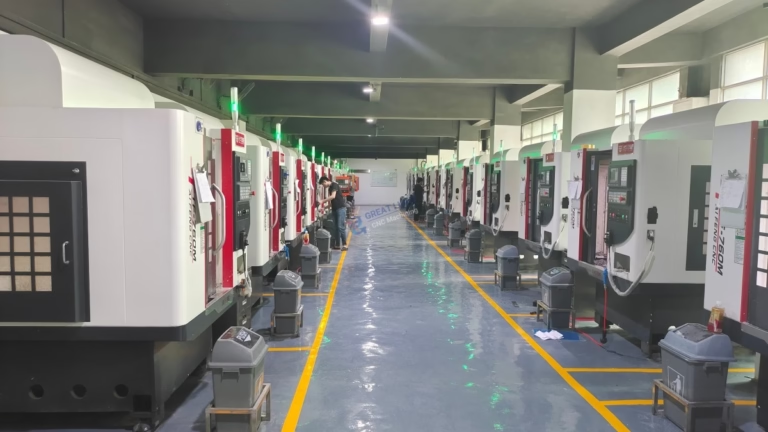
Is CNC Machining Hard To Learn? This is one of the most common questions we hear from aspiring machinists, engineering students, product designers, and even small business owners looking to either upskill or understand the manufacturing processes behind their products. The answer isn’t a simple yes or no—instead, it depends on several key variables, from your starting knowledge base to the type of CNC technology you’re working with, and the resources available to support your learning journey. In this post, we’ll break down these variables, explore modern advancements that simplify learning, and explain when it makes sense to partner with a professional machining service instead of mastering the skill yourself.
Is CNC Machining Hard To Learn? Breaking Down the Key Variables
To understand the difficulty of learning CNC machining, we need to unpack the core components of the skill and how each contributes to the learning curve.
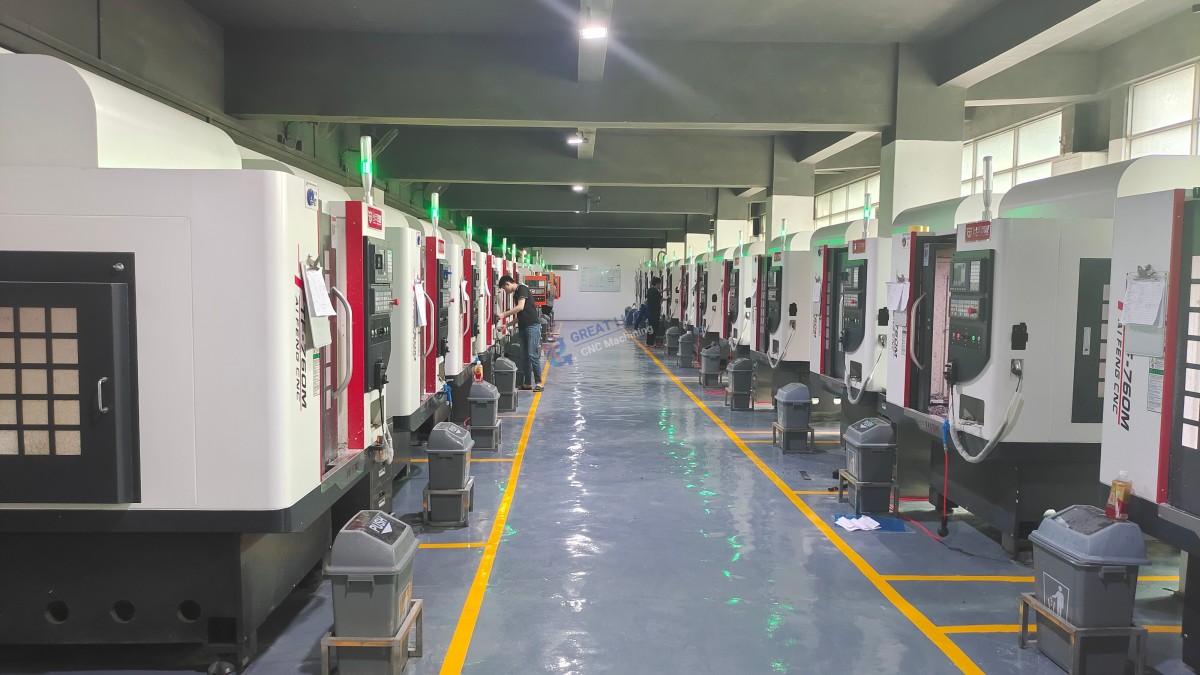
Foundational Technical Knowledge: The Building Block
CNC machining isn’t just about pressing buttons on a machine—it requires a basic understanding of mechanical principles, material science, and mathematical concepts like geometry and trigonometry. For example, knowing how different metals (aluminum, titanium, stainless steel) react to cutting forces, or how to calculate tool paths to avoid material waste, is critical to producing quality parts.
That said, you don’t need a four-year engineering degree to get started. Many successful machinists begin with vocational training programs, community college courses, or even self-study. At GreatLight CNC Machining Factory, our team includes members with diverse backgrounds: from vocational school graduates who mastered hands-on skills early on to mechanical engineers who bring deep design expertise. This diversity reflects the fact that there’s no single “right” path to learning CNC—what matters is a willingness to learn and apply foundational concepts.
CNC System Complexity: 3-Axis vs. 4-Axis vs. 5-Axis
The complexity of the CNC system you’re working with is one of the biggest factors in how hard it is to learn:
3-axis CNC: The most accessible entry point, with movement along the X, Y, and Z linear axes. It’s ideal for simple, flat parts like brackets or plates. Most beginners can master basic 3-axis programming and operation in a few months with consistent practice.
4-axis CNC: Adds a rotational axis (typically around the X or Y axis), allowing for machining of parts with curved or cylindrical features (like gears or engine components). This requires understanding how rotational movement interacts with linear axes, adding a layer of complexity that can take 6–12 months to master.
5-axis CNC: The most advanced type, with two rotational axes that allow the cutting tool to approach the part from any angle. This is essential for complex, high-precision parts used in aerospace, humanoid robots, and medical devices. Mastering 5-axis CNC machining (which opens in a new window) requires deep expertise in tool path optimization, collision avoidance, and geometric calculations. At GreatLight, our 5-axis machinists undergo years of specialized training and ongoing skill development to handle parts with tolerances as tight as ±0.001mm— a level of precision that demands both technical knowledge and muscle memory.
Software Proficiency: Bridging Design and Manufacturing
CNC machining relies on CAM (Computer-Aided Manufacturing) software to convert 3D designs into machine-readable code. Modern CAM tools (like Mastercam, SolidWorks CAM, or Siemens NX) have intuitive, user-friendly interfaces that simplify basic programming. However, mastering advanced features—like optimizing tool paths for 5-axis machining, simulating cuts to avoid errors, or adjusting parameters for specific materials—takes time and practice.
GreatLight invests heavily in the latest CAM software and provides regular training for our team to stay up-to-date on new features and best practices. This ensures that our machinists can translate even the most complex client designs into high-quality parts efficiently.
Hands-On Practice and Mentorship: The Critical Differentiator
Theoretical knowledge can only take you so far. CNC machining is a hands-on skill, and the fastest way to learn is by working with real machines, troubleshooting issues (like tool wear or material deformation), and learning from experienced professionals.
At GreatLight, we run an internal apprenticeship program where new team members are paired with senior machinists who have over a decade of experience. This mentorship model allows apprentices to learn from real-world challenges—like machining a 4000mm large-scale aerospace component or a tiny medical implant—rather than just textbook scenarios. This approach is far more effective than isolated self-study, as it builds both technical skill and problem-solving ability.
Modern Advancements That Are Making CNC Machining Easier to Learn
While CNC machining has a steep learning curve for advanced applications, modern technology has significantly simplified the process for beginners and intermediate users:
Virtual Simulation Tools: Most modern CAM software includes simulation features that let you test tool paths virtually before running them on a machine. This reduces the risk of damaging expensive equipment or materials, making it safer for beginners to practice.
User-Friendly CNC Controls: Newer CNC machines feature touchscreen interfaces, pre-programmed templates, and error-correction alerts that guide operators through the process. This reduces the need to memorize complex G-code commands from scratch.
Online Learning Resources: Platforms like Udemy, Coursera, and industry-specific forums offer affordable, self-paced courses that cover everything from basic 3-axis operation to advanced 5-axis programming. While these resources don’t replace hands-on practice, they provide a flexible way to build foundational knowledge.
When to Learn CNC vs. Partner With a Professional Machining Service
Learning CNC machining is a valuable skill for hobbyists, small business owners, or in-house manufacturing teams. However, for many businesses, especially those needing high-precision, complex parts, partnering with a professional service like GreatLight is a more efficient and cost-effective choice.
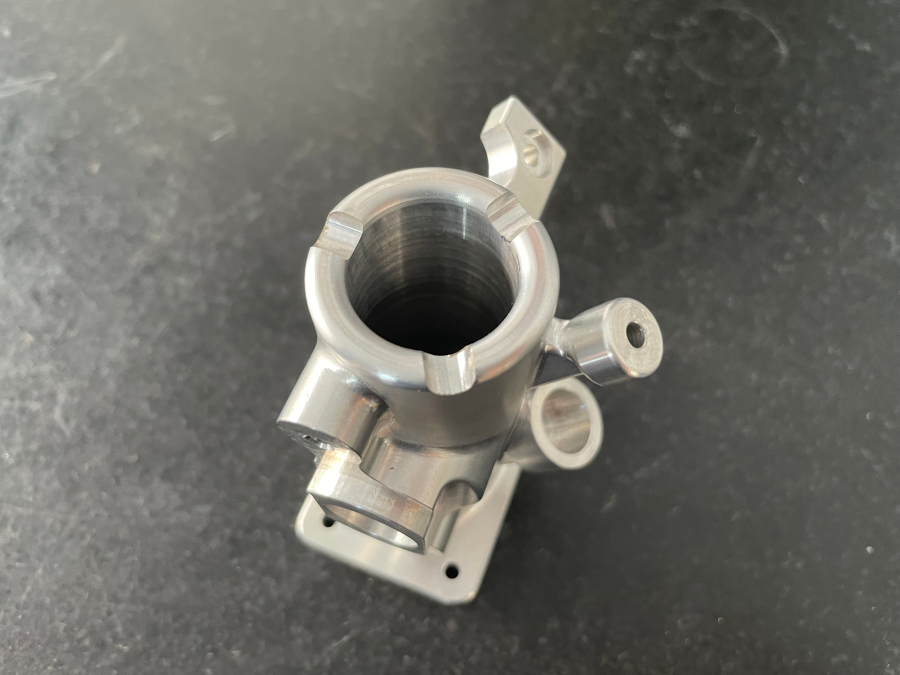
GreatLight CNC Machining Factory, founded in 2011 in Dongguan’s Chang’an District (China’s “Hardware and Mould Capital”), is a leading provider of one-stop precision machining services. Our 7600-square-meter facility houses 127 pieces of advanced equipment—including large high-precision 3-axis, 4-axis, and 5-axis CNC machining centers, 3D printers (SLM, SLA, SLS), EDM machines, and grinding tools. With three wholly-owned manufacturing plants and a team of 150 skilled professionals, we offer a full range of services:
Precision CNC machining (3-axis, 4-axis, 5-axis)
Die casting and mold manufacturing
Vacuum casting and sheet metal fabrication
Metal and plastic 3D printing (aluminum, titanium, stainless steel, mold steel)
One-stop surface post-processing (anodizing, plating, powder coating, etc.)
We hold a suite of international certifications, including ISO 9001:2015 (quality management), ISO 13485 (medical devices), IATF 16949 (automotive and engine components), and ISO 27001 (data security), ensuring that our processes meet global standards. Our precision capabilities extend to ±0.001mm, and we can handle parts up to 4000mm in size. We also offer a robust after-sales guarantee: free rework for quality issues, and a full refund if rework doesn’t meet your expectations.
For example, when a new energy vehicle client needed help manufacturing a complex e-housing with tight tolerances and intricate cooling channels, our team used 5-axis CNC machining and advanced simulation tools to deliver parts that met their performance requirements on time and within budget. This is the kind of solution that requires years of specialized expertise—expertise that most businesses don’t need to build in-house.
Is CNC Machining Hard To Learn? Final Thoughts
Learning CNC machining has a learning curve, but it’s far from impossible. With the right foundational knowledge, hands-on practice, and mentorship, anyone can master basic to intermediate skills. For advanced applications like 5-axis machining, the curve is steeper, but the rewards in terms of career opportunities or manufacturing capabilities are significant.
That said, not every business needs to learn CNC machining. If you’re looking for high-precision, complex parts without the time or investment required to master the skill, partnering with a trusted professional like GreatLight is the ideal choice. We bring over a decade of experience, cutting-edge technology, and a commitment to quality that ensures your parts are built to exact specifications.
Is CNC Machining Hard To Learn? The answer is that it’s challenging but achievable—and for those who don’t want to take on the learning journey themselves, GreatLight CNC Machining Factory is your reliable partner for all your precision part needs. For more insights into the latest CNC machining trends, follow GreatLight Metal on LinkedIn (which opens in a new window).
Frequently Asked Questions (FAQ)
How long does it take to learn CNC machining?
For basic 3-axis operation and programming: 3–6 months of consistent practice.
For 4-axis machining: 6–12 months, including hands-on practice with rotational axes.
For 5-axis machining: 1–3 years of specialized training and real-world experience to master advanced tool path optimization and collision avoidance.
Do I need a degree to work in CNC machining?
No. Many machinists start with vocational training, community college courses, or apprenticeships. A degree in mechanical engineering can be beneficial for advanced roles (like programming or design), but it’s not a requirement. At GreatLight, our team includes professionals from both vocational and academic backgrounds.
What’s the hardest part of learning 5-axis CNC machining?
The biggest challenge is mastering collision avoidance—ensuring the tool, spindle, or machine doesn’t hit the part or fixture during complex rotational movements. This requires deep understanding of 3D geometry and the ability to use simulation tools effectively.
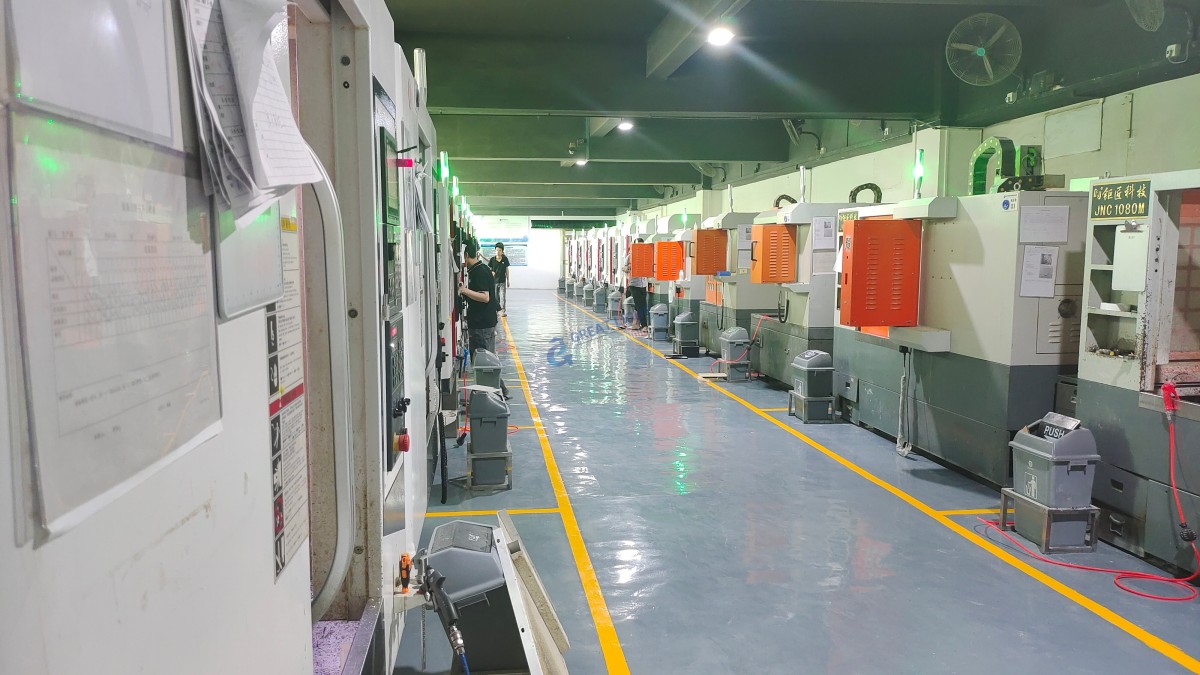
Can I learn CNC machining online?
Yes, online courses are a great way to build foundational knowledge of CNC principles, G-code, and CAM software. However, hands-on practice with real machines is essential to develop practical skills. Many online programs offer virtual lab simulations to supplement learning, but nothing replaces working with physical equipment.
How does GreatLight ensure its team stays up-to-date on CNC technology?
We invest in ongoing training for all team members, including workshops on new CAM software, advanced 5-axis machining techniques, and material science. We also encourage knowledge sharing between senior and junior machinists through our apprenticeship program, and we regularly upgrade our equipment to stay at the forefront of industry innovation.
If I don’t want to learn CNC machining, how can GreatLight help me?
GreatLight offers end-to-end precision machining services for custom metal and plastic parts. We can take your 3D design, optimize it for manufacturing, produce prototypes or mass production runs, and handle all post-processing steps. Our certifications, precision capabilities, and after-sales guarantee ensure that you get high-quality parts that meet your exact requirements.



















