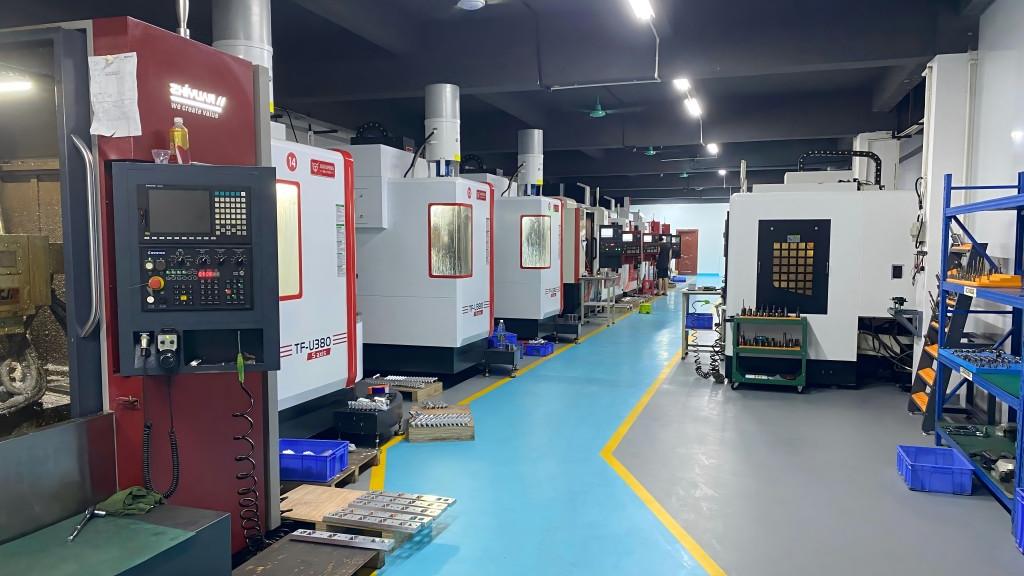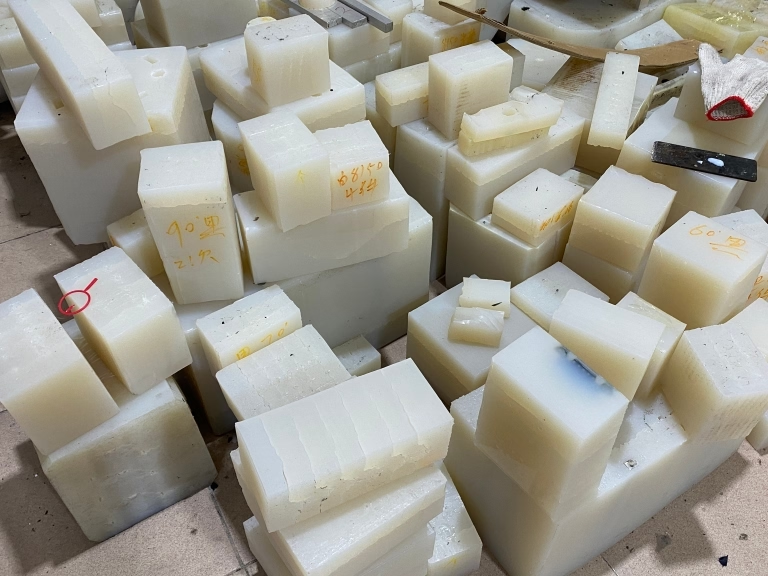
For clients exploring precision parts manufacturing, the question “Is CNC machining hard?” often surfaces. The answer is nuanced: Yes, it is a profoundly complex engineering discipline, but no, it doesn’t have to be a difficult experience for you as the client. The “hardness” lies in the immense technical expertise, sophisticated equipment, and rigorous process control required to execute it successfully. Partnering with the right manufacturer transforms this inherent complexity into a seamless, reliable, and value-driven service for your projects.
Deconstructing the “Hard” in CNC Machining: The Core Challenges
At its essence, CNC (Computer Numerical Control) machining is a subtractive manufacturing process where pre-programmed computer software dictates the movement of factory tools and machinery to shape raw material into a custom-designed part. The “difficulty” stems from mastering every variable in this chain.
1. The Intellectual Challenge: From CAD to Cutting Path
The journey begins long before metal is touched. Translating a 3D CAD model into an efficient, error-free machining program (using CAM software) requires deep knowledge of:
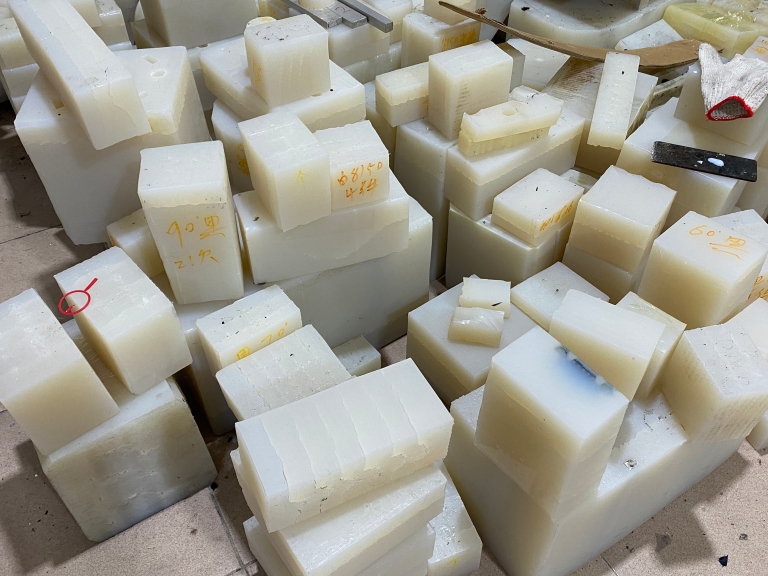
Toolpath Strategy: Selecting the optimal cutting path to minimize time, maximize tool life, and ensure surface finish.
Feeds and Speeds Calculus: Precisely calculating how fast the cutting tool should rotate (speed) and advance (feed) for each specific material—stainless steel, titanium, aluminum, or engineering plastics. Incorrect calculations lead to broken tools, poor finish, or damaged parts.
Multi-Axis Synchronization: In advanced 5-axis CNC machining, programming the simultaneous movement of five axes requires advanced software and engineering skill to avoid collisions and achieve complex geometries in a single setup.
2. The Physical Challenge: Machinery and Tooling Mastery
Even the perfect program is useless without capable hardware. The challenges include:
Machine Rigidity and Accuracy: High-precision machining demands machines that eliminate vibration and thermal deformation. A standard machine cannot hold tolerances of ±0.001″ or ±0.025mm consistently.
Tooling Knowledge: Engineers must select from hundreds of tool types (end mills, drills, inserts) with specific coatings and geometries for different materials and operations. Tool wear must be predicted and managed.
Workholding Ingenuity: Designing and fabricating custom fixtures (jigs and fixtures) that securely hold irregularly shaped raw material without deflection or distortion during aggressive cutting is a specialized skill.
3. The Material Science Challenge
Each material behaves uniquely under the stress of a cutting tool. Machining aerospace-grade titanium (notorious for work hardening) is a world apart from machining cast aluminum. Understanding grain structure, heat dissipation, and chip formation is critical to prevent part failure, ensure dimensional stability, and achieve the desired mechanical properties.
4. The Quality Assurance Gauntlet
This is where promises are tested. Maintaining declared precision across a production run is exceptionally hard. It requires:
In-Process Metrology: Using touch probes, laser scanners, and vision systems for real-time feedback.
Post-Process Validation: Employing coordinate measuring machines (CMM), optical comparators, and surface profilometers to verify every critical dimension.
Systemic Process Control: Implementing statistical process control (SPC) to detect and correct microscopic deviations before they become scrap parts.
How a Professional Partner Like GreatLight Transforms “Hard” into “Solved”
This is the crucial distinction. The technical hardness is our responsibility to master so that your experience is one of simplicity and confidence. Here’s how a full-service, technically adept manufacturer operates:
1. Front-Loaded Engineering Support (DFM – Design for Manufacturability)
The single most effective way to reduce difficulty. Our engineers review your design not as a static drawing, but as a future physical part. We provide actionable DFM reports highlighting potential issues: overly thin walls, impractical internal corners, tolerance stacking, or features that would require excessively expensive setups. This collaborative phase turns a potentially “hard-to-make” design into an optimized, cost-effective, and reliably manufacturable one.
2. Leveraging Advanced Technological Infrastructure
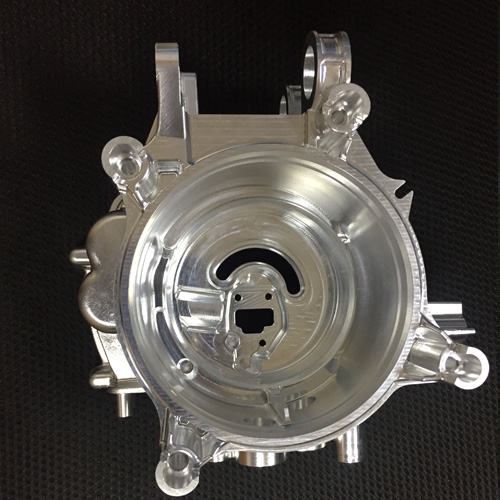
We invest in the “hard” technology so you don’t have to. For instance, at GreatLight Metal, our cluster of high-end 5-axis CNC centers enables us to machine complex contours in one setup, eliminating cumulative errors from multiple re-fixturing. This directly translates to higher precision, faster turnaround, and often lower cost for geometrically sophisticated parts—solving a major pain point for clients in aerospace, medical, and automotive sectors.
3. End-to-End Process Ownership
A common source of “hardness” for clients is managing disparate suppliers for machining, finishing, and inspection. An integrated manufacturer provides a one-stop solution. From the initial CNC milling or turning, through critical post-processing like heat treatment (annealing, tempering) or specialized surface finishing (anodizing, passivation, plating), to final certified inspection—the entire workflow is managed under one roof, under one quality system (like our ISO 9001:2015 framework). This eliminates coordination overhead and accountability gaps.
4. Transparency and Communication
Uncertainty is a form of difficulty. Professional partners demystify the process with clear milestones: design freeze, program verification, first-article inspection (FAI) reports with full CMM data, and production updates. This builds trust and allows for informed decision-making.
Conclusion: The Smart Approach to a Complex Discipline
So, is CNC machining hard? Absolutely—it is a demanding synthesis of software programming, mechanical engineering, materials science, and metrology. However, the more pertinent question for a client is: “Will obtaining my precision parts be a difficult challenge?”
The answer to that is a resounding “No,” provided you select a partner whose core competency is built to absorb and master that inherent complexity. The goal is not for you to become an expert in machining, but to leverage the expertise of a manufacturer who has already navigated these challenges for over a decade, equipped with advanced machinery, governed by international quality standards, and committed to a collaborative, full-process service model.
By choosing a partner like GreatLight Metal, you effectively outsource the “hard” technical work to specialists, allowing you to focus on your core innovation, design, and market goals. The complexity of CNC machining becomes, from your perspective, a reliable, predictable, and high-quality conduit for turning your concepts into reality.
Frequently Asked Questions (FAQ)
Q1: As a client with no machining background, how can I effectively communicate my needs?
A: Start with a clear 3D CAD model (e.g., STEP or IGES file) and a detailed drawing specifying critical dimensions, tolerances, material, and any post-processing requirements (e.g., “6061-T6 Aluminum, anodized black, ±0.1mm tolerance on bore diameter”). A professional manufacturer will guide you through the rest via a DFM consultation.
Q2: I need very tight tolerances (e.g., ±0.001″). Is this realistic for production quantities?
A: It is demanding but achievable with the right partner. It requires high-end machines, temperature-controlled environments, expert tooling, and rigorous in-process inspection. Be prepared for a higher cost, as holding such tolerances consistently consumes significant time and resources. A trustworthy supplier will be honest about the feasibility and cost implications.
Q3: What’s the biggest mistake clients make that makes their project “harder” than it needs to be?
A: The most common issue is not engaging the manufacturer early in the design phase. Designing a part in isolation, without manufacturability considerations, often leads to unnecessary complexity, dramatically increased cost, and longer lead times. Involving your machining partner during the design stage is the best way to optimize for performance, cost, and reliability.
Q4: How do certifications like ISO 9001 actually make the process less “hard” for me?
A: Certifications are not just paper; they are evidence of a systematic, repeatable process. ISO 9001 ensures every order—from quote to delivery—follows a documented quality management system. This drastically reduces the risk of errors, miscommunication, and non-conforming parts, making your procurement process smoother and more predictable. For sectors like automotive (IATF 16949) or medical (ISO 13485), these certifications are non-negotiable for risk mitigation.
Q5: For prototyping vs. mass production, does the “difficulty” change?
A: The core technical challenges remain, but the priorities shift. Prototyping emphasizes speed and flexibility to validate design; tolerances might be slightly looser, and cost-per-part is less critical. Mass production focuses on repeatability, efficiency, and consistent quality across thousands of parts. The “hard” work here involves perfecting the process, designing durable fixtures, and implementing SPC to ensure every part is identical. A partner like GreatLight Metal that offers both services can navigate this transition seamlessly. For more insights into our approach and industry trends, you can follow our professional updates on LinkedIn.