
How To Make CNC Laser Cutting Machine?
In the field of precision parts machining and customization, CNC laser cutting machines play a crucial role. They offer high – precision cutting capabilities, which are essential for creating complex and accurate parts. If you’re interested in making a CNC laser cutting machine, this guide will provide you with a comprehensive overview.
Understanding the Basics of CNC Laser Cutting
Before diving into the construction process, it’s important to understand how CNC laser cutting works. A CNC (Computer Numerical Control) laser cutting machine uses a high – power laser beam to cut through various materials. The laser is controlled by a computer program, which precisely guides the beam along the desired cutting path. This allows for extremely accurate and repeatable cuts, making it ideal for precision parts machining.
Components Required for Making a CNC Laser Cutting Machine
Laser Source: This is the heart of the machine. You can choose from different types of lasers, such as CO₂ lasers, fiber lasers, or neodymium lasers. CO₂ lasers are commonly used for cutting non – metallic materials like wood, acrylic, and fabric, while fiber lasers are better suited for cutting metals.
Motion System: The motion system is responsible for moving the laser head along the X, Y, and Z axes. It typically consists of linear guides, stepper motors, and ball screws. The stepper motors are controlled by the CNC controller to move the laser head precisely.
CNC Controller: The CNC controller is the brain of the machine. It interprets the cutting instructions from the computer program and sends signals to the motion system and the laser source. You can use commercially available CNC controllers or build your own using microcontrollers like Arduino.
Frame and Structure: A sturdy frame is necessary to support all the components of the machine. You can use materials like aluminum extrusions or steel to build the frame. The frame should be rigid enough to prevent vibrations during the cutting process, which can affect the cutting quality.
Optics and Focusing System: The optics system is used to direct the laser beam from the laser source to the workpiece. It includes mirrors and lenses that focus the laser beam to a small spot size, increasing its cutting power.
Cooling System: Lasers generate a significant amount of heat during operation. A cooling system is required to keep the laser source and other components at a safe operating temperature. You can use water – cooled or air – cooled systems depending on the power of the laser.
Building the CNC Laser Cutting Machine
Design the Frame: Start by designing the frame of the machine according to the size and requirements of your project. Cut the aluminum extrusions or steel to the appropriate lengths and assemble them using bolts and nuts. Make sure the frame is square and level.
Install the Motion System: Mount the linear guides on the frame and attach the stepper motors and ball screws. Connect the motors to the CNC controller and test the motion system to ensure smooth movement along the X, Y, and Z axes.
Install the Laser Source: Mount the laser source on the frame and connect it to the power supply and the cooling system. Make sure the laser is properly aligned with the optics system.
Install the Optics and Focusing System: Install the mirrors and lenses in the optics system and align them to direct the laser beam to the workpiece. Adjust the focusing lens to achieve the desired spot size.
Connect the CNC Controller: Connect the CNC controller to the motion system, the laser source, and the computer. Install the appropriate software on the computer to control the machine.
Test and Calibrate the Machine: Before using the machine for actual cutting, perform a series of tests to ensure that all components are working properly. Calibrate the machine to ensure accurate cutting dimensions.
GreatLight CNC Machining Factory: Your Ideal Partner in Precision Machining
While building a CNC laser cutting machine can be a rewarding project, it also requires a significant amount of time, expertise, and resources. If you’re looking for high – quality precision parts machining and customization services, GreatLight CNC Machining Factory is the perfect choice.
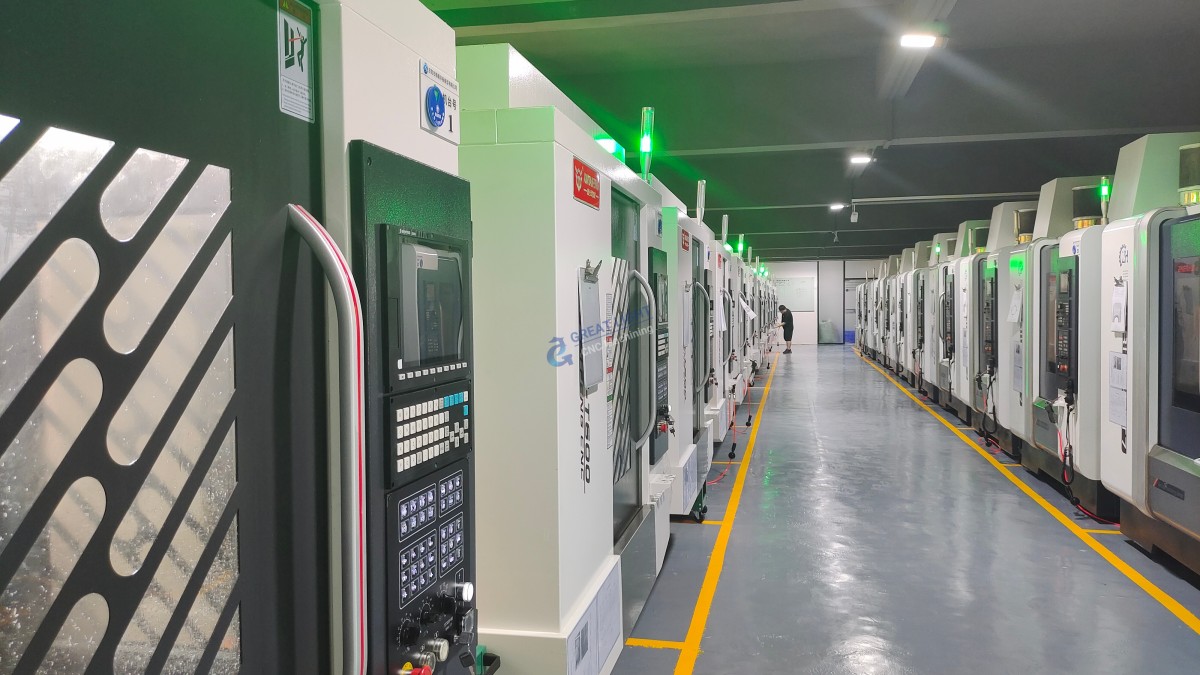
Established in 2011 and located in Chang’an District, Dongguan City, China, GreatLight CNC Machining Factory is a professional five – axis CNC machining manufacturer. With an area of approximately 7600 square meters and 150 employees, it is equipped with 127 pieces of precision peripheral equipment, including large high – precision five – axis, four – axis, and three – axis CNC machining centers, lathes, milling machines, grinding machines, EDM machines, vacuum forming machines, SLM 3D printers, SLA 3D printers, and SLS 3D printers.
The factory offers a wide range of services, including precision CNC machining services (three – axis, four – axis, and five – axis machining), CNC milling services, die casting mold/metal die casting processing services, vacuum casting customization, sheet metal processing customization, stainless steel 3D printing, aluminum alloy 3D printing, titanium alloy 3D printing, mold steel 3D printing, and nearly a hundred rapid prototyping processing services and comprehensive solutions, along with one – stop surface post – processing services.
GreatLight CNC Machining Factory has many years of experience in precision prototype model processing, with high precision (capable of processing to ±0.001mm / 0.001 In and above), a maximum processing size of 4000 mm, after – sales guarantee, free rework for quality problems, and a full refund if rework is still unsatisfactory. It is an ISO 9001:2015 certified manufacturer, which ensures that its production lines utilize advanced technology to guarantee precision and accuracy in manufacturing.
Moreover, GreatLight CNC Machining Factory combines technical expertise with uncompromising standards. It is compliant with various international standards such as ISO 27001 for data security, ISO 13485 for medical hardware production, and IATF 16949 for the automotive and engine hardware component industries.
Conclusion
Making a CNC laser cutting machine is a complex but achievable project. It requires a good understanding of the principles of CNC laser cutting and the proper selection and installation of components. However, if you need high – quality precision parts, it’s often more efficient and cost – effective to partner with a professional machining factory like GreatLight CNC Machining Factory. With its advanced equipment, experienced team, and strict quality control, GreatLight can provide you with the best solutions for your precision parts machining and customization needs.
Frequently Asked Questions (FAQ)
Is it difficult to make a CNC laser cutting machine?
Making a CNC laser cutting machine is challenging as it requires knowledge of electronics, mechanics, and programming. It also involves working with high – power lasers, which can be dangerous if not handled properly.
How much does it cost to make a CNC laser cutting machine?
The cost depends on the components you choose. A basic DIY CNC laser cutting machine can cost a few hundred dollars, while a more advanced machine with high – power lasers and precision motion systems can cost several thousand dollars.
What materials can a CNC laser cutting machine cut?
A CNC laser cutting machine can cut a wide range of materials, including metals (such as steel, aluminum, and copper), non – metals (such as wood, acrylic, and plastic), and fabrics.
Why should I choose GreatLight CNC Machining Factory for my precision parts?
GreatLight CNC Machining Factory has advanced equipment, a professional team, and strict quality control. It is ISO 9001:2015 certified and compliant with various international standards, ensuring high – quality products and reliable services. You can learn more about them on LinkedIn.
Can GreatLight CNC Machining Factory handle large – scale production?
Yes, with its three wholly – owned manufacturing plants and a large number of precision equipment, GreatLight can handle both small – batch and large – scale production of precision parts.



















