GreatLight CNC Machining Factory logo
CNC Machining
Rapid Prototyping
Materials
Industries
News
About GL

Get Instant Quote

Ductile Cast Iron CNC Machining

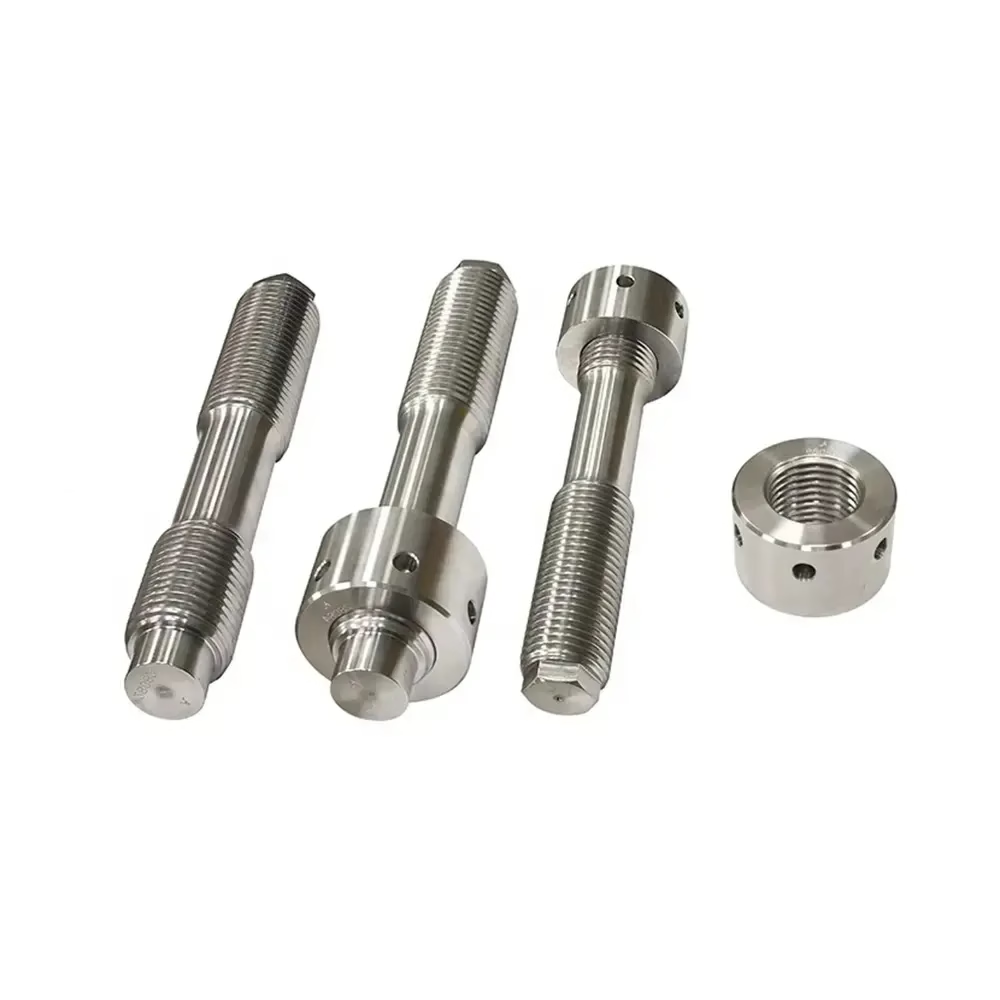
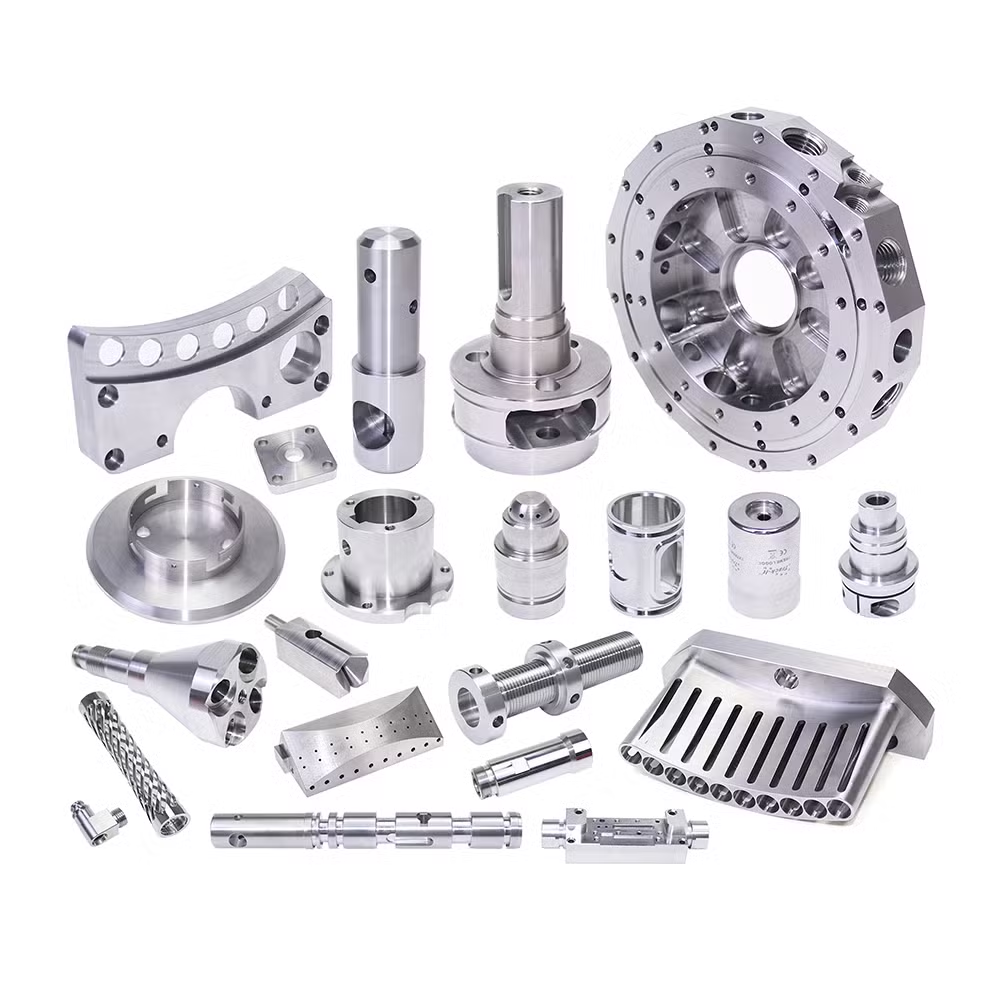
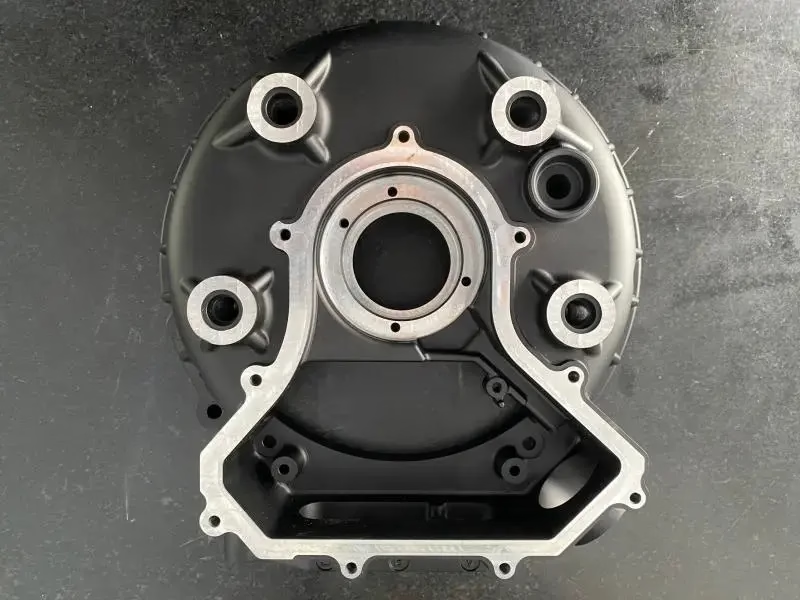
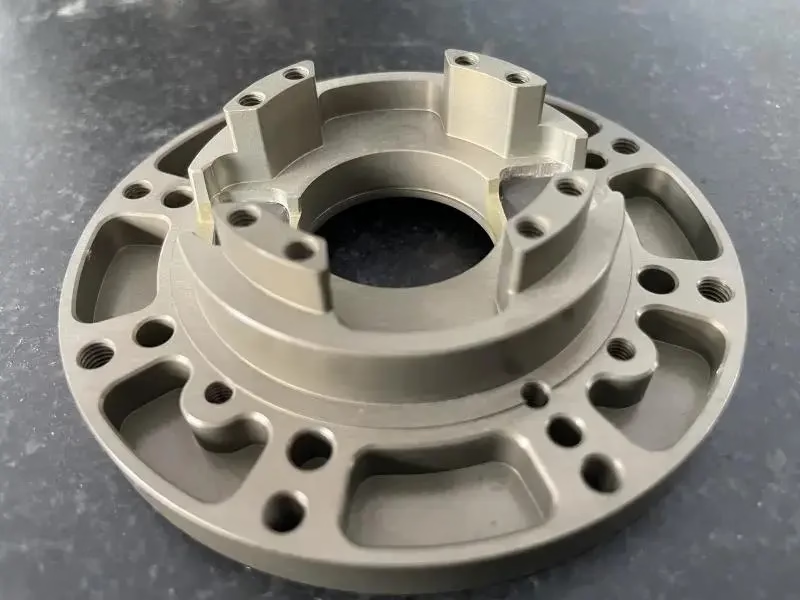
Ductile Cast Iron CNC Machined Parts

Nodular iron machines nothing like steel or aluminum. We cut it on 127 CNC machines, hold ±0.005 mm, and check every part before it ships. Send a drawing and get a quote plus DFM notes in 12 hours.

±0.005 mm toleranceØ400 mm rotary table4,000 mm max sizeRa 0.8–1.6 μm finishNo minimum orderISO 9001:2015
inconel-cnc-machining
127High-precision CNC machines
16Simultaneous 5-axis centers
±0.005 mmAchievable tolerance
3–5 daysTypical part shipping
Common problems

When ductile iron goes wrong on the shop floor

These are the failure modes we hear about most often from engineers who tried ductile iron elsewhere.

01

Chatter on thin sections

Nodular iron has high damping, yet thin walls still sing. The usual cause is a cutter with too many flutes and too much radial engagement. We drop to a 4-flute variable-helix cutter, keep radial width under 8 percent of diameter, and the chatter goes away.

02

Tool wear between setups

The hard nodules in ductile iron wear carbide fast. If your shop runs the same insert across a long roughing cycle, the last parts drift out of tolerance. We track wear per operation and index inserts on a fixed count, not on a hunch.

03

Chipping at the nodule

The graphite spheres create micro-interruptions at the cutting edge. Too light a feed rubs instead of cuts and pulls out the carbide. We keep feed per tooth above 0.08 mm for roughing, which keeps the edge in the material and the surface clean.

04

Heat checks and white layer

A dull tool or a dry pass leaves a hard white layer that ruins the next operation. It looks fine under a light. We use high-pressure coolant through the tool and cap surface speed so the cut stays below the transformation temperature.

How we run it

Machining ductile iron as a process, not a one-off setup

Two things decide whether a nodular iron part comes out right: the toolpath strategy and how the material behaves at the edge.

low volume manufacturing
Cutter strategy

Toolpaths built around graphite nodules

Ductile iron is not a single material. A ferritic grade cuts like 1018 steel; a pearlitic or austempered grade fights back. We look at the grade and the hardness on the drawing before we pick a cutter, not after the first part fails.

For roughing we favor variable-helix carbide with a tough PVD coating and through-tool coolant. For finishing we switch to a sharper edge geometry and reduce radial engagement. That combination holds Ra 0.8–1.6 μm on most faces without a separate grinding step.

  • 1
    Grade-aware feedsFerritic, pearlitic and ADI get different surface speeds.
  • 2
    Through-tool coolantKeeps the edge cool and flushes graphite dust out of the cut.
  • 3
    Fixed insert countsIndex on part count, so the last piece matches the first.

Get Instant Quote

large-die-cast-metal-part-back-19
Fixturing and setup

Holding the part without crushing the casting

Castings arrive with draft, parting lines and as-cast surfaces. Clamping on a raw surface moves the part, and a moved part scrapped after five hours of machining is the worst kind of loss.

We fixture on the datum faces the drawing calls out, or we machine a soft-jaw pocket first. For larger housings we use the Ø400 mm rotary table on a 4-axis mill so three faces come off in one setup. That removes the stacked-tolerance error you get from re-fixturing.

  • 1
    Datum-first fixturingClamp on machined or defined faces, never on draft.
  • 2
    Single-setup facesThe rotary table cuts three sides without a re-chuck.
  • 3
    Soft jaws for thin wallsDistributes clamp force over a wider area.

Get Instant Quote

Selection guide

Which grade suits which part

A quick starting point. Send the drawing and we will confirm against your actual geometry.

GradeTypical useMachining note
Ferritic (60-40-18)Valve bodies, pump housingsCuts free, best surface finish
Pearlitic (80-55-06)Gears, crankshafts, bracketsLower speed, watch tool wear
Austempered (ADI)Suspension, high-wear linksHard, needs rigid setup and sharp edges
As-cast skinAny part with raw surfacesInterrupted cut, reduce feed at entry
What we do

Services around ductile cast iron parts

One shop for the machining, the finishing and the inspection report.

01

CNC milling and turning

3-axis, 4-axis and mill-turn work on cast and pre-machined blanks. Up to 4,000 mm in one setup.

02

5-axis machining

16 simultaneous 5-axis centers for contoured ports, angled holes and parts with five-sided features.

03

Rapid prototyping

One-off nodular iron parts for fit checks before you commit to a casting pattern or a production run.

04

Surface finishing

Bead blasting, tumbling, black oxide, plating and powder coating, matched to the service environment.

05

Inspection and reports

Raw material check, in-process monitoring and final inspection. Dimensional reports on request.

06

Low and high volume

From a single prototype to 10,000+ part runs. No minimum order quantity stands in the way.

Capability

Machine range and what it covers

CapabilityRangeBest for
Max part size4,000 mmLong housings and rails
Large travel4,000 × 400 × 150 mmElongated castings
Medium travel750 × 1,150 × 550 mmPump and gearbox bodies
Compact travel500 × 500 × 450 mmBrackets and small covers
Rotary tableØ400 mmMulti-face work in one setup
Tolerance±0.005 mmBearing bores and mating faces
Why GreatLight

The numbers behind the shop

Data from our Dongguan and Singapore plants.

15Y

Since 2011

Fifteen years of production machining, three wholly-owned plants and 7,600 m² of floor space.

±0.005

Millimeter tolerance

Held on production ductile iron parts, not just on a lab sample. That is ±0.0002 in.

99.99%

Qualification rate

Parts that pass final inspection. Every shipment is checked before it leaves the dock.

127

CNC machines

Including 16 simultaneous 5-axis centers and 16 mill-turn centers under one roof.

150

Technicians

Machinists, programmers and inspectors who work on castings every week.

12H

Quote turnaround

Quotation plus free DFM analysis within 12 hours. Production can start within 24.

7,600 m²Manufacturing space
3Wholly-owned plants
100%Inspection before shipment
<2%Historical late-delivery rate
Delivered work

What these industries ask for

large-die-cast-metal-part-back-5

Automotive and EV

Nodular iron brackets and housings that must survive vibration and hold bore alignment.

  • ±0.005 mm bores
  • IATF 16949
  • 3–5 day ship
die-casting-technology

Industrial machinery

Pump bodies and gearbox covers with machined faces that have to seal on the first try.

  • Ra 0.8–1.6 μm
  • Ø400 mm table
  • 100% inspection
vacuum-casting-services1

New energy equipment

Heavy castings where flatness and hole position drive the assembly, not the finish.

  • 4,000 mm max
  • In-process checks
  • Report on request
FAQs

Ductile cast iron CNC questions

Can you machine the casting and the finish in one order?

Yes. We machine the part, then run bead blasting, tumbling, black oxide, plating or powder coating in the same plant.

That keeps the part from bouncing between vendors and keeps the finish spec tied to the machining spec.

What tolerance can you actually hold on nodular iron?

Down to ±0.005 mm on features we can reach with a rigid setup, such as bores and mating faces.

As-cast skin and interrupted cuts are a different case. On those surfaces we plan for a rougher allowance and confirm the number in the DFM review.

Do you supply the castings, or do I send blanks?

Both work. Some customers send pre-cast blanks they already have. Others ask us to source and pre-machine the casting.

If you send blanks, include the as-cast drawing so we can plan the stock allowance before we quote.

How does ductile iron compare with gray iron for machining?

Nodular iron is stronger and tougher, so it takes more cutting force and wears tools faster than gray iron.

The trade is worth it when the part sees impact or fatigue. If the part is only a static cover, gray iron is cheaper to cut.

When is ductile iron the wrong choice?

If the part is small, thin and highly detailed, a machined aluminum or steel part is usually faster and cheaper.

Ductile iron pays off on larger parts with thick sections, vibration damping needs, or wear resistance that a casting grade gives you.

What do you need to quote a ductile cast iron part?

A 3D model or 2D drawing with tolerances, the grade and hardness, the quantity, and the finish you want.

If the part is a casting, tell us whether you supply the blank or need us to. We return a quote and DFM notes within 12 hours.

Is there a minimum order quantity?

None. One prototype is fine, and so is a 10,000+ part run.

For a single part we still run the same inspection routine as a production batch.

How do you keep drawings confidential?

Uploads are secure and confidential. We can sign an NDA before you send files if your process requires it.

Files are held under access control and are not shared outside the project team.

Send a ductile cast iron part for quote

Upload your drawing and we will return a price plus DFM notes within 12 hours. One prototype or ten thousand, the same shop handles it.

12-hour quote100% inspectionNo minimum orderNDA available

Trusted by engineers and manufacturers worldwide

Tesla Ford Motor Company BYD Auto Denso Magna International Boeing Airbus Medtronic KUKA FANUC