
Wheel CNC Machining Anodized: How the Process Actually Works
This page explains how a machined aluminum wheel is cut, then anodized, and what that treatment does to the surface. It is written for design engineers and sourcing staff who need to judge wall thickness, finish class, and masking before they release a drawing.
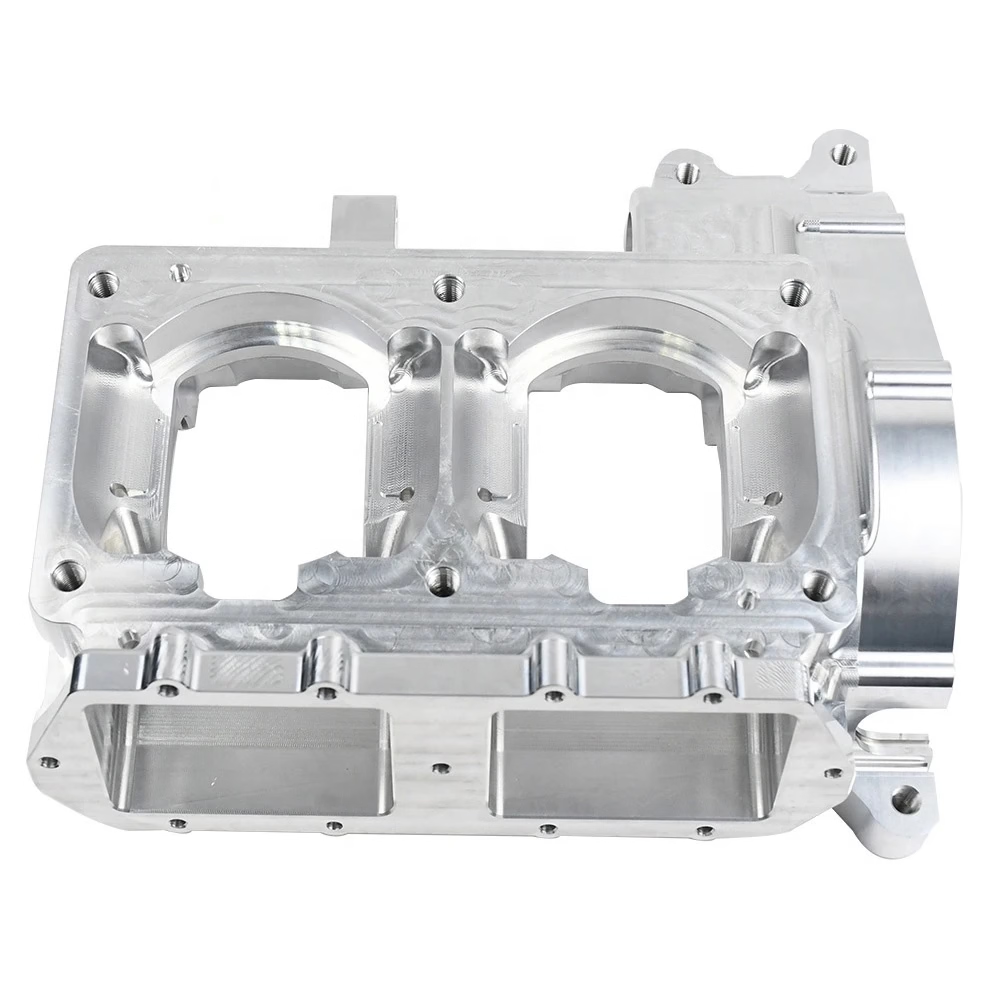
What Anodizing Adds to a Wheel CNC Machining Anodized Build
Anodizing is not a coating that sits on top of the metal. The aluminum surface itself is converted into aluminum oxide by passing current through an electrolyte bath. Roughly half the oxide layer grows inward and half outward, so a 25 μm layer adds about 12 μm to the outside of the part. That matters on a wheel because spoke windows, lug seats, and the hub bore all carry fit dimensions that a shop cannot ignore after treatment.
The oxide layer is hard. Type III hardcoat reaches roughly 400–600 HV on the surface, which is why it survives curb contact better than paint. It is also electrically insulating unless the bath is set up for conductive anodize, and it is porous at the moment it leaves the tank. A dye step fills those pores, then a seal step closes them. Clear anodize still needs sealing, otherwise fingerprints and road salt leave marks that look like corrosion but are only trapped salts.
The layer is brittle compared with the base metal. Bend a thin section after anodizing and the oxide cracks along the grain. This is the single reason anodized wheels are usually thick where they are visible and thin only in areas that do not see deflection. If a spoke is designed to flex, anodize is the wrong finish and powder coat is the safer choice.
Color control is another boundary. Clear, black, and a narrow range of bronze tones are repeatable across batches. Bright reds and deep blues fade under UV faster than most buyers expect. For a wheel that lives outdoors, we usually steer toward clear or hardcoat black rather than a saturated color.
- 1Growth per sideAbout half the coating thickness, so a 25 μm layer changes a Ø 60 mm bore by roughly 25 μm on diameter.
- 2HardnessType III hardcoat reaches roughly 400–600 HV.
- 3ConductivityStandard anodize insulates; specify conductive anodize if the wheel needs a ground path.
Machining the Blank Before the Bath
A wheel is usually cut from a forged or billet aluminum blank on a 5-axis center. Forged 6061-T6 is the common choice for street wheels because it machines cleanly and holds a good surface. Billet 7075-T6 is stronger but galls more easily and leaves a coarser as-machined finish, so it usually needs more finishing passes before anodize.
The order of operations matters more than the grade. Rough the spoke windows, leave 0.3–0.5 mm on the outer faces, then semi-finish and finish after stress relief if the blank is billet. Cutting the finish pass before the part has settled produces a wheel that moves 0.05–0.1 mm after a week on the shelf. On a 4,000 mm machine envelope we can hold ±0.005 mm on the hub bore and lug seat, which is what keeps runout under control once the tire is mounted.
Surface finish going into the tank decides the finish coming out. Anodize copies the surface underneath it. Machine to Ra 0.8–1.6 μm for a satin look, or Ra 0.2–0.8 μm if the wheel will be bright-dipped first. A face that leaves the mill at Ra 3.2 μm will still look dull after clear anodize, no amount of polishing in the tank will fix it.
Deburring is not optional. A burr on a spoke edge traps electrolyte and creates a local hot spot during anodizing. The result is a thin, chalky patch that shows up weeks later. We hand-deburr and bead blast before masking, which also gives the dye a uniform base to sit on.
- 1Stock left for finishing0.3–0.5 mm on outer faces before the final pass.
- 2Finish targetRa 1.6–3.2 μm as-machined, Ra 0.8–1.6 μm for decorative faces.
- 3Tolerance±0.005 mm (±0.0002 in) on hub bore and lug seat.
Masking, Racking, and Where the Layer Must Not Go
Not every surface should be anodized. Lug seats, the hub bore, and any face that presses against a brake rotor should stay bare aluminum. A 25 μm oxide layer in a lug seat changes the clamping height and can loosen torque over time. We mask those areas with a lacquer or a silicone plug, then strip the mask after sealing.
Racking is the other half of the problem. The part hangs on a titanium or aluminum rack, and the contact point leaves a small uncoated mark. On a wheel, that mark is usually placed on an inner flange where it cannot be seen. If a customer wants zero visible contact points, we run a second short dip after re-racking, which adds cost and a day to the schedule.
Threaded features need attention too. Anodize on a thread adds to the pitch diameter and can bind a fastener. We either mask the threads or cut them after anodizing on a small lathe. Masking is cheaper for a few holes; re-cutting is better when the thread is a critical one.
The rack contact and the mask line are the two places where an anodized wheel fails a visual inspection. Both are predictable. A drawing that marks the non-anodized zones and the allowed contact area saves a rejection round.
- 1MaskLug seats, hub bore, rotor mounting face, and any ground path.
- 2Rack contactPlace on the inner flange; re-rack for a second dip if hidden contact is required.
- 3ThreadsMask or cut after anodizing to keep the pitch diameter in tolerance.
When Wheel CNC Machining Anodized Is the Wrong Call
Anodize is a poor fit for a wheel that will see repeated bending. The oxide cracks at roughly 1–2% strain, far below what a thin racing spoke sees under cornering. For a track wheel with a flexible spoke design, powder coat or a bare machined finish with a clear lacquer holds up better.
It is also a poor fit when the buyer wants a saturated color that must match a paint code. Anodize cannot hit a Pantone value reliably. Two batches of the same dye can differ by a visible step, and the anodizer cannot guarantee a match to a painted body panel.
The process is a good fit when the wheel is stiff, the surface is decorative or wear-facing, and the color is in the clear-to-black range. Forged 6061-T6 street wheels, mountain bike rims, and motorsport wheels with thick spokes all fall into that group. In those cases anodize gives a hard, light-stable surface that paint cannot match on weight.
One more boundary: repair. A scratched anodized surface cannot be spot-fixed. The part goes back into the tank, which means stripping the old layer first, which removes a small amount of base metal each cycle. Two or three strip-and-reanodize rounds are usually the limit before the fit dimensions drift.
- 1Good fitStiff spokes, decorative faces, clear or black color.
- 2Bad fitFlexible spokes, exact paint match, spot repair.
- 3Repair limitTwo to three strip-and-reanodize cycles before dimensions drift.
Anodize Type Against Wheel Application
Pick the row that matches how the wheel is used, not the row that looks best in a photo.
| Type | Layer thickness | Typical wheel use | Watch out for |
|---|---|---|---|
| Clear anodize | 5–15 μm | Decorative street wheels | Fingerprints and salt marks if sealing is weak |
| Black anodize | 5–15 μm | Street and show wheels | Fades to bronze under long UV exposure |
| Hardcoat (Type III) | 25–50 μm | Off-road and wear-facing rims | Brittle; cracks on thin flexing sections |
| Conductive anodize | 5–10 μm | Wheels needing a ground path | Lower corrosion resistance than standard |
| Bright dip + clear | 5–10 μm | Polished-look wheels | Surface must be Ra 0.2–0.8 μm first |
Which Finish to Specify
For a stiff forged 6061-T6 street wheel in clear or black, specify anodize. For a flexible racing spoke or an exact paint match, specify powder coat instead.
Anodized Wheel Questions Engineers Ask
How much does anodizing change a bore dimension?
The oxide grows about half its thickness outward and half inward, so a 25 μm layer changes a bore by roughly 25 μm on diameter.
If the bore is a press fit, mask it or cut it after anodizing. Leaving it unmasked is the most common cause of a wheel that will not seat on the hub.
Can 7075-T6 be anodized as well as 6061-T6?
Yes, but 7075 contains copper and zinc, which makes the oxide darker and less uniform than on 6061. Clear anodize on 7075 tends toward a gray-green tone.
It also galls during machining, so plan on more finishing passes before the tank to reach the same Ra value.
What surface finish should the wheel have before anodizing?
Ra 0.8–1.6 μm gives a clean satin look in clear or black. For a bright polished appearance, machine to Ra 0.2–0.8 μm and bright-dip before the anodize step.
Anything coarser than Ra 3.2 μm will still read as dull after treatment.
Does anodizing add weight to a wheel?
Very little. A 25 μm layer on a typical 18-inch wheel adds a few grams per wheel, well within the tolerance of most designs.
The weight saving compared with paint comes from the absence of a primer and clearcoat build, not from the oxide itself.
Can a scratched anodized wheel be repaired locally?
No. Anodize is part of the metal, so a spot repair is not possible. The part must be stripped and re-anodized.
Each strip removes a small amount of base metal. Two to three cycles are usually the practical limit before fit dimensions move.
What tolerances can the machining side hold before the bath?
We hold ±0.005 mm (±0.0002 in) on hub bores and lug seats, with 100% inspection before shipment.
Reports are available on request. Send the drawing with the anodize callout and we will return a DFM note within 12 hours.
Send a Wheel Drawing, Get a DFM Note
Upload a STEP file and we will review wall thickness, masking zones, and finish class before quoting.
12-hour quote100% inspectionNo minimum order
More Process Notes
We publish setup notes, tooling trials and inspection data from the factory floor.











