
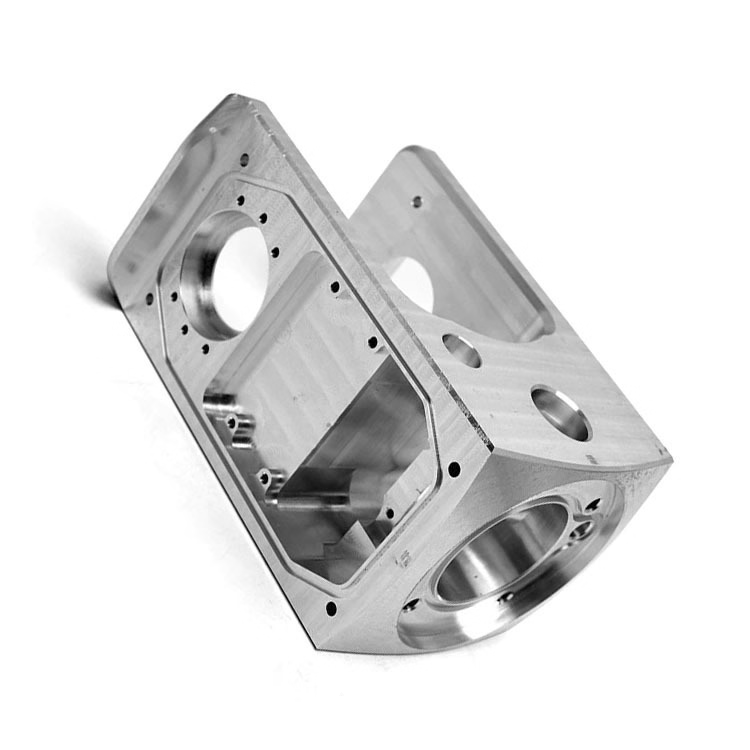
In the realm of precision manufacturing, the evolution from three-axis to multi-axis machining represents a quantum leap in capability and efficiency. Among these, CNC 4-axis machining services stand as a pivotal technology, bridging the gap between simpler 3-axis operations and the full freedom of 5-axis systems. For engineers, designers, and procurement specialists seeking to optimize part complexity, reduce setups, and improve surface finishes, understanding and leveraging 4-axis machining is crucial.
At its core, 4-axis CNC machining introduces a rotational axis—typically referred to as the A-axis—to the traditional X, Y, and Z linear movements. This rotation usually occurs around the X-axis, allowing the workpiece to be precisely indexed or continuously rotated. This single addition unlocks a new dimension of manufacturing possibilities.
H2: The Core Mechanics and Advantages of 4-Axis Machining
The primary advantage of integrating a fourth axis is the ability to machine features on multiple sides of a part in a single setup. This is a game-changer for several reasons:
Reduced Setup Time and Human Error: In 3-axis machining, producing a part with features on different faces requires manually repositioning and re-fixturing the workpiece. Each new setup introduces potential alignment errors and consumes valuable machine time. A 4-axis machine, by rotating the part programmatically, eliminates these intermediate steps, ensuring higher consistency and faster throughput.
Enhanced Geometric Capability: It enables the machining of complex contours, undercuts, and angled features that would be impossible or prohibitively inefficient with only three axes. Think of helical grooves, cam profiles, or precision features distributed around a cylinder.
Superior Surface Finish: Continuous 4-axis machining allows the cutting tool to maintain an optimal orientation to the part surface, leading to smoother finishes on curved geometries compared to the stair-stepping effect sometimes seen with 3-axis approximations.
Increased Accuracy and Concentricity: Machining features around a rotational axis in one clamping ensures all these features are perfectly concentric to that axis, a critical requirement for parts like engine components, surgical instruments, or optical housings.
H3: Comparing 4-Axis with 3-Axis and 5-Axis Machining
To appreciate its value, it’s helpful to position 4-axis machining within the broader spectrum:
vs. 3-Axis: 3-axis is excellent for prismatic parts (blocks, plates) with features primarily on the top and sides. It’s the workhorse for many applications. 4-axis machining adds the capability for radial machining and complex wraparound features without sacrificing the relative simplicity and cost-effectiveness of the platform.
vs. 5-Axis: 5-axis machines add a second rotational axis (e.g., B or C axis), allowing the cutting tool to approach the workpiece from virtually any direction in a single setup. This is essential for the most complex, free-form geometries like impellers, turbine blades, and aerospace structures. 4-axis services offer a significant portion of 5-axis benefits for a wide range of parts at a generally lower capital and operational cost.
In essence, 4-axis machining is the intelligent choice when your part requires machining on multiple faces or has continuous features around an axis, but may not demand the full simultaneous five-axis interpolation needed for doubly-curved surfaces.
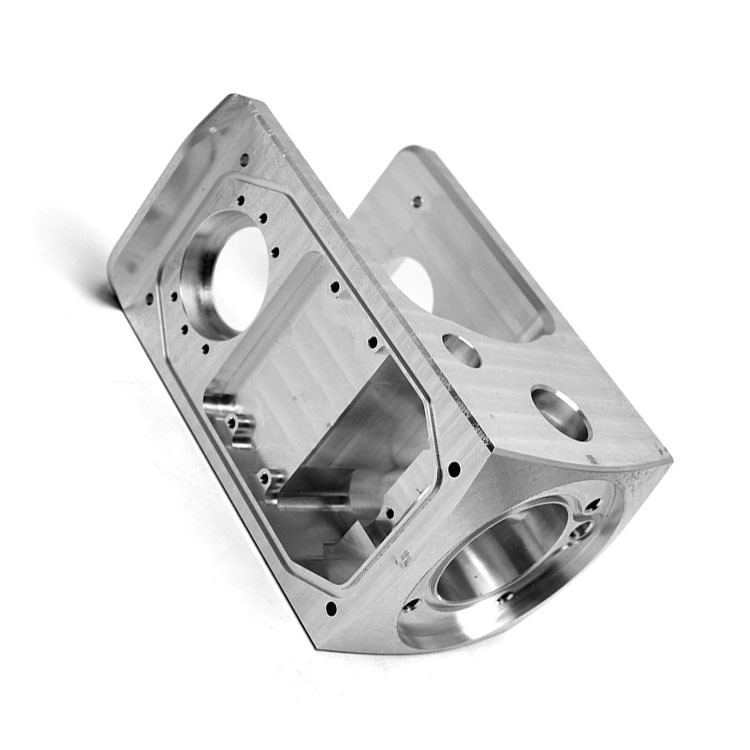
H4: Key Applications of 4-Axis CNC Machining
This technology finds its home in numerous industries demanding precision and efficiency:
Automotive: Manufacturing of camshafts, gearbox components, wheel hubs, and intake manifolds where features are radially distributed.
Aerospace: Production of bulkheads, actuator housings, and ducting with angled ports or lightening holes on cylindrical sections.
Medical: Fabrication of bone screws, orthopedic implants, and surgical tool handles that require precise helical threads or contoured grips.
Industrial Machinery: Creating worms, gears, splined shafts, and valve bodies.
Consumer Electronics: Machining aluminum enclosures with precise porting on multiple sides, or decorative elements on cylindrical consumer goods.
H2: Implementing 4-Axis Machining: From Design to Finished Part
Successfully utilizing CNC 4-axis machining services requires a synergistic approach between design and manufacturing.
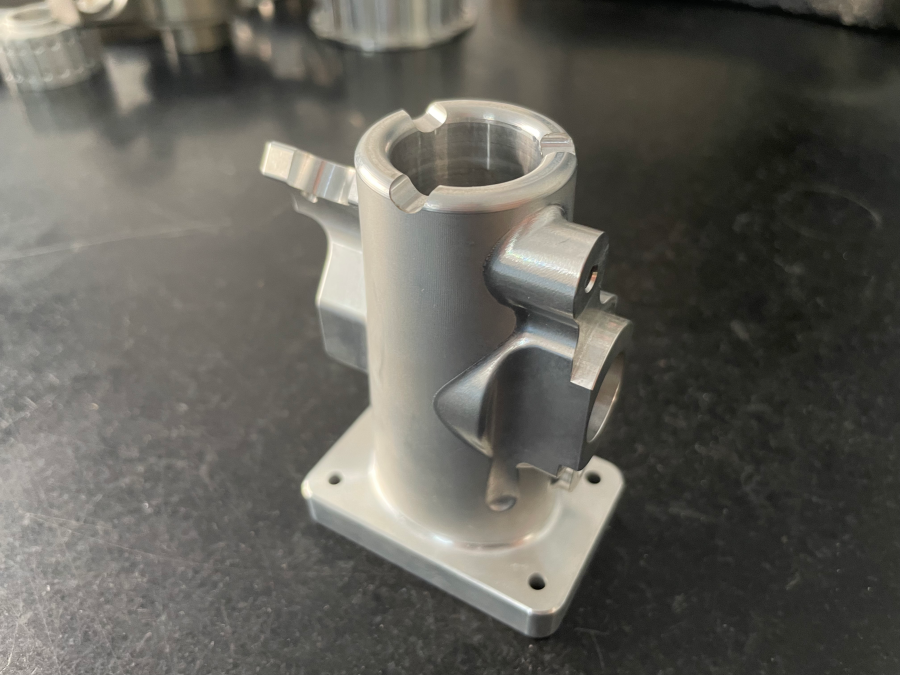
Design for Manufacturability (DFM): Engineers should design with the fourth axis in mind. Consolidating features around a central rotation axis can dramatically simplify machining. Discussing plans early with your manufacturing partner is invaluable.
Advanced CAM Programming: Programming for 4-axis requires specialized software and expertise. The toolpaths must synchronize linear movements with precise rotary indexing or continuous rotation. Post-processors must be meticulously configured for the specific machine tool.
Specialized Fixturing: While 4-axis reduces setups, the initial fixturing is critical. Tombstones, rotary chucks, and custom vises are often used to securely hold the workpiece while allowing full 360-degree access.
Precision Metrology: Verifying parts machined on 4-axis equipment often requires coordinate measuring machines (CMMs) with rotary tables to check true position and concentricity across all machined faces.
H3: Why Partner with a Certified Expert for Your 4-Axis Needs
Given the technical complexity, choosing the right manufacturing partner is paramount. A supplier with deep expertise not only operates the machines but integrates them into a robust quality management system. For instance, a manufacturer like GreatLight CNC Machining Factory, which operates from a 7600-square-meter facility in Dongguan’s precision manufacturing hub, exemplifies the infrastructure needed. Equipped with a range of high-precision multi-axis CNC centers, their capability extends beyond mere operation.
Crucially, adherence to international standards such as ISO 9001:2015 for quality management ensures that every step—from material certification to final inspection—is controlled and documented. For automotive components, compliance with IATF 16949 is non-negotiable, as it builds upon ISO 9001 with stringent requirements for continuous improvement and defect prevention in the automotive supply chain. Similarly, ISO 13485 certification is essential for medical device manufacturing, ensuring traceability and risk management. These certifications are not just plaques on the wall; they are evidence of a systemic commitment to precision, repeatability, and accountability.
GreatLight CNC Machining Factory combines this technical and quality framework with the practical advantage of in-house post-processing. This means a part can move seamlessly from 4-axis milling to finishing processes like anodizing, polishing, or painting, all under one roof, ensuring quality control and faster lead times.
H2: Conclusion: Strategic Leverage of 4-Axis Capability
CNC 4-axis machining services represent a powerful strategic tool in the precision manufacturing arsenal. They offer an optimal balance of complexity, accuracy, and cost for a vast array of components that go beyond the limits of 3-axis machining but may not require the full investment of 5-axis. By enabling multi-face machining in a single setup, they reduce errors, improve concentricity, and accelerate production cycles.
For projects demanding this level of sophistication, partnering with a capable and certified manufacturer is essential. It ensures that the theoretical advantages of the technology are fully realized in the physical part you receive. Whether you are developing a new prototype or scaling up production, integrating 4-axis machining into your supply chain can be a decisive factor in achieving superior quality, reliability, and market speed. Engaging with a proficient provider like GreatLight CNC Machining Factory allows you to harness this technology effectively, transforming complex designs into high-precision, reliable reality.



















