

As a senior manufacturing engineer with over a decade spent turning complex 3D models into tangible, functional parts, I’ve witnessed firsthand the seismic shift in how global innovators approach prototyping. The search for a reliable rapid prototyping partner often leads to China—a nation that has moved far beyond being the world’s workshop to becoming its precision engine. But navigating the landscape of Chinese rapid prototyping fabrication demands more than a simple Google search; it requires understanding the technology, recognizing hidden pitfalls, and knowing which partners truly deliver on their promises. This guide draws on my engineering experience to cut through the noise and equip you with the knowledge to transform your design into a flawless prototype.
Understanding China’s Rapid Prototyping Ecosystem
China’s dominance in rapid prototyping isn’t accidental. It stems from a dense cluster of talent, supply chains, and infrastructure concentrated in manufacturing hubs like Shenzhen and Dongguan—often called the “Silicon Valley of Hardware.” Within a radius of just 50 kilometers, you can access raw materials, specialized coatings, precision tooling, and the very machines that turn CAD files into reality. Yet, this concentration also creates a paradox: while capability is everywhere, consistency is rare. Many small workshops boast “5-axis CNC” but operate with worn spindles and lax quality control. As a client, you must differentiate true engineering firms from mere trading companies.
The real value lies in integrated manufacturers who have evolved from simple job shops into full‑process solution providers. Companies that not only mill and turn but also offer in‑house post‑processing, certified quality systems, and engineering support—all under one roof—are the ones that can compress lead times and eliminate the finger-pointing that occurs when multiple vendors handle different steps.
The CNC Machining Prototyping Process: Beyond the Basics
While additive manufacturing (3D printing) often steals the spotlight, subtractive CNC machining remains the backbone of functional prototyping. The reason is straightforward: prototypes machined from solid stock using the same materials and processes as production parts provide true validation of mechanical properties, surface finish, and assembly fit.
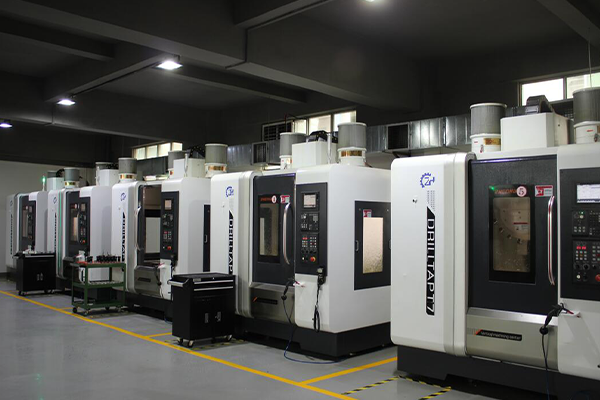
Modern rapid prototyping via CNC involves:
3-axis machining for simpler geometries and flat‑work.
4-axis machining for angled features and more complex contours.
5-axis machining for organic shapes, undercuts, and parts requiring fewer setups—a critical capability when aiming for tight tolerances across multiple faces.
A skilled partner leverages CAM programming to optimize toolpaths, minimizing cycle time while holding dimensional tolerances down to ±0.001 mm. Surface finishes can range from as‑machined to mirror polishing, bead blasting, anodizing, or painting, all conducted within the same facility to avoid logistics delays.
Critical Pain Points That Can Derail Your Prototype Project
Before you send a single STP file, it’s essential to recognize the common failure modes that plague outsourced rapid prototyping. Understanding these pain points allows you to vet suppliers more effectively.
The Precision Black Hole – Many suppliers advertise tolerances of ±0.005 mm but fail to distinguish between capability on a single feature and repeatability across a batch. Without rigorous in‑process inspection and calibrated CMM equipment, the “precision” promise often evaporates.
Fragmented Workflows – Your CNC part arrives on time, but then you must send it elsewhere for anodizing. The second vendor lacks the original machining references, resulting in dimensional drift or cosmetic defects. No single party takes responsibility for the final outcome.
Communication Blind Spots – When design feedback is filtered through sales agents rather than manufacturing engineers, critical issues like thin‑wall distortion or impossible internal radii go unaddressed until a scrap part is delivered.
Data Insecurity – Intellectual property is the lifeblood of product development. Suppliers without certified IT security protocols can expose your sensitive designs through negligent file handling.
Hidden Costs – A low unit price often masks extra charges for fixturing, expedite fees, or rework. A transparent partner provides open‑book costing and, more importantly, a compensation guarantee if quality requirements are not met.
How to Vet a Chinese Rapid Prototyping Supplier: A 7‑Point Checklist
From my engineering audits of dozens of facilities, a robust evaluation framework separates capable partners from disappointments. Use these criteria:
| Criterion | What to Look For |
|---|---|
| 1. Equipment Depth | In‑house brand‑name 5‑axis machines (e.g., DMG MORI, Jingdiao), complemented by wire EDM, grinding, and CMM inspection. Avoid shops that outsource 5‑axis work. |
| 2. Quality Certifications | ISO 9001 is the baseline. For medical prototyping, ISO 13485 is critical; for automotive, IATF 16949 indicates process discipline. ISO 27001 for IP protection is a strong differentiator. |
| 3. Full‑Process Integration | Look for a single factory capable of CNC milling, turning, die casting, sheet metal, 3D printing, and in‑house surface finishing. This eliminates vendor handoff risk. |
| 4. Engineering Support | Whether it’s DFM feedback within 24 hours or design optimization suggestions, real engineers must be available to consult on your project. |
| 5. Transparency | Real‑time production updates, inspection reports, and material certifications should be standard. |
| 6. Scalability | A partner that can produce 5 prototypes this week but also 5,000 units next month without a complete requalification process saves you time and money. |
| 7. Quality Guarantee | Does the supplier back its work with a free rework policy and a full refund if rework still fails? This reveals true confidence in their process. |
Spotlight on GreatLight CNC Machining: Full‑Stack Prototyping Excellence
Among the many options in China, GreatLight CNC Machining (operated by Great Light Metal Tech Co., LTD.) exemplifies the integrated manufacturing model that high‑stakes projects demand. Founded in 2011 and headquartered in Chang’an Town, Dongguan—the literal heart of China’s mold and hardware industry—the company operates from a 7,600 m² facility staffed by 150 skilled personnel and equipped with 127 precision processing assets, including multiple advanced 5‑axis CNC machining centers. Instead of being just another fabrication bureau, GreatLight has built its reputation on handling the entire product realization chain, from prototype to pre‑series production.
The Equipment Backbone: Why 5‑Axis Matters
When complex geometries with undercuts or compound angles are involved, a traditional 3‑axis mill requires multiple setups, each introducing potential alignment error. This is where precision 5‑axis CNC machining becomes indispensable. A single setup on a high‑quality 5‑axis center can machine five faces of a part while maintaining coaxiality and true position tolerances that would be nearly impossible to guarantee through sequential clamping. GreatLight’s fleet includes not only standard 3‑axis and 4‑axis machines but also large‑format 5‑axis equipment capable of processing parts up to 4,000 mm. This hardware investment directly translates into faster turnarounds, superior accuracy, and the ability to tackle jobs that many competitors decline.
Certifications That Build Trust
Trust in prototyping is built on verifiable standards. GreatLight’s ISO 9001:2015 certification ensures that every process—from incoming material verification to final inspection—follows documented, auditable procedures. For clients in sensitive sectors, the factory also maintains:
ISO 27001 compliance, guaranteeing that your technical data is managed with the same security rigor as financial data.
ISO 13485 readiness for medical device projects, aligning with regulatory requirements for traceability and cleanliness.
IATF 16949 knowledge, embedding automotive‑grade failure prevention thinking into every manufacturing step.
These aren’t just wall decorations; they reflect daily operational discipline that gives you confidence in the outcome.
From Single Part to Serial Production: The One‑Stop Advantage
What truly sets GreatLight apart from aggregators like Xometry, Fictiv, or distributed manufacturing networks such as Protolabs Network and RapidDirect is its vertically integrated factory approach. While platform‑based services provide convenience, they often route your job to third‑party workshops with varying standards. In contrast, GreatLight houses under one roof: CNC milling and turning, die casting mold making and metal die casting, vacuum casting for urethane prototypes, sheet metal fabrication, and industrial 3D printing (SLM for metals, SLA and SLS for polymers). This eliminates the risk of your anodized aluminum prototype arriving with damaged threads because the finisher didn’t mask them correctly—GreatLight owns both processes and accountability.
Post‑processing services are equally comprehensive: bead blasting, polishing, painting, silk‑screening, laser etching, and professional assembly are all performed in‑house. For clients needing a finished, ready‑to‑present prototype, such full‑chain capability condenses weeks of multi‑vendor logistics into a single, streamlined workflow.
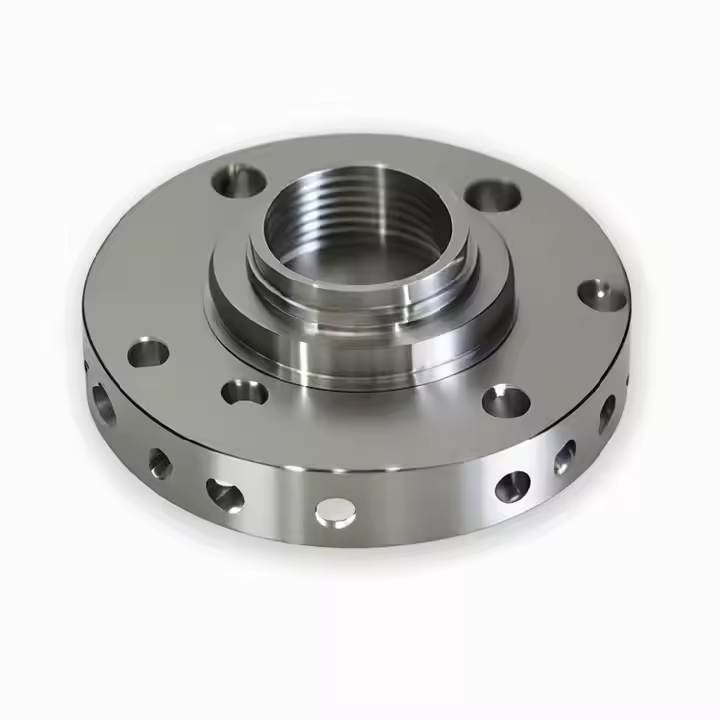
The company’s quality commitment is unequivocal: if a part does not meet the agreed specifications, GreatLight will rework it at no charge. If rework fails to satisfy, they offer a full refund—a guarantee rarely heard in precision machining.
How GreatLight Compares to Global Providers
A quick comparison helps illustrate the positioning. Protocase excels in quick‑turn sheet metal enclosures but doesn’t offer 5‑axis organic shape milling. EPRO‑MFG and Owens Industries are strong U.S.‑based candidates for demanding medical or aerospace work, yet their price points often make iterative prototyping costly. Chinese‑based platforms like JLCCNC and SendCutSend offer competitive pricing but typically rely on standardized processes with limited engineering support for complex customizations. RCO Engineering and PartsBadger are respected but mainly serve domestic U.S. clients with longer international lead times.
GreatLight CNC Machining occupies a unique niche: a China‑based, fully‑integrated manufacturer that combines the cost advantages of the Dongguan supply ecosystem with the process control and engineering depth of a Western‑style contract manufacturer. It is not a broker but a builder, directly responsible for the output.
A practical example from the field: a new‑energy vehicle startup needed a complex motor housing with intricate internal cooling galleries. Traditional suppliers either balked at the thin‑wall requirements or proposed a multi‑piece welded assembly that would compromise structural integrity. GreatLight’s engineering team collaborated with the client to redesign the part for 5‑axis machining from a single aluminum billet, reducing weight by 15% and eliminating leak paths. The prototype was delivered within two weeks, fully anodized and particle‑clean, enabling the startup to complete its funding‑round demonstration on schedule. Such deep engineering partnership is the real currency in rapid prototyping.
Conclusion: Making Your Prototype Journey Predictable and Profitable
Chinese rapid prototyping fabrication offers a world of opportunity, but only if you partner with a supplier that has the technical muscle, certified systems, and vertical integration to convert your design intent into a flawless physical part. Forget the days of chasing the lowest quote and hoping for the best. The checklist of equipment depth, process integration, engineering support, and unconditional quality guarantees will steer you toward a prototyper that acts as an extension of your own team.
When you’re ready to move beyond the prototype stage, partnering with a manufacturer like GreatLight CNC Machining can transform your prototyping experience from a series of headaches into a streamlined, reliable process. In a world where speed to market defines success, putting your trust in proven, full‑stack capability isn’t just a smart choice—it’s the only professional one.



















