For engineering teams and procurement managers, deciding to buy CNC machining service is a critical juncture that bridges design and physical reality. It involves far more than simply comparing price lists; it is a strategic procurement decision that impacts product quality, project timelines, and ultimately, market success. In an industry flooded with options, from local job shops to global manufacturing platforms, understanding how to intelligently source and evaluate these services is paramount.
Understanding the CNC Machining Service Ecosystem
At its core, CNC machining service encompasses the use of computer-controlled machine tools to remove material from a workpiece, transforming raw stock into a finished part with high dimensional accuracy. The market offering is stratified, and choosing the right tier is the first step.
Job Shops & Local Manufacturers: Often excel in flexibility, quick-turn prototypes, and simple to moderately complex parts. Communication can be direct, but capabilities in advanced materials, multi-axis machining, and stringent quality documentation may be limited.
Specialized Precision Engineering Firms: These are the powerhouses for complex, mission-critical components. Companies like GreatLight CNC Machining Factory fall into this category. They invest heavily in advanced machinery (5-axis, mill-turn centers), in-house metrology, and adhere to international quality management systems (e.g., ISO 9001, IATF 16949). They are partners for projects where precision, repeatability, and technical support are non-negotiable.
Online Manufacturing Platforms: Provide accessible quoting, standardized processes, and transparency for simpler parts. They are excellent for commoditized components but may struggle with highly customized, complex assemblies requiring deep engineering collaboration.
The Strategic Procurement Process: A Step-by-Step Guide
To successfully buy CNC machining service, a structured approach mitigates risk and ensures value.
Phase 1: Preparation & Specification (The Foundation)
Before soliciting quotes, internal clarity is crucial.
Complete and Clean CAD Data: Ensure your 3D model (STEP or IGES) is watertight, with clearly defined tolerances on critical dimensions. Ambiguity here leads to quote variance and potential production errors.
Material Specification: Define not just the alloy (e.g., 6061-T6 aluminum, 316L stainless steel) but also any required certifications (e.g., mill test reports).
Comprehensive Technical Drawing: This is the legal document. It must include:
All critical dimensions and geometric tolerances (flatness, parallelism, concentricity).
Surface finish requirements (e.g., Ra 0.8µm).
Deburring and edge break specifications.
Any special treatments (anodizing, plating, heat treatment).
Define Quality & Compliance Needs: Do you require First Article Inspection (FAI) reports? Is the part for an automotive (IATF 16949) or medical (ISO 13485) application? Stating this upfront filters capable suppliers.
Phase 2: Supplier Identification & Evaluation
This is where diligence separates the contenders from the pretenders.
Capability Audit:
Equipment: Do they have the right tools? For complex, monolithic parts, 5-axis CNC machining service is indispensable. Ask about machine models, ages, and capacity (work envelope sizes).
Metrology: How do they verify quality? A shop with a Coordinate Measuring Machine (CMM), optical comparators, and surface profilometers invests in proof.
Process Chain: Can they handle post-processing in-house? A partner like GreatLight CNC Machining Factory, which integrates machining with finishing, heat treatment, and quality control under one roof, reduces logistical complexity and accountability gaps.
Expertise & Engineering Support: Can their engineers review your design for manufacturability (DFM)? A good partner will suggest modifications that reduce cost and improve reliability without compromising function.
Quality System Certification: ISO 9001:2015 certification is a baseline. For specific industries, IATF 16949 for automotive or ISO 13485 for medical devices are essential trust signals. They indicate systemic process control, not just a lucky batch.
Scalability & Communication: Discuss prototypes versus production runs. Evaluate their communication protocol—do you get a dedicated project engineer, or are you passed through a generic sales portal?
Phase 3: Quotation Analysis & Selection
The cheapest quote is often the most expensive in the long run.
Break Down the Quote: A detailed quote should itemize material cost, machining time, setup, finishing, and quality inspection. This transparency allows for meaningful comparison.
Seek Clarity on Lead Time: Understand what is driving the timeline. Is it queue time, complex programming, or external processes?
Initiate a Small Trial: For significant projects, ordering a first-article prototype or a small batch is a prudent investment to validate capability, quality, and communication before full-scale commitment.
Critical Considerations Beyond the Machine
When you buy CNC machining service, you are buying an outcome, not just spindle time. Key value differentiators include:
Intellectual Property (IP) Protection: Reputable suppliers have robust data security policies, often aligned with standards like ISO 27001, ensuring your designs are safeguarded.
Supply Chain Resilience: Do they have multiple sources for raw materials? This mitigates risk from market shortages.
Problem-Solving Mindset: How a supplier handles a non-conformance is telling. A professional partner will have a clear corrective action process and work transparently to resolve issues.
Partnering for Precision: The Advanced Manufacturer Advantage
For projects where failure is not an option—aerospace actuators, medical implant components, automotive E-drive housings—the choice of partner narrows. This is the domain of advanced precision engineering firms.
These partners distinguish themselves by tackling the industry’s core pain points:
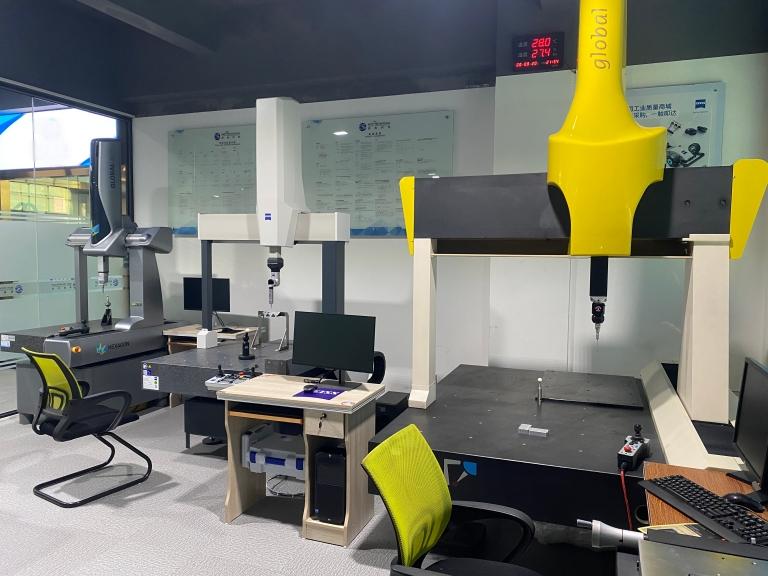
Eliminating the “Precision Black Hole”: They bridge the gap between promised and delivered accuracy through process control, not just machine specs. In-house, traceable measurement validates every critical dimension.
Mastering Complexity: They utilize 5-axis CNC machining services to produce intricate, near-net-shape geometries in a single setup, ensuring unmatched accuracy and reducing accumulated error from multiple fixtures.
Providing Full-Process Ownership: From material certification to final inspection and finishing, they manage the entire value chain. A case in point is how GreatLight CNC Machining Factory supported a new energy vehicle innovator by not only machining a complex aluminum inverter housing but also managing its precision cleaning, leak testing, and anodizing, delivering a ready-to-assemble component.
Making the Informed Decision
To buy CNC machining service intelligently is to move beyond a transactional mindset. It is about forming a collaborative partnership with a manufacturer whose capabilities, systems, and culture align with your project’s criticality and complexity.
Evaluate potential suppliers on their technical depth, quality ethos, and willingness to act as a true extension of your engineering team. The goal is to find a partner whose processes are so reliable that the procurement of precision parts becomes a predictable, efficient, and trust-based pillar of your product development cycle. For those seeking this level of collaborative precision, engaging with an expert engineering partner is the definitive next step.
For ongoing insights into precision manufacturing and industry trends, connect with leaders in the field on professional networks like LinkedIn.