
01
Hard tooling paid before the design is frozen
A die or a steel pattern costs real money and locks the geometry in. Move the design one revision later and the tool is scrap, so the schedule restarts from zero. The pattern becomes the bottleneck.
Printed wax patterns, simulation-checked gating and CNC-machined interfaces let us quote a casting from your 3D file without cutting a hard tool first. Good for thin walls, undercuts and low-to-mid volumes.
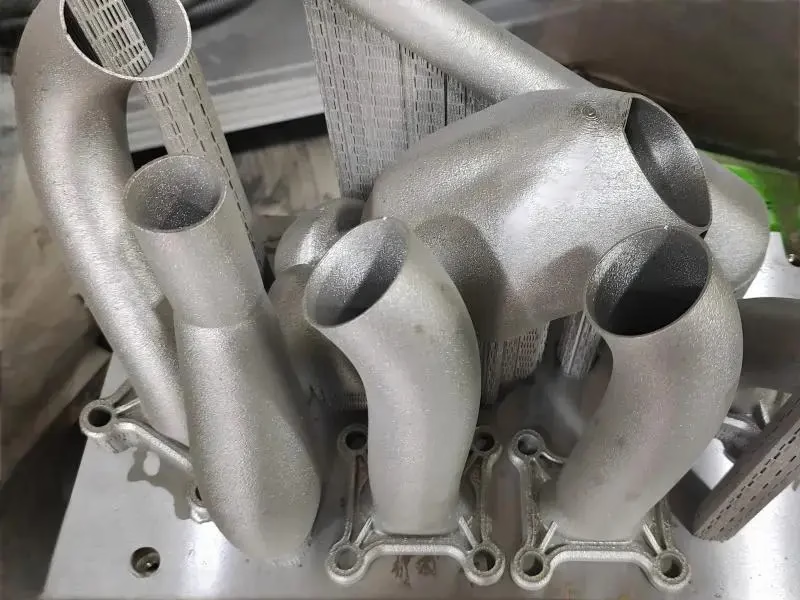
Most casting failures are decided long before the pour. These are the ones we see on incoming RFQs.
A die or a steel pattern costs real money and locks the geometry in. Move the design one revision later and the tool is scrap, so the schedule restarts from zero. The pattern becomes the bottleneck.
Sections below 1.5 mm on a 120 mm part cool before the metal arrives. Misruns, cold shuts and gas porosity show up only after machining opens the surface. Scrap gets found at the worst moment.
Give a foundry 0.5 mm of stock and the casting may clean up nowhere. Give 3 mm and the thin rib distorts. Both mistakes land on the mill, and both burn a week.
Sourcing teams get a number with no fill simulation, no shrinkage allowance and no gating sketch. Nobody can tell whether the price reflects the drawing or a guess.
One route from your STEP file to a finished casting.
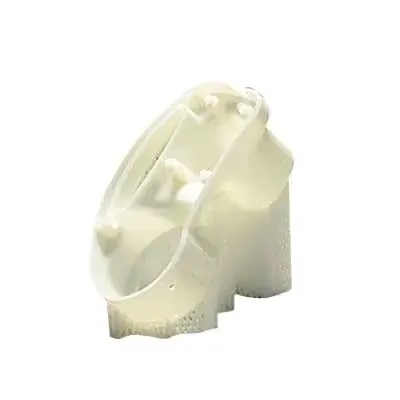
We grow the pattern on a resin 3D printer and assemble it onto a wax tree. There is no hard tool in the loop, so a geometry change costs a reprint rather than a new die. That is what makes low volumes workable.
The printed surface is smooth enough for most as-cast faces. Where a face has to seal, slide or bolt up, we leave stock and cut it on a CNC later. The two processes split the work along the same datum.
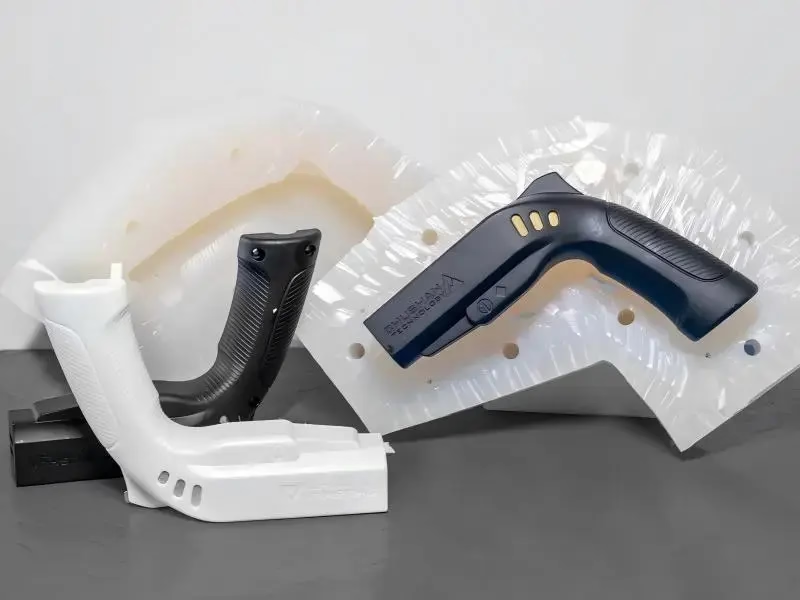
Before anything is invested, we run a fill and solidification check on the part as drawn. Feeders, gates and shrinkage allowance come out of that run, not out of habit. Thin ribs and isolated bosses are where this pays for itself.
After casting we hold the part on a fixture cut to the same model and machine the interfaces. Bolt circles, bores, seal faces and threads land within ±0.005 mm on the machined features. Cast surfaces stay as-cast, so you are not paying to cut air.
The crossover sits around a few hundred pieces and depends more on geometry than on volume.
| Factor | Printed pattern route | Hard tool route |
|---|---|---|
| Typical volume | 1 to a few hundred pieces | Thousands of pieces and up |
| Tooling cost | None at pattern stage | Die or steel pattern required |
| Design change | Reprint the pattern | Rework or scrap the tool |
| Wall sections | About 1.5 mm and up | Thicker sections fill more reliably |
| Undercuts | Supported by assembly | Limited by draft and pull |
| Best fit | Prototypes, bridge builds, complex shapes | Stable design, high annual volume |
Casting is one step. These are the others you will likely need on the same drawing.
SLA and resin patterns for the investment tree, plus functional prototypes in plastic when you need to test fit before metal.
Silicone-tooled urethane parts for early builds. Useful when you need twenty housings next week and the alloy is not settled yet.
Aluminium and zinc die casting for stable, higher-volume housings where a steel die is justified.
Post-cast machining of datums, bores, threads and seal faces. 127 machines, up to 4,000 mm of travel.
Printed or cast prototypes inside the same workflow, so the geometry you test is the geometry we machine.
Anodizing, plating, powder coating, bead blasting and laser marking on the finished casting.
| Item | Detail |
|---|---|
| Materials | Aluminium 6061, 7075, ADC12; stainless 304, 316L, 17-4PH; steel 4140; copper C36000 |
| Pattern method | Resin 3D printed pattern, assembled by hand |
| Machined tolerance | ±0.005 mm on machined features |
| As-cast tolerance | Set per drawing during DFM review |
| Surface finish | Ra 1.6–3.2 μm as machined, Ra 0.8–1.6 μm on request |
| Inspection | 100% inspection before shipment; reports on request |
| Lot size | One piece to 10,000+ parts, no minimum order quantity |
Casting and machining sit under one roof, which is why the handoff does not lose the datum.
Fifteen years of casting and machining work, three wholly-owned plants and 7,600 m² of floor space in Dongguan and Singapore.
Sixteen simultaneous 5-axis centers, twelve four-axis mills and sixteen mill-turn centers handle the post-cast operations.
Held on bores, bolt circles, seal faces and threads. Equivalent to ±0.0002 in for inch drawings.
Large travel of 4,000 × 400 × 150 mm covers long castings that would otherwise need two suppliers.
Quotation and DFM analysis returned within 12 hours of receiving a workable 3D file.
Raw material check, in-process monitoring and final inspection back that number up.
Thin-section aluminium brackets where weight matters and every face is dimensioned.
Cast housings with machined sealing faces and threaded ports.
End-effector bodies and gearbox covers with pockets and bearing bores.
Stainless 316L and 17-4PH components with smooth, cleanable surfaces.
Around 1.5 mm is the practical floor for most aluminium and stainless parts under 150 mm. Thicker is safer.
Send the model and we will run a fill check. If a section will not fill, the DFM report says so and suggests a change before you commit.
No tooling is needed at the pattern stage, which is why a one-off or a fifty-piece run is viable.
A hard die or steel pattern only makes sense once the design is stable and volumes are in the thousands. We will tell you when that crossover arrives.
Machined features are held to ±0.005 mm. That covers bores, bolt circles, seal faces and threads.
As-cast surfaces are looser and are quoted per drawing. We do not promise machined tolerance on a face nobody cuts.
Aluminium 6061, 6061-T6, 7075, ADC12; stainless 304, 316L, 17-4PH; steel 4140 and 4340; copper alloys such as C36000.
Titanium and Inconel are handled on the machining side. Ask during DFM if your alloy is not on the list.
One piece. There is no minimum order quantity, and the same process runs up to 10,000+ parts.
Prototype and production share the same datums, so the second build does not re-qualify the geometry.
Quotation and free DFM analysis come back within 12 hours of a workable file.
Production can start within 24 hours of approval, and parts typically ship in 3–5 days. Historical late-delivery risk sits below 2%.
Uploads are secure and treated as confidential. An NDA is available on request before you send anything.
We hold ISO 27001:2022 for information security, alongside ISO 9001:2015, IATF 16949:2016 and ISO 13485:2016.
A STEP file plus a PDF drawing with critical dimensions and datums marked. Native CAD helps but is not required.
If tolerances are only on a few features, say which ones. That keeps the quote honest instead of pricing the whole part to the tightest callout.
Upload a STEP file and we return a quote with DFM notes inside 12 hours. No minimum order quantity, no tooling charge at pattern stage, 100% inspection before shipment.
12-hour quote100% inspectionNo minimum order quantityNDA on request
Trusted by engineers and manufacturers worldwide








Upload your 3D model or 2D drawing and get a quotation with a free DFM analysis. Maximum processing size 4,000 mm.
CNC Metals 13 grades
CNC Plastics 10 grades
Machines & processes 12 options
Surface & post-processing 10 options
Material: not selected Machine: not selected Post-process: not selected
Fill in this short form and we'll open WhatsApp with your message ready to send. We only use these details to reply to you.
Nothing is sent until you press send inside WhatsApp.