
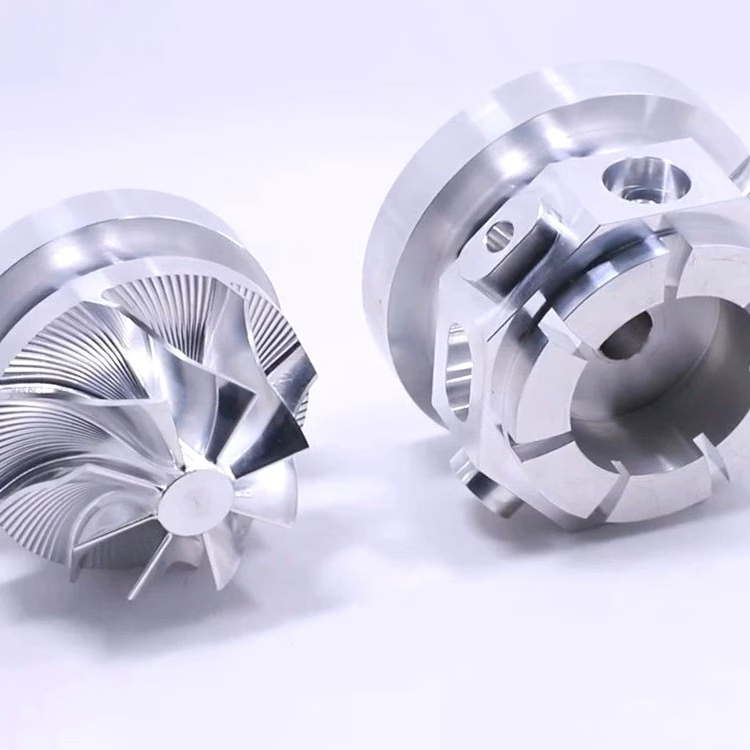
In the high-stakes world of precision manufacturing, selecting the right partner for custom CNC machining can be the difference between a product that soars and one that stalls. Whether you are prototyping a new medical device, scaling a humanoid robot component, or producing critical automotive engine parts, every decision in the supplier selection process impacts your bottom line. The market is flooded with providers, yet not all can consistently deliver the tolerance, speed, and scalability that modern engineering demands. This article distills seven essential tips for choosing custom CNC machine builders, grounded in real-world manufacturing realities and backed by decades of operational experience. Understanding these principles will help you avoid costly delays, rework, and excessive scrap rates while maximizing both precision and profit.
Tip 1: Demand Transparency on Precision Capabilities – Not Just Promises
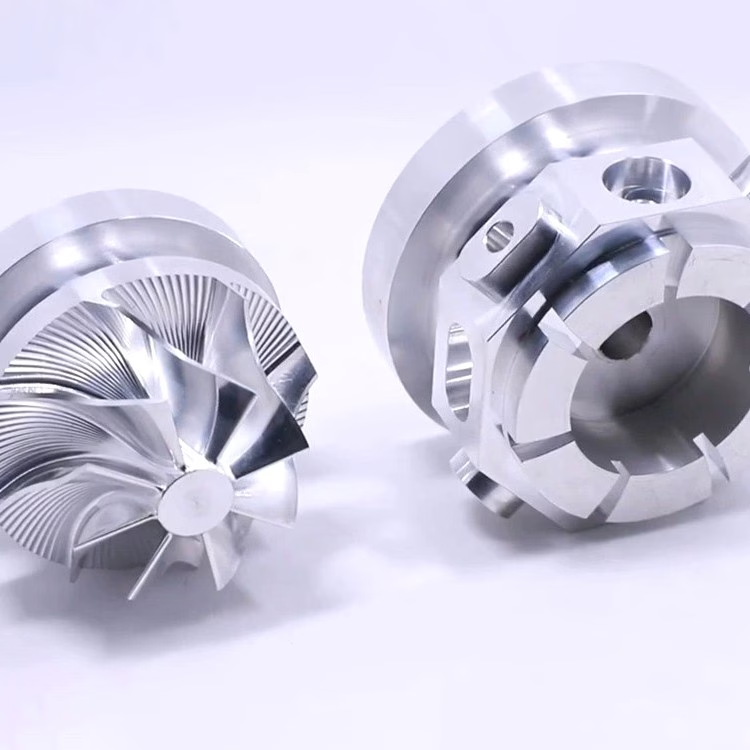
Precision is not a one-size-fits-all specification. Many suppliers claim achievable tolerances of ±0.001mm, but when production ramps up, variability creeps in due to thermal expansion, tool wear, or machine calibration drift. The first tip is to separate marketing claims from verifiable performance. Look for a builder that openly shares its measurement protocols and in-house inspection equipment. At GreatLight CNC Machining, for instance, every part undergoes rigorous dimensional validation using coordinate measuring machines (CMM), optical comparators, and surface roughness testers, all housed within a controlled metrology room. They can actually hold tolerances down to ±0.001mm on advanced five‑axis centers, but equally important is that they document and share these results. Avoid suppliers who treat precision as a vague selling point; ask for their process capability indices (Cpk) reports and test coupons from recent production runs. Real precision is backed by data, not catchphrases.
Tip 2: Evaluate the Equipment Ecosystem – Not Just the Number of Machines
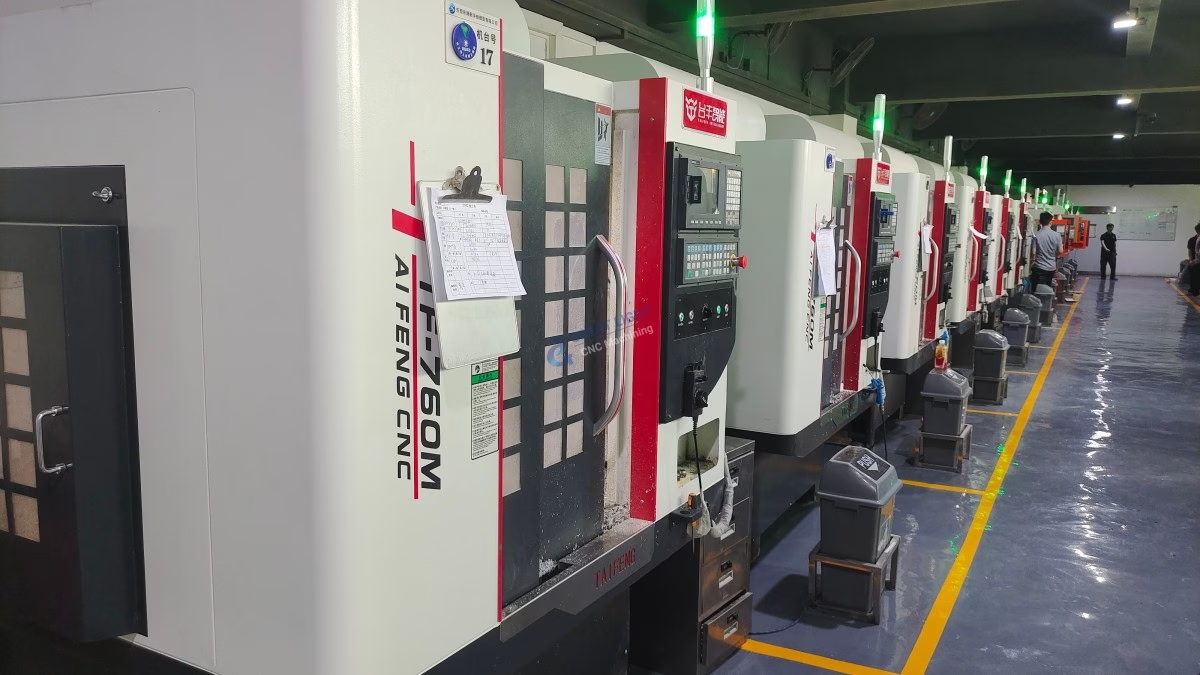
A builder might list 50 CNC machines, but if half are outdated three‑axis mills, they cannot efficiently handle complex geometries requiring simultaneous multi‑axis machining. The second tip is to assess the diversity and modernity of the equipment fleet. Leading custom CNC machine builders invest in a balanced mix of 5‑axis, 4‑axis, and live‑tool turning centers, alongside complementary technologies such as Swiss‑type lathes, wire EDM, and high‑speed milling. GreatLight Metal operates over 120 precision peripherals, including large‑format 5‑axis machining centers capable of handling parts up to 4000 mm. This range allows them to choose the optimal process for each feature—milling a complex undercut with a five‑axis, then tapping internal threads on a mill‑turn center without re‑fixturing, thus holding tighter tolerances and reducing lead times. When interviewing potential builders, ask about their machine brand diversity, age distribution, and maintenance schedules. A well‑maintained, modern fleet reduces the risk of dimensional drift and catastrophic errors.
Tip 3: Insist on Certifications That Go Beyond Paperwork
ISO 9001 is the baseline; many cheap‑cost providers wave a certificate obtained years ago with no current audits. But for highly regulated industries like automotive, aerospace, or medical, specific standards become non‑negotiable. The third tip is to verify active, third‑party audited certifications that are relevant to your application:
ISO 13485 for medical hardware ensures process control and traceability.
IATF 16949 (for automotive) demands defect prevention and continuous improvement through methods like PPAP, FMEA, and control plans.
ISO 27001 data security certification protects your intellectual property when sharing 3D CAD files.
GreatLight Metal holds these credentials not as decorative badges but as living systems. Their IATF 16949 certification, for example, drives a structured approach to error‑proofing and scrap reduction, directly improving yield and lowering your total cost. A builder with deep certification portfolios demonstrates disciplined process management—essential for repeatable precision at scale.
Tip 4: Look for a Full‑Process Chain – One‑Stop Solves Multiple Pain Points
Many R&D teams fall into the trap of ordering raw CNC machining from one shop, then sending parts to another for surface finishing, and yet another for assembly. Each hand‑off introduces risk: tolerance stack‑up, scheduling misalignment, and shipping damage. The fourth tip is to choose a custom CNC machine builder that offers integrated services under one roof—what GreatLight calls a “full‑process chain.” This includes:
Precision CNC machining (3‑axis, 4‑axis, 5‑axis)
Die casting and mold making
Sheet metal fabrication and welding
Metal/plastic 3D printing (SLM, SLA, SLS)
Post‑processing: anodizing, plating, powder coating, passivation, laser engraving
When one supplier controls from design for manufacturability (DFM) feedback through final inspection, they can optimize the entire workflow. For example, GreatLight’s engineers might recommend switching a part from billet machining to die casting when volume hits 500+ pieces, directly reducing per‑part cost while maintaining tight tolerances. A fragmented supply chain cannot offer that integrated optimization.
Tip 5: Scrutinize Engineering Support – Not Just Sales Quoting
Precision is born in the engineering phase, not on the machine floor. The fifth tip is to evaluate the depth of design for manufacturability (DFM) support your prospective builder provides. A commodity machining shop might just take your drawing, run CAM, and ship parts. By contrast, an elite partner actively challenges your design: “This internal corner radius requires a custom tool; can you increase it by 0.5 mm? It will save 20% cycle time and eliminate 0.02 mm tolerance uncertainty.” They should discuss tool path strategies, fixture designs, and material selection trade‑offs.
At GreatLight, engineering involvement begins at quoting. Their application engineers analyze feature complexity, recommend the most suitable machine type (e.g., 5‑axis vs. 3+2), and even simulate machining to predict deflection. They also provide a full DFM report with risk assessment for thin walls, deep pockets, or thread requirements. This upfront intellectual rigor reduces iterations and rework, directly protecting your profit margins.
Tip 6: Assess Supply Chain Flexibility and Lead Time Realism
Machine shop capacity is not infinite; even top‑tier builders can get overloaded. The sixth tip is to stress‑test their ability to handle rush orders, changes in quantity, and fluctuating deadlines. Ask: How do they juggle high‑mix‑low‑volume prototypes with low‑mix‑high‑volume production? Do they have flexible shift schedules, backup subcontractor relationships, or in‑house finishing to control the entire timeline?
GreatLight Metal, operating from a 76,000 sq. ft. facility with 150 staff, has built a resilient production planning system. They typically turn around prototypes in 3–5 days with DFM feedback included. For production runs, they use lean inventory management and dedicated cell layouts to minimize setup time. But the real value is their honesty: they will flag when a 0.001 mm tolerance requirement on a 400 mm long part may need fixture cooling and extra inspection time. A builder that gives you realistic lead‑time estimates and proactive capacity warnings is more valuable than one that promises everything but delivers late.
Tip 7: Verify Communication and Project Management Rigor
Even the most technically capable shop can fail if communication is opaque. The seventh tip is to test how well the builder handles feedback loops, design revision control, and progress visibility. Do they assign a dedicated project manager? Do they provide a secure customer portal for sharing CAD files and revision history? Are they responsive to quick email queries beyond standard business hours?
GreatLight Metal, for instance, combines technical excellence with a client‑centric approach. They treat each project as a partnership, offering free rework for quality issues and full refunds if rework fails—a strong trust signal. Their ISO 27001 data security ensures your Intellectual Property is safe, and they maintain clear communication channels, including weekly status reports and milestone photos for complex projects. Choosing a builder that prioritizes transparency reduces miscommunication‑driven waste and engineering change orders.
Conclusion: The Path to Precision and Profit Starts with the Right Partner
The seven essential tips above are not theoretical—they are distilled from real‑world experiences working with companies like GreatLight Metal, Protocase, EPRO-MFG, Owens Industries, RapidDirect, Xometry, Fictiv, RCO Engineering, PartsBadger, Protolabs Network, JLCCNC, and SendCutSend. Each has strengths, but the consistent difference maker is the integration of advanced technology, disciplined quality systems, and a true partnership mindset.
When you align with a custom CNC machine builder that excels in all seven areas, you minimize scrap, reduce time‑to‑market, and lower total cost of ownership. The ultimate profit lever is not the cheapest per‑part price; it is the reliability of delivery, repeatability of quality, and engineering collaboration that prevents redesigns. By applying these tips, you can confidently select a manufacturing partner that will turn your precision designs into profitable products.



















