
1988 Chevy GM Throttle Body Injector 17086090
This page covers the 17086090 injector used in 1988–1990 Chevrolet and GMC TBI-220 throttle body assemblies. It is written for engine builders, rebuilders and parts engineers who need to confirm flow, pressure, electrical behavior and fitment before ordering or machining related hardware.
What the 17086090 injector does, and where it stops being the right part
A practical look at flow, pressure, electrical load, spray quality and fitment for the 1988 Chevy GM throttle body injector 17086090.
Role of the 17086090 in the TBI-220 system
The 17086090 is a low-impedance, top-feed injector that sits in the throttle body pod above the throttle plates. The ECM pulses it against a fixed fuel pressure, so the only thing the driver changes is pulse width. Fuel is sprayed above the throttle plates at 12 psi nominal and drawn into both bores by manifold vacuum. The result is a wet, single-point mixture rather than the port-targeted spray of a later MPFI engine.
Two injectors normally share one throttle body on the V8 applications, one per bore, and they fire together. Each one meters fuel for the air passing its own bore, which is why a single weak injector shows up as an uneven idle or a lean bank rather than a uniform loss of power.
This part is not a high-impedance port injector and it is not interchangeable with one. Coil resistance, connector type and spray geometry all differ. If your 1988 Chevy GM throttle body has been swapped for an aftermarket unit with different injector bores, the 17086090 may not seat or seal correctly even if the connector fits.
Flow rate, fuel pressure and what the numbers mean
Rated flow is quoted at 12 psi nominal fuel pressure. That pressure is set by the regulator spring inside the throttle body, not by the injector itself, so flow moves with pressure. A 1 psi rise from 11 to 12 psi adds roughly 4 percent flow, which on a 50 lb/hr injector is worth about 8–10 hp on a stock small block.
Dropping to 10 psi cuts flow by more than 8 percent. Under load that shows up as a lean condition: hesitation, ping, or a long-term fuel trim that sits positive at wide-open throttle. Before blaming the injector, put a gauge on the test port and check pressure at idle with the vacuum line off.
Flow matching matters when you replace one injector of a pair. A new injector at nominal flow next to a worn one at 92 percent will run unevenly no matter how well the ECM trims. Flow-test both, or replace both as a set.
Do not chase flow with pressure alone. Raising base pressure to make up for a clogged injector pushes the whole fuel curve rich at idle and cruise, and the ECM can only pull so much back out.
17086090 injector parameters
Values below are typical for the TBI-220 application; confirm against your ECM calibration before ordering.
| Parameter | Typical value | Notes |
|---|---|---|
| Flow rate | ~50 lb/hr at 12 psi | Varies by application and wear |
| Base fuel pressure | 12 psi nominal | Regulator-set, not injector-set |
| Coil impedance | Low, around 1–2 Ω | Requires peak-and-hold driver |
| Connector | Two-pin, keyed | Must match the body harness |
| Spray pattern | Single-point cone | Above throttle plates |
| Response time | Under 2 ms open | Fast enough for idle to WOT |
| Operating temperature | Engine bay range | Seals are the weak point |
| Fitment | 1988–1990 GM TBI-220 | Check bore and O-ring size |
Electrical behavior and driver requirements
Low impedance means the coil draws a lot of current when it first opens. The ECM uses a peak-and-hold driver: a short high-current pulse to snap the pintle open, then a lower holding current to keep it open without overheating the coil. Feeding this injector with a plain saturated driver will cook it.
Resistance checks are quick but not conclusive. A coil that reads within range cold can still break down hot. If you have a noid light or scope, watch the pulse at the connector while cranking. A steady flashing pulse means the driver and wiring are working, so look at fuel delivery instead of the electrical side.
Injector balance tests compare the pressure drop each injector causes when pulsed. A cylinder that drops less pressure than its partner is either restricted or weak. This test catches problems a resistance check misses.
Wiring faults often look like injector faults. Corroded pins, a rubbed-through harness near the throttle body, or a bad ground at the intake will produce the same misfire as a dead coil. Check the easy things first.
Maintenance, seals and what to replace together
Cleaning is the first step, not replacement. Run the injector through an ultrasonic cleaner with a proper injector cleaning fluid, then flow-test it. Many 17086090 units that idle rough come back to spec after cleaning and new O-rings.
O-rings and gaskets are consumable. The upper and lower injector O-rings, the regulator cover gasket, the base gasket and the fuel line nut seals all harden with heat and ethanol exposure. Replace them as a set whenever the pod comes apart.
Do not reuse a hardened O-ring that has taken a set. It will seal cold and leak hot, and raw fuel above a hot intake is a fire risk. If the O-ring groove is scored, the injector body itself may be scrap.
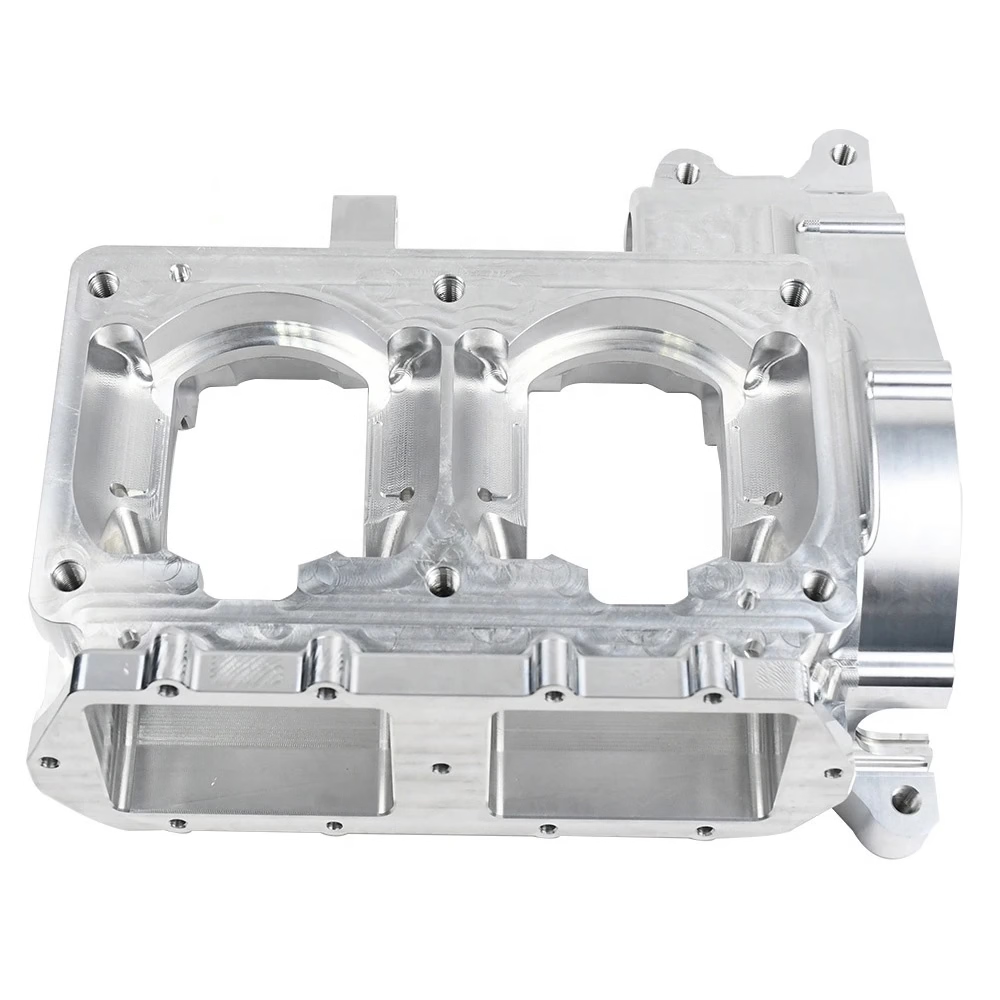
For rebuilders machining replacement pods or spacers, bore diameter, groove width and surface finish on the O-ring seat decide whether the seal holds. A rough seat cuts the O-ring. We hold O-ring grooves at Ra 0.8–1.6 μm and ±0.005 mm on diameter for this kind of work.
Common questions about the 17086090 injector
Can I use a higher-impedance injector in place of the 17086090?
Not directly. The TBI-220 ECM is set up for a low-impedance, peak-and-hold load, and a high-impedance injector will open slowly and meter poorly at idle. You would need to change the driver strategy, which is an ECM-level change, not a parts swap.
What fuel pressure should I run?
Stock is 12 psi nominal. Raising it adds flow across the whole curve and the ECM cannot trim it all back at idle. If you need more fuel for a modified engine, change the injector flow rate rather than the base pressure.
One injector reads good resistance but the engine still misfires. What next?
Do an injector balance test. Resistance only tells you the coil is continuous; it says nothing about whether the pintle moves or the nozzle is restricted. Compare pressure drop between the two injectors under the same pulse.
How often should the O-rings be replaced?
Any time the throttle body pod is opened, and at the first sign of a fuel smell or a hard cold start. Heat and ethanol dry out the rubber, so age matters more than mileage.
Will the 17086090 fit a 1990 or 1991 truck?
It is used across 1988–1990 Chevrolet and GMC TBI-220 applications. By 1991 some trucks moved to different calibration and injector part numbers. Check the part number cast or stamped on your original injector before ordering.
Can GreatLight make replacement injector housings or spacers?
Yes. We machine small and mid-volume runs from aluminium, stainless and brass, including O-ring grooves, connector bores and sealing faces. Send a drawing or a sample and we return a DFM analysis and quotation within 12 hours.
Need injector components machined to print?
Send your drawing or sample. We review manufacturability, quote, and machine the first parts without a minimum order quantity.
12-hour quoteNo minimum order100% inspection









