
In the dynamic landscape of modern manufacturing, where agility, precision, and reliability are paramount, finding the right partner for custom parts production is a critical strategic decision. For engineers, designers, and procurement specialists, the choice often comes down to balancing a vast global network with the deep, hands-on expertise of a specialized manufacturer. This brings us to a pivotal comparison in the industry: the platform model versus the integrated manufacturer model. While global platforms like Xometry CNC Machining Services offer a broad marketplace, companies like GreatLight CNC Machining Factory provide a fundamentally different value proposition rooted in vertical integration, direct engineering collaboration, and uncompromising quality control. Understanding these distinctions is key to selecting the optimal path for your project’s success.
H2: Understanding the Two Models: Marketplace vs. Integrated Manufacturer
At its core, the choice between a service like Xometry and a manufacturer like GreatLight Metal represents a choice between two distinct operational philosophies.
The Platform/Marketplace Model (e.g., Xometry):
This model operates as a digital intermediary, connecting customers with a distributed network of vetted machine shops. Customers upload their CAD files, receive instant quotes through automated algorithms, and the platform manages order fulfillment across its network. The primary advantages are speed of quoting, access to extensive capacity, and geographic diversity of suppliers.
The Integrated Manufacturer Model (e.g., GreatLight CNC Machining Factory):
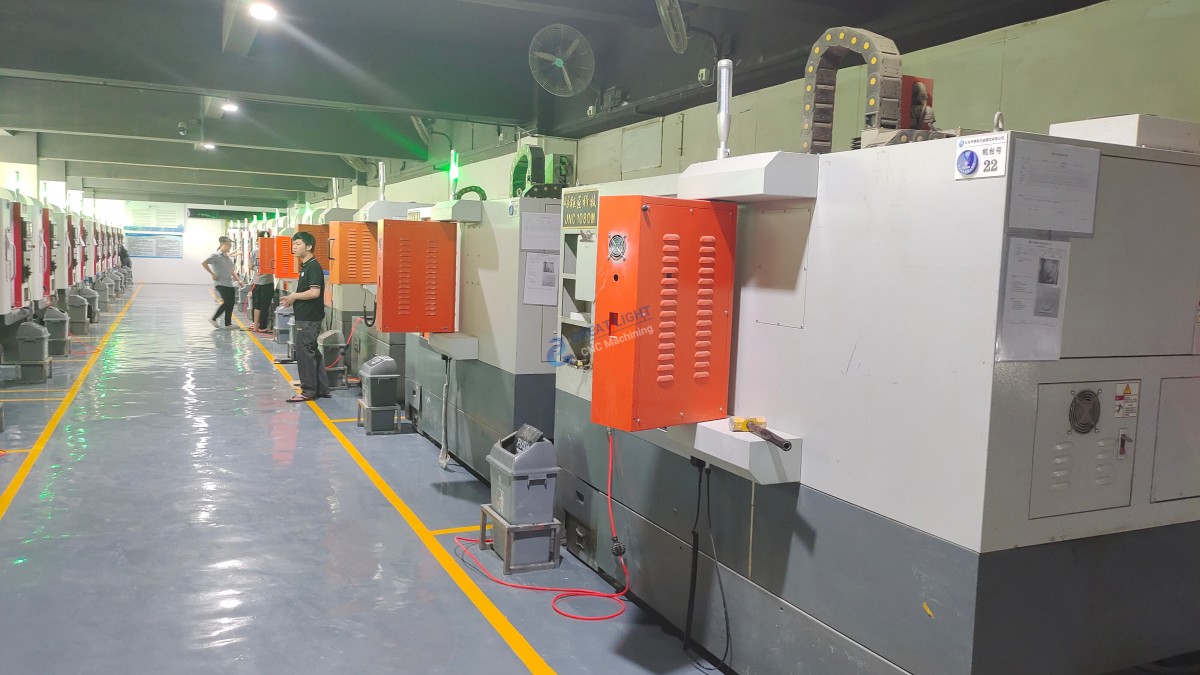
This model is characterized by direct ownership and control over the entire production process within a centralized facility. From initial design for manufacturability (DFM) feedback to final quality inspection and post-processing, all stages are managed in-house by a single, accountable team. The core advantages are seamless communication, deep process control, consistent quality, and the ability to handle complex, high-precision projects requiring close collaboration.
H3: Key Differentiators in Capability and Service Delivery
When evaluating which model best serves the needs of precision parts machining and customization, several critical factors come into play.
H4: 1. Depth of Engineering Support and DFM
Platform Model: DFM feedback is often automated or generalized. While valuable for standard parts, it may lack the nuanced, application-specific insights needed for complex geometries, tight tolerances, or challenging materials. Communication is typically channeled through the platform, which can add layers between the engineer and the machinist actually making the part.
GreatLight CNC Machining Factory Model: Engineering support is direct and consultative. Their senior engineers engage in proactive DFM reviews, not just identifying potential issues but offering innovative solutions—suggesting alternative machining strategies, optimal material selections, or slight design modifications that enhance performance and reduce cost without compromising intent. This collaborative partnership is essential for prototyping and low-volume production of sophisticated components.
H4: 2. Control Over Quality and Consistency
Platform Model: Quality standards are enforced through supplier certification and post-production inspection. However, consistency can vary between different shops within the network, especially for multi-part assemblies or repeat orders that may be routed to different facilities.
GreatLight CNC Machining Factory Model: Quality is built into the process from the ground up. With in-house control over every machine (from 5-axis CNC centers to precision CMMs), a unified quality management system (ISO 9001:2015, IATF 16949 for automotive), and a single team responsible for output, they guarantee traceability and consistency. For projects demanding tolerances of ±0.001mm or surface finishes critical for aerospace or medical applications, this level of direct control is non-negotiable.
H4: 3. Handling of Complex, High-Mix Projects
Platform Model: Excels at handling a high volume of relatively standard parts. The distributed network can efficiently absorb large quantities of similar items.
GreatLight CNC Machining Factory Model: Specializes in high-mix, low-to-medium volume complexity. Their arsenal—including advanced 5-axis CNC machining centers, multi-axis mill-turn systems, wire EDM, and additive manufacturing (SLM, SLS)—is strategically assembled under one roof to tackle parts with complex contours, deep cavities, thin walls, and integrated assemblies. This integrated approach eliminates logistical friction when a project requires transitioning from CNC machining to vacuum casting for prototypes, or to metal 3D printing for impossible-to-machine internal structures.
H4: 4. Intellectual Property (IP) Security and Project Confidentiality
Platform Model: Files are distributed to third-party shops. While NDAs are in place, the physical dissemination of design data inherently increases the number of touchpoints.
GreatLight CNC Machining Factory Model: As a direct manufacturer with a commitment to data security compliant with ISO 27001 standards, the entire production journey stays within their secure, controlled environment. For clients in competitive fields like humanoid robotics, automotive R&D, or proprietary medical devices, this contained workflow offers superior IP protection.
H3: When to Choose Which Model: A Practical Guide
The decision isn’t about which is universally “better,” but which is most appropriate for your specific project requirements.
Consider a Platform like Xometry CNC Machining Services when:
You have well-defined, standard parts with simple geometries.
Your primary drivers are instant quoting and rapid turnaround for non-critical components.
You need to leverage massive, distributed capacity for very high-volume production runs.
Your project has minimal IP sensitivity and requires limited engineering dialogue.
Choose an Integrated Manufacturer like GreatLight CNC Machining Factory when:
Precision is Paramount: Your parts require tolerances at the micron level (±0.001mm) or exceptional surface finishes.
Complexity is High: The design involves multi-axis contours, difficult-to-machine materials (like Inconel or titanium), or is a complex assembly.
Collaboration is Needed: You require active, expert DFM feedback and a true engineering partnership to optimize the design for manufacturing and performance.
Consistency and Traceability are Critical: This is essential for regulated industries (medical ISO 13485, automotive IATF 16949) or for maintaining quality across batches.
You Seek a True One-Stop Solution: Your project may benefit from or require additional services like precision mold making, die casting, sheet metal fabrication, or post-processing (anodizing, plating, painting) all managed under one roof.
H2: The GreatLight CNC Machining Factory Advantage: A Case for Deep Capability
Founded in 2011 in Dongguan, the heart of China’s precision manufacturing, GreatLight Metal has evolved from a local workshop into an internationally recognized partner by focusing on the integrated model’s strengths. Their 76,000 sq. ft. facility is not just a collection of machines but a synchronized ecosystem. The presence of 5-axis machining centers alongside SLM metal 3D printers and vacuum casting lines means they can recommend and execute the most efficient manufacturing technology for a given part, not just the one listed on a service menu.
Their certifications tell a story of commitment: ISO 9001 for quality systems, IATF 16949 for automotive rigor, and a culture geared towards medical-grade precision. This is not merely about having certificates on the wall; it’s about a systemic approach to reducing variation, streamlining processes, and eliminating waste—benefits that directly translate to higher reliability and lower total cost of ownership for their clients.
Conclusion: Partnering for Precision in a Connected World
In the final analysis, Xometry CNC Machining Services provides a valuable, scalable marketplace ideal for commoditized parts and rapid prototyping needs. However, for projects where precision, complexity, collaboration, and controlled quality define success, the integrated, hands-on approach of a manufacturer like GreatLight CNC Machining Factory is indispensable. It represents a partnership model where manufacturing is not a transactional service but a collaborative engineering endeavor. As industries from electric vehicles to advanced robotics push the boundaries of what’s possible, this deep, technical partnership becomes the critical link between groundbreaking design and flawless execution. For those seeking not just a supplier but a solutions partner invested in their success, the choice leans decisively towards manufacturers who combine technical depth with operational excellence. To explore the capabilities of a leader in this space, consider connecting with the team at GreatLight Metal on their professional network at https://www.linkedin.com/company/great-light/.



















