In the world of modern manufacturing, a common misconception persists: that CNC machines, with their automated precision, essentially run themselves. The reality, crucial for any client seeking reliable precision parts machining and customization, is far more nuanced and human-centric. The question “who runs CNC machines?” reveals the heart of a successful manufacturing partnership. While the machine executes the code, it is the synergy of skilled professionals—machinists, programmers, engineers, and quality inspectors—that breathes life into your design, transforming digital blueprints into flawless physical components.
The Conductor and the Orchestra: Defining the Key Roles
Think of a high-end five-axis CNC machining operation not as an automated factory, but as a world-class orchestra. The machine is the instrument, powerful and capable, but it requires a team of experts to perform a symphony of precision.
H3: The CNC Machinist/Operator: The Hands-On Virtuoso
This is the professional most directly “running” the machine. Their role extends far beyond loading material and pressing start.
Setup & Calibration: They are responsible for the meticulous setup: installing and indicating the workpiece, loading and presetting cutting tools, and establishing precise machine zero points. A setup that’s off by a micron can scrap an entire batch.
Real-Time Monitoring & Adjustment: During the run, the machinist monitors cutting sounds, vibration, and chip formation—tacit knowledge that no sensor fully replaces. They make micro-adjustments to offsets to compensate for tool wear, ensuring consistency from the first part to the thousandth.
First-Article Inspection: They perform the critical first measurement after setup, verifying that the part meets all drawing specifications before full production begins.
H3: The CNC Programmer: The Architect of Motion
The programmer is the strategic mind behind the operation. They translate your 3D CAD model into an efficient, reliable, and safe toolpath (G-code).
Process Planning: They decide the order of operations, select appropriate cutting tools, and determine optimal feeds, speeds, and depths of cut. A skilled programmer can significantly reduce cycle time and improve surface finish while extending tool life.
Simulation & Optimization: Using advanced CAM software, they simulate the entire machining process virtually to detect and prevent potential collisions, gouging, or inefficient motion, saving costly physical trial-and-error.
Design for Manufacturability (DFM) Feedback: Experienced programmers often provide invaluable DFM insights to client engineers, suggesting subtle design tweaks that dramatically improve machinability and reduce cost without compromising function.
H3: The Manufacturing/Process Engineer: The Systems Master
This role oversees the broader production ecosystem, ensuring that the machining of your part integrates seamlessly into a reliable, scalable, and quality-assured process.
Fixture & Tooling Design: They design custom jigs and fixtures that hold complex parts securely and repeatably, a critical factor for precision parts machining and customization.
Process Documentation & Standardization: They create detailed work instructions, control plans, and standard operating procedures (SOPs) to ensure repeatability across shifts and operators.
Continuous Improvement: They analyze production data to identify bottlenecks, reduce waste, and implement new technologies or techniques to enhance quality and efficiency.
H3: The Quality Assurance (QA) Inspector: The Guardian of Precision
The inspector provides the final, objective verification. They are the ultimate arbiter of whether the part that “ran” matches the part you designed.
Metrology Expertise: They operate sophisticated equipment like Coordinate Measuring Machines (CMMs), optical scanners, and surface profilometers to validate dimensions, geometries, and tolerances against your specifications.
Documentation & Traceability: They certify the quality of the shipment, providing detailed inspection reports (ISIR, PPAP) that are essential for industries like automotive, aerospace, and medical.
H2: Beyond the Job Title: The Indispensable Human Skills
Running CNC machines at a level that delivers true precision requires a blend of hard and soft skills:
Troubleshooting Intuition: Diagnosing the cause of a poor surface finish or a dimensional drift is an art form combining experience, logic, and sensory perception.
Material Science Understanding: Knowing how different alloys (e.g., titanium vs. aluminum) behave under the cutter is key to selecting the right parameters.
Meticulous Attention to Detail: A single misplaced decimal point in an offset can lead to catastrophic failure.
Collaborative Communication: The seamless handoff from sales engineer to programmer to machinist to inspector is vital for project success.
Why This Matters for Your Custom Parts Project
When you outsource precision parts machining and customization, you are not just renting machine time; you are hiring this entire ecosystem of expertise. A shop where these roles are siloed or under-skilled will struggle with consistency, lead times, and problem-solving.
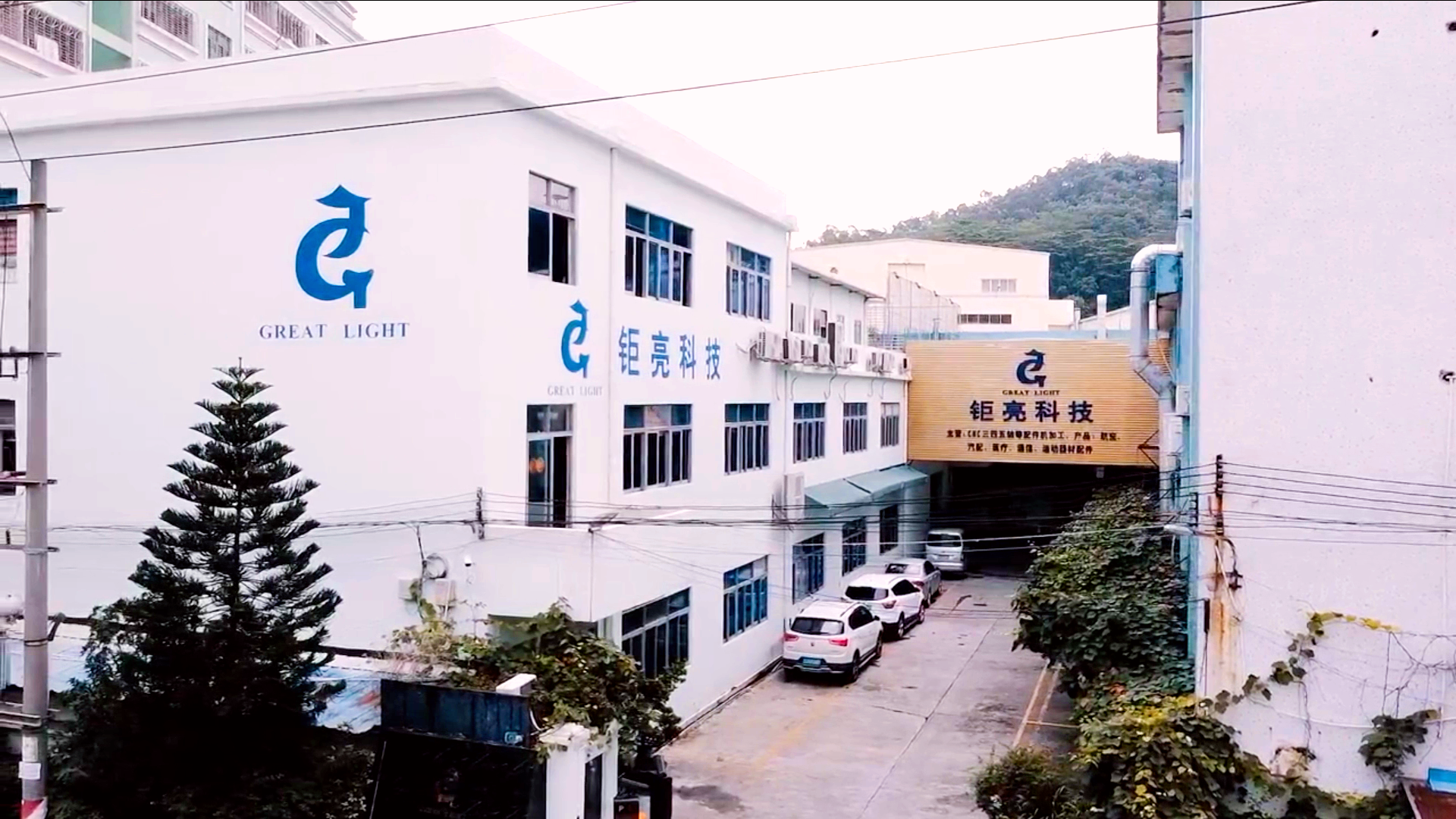
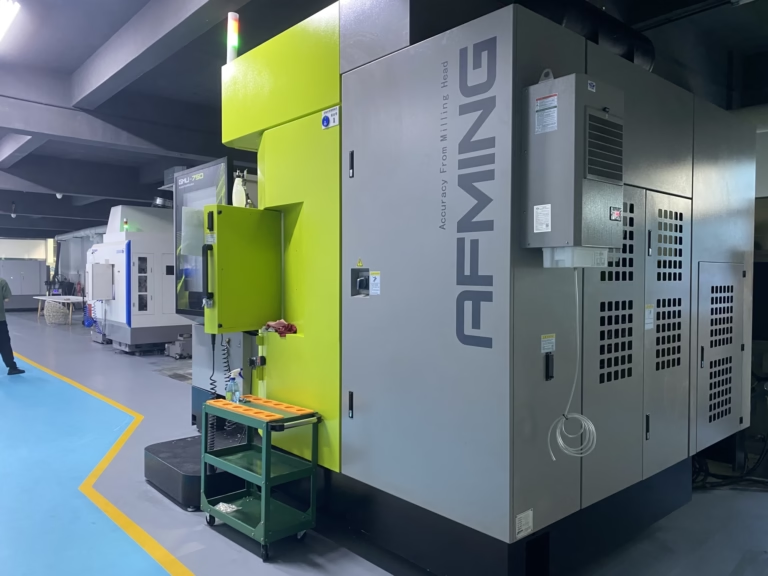
This is where a partner like GreatLight CNC Machining Factory demonstrates its value. Our strength lies in the deep integration of these human roles with our advanced five-axis CNC machining platforms. Our programmers have direct, daily collaboration with our machinists on the shop floor. Our process engineers design fixtures optimized for our specific machine tools. Our QA inspectors are involved from the initial DFM phase. This cohesive, expert-driven system, backed by ISO 9001:2015, IATF 16949, and ISO 13485 certifications, is what truly “runs” our machines. It transforms advanced equipment into a reliable delivery mechanism for your most demanding custom parts, ensuring that every component we produce is not just made, but expertly crafted to your exact requirements.
Conclusion
So, who runs CNC machines? Ultimately, it is a dedicated team of seasoned professionals whose collective expertise guides the machine’s potential. The CNC machine is a tool of extraordinary capability, but it is the human element—the judgment, experience, and rigorous discipline of machinists, programmers, engineers, and inspectors—that unlocks true precision and reliability. For clients seeking a manufacturing partner, the most critical question evolves from “who runs your machines?” to “what depth of expertise and integrated process controls your team’s execution?” Choosing a partner that invests in this human infrastructure is the surest path to achieving flawless results for your precision parts machining and customization needs.
Frequently Asked Questions (FAQ)
Q1: If the machine is automated, can’t I just hire the cheapest operator?
A: Absolutely not. While an unskilled operator can load a machine, a highly skilled machinist proactively manages the process, anticipates problems, makes precise adjustments, and ensures consistent, high-quality output. This expertise directly impacts yield, surface finish, and your total cost of ownership.
Q2: How do I evaluate the “team” behind a CNC machining supplier?
A: Look beyond the equipment list. Ask about their average machinist tenure, programmer qualifications (e.g., CAM software certifications), and engineering support. Request a tour (virtual or in-person) to observe shop floor communication. Certifications like ISO 9001 indicate a systemic, not just individual, approach to quality.
Q3: My design is complex. Will I interact with the programmer or just the salesperson?
A: With a proficient supplier like GreatLight CNC Machining Factory, you should have direct access to technical expertise. Early DFM feedback from programmers and engineers is crucial for complex parts and can save significant time and cost.
Q4: What happens if a problem arises during my production run?
A: This is where the integrated team proves its worth. A skilled machinist will identify an anomaly, a programmer can quickly analyze and adjust the code if needed, and a process engineer can investigate systemic causes—all working in concert to minimize disruption and correct the issue root-and-branch.
Q5: I only have a concept sketch. Who helps me from here?
A: A full-service partner provides a complete chain of expertise. This starts with design engineers who can refine your concept into a manufacturable 3D model, then programmers to create the toolpaths, and finally the machining and inspection team to produce and validate the physical part.